10 Great Things about The Phantom Menace

The year is 1999, and a new Star Wars movie was coming out for the first time in 16 years. To say that people were excited is putting it mildly; no film since – not even the sequel trilogy – has come close to the anticipation the world had for Menace. No matter where you went, you were bombarded with commercials, promotions, toys, and this thing. And on May 19th, my family and I went to the theater, took our seats, and were caught up in the thunderous cheers of the audience as the title finally appeared… And then we were informed that the taxation of intergalactic trade routes was in dispute.

Uh oh.

Two hours later, we walked out into the night, and I was… satisfied. The Phantom Menace wasn’t the masterpiece of escapism I had hoped it would be, but I still liked it. Unfortunately, a lot of other people didn’t, and the film became synonymous with everything that was wrong with Star Wars, becoming the butt of a great many (admittedly hilarious) jokes.

Yet, as the decades have passed, views towards The Phantom Menace have softened, to the point where many in the Star Wars fandom look back on it fondly. Thus, in the spirit of celebrating the film’s 25th anniversary, here are 10 great things about The Phantom Menace.

1. It tells a new story

If The Phantom Menace was made today, it would lean heavily on nostalgia and familiar story beats from previous films (as The Force Awakens would do decades later), but George Lucas didn’t do that. Instead, he told a new story about the twilight of a democratic republic that was rotting away from within, a logical counterpart to the original trilogy’s saga of fighting to save the galaxy from a fascist empire. And while we do get some returning characters and locations from the original trilogy, almost everything else in Menace – from Naboo, Coruscant, Luke and Leia’s mom, a look at how the galaxy’s government runs, and our very first look at the Jedi order – are fresh and unique. Even if the story didn’t quite work out as fans had wanted, Lucas is to be commended for trying something new and not just re-telling a story that had already told.

2. Qui-Gon Jinn

While it’s great to see Obi-Wan Kenobi in his younger years (played wonderfully by Ewan Mcgregor), my favorite character of Menace is his tutor, Qui-Gon Jinn. Jinn is a fascinating Jedi who, instead of the orthodox Obi-Wan and dogmatic Yoda, seeks to follow the spirit of Jedi law instead of its letter. He believes in focusing on the moment, listening to the Force, and doing what’s right, regardless of what others think, even if it involves bending the rules to achieve a greater good. But most of all, he’s a good man who doesn’t talk down to others:

With Liam Neeson’s warmth, focus, authority, and just a touch of mischievousness, Qui-Gon remains my favorite Jedi in the Star Wars saga.

3. Anakin Skywalker

Much has been written over the years about how ill-advised it was to have Anakin Skywalker be a 9 year old kid in Menace, and even more has been written about Jake Lloyd’s portrayal of the galaxy’s most infamous Jedi. While I agree that it probably would have been better to introduce him as a teenager, I still think Anakin’s fine in the film; he is, after all, a 9 year old boy and acts like it. And much like how even Sauron was not evil in the beginning, I liked seeing the boy who would be Vader as an innocent kid who – despite being a slave his whole life – is still compassionate and helps total strangers without any thought of reward. It’s a refreshing reminder that Vader didn’t start out as an evil little brat who enjoyed force-choking other kids who stole his blue milk at lunchtime, but an ordinary person who could do either great good or great evil.

4. The Prophecy of the Chosen One

Perhaps no other trope has been done to death than prophecies about chosen ones who will save the world, and Star Wars has its own with the prophecy of the one who will bring balance to the Force. But Menace smartly and cleverly uses this trope to add a whole new layer of depth to Anakin. In the original trilogy, he was little more than glorified muscle for the Emperor, but here we learn that he was created by the Force itself to bring balance, turning Vader into a tragic figure who could have been the most powerful and most famous Force user in history, but became a cripple who lost everything due to his fear of loss. This twist is an excellent example of a prequel enriching a previous story by adding more complexity that originally didn’t exist, letting us see beloved characters in a new light that makes them even more compelling than before.

5. The Jedi Order aren’t the heroes we thought they were

Throughout the original trilogy, the Jedi were revered as mythical beacons of truth, justice, and the American way. In Menace, we finally see them in their heyday… and discover that they’re a dogmatic, self-righteous cult. While the corruption and fallibility of the Jedi would be explored in subsequent movies (and get really torn apart in The Last Jedi decades later), Menace shows how, as the Republic became corrupt and decayed from within, so too, did the Jedi order, and nowhere is this more telling than when the Jedi council tests Anakin:

Rather than being compassionate and understanding towards this little boy who has do to leave everyone and everything he’s ever known to follow a dream, they treat him with contempt and refuse to take him on because he’s too old, revealing that the Jedi – for all intents and purposes – brainwash children into their order without giving them a choice on if they want to join or not. And in one of the saga’s biggest twists of irony, this lack of compassion and decency towards Anakin sows the seeds of the council’s own destruction at his hands years later. (Notice the death-glare Anakin gives Mace when he says that Anakin won’t be trained.)

The Last Jedi may have been mocked for trying to subvert audience expectations, but Menace did it first by making the Jedi order horribly flawed instead of morally pure defenders of the light. While their individual members may be good beings dedicated to doing what’s right, their organization was as decayed as the Republic they served.

6. The Beauty of Naboo

While Tatooine once again comes back to showcase its endless seas of sand, dirt, and rock, Menace takes us to two new planets: Coruscant and Naboo. Coruscant is a breathtaking example of a city-planet, but Naboo easily takes the award for the most beautiful planet in the Star Wars universe.

With beautiful rolling green hills, towering waterfalls, Byzantine buildings, and Baroque/Rococco interiors, Naboo is a gorgeous example of a sci-fi society that has achieved harmony with nature, and becoming a place you’d actually want to visit and live in. (Yeah, electing pre-teens to be their leaders is an odd quirk, but eh.)

7. The Podrace

If someone asked you to imagine The Phantom Menace with a single scene, the climactic lightsaber fight at the end would probably come to mind. But coming in close behind would probably be the podrace, and with good reason: ILM pulled out all the stops to create a fast-paced, exciting, outer-space remake of the legendary chariot scene from Ben-Hur, and they succeeded.

While its story purpose is a bit silly (Anakin needs to win so that his new friends can get a new engine for their spaceship), the sequence is a visual and audio marvel, and gives Anakin a chance to show off his mechanical and piloting skills. It’s a scene like no other in the Star Wars saga, and a thrill ride no matter how may times you see it.

8. Sio Bibble

There’s a politician in the Star Wars universe named Sio Bibble who looks like he’s a human-sized gnome. I love it!

9. Duel of the Fates

It may still be affectionately mocked 25 years after it was released, but The Phantom Menace does one thing perfectly, and that’s the legendary battle between Obi-Wan, Qui-Gon, and Darth Maul at the film’s climax. Before the film came out, lightsaber fights were slow, grounded, and realistic duels between inexperienced moisture farmers, old men, and asthmatic space cyborgs. But here, George Lucas showed what duels were like between Force-users in their prime with jumping, flipping, and multiple combatants, double-bladed lightsabers, and one of the most incredible pieces of music John Williams has ever composed. Lucas succeeded so well that this type of fighting remains the standard in all Star Wars media to this day, and the fight itself remains arguably the most epic in any of the films.

But beyond the exciting visuals and music, there’s a deeper theme at work here: This fight isn’t just about Jedi fighting Sith, but is a duel for the fate of Anakin’s soul. If Qui-Gon won, he could have potentially helped Anakin stay in the light… but Obi-Wan was left to take up Anakin’s training, a move that, as he will admit to Luke many years later, had disastrous consequences for the galaxy.

10. The Phantom Menace

Though there are deaths, military occupations, and Anakin leaving his mother, The Phantom Menace is a lighthearted story that ends on a happy note: Naboo is liberated, Darth Maul is vanquished, The Trade Federation can kiss their trade franchise goodbye, and Anakin begins his Jedi training… but as the film’s credits come to an end, and the final, quiet notes of Anakin’s theme fades out, we hear the distant echo of Darth Vader breathing.

For years, I’ve just enjoyed it as a chilling easter egg reminding us of Anakin’s dark destiny, but it wasn’t until recently that I realized that, in a way, Anakin himself is the Phantom Menace. Though Palpatine is the greatest evil in the Star Wars galaxy and has started his plan to gain ultimate power, it’s Anakin who will destroy the Jedi, terrorize the galaxy, and, in the end, kill Palpatine. He’s the ultimate threat to everyone in the film, and no one – not even Palpatine himself – suspects this. Thus, hearing Vader’s breathing is a reminder that while Palpatine is the one calling the shots, it’s Anakin who will bring them all down.

Those are my favorite ten things about The Phantom Menace. What are yours? Sound out below in the comments!

My Favorite Fictional Places To Live In

If you could choose one fictional place to live in, what would it be? Would you go live in Hogwarts? A penthouse somewhere on Coruscant? Or maybe getting your very own Hobbit-hole in the Shire is more up your alley? Anyone who’s fallen in love with a book, a movie, or a game has fantasized about living in a particularly loved location; here are ten of my favorites.

10. The Matrix (The Matrix franchise)

Image created by me using Deviantart’s DreamUp AI art generator.

Why I’d love to live there: Wait a minute! you might say; why would you want to live inside the Matrix?! Isn’t it a prison for humanity? Well, the first six were, but the Matrix I’m referring to would be one that takes place after the film series, where humanity is aware that they live in virtual reality, but they and the machines are no longer at war. While the machines work to rebuild the surface of the Earth to make it habitable for humans again, humanity chills out in the Matrix to give the machines the power they need, and thanks to their world being virtual, people can now alter it so that they can choose how they look, what clothes they wear, and have increased physical abilities, including – if you’re lucky – flight! And since real estate isn’t an issue, humanity could finally reach a state where everyone is housed and poverty is eliminated forever. Yeah, it may be all digital trickery, but as Morpheus pointed out, your mind would make it real.

Potential drawbacks: While I think everyone would love being able to bend the laws of physics, the possibility of people abusing these new abilities is very high. While most people would be content to be able to fly around in the digital world, abusers, criminals, sociopaths, and bullies would abuse their new powers, and conflicts could become even more dangerous than they are now. So while the Matrix would be very cool, it could also be very dangerous.

9. The Enterprise D (Star Trek: The Next Generation)

Image: Paramount Pictures

Why I’d love to live there: The Enterprise D is a huge spaceship filled with all the wonders the 24th century has to offer, including one of the greatest fictional devices ever created: the holodeck, a place where almost any fantasy you can dream up can come to life. And when you’re not living out your favorite daydreams, you can visit the arboretum, watch the stars from Ten Forward, enjoy a stroll through the ship while listening to the hum of the engines, and visit the onboard dolphins. (No, really, there are dolphins on the Enterprise.) Accommodations are nice, too; if you can snag one of the officer’s quarters, you get a lovely view of space and funky iridescent bedding! Coupled with the ship’s enormous size, and the timeless 80’s sci-fi design, you’d have a nice place to call home.

Potential drawbacks: As Q so memorably pointed out, space is no place for the timid: Being assimilated by the Borg, being dissolved by giant crystal entities, encountering space anomalies that turn you into monkeys or trap you inside a never-ending time loop, and any other number of galactic hazards are some of the things you might encounter, so if you want to live on the Enterprise, maybe do so when it becomes a museum ship.

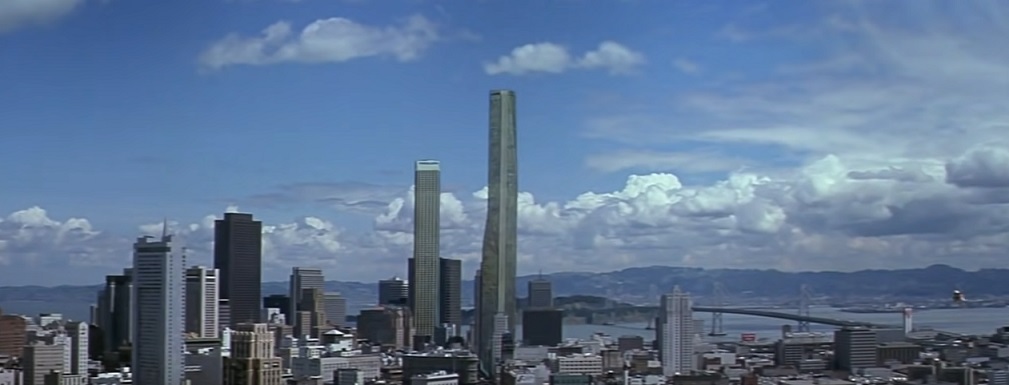
8. The Glass Tower (The Towering Inferno)

Image: 20th Century Fox/Warner Bros.

Why I’d love to live there: The Glass Tower is, in my opinion, one of the most beautiful skyscrapers ever to appear in film. Not only is the gold exterior a beautiful, simple, timeless look, but the interior has a wonderfully charming 70’s decor, right down to the interior elevators. But the big perk is the views: no matter where you live in the tower, you would get breathtaking views of the city, the bay, and the surrounding areas.

Potential drawbacks: Well, there is the itsy, bitsy, tiny fact that the tower catches on fire due to faulty wiring due to cut corners and cost saving measures during construction. And considering that the tower is in San Francisco, your monthly rent would be about 18 trillion dollars. So unless you magically get a free, lifetime lease, you’d have to be quite rich to live there.

7. Mêlée Island (The Secret of Monkey Island)

Image: Lucasfilm Games

Why I’d love to live there: As a night owl, the never-ending nightlife of Melee Island (It’s always 10 PM), is a big plus for me, as is the peaceful town and wilderness to explore: nothing can hurt you here, there are plenty of shops to visit, and the island’s vast forests are beautiful to walk through without fear of wild animals and other threats.

Potential drawbacks: As this is also a pirate town in the 1700’s, you don’t have things like electricity, the internet, movies, or TV shows to keep you occupied on Melee Island, so once you’ve explored and seen everything, there’s not much else to do.

6. Equestria (My Little Pony: Friendship is Magic)

Image: Hasbro

Why I’d love to live there: Who says you have to live somewhere with nothing but humanoids to keep you company? Equestria is a land filled with adorable ponies who are happy to be your friend, and there are plenty of places to live with them, from towns to deserts, palaces and islands, and even floating cities, all but guaranteeing that you’ll find somewhere you like. Plus, Equestria is watched over by a benevolent monarch who has ruled it for over 1,000 years without succumbing to madness or becoming a dictator; if only we were blessed with leaders that good.

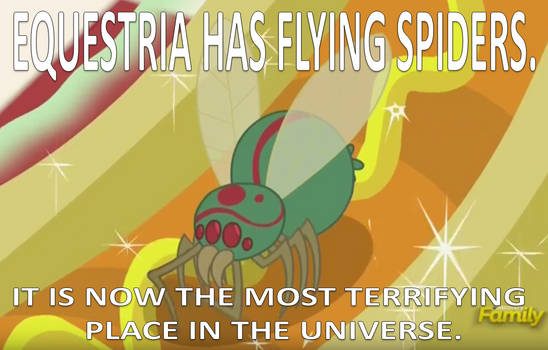
Potential drawbacks: Magic is real in this universe, and while there are beneficial spells, there’s also plenty of harmful and destructive spells that can brainwash you, turn you into other creatures, or kill you. And despite having lots of friendly ponies to live with, there are also lots of unfriendly ponies and monsters who either want to eat you or conquer the world, and have the ability to do so thanks to aforementioned magic. Oh yeah, and there are flying spiders.

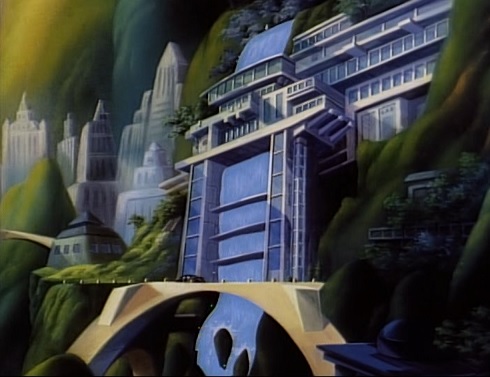
5. Cape Suzette (Talespin)

Image: Disney

Why I’d love to live there: Saturday morning cartoons of my childhood had lots of cool fictional places where adventures took place, but the only one I’d like to live in as an adult would be Cape Suzette from Disney’s Talespin. Set in a fictional 1930’s inhabited by anthropomorphic animals, Suzette is a sequestered, art-deco metropolis nestled in a towering mountain range and a beautiful cove, making it the perfect hub for the adventurous type. But the biggest draw is the apartment of Rebecca Cunningham:

Image: Disney

Even as a little kid, I thought her place was incredible, and as an adult it’s a strong contender for the most beautiful fictional apartment I’ve ever seen. Assuming money wasn’t a problem, this is where I’d love to live!

Potential drawbacks: Aside from being the only human in the city, you’d have to contend with raids by air-pirates, and every trip outside of the city’s boundaries is fraught with danger. There’s also the fact that the city’s de-facto ruler is a ruthless tiger who isn’t afraid to do anything and everything to increase his own wealth and power, so if he decided to ruin your life, there’s a strong chance he could get away with it.

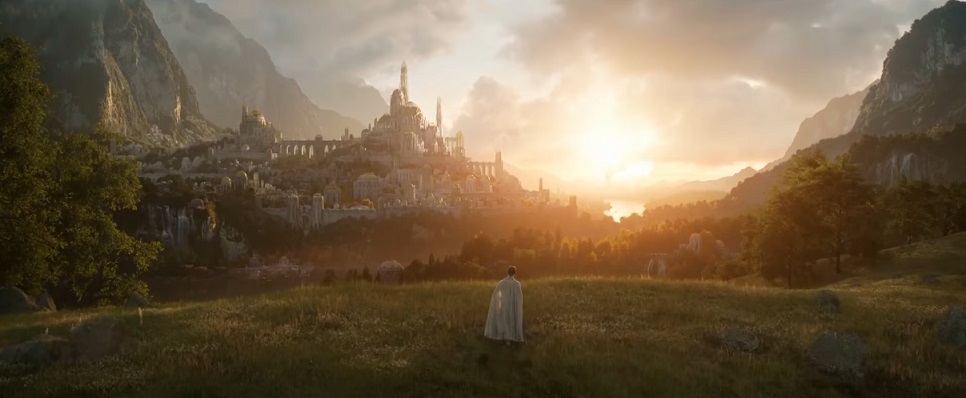
4. Valinor (The Silmarillion/ The Lord of the Rings)

Image: Amazon Studios

Why I’d love to live there: Valinor, the land of Middle-Earth’s gods, is one of the most fascinating places to me in JRR Tolkien’s universe, and the one place I’d love above all others to visit, or, better yet, live in: being free from evil, you could explore all its wonders, from the tallest mountains in existence, to the most majestic trees in creation, and the magical Gardens of Lórien, the most beautiful place in all of Arda. And if you wanted to, you could even visit the Halls of Mandos, the dwelling place of the dead; that sounds fun, right? But one of the most amazing draws would be living amongst elves and the gods themselves, beings who helped shape and create Arda and have seen the creator god – Eru – face to face.

Potential drawbacks: It’s said many times throughout Tolkien’s mythology – and by Tolkien himself – that mortals cannot live in Valinor because their lives would be greatly shortened due to the overwhelming magical power of the island, and they’d die cursing that they alone aged while everything around them seemed to never change. Yet, Frodo, Sam, and Gimili lived there in a state of peace and healing, suggesting that mortals can stay in the blessed realm if they accept death and don’t seek immortality. Thus, any would-be-mortal-resident would have to decide if living among elves, gods, and all their wonders is worth a greatly-reduced lifespan.

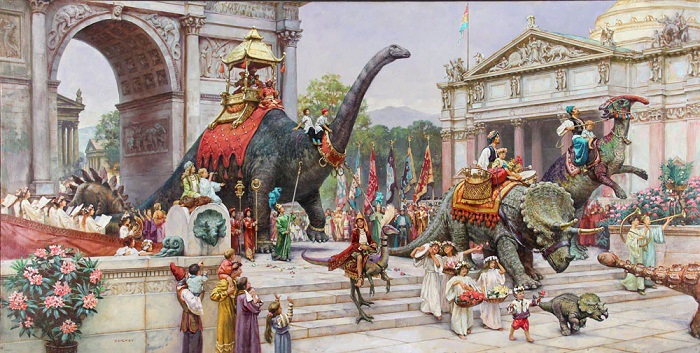
3. Dinotopia (The Dinotopia series by James Gurney)

Image: James Gurney

Why I’d love to live there: IT’S A UTOPIA WHERE HUMANS LIVE SIDE BY SIDE WITH DINOSAURS HOLY S**T THAT IS AWESOME.

Ahem; sorry.

To tone down my inner child, Dinotopia is one of the most wondrous, peaceful, utopian places I’ve ever found in fiction. A place where dinosaurs have survived to the present day and live peacefully with humans in cities, towns, jungles, mountaintop temples, and seaside communities, all brought to life by James Gurney’s beautiful artwork. For children and adults alike, it’s a place so many would love to call home, myself among them.

Potential drawbacks: Encountering carnivores who are not afraid to embrace their more savage side. Thankfully, you have to go out of your way to encounter them, so the threat is minimal, meaning that most of Dinotopia is one of the safer places on this list.

2. The Culture (The Culture series by Iain Banks)

Image created by me using Deviantart’s DreamUp AI image generator

Why I’d love to live there: When it comes to utopias in fiction, The Culture is arguably the one that probably gets closest to making one that you’d actually want to live in: A highly advanced, post-scarcity society where benevolent AI’s keep society running, allowing citizens of the Culture to do literally anything they want, as long as it doesn’t hurt or harm other individuals. With a high value on personal liberty and freedom, as well as technology that allows individuals to live up to 400 years (or even longer), people living in the Culture have it made: You can pursue all your passions, dreams, and hobbies as much as you want without worrying about having to pay the bills. Sweet!

Potential drawbacks: While the Culture does run into occasional problems and even more advanced civilizations dwelling in the cosmos, there really aren’t any hazards or drawbacks its citizens have to worry about; some would say that the Minds (the aforementioned AI’s that keep the Culture running) run a surveillance state, even if it is a completely benevolent one, but when you look at all the benefits the Culture’s technology can offer, and almost unlimited freedom everyone enjoys, the Culture is as close to an earthly heaven as you can get. And speaking of paradise…

1. Heaven

Image created by me with Deviantart’s DreamUp AI image generator

Why I’d love to live there: While we will likely never know for sure if there is continued existence after death (though considering the volume of near death experiences and other otherworldly phenomena reported throughout the centuries, I’m in the ‘there’s probably something after we die’ camp), Heaven, as seen in countless books, movies, TV shows, and video games, would be the absolute perfect place to live: a realm of peace, joy, and bliss, where all your dreams can come true, and where you can live without any of the negative parts of Earthy life, like death, aging, paying the bills, late-stage capitalism that puts the acquisition of money above human well being, etc. Plus, assuming the Supreme Being is benevolent and all-loving, you can chill out with God; who wouldn’t want to do that?! (I’ve always loved how in the book, ‘David Vs. God,’ you can even go surfing with God!)

There are countless versions of Heaven in fiction, but I especially like the version presented in the online webcomic, ‘The Order of the Stick,’: essentially, you get to enjoy every earthly delight you want, and when you’ve had your fill you get to go further up into Paradise to greater and greater joys.

Potential drawbacks: Depending on the rules of which universe you’re in (such as the movie, ‘What Dreams May Come’), the worst part of living in Heaven is the possibility that your loved ones don’t make it in, which would make living there hell. But since stories featuring getting into Heaven at the end tend to be more on the positive side, the odds of that happening are low, and the possibility remains that said loved ones can still eventually get there, even if they have to be rescued/fight their way out of Hell/the Underworld, etc.

Those are my favorite fictional places to live in; what are yours? Tell us your favorite fictional living places in the comments below!