16 Great Things about ‘The Lord of the Rings: The Rings of Power’ Season 2

In my last article about The Rings of Power, I talked about my 15 favorite things about Season 1. Here – in no particular order – are my 16 favorite things about Rings’ second season. Be warned that this list contains spoilers for not only Season 2, but also future events in the series, and the Lord of the Rings as well.

*All pictures in this article are the property of Amazon.*

1. Sauron’s Death

Season 2 opens with a flashback to Sauron trying to take command of Middle-Earth’s orcs following Morgoth’s fall. Unsurprisingly, the orcs (and Adar) don’t take kindly to being told that they’ll be sacrificed to achieve Sauron’s goals, so they express their displeasure by stabbing Sauron a few hundred times until he explodes, turning the surrounding terrain into a winter wonderland.

Many fans of Tolkien’s works have decried this scene for contradicting Sauron’s character (he tries to reason with the orcs, where he dominates them in the books with fear and terror), but I think this scene is a clever look at Sauron’s journey as a character. Originally, he was a being who loved order and perfection, but during his time as Morgoth’s servant Sauron was corrupted into being willing to enslave, torture, and kill others to get what he wanted. With Morgoth gone, some of Sauron’s original goodness is poking through, and this scene shows him at the halfway point between the good spirit he was originally, and the hate-filled tyrant of the Lord of the Rings trilogy.

Despite contradicting Season One of Rings’ (Adar said that he killed Sauron after the latter experimented on so many orcs; here, he and the orcs kill Sauron before those experiments begin), this prologue is a great way to open the season.

2. Sauron’s Rebirth

Something never elaborated on in Tolkien’s works is how Sauron creates a new body for himself each time he was killed, saying only that it took Sauron longer and longer with each subsequent death. Rings lets us see how the process might have gone: after being killed by the orcs, Sauron slowly rebuilds himself from a few drops of blood, taking the lives of insects, rats, and eventually people before he can finally create a new body for himself and resume his quest to conquer Middle-Earth.

What I like about this scene is that, compared to everything else we’ve seen of Tolkien’s world onscreen, this is something out of a story by H.P. Lovecraft: we’re watching the birth of an abomination from the dark, moldy depths of the earth, something that doesn’t belong to the natural order of things. And while this putrid mass of cancerous growth may look weak and frail, it’s still one of the most powerful and evil things in existence. And in a nice nod to Tolkien’s mythology, the whole sequence ties into his recurring theme that evil cannot create new things, only corrupt what has already been made: where Sauron could once manifest a beautiful form before his fall, now he is forced to take life from others to create a body for himself, one that may seem normal, but is only a mask to hide the evil within.

3. Choose Good

Sauron may have created a new body for himself, but he is now at the lowest point of his entire existence: he’s lost his position as Morgoth’s right hand. He has no armies to command, he’s been exiled from his home in Valinor, and his dreams of creating a perfect, orderly world are in tatters. But being humbled presents him with an opportunity to realize what he’s done and turn his life around, something that he seems to seriously consider when he comes across a group of refugees, one of whom unknowingly offers him the chance to leave his destructive path and choose a new, better one.

Later, when talking on a ship, the same man gives Sauron a brief, but perfect summary of what it means to turn from evil and become good:

I like to imagine that this meeting isn’t due to chance, but actually an act of fate: in The Fellowship of the Ring, Gandalf told Frodo that Bilbo was meant to find the Ring, and that Frodo was also meant to have it. During the events of The Hobbit, Gandalf and Thorin seem to have been guided to meet each other in Bree, which ultimately led to the Quest of Erebor and the death of Smaug, saving Middle-Earth from his wrath.

With all that said, I believe that Eru subtly guided the old man into meeting Sauron and inspired him to say the right things in hopes of helping the fallen Maiar find his way back to the light… but, alas, Sauron chooses instead to be a big meany butt and be evil (and confirming that he was lying to Galadriel about trying to redeem himself in Season 1).

Had Sauron listened to the man and chosen differently, the fate of Middle-Earth would have been very different, indeed.

4. Rhûn

If there’s one thing The Lord of the Rings, The Hobbit, and The Silmarillion has in common, it’s that we don’t get to see a world outside of the standard European fantasy environment (tall mountains, forests, castles, and the like). That’s why it’s such a delight in Season 2 that we finally get to see the deserts of Rhûn – the homeland of the Easterlings – on screen for the very first time.
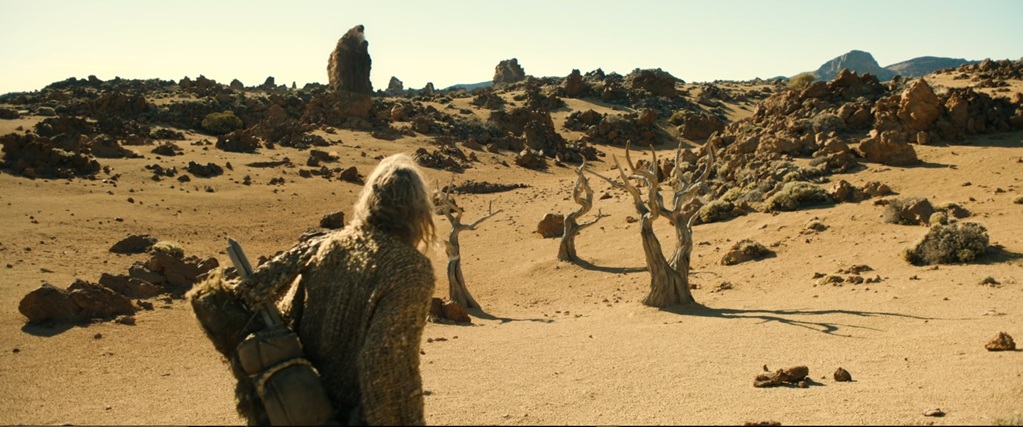
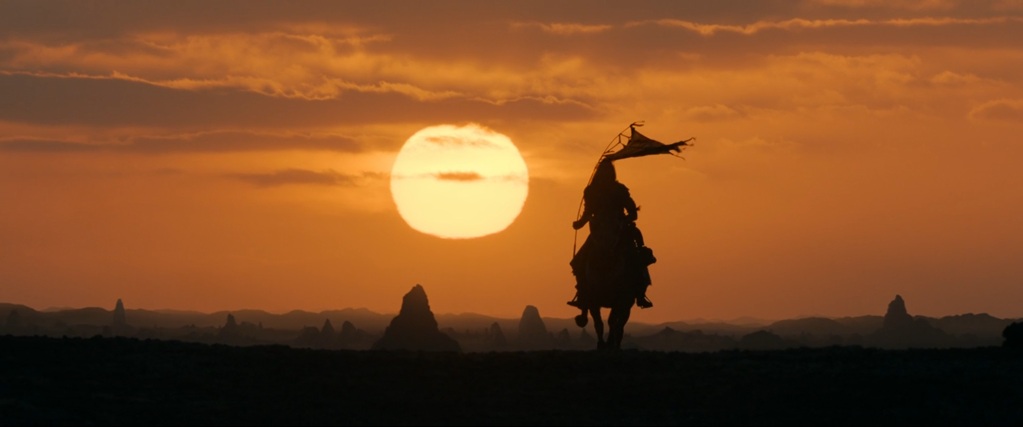
While we don’t get much outside of rocks, dead trees, barren canyons, and lots of sand, it’s great to finally see something other than European climates, and remember that Middle-Earth is so much bigger and varied than what we’ve seen in Tolkien’s books.

5. Celebrimbor

Though he had an important role to play in Season 1 of Rings, where he forged the three rings of the Elves, Season 2 is where Celebrimbor gets to come into his own and shine as one of the most famous elves of the Second Age. As the descendant of the famously fiery and temperamental Fëanor, Celebrimbor is an elf who doesn’t desire fame, power, or ruling others, but only in creating beautiful things and trying to undo the mistakes of his ancestor… a desire that makes him him all-too vulnerable to Sauron’s manipulations.

While he has all the qualities of being a noble hero like Gandalf, Aragorn, and Galadriel, Celembrimbor is unfortunately like Isildur and Bromoir: beings who fight and strive to do what is right at great personal cost, but who’s tales are told as tragedies by those who come after them. Celebrimbor’s a noble and kind-hearted elf, but his determination to make his mark on the world has catastrophic consequences for the world at large.

Yet, his noble intentions, determination to do what is right after realizing he’s been lied to and deceived by Sauron, and only wanting to do good makes him endearing and likeable. Like Diza, he’s an elf you’d be happy to share ale with at a tavern after a long day’s work.

6. Celebrimbor’s Anvil
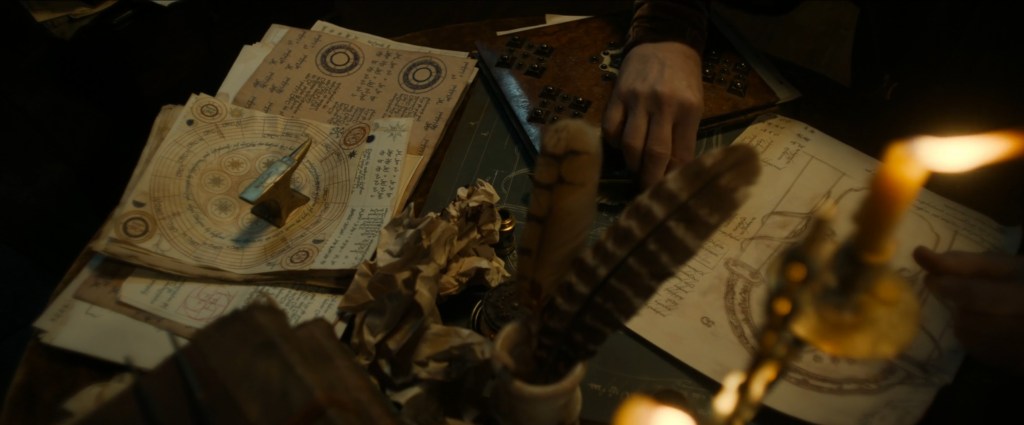
It’s only onscreen for a few seconds, but when Celebrimbor is doing some paperwork in his office, sharp-eyed viewers will see that he uses a tiny anvil as a paperweight, implying that the mighty Celebrimbor, greatest Elven smith of the Second Age, has a good sense of humor. Plus, the image of noble and graceful elves going through the effort to craft, shape, and forge an itty-bitty, widdle anvil is hilarious. Why haven’t we gotten this thing as an officially licensed collectible yet?

7. The Hammer and the Crown

Middle-Earth has its fair share of historical objects that Indiana Jones would be happy to track down, and ‘Rings’ has two big ones in Season 2: Fëanor’s hammer, and Morgoth’s crown.

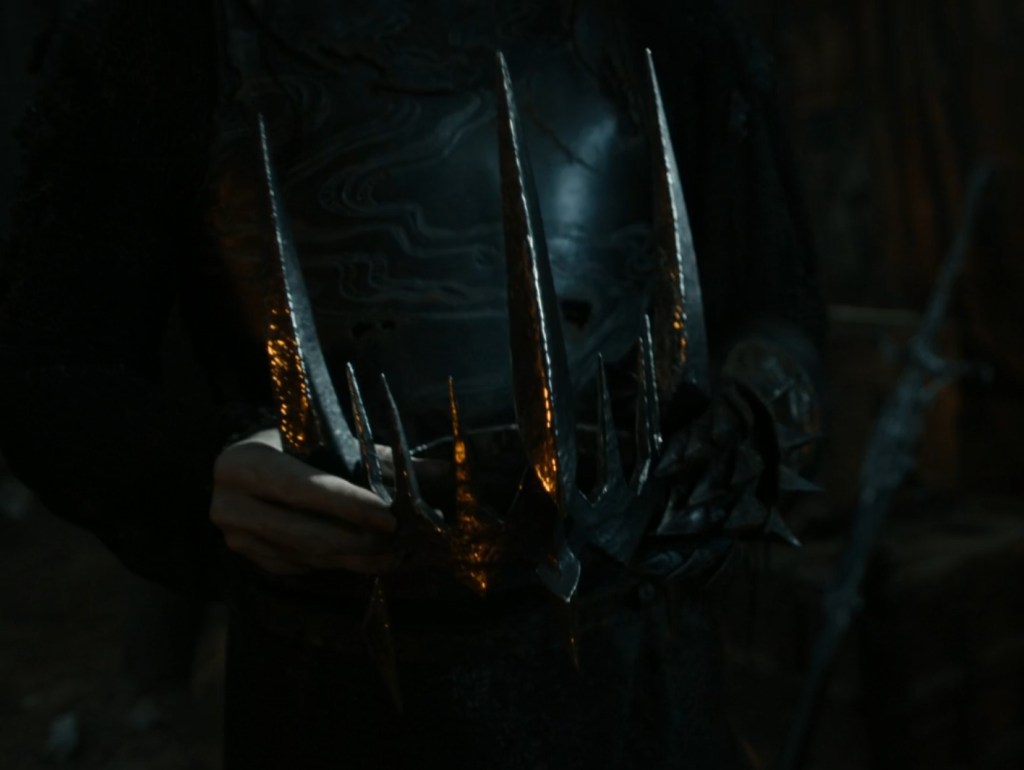
While fans who have only watched the films or seen the show can understand that these are important artifacts, readers of Tolkien’s works will get the most enjoyment out of seeing the hammer forged the most beautiful objects in all of creation (the Silmarils), and that crown that was worn by the most evil being who will ever exist (and that held the aforementioned jewels in its spiky embrace). Both go a long way to help make the world of Middle-Earth feel ancient and lived in, and that they played huge parts in changing the course of history long before the show began.

8. The Nameless Thing

One of the most fascinating parts of Tolkien’s world are the nameless things: eldritch horrors that live in the deepest, darkest fissures deep beneath the mountains of the world that are even older than Sauron. They are only mentioned briefly in Tolkien’s works, but are apparently so frightening that even Gandalf refuses to describe these abominations after encountering them when pursuing the balrog after their fall into the pit of Khazad-dûm. Season 2 gives us a glimpse of one in the form of a giant, grotesque worm-thing that tries to eat Isildur and Arondir before being sliced up from the inside and being (presumably) turned into nameless thing-burgers for dinner.

Is this a scene that doesn’t really add anything to the overall plot? Yes. Could it have been cut out without any effect on the story? Yes. Is it cool to see one of the most mysterious, dark, and vicious things that Tolkien ever wrote about? Heck yes.

9. Mirdania Sees Sauron’s True Form

One of Tolkien’s smartest decisions in writing The Lord of the Rings was not describing what Sauron looks like: he’s an unseen evil, a force so powerful and so dreadful that you don’t even have to be anywhere near him to experience the power of his malice. And despite having more screentime in Rings of Power than both the Hobbit and Lord of the Rings films combined, Rings has never shown Sauron’s true form, only his armor from the First Age and the disguises he wears to interact with others.

The closest we get to getting a glimpse of Sauron’s true form is when one of Celebrimbor’s assistants, Mirdania, accidentally enters the unseen world and sees Sauron as he really is (without realizing who she’s looking at), the experience shaking her to her core… but we don’t see that. All we get is Mirdania describing a tall being with pitiless eyes and skin made of flames. By describing the moment, but not showing it, Rings follows Tolkien’s example by leaving it up to the viewer’s imagination to visualize what Sauron’s true, malevolent form must look like.

One last little twist about the scene: after Mirdania describes what she saw, who’s the first one to comfort her? Sauron himself.

10. The Raid on the Temple

One of season 2’s strongest storylines is showing Numenor’s gradual downfall. While season 1 hinted that the greatest kingdom of Men in Middle-Earth was starting to crumble from within, season 2 brings this rot out into the open as a power-hungry Ar-Pharazôn begins his campaign to take control of the island empire and persecute those loyal to the Valar, the elves, and their ways.

The one scene that perfectly embodies Numenor’s descent into evil is the raid on the Faithful’s temple. Starting off as a peaceful funeral ceremony bidding farewell to all who died on the mainland in the last season, it devolves into Pharazôn’s sniveling weasel of a son – Kemen – gleefully interrupting the ceremony and announcing the destruction of the temple, destroying sacred artifacts for the fun of it, and then emotionally manipulating Isildur’s friend Valandil into starting a fight to justify using lethal force against the faithful, ending with Kemen stabbing Valandil in the back.

This scene, more than any other in the series, showcases the cruelty and moral rot of Numenor. What’s more chilling is that there are no orcs here, no supernatural monsters or ancient evils emotionally manipulating everyone present. It’s just humans being evil to one another, and it’s arguably scarier than any demon Tolkien could conjure up. And the worst part is that this is only a taste of the evil that Numenor is going to unleash upon Middle-Earth at large in the years to come.

(As an aside, I think there’s a very good chance that Kemen will end up being one of the Ringwraiths: Tolkien’s writings strongly imply that at least three Ringwraiths were of Numenorian descent, and it’s easy to see Kemen being nasty and power-hungry enough to accept a ring of power by Sauron. And if he wants to take the throne of Numenor, only to be denied, then Sauron might offer to make him a great lord and promise him a kingdom of his own to rule… Angmar, perhaps?)

11. Sauron’s Deceptions

One of Sauron’s greatest strengths is his ability to deceive and manipulate almost anyone he encounters, including the smartest, wisest, and most powerful elves in Middle-Earth. Yet, the books are vague about how he does this beyond his ability to take fair forms and cast illusions. While most of his manipulations in Season 2 follows the pattern of narcissists abusing others (lovebombing, gaslighting, ignoring boundaries, victim blaming, etc.), we get to see Sauron’s supernatural abilities at work when he conjures a vision of Eregion to subtly trap Celebrimbor. Like the holodeck from Star Trek, Celebrimbor can walk around in this vision, touch things, interact with other elves, and continue his work… completely unaware that the real Eregion is being bombed into rubble by orcs.

This illusion is a fascinating demonstration of Sauron’s power and his ability to deceive others, and makes you wonder how he’s used this ability on others throughout his time in Middle-Earth: It’s one thing to resist lies and flattery, but it’s much harder to resist when the very world around you is a lie and you don’t know it.

12. Who’s Will Is Stronger?

So often in fantasy stories, dark lords and evil-doers have all the power and all the advantages over their good counterparts, including the willingness to do whatever needs to be done to achieve their goals. But Celebrimbor gets a moment to prove that the good guys can be equally as strong-willed: shackled to his desk and unable to stop Sauron from taking the rings that he will use to enslave men and create the ringwraiths, Celebrimbor realizes the only way he can get free is to cut off his own thumb so he can slip through his shackle. But doing so means that he will never again be able to use a hammer, an anvil, and a forge to create things. Celebrimbor’s Eru-given gifts of forging and creating will be forfeit, and his dreams of making Middle-Earth beautiful will be gone.

Knowing all that, Celebrimbor still cuts off his thumb.

While gruesome, this is one of Celebrimbor’s best character moments: when everything is on the line, he is willing to give up his life’s dream for the chance to stop Sauron and save others. While it is, unfortunately, all for nothing in the long run, never let it be said that Celebrimbor did something most of us wouldn’t have the courage to do.

13. Celebrimbor’s Death

Celbrimbor’s death is one of the more gruesome in Middle-Earth media: tortured by being shot repeatedly with arrows from Sauron himself, threatened with supernatural means to ensure he doesn’t die, and then being impaled with a spear through the gut before finally dying, it’s a gruesome spectacle. Yet, one thing that’s puzzled me ever since watching it is why Sauron cries after Celebrimbor’s death. He wouldn’t see Celebrimbor as a friend, nor would a being such as himself be frightened at a prophecy that his rings will one day destroy him. So why the tears?

After mulling things over, I’ve come to think that the reason Sauron cries is because he’s realized he’s crossed the point of no return. All throughout Season 1 and 2, Sauron says that his greatest goal is to heal Middle-Earth of the hurts he helped inflict upon it. Yet, when staring at Celebrimbor’s corpse, Celebrimbor’s words cut through all the lies he’s told himself:

“I go now to the west, blown forth on a wind that you can never follow.”

I think Sauron realized that Celebrimbor was right: After all he’s done, and after all the times he’s rejected the chance to turn away from evil, it now hits Sauron that he can never go back to Valinor, his home. If he did, the Valar would imprison him, find him irredeemable, and thrust him into the void to join his master in endless darkness.

In my opinion, this is the moment where the last piece of good in Sauron dies. From here, he will fully embrace evil to achieve his goals and abandon any attempt to kid himself that he’s doing this to help others. Celebrimbor may have died here, but so did a tiny, flickering spark of light that will never be re-kindled.

14. Adar Turns Back to the Light.

One of my favorite storytelling tropes is when a villain sincerely and truly repents of their ways and turns their backs on evil. That’s why one of my favorite scene in all of Rings – tied with Sauron being offered the chance to turn from evil, as described above – comes with Adar turning back to the light.

Having obtained Galadriel’s ring, Adar seems poised to use it as a weapon to turn the tide in his war against Sauron and finally defeat him once and for all… but that’s not what happens. Though exactly what happened isn’t shown, it’s logical to assume that Adar’s mind was healed by Galdriel’s ring, making him realize how much evil, death, and destruction he had caused since beginning his quest to create a homeland for the orcs. But instead of giving into despair and hopelessness, or telling himself even more lies to cover up the pain as Sauron did, Adar instead chooses to pursue a path of peace.

While his quest for redemption only lasted a few minutes, Adar holds the unique distinction of being the only true villain in Tolkien’s universe – whether in books, films, games, and TV shows – to sincerely repent, something that Sauron, Saruman, Grima Wormtongue, and so many others never did.

While his ultimate quest to have the orcs live in peace was doomed to never succeed, I hope Adar can return in future seasons (due to Elves being able to reincarnate in Valinor if they are killed), and become of the good guys fighting against Sauron.

15. “Dwarves!”

Dwarves!

16. Sauron vs Galadriel

In Tolkien’s writing, an interesting paradox is introduced regarding Sauron: Despite his overwhelming power, strength, and innate magical abilities, he always loses whenever he gets into a physical fight with someone. That trend is played with at the climax of Season 2, when we get our very first scene of the Dark Lord going toe-to-toe with an opponent onscreen when he fights Galadriel for the 9 rings of power. For the majority of the fight, Sauron easily has the upper hand, toying with her mind and easily deflecting her blows before finally defeating her with a stab from Morgoth’s crown, and taking the 9 rings.

While I enjoy the fight for being able to see my favorite fictional villain getting to show off his fighting skills (and using Morgoth’s crown as a weapon is an ingenious and clever idea), I also like how the fight shows that even if Sauron defeated Galadriel, destroyed Eregion, and got his rings, he still lost: Galadriel escapes, and his potential ally and slave will instead be a thorn in his side for the rest of his days, giving hope, comfort, and aid to those who fight against Sauron, and will be one of the major players in his final and permanent defeat.

Sauron may have won this battle, but though it will take centuries for it to happen, he has ultimately lost his war to enslave Middle-Earth, and Galadriel escaping is just the first of many twists of fate that will finally lead to his final and ultimate defeat.

That’s it for Season 2, which I think is a big improvement over Season 1; come back in 2027 when we’ll take a look of my favorite moments from the third season of ‘The Rings of Power’.

Favorite Moments: Snow Camo In the Jungle

We all have our favorite moments in movies, books, and games, moments that stay with us long after the story is over. This column is my attempt to examine my favorite moments and see why they stick with me.

***

The Commercial: The Most 90’s Toy Commercial Ever Made

Why It’s Great:

The 90’s were arguably the golden age for toy commercials, and perhaps none are more 90’s, more EXTREME and more over-the-top than this commercial for GI Joe. But among the jump-kicking ninjas, laser-shooting space stations, and military vehicles that resemble mechanical porcupines instead of weapons of war, one thing stands out the most: Snow Job at 0:16, charging into battle against the dastardly forces of COBRA… while wearing snow camouflage. In the jungle.

Buh.

Why is Snow Job wearing his arctic survival suit in the jungle? Perhaps he wanted so badly to go fight in a mission that didn’t involve snow, cold, penguins, and homicidal polar bears that he just charged right in without questioning the wisdom of wearing insulated parkas, snow pants, and thermal gloves to a tropical environment with an average temperature of 93 degrees and 300% humidity. Maybe his best buddy, Ice Cream Soldier, was on vacation that day and the Joes needed anyone who could take on ninjas in the jungle.

Whatever the reason, Snow Job is a perfect example of a character suited to a very specific environment suddenly being thrust into one he/she has no reason being in, and watching the ensuing hilarity. But while we laugh, I’m sure that, in the time between skiing into the Amazon and ending up as a charred skeleton cooked to medium-rare, Snow Job did his part with his laser rifle to make the jungle safe for democracy!

15 Great Things About ‘The Lord of the Rings: The Rings of Power’ Season 1

The year is 2017 and Amazon has just announced that they’re going to create the very first TV show set in JRR Tolkien’s Middle-Earth, one that will chronicle the Second Age, the downfall of Numenor, the creation of the rings of power, and the early years of Sauron’s war to enslave Middle-Earth. And to top off that bombshell announcement, the show is going to run for five seasons and be the most expensive TV show in history. With almost unlimited production resources, being set in one of the most famous fantasy series ever created, and having legions of fans of said series, the stars were aligned to create one of the biggest hits television has ever seen.

It didn’t quite work out that way.

After the release of The Rings of Power‘s first season, reception was, to be generous, mixed. Critics found the writing to be subpar, and fans in particular were not happy with the many liberties taken with adapting Tolkien’s work, including turning Galadriel into a bloodthirsty warmonger, the Harfoots being unlikable pricks who leave their injured to die (and then later laugh at said deaths), and Elves and Dwarves having mixed ethnicities, among other things.

As a die-hard fan of both the Lord of the Rings and Hobbit film trilogies, I thought season 1 of Rings of Power was average at best. It had some good bits, some bad bits, but nothing truly awful or great, and I quickly forgot most of it after the season concluded. Recently, though, I re-watched season 1 to get ready to see season 2, and I was surprised to find that I enjoyed it much more than the first-go around. Here – in no particular order – are fifteen of my favorite things about The Rings of Power: Season 1.

NOTE: For those who haven’t watched the show, or have but haven’t read Tolkien’s books, this article contains big spoilers for the first season of Rings of Power, as well as what will happen in future seasons; you have been warned.

1. The Prologue

It seems to be a cosmic law that if you have a movie or a TV show set in Middle-Earth, you’re going to have a spectacular prologue, and Rings continues that tradition. Where the New Line films began with the Battle of the Last Alliance, and the Hobbit films showcased the downfall of Erebor, Rings gives us the first age of Arda, showcasing the beauty of a world just before everything was ruined forever. We get our first-ever glimpse of Valinor, home of Middle-Earth’s gods and the elves, the destruction of the Two Trees, the briefest glimpse of Morgoth, Sauron’s master, the war to overthrow him, a hauntingly beautiful shot of Sauron in his armored form, and the ending setting up Galadriel’s quest to hunt him down, which will be her singular focus for the entire season.

This prologue is Rings is at its best, the one sequence that matches the epic scope of the New Line films. And it’s not just the big moments that make the prologue as epic as what’s come before, but little things, too: we see the giant Eagles being defeated in battle for the very first time, and the elves expecting a quick victory against Morgoth, but finding themselves sucked into a war that lasts centuries, cleverly paralleling our own history where overconfident nations gleefully expected wars to be over in weeks, only to find themselves in bloodbaths that lasted for years, leaving their armies and populations shattered and broken.

2. Adar

Long known for being, ugly, snarling beasts with cockney accents who can be killed by a single hit from any weapon, Rings bucks that trend by giving us what I think is the the most interesting orc in any Tolkien story: Adar, one of the first orcs ever created by Morgoth. But unlike a lot of monster prototypes, Adar isn’t a savage, feral, barely-sentient beast with British teeth: he’s an orc who still strongly resembles the elf he was before being tortured and warped into something foul.

It’s not just Adar’s ruggedly handsome looks that make him stand out, but his character: While he does horrible things, psychologically torments others, enslaves innocent people, and commits ecological genocide, Adar doesn’t want to conquer the world, make himself a god, or wipe out other civilizations; all he wants is for his fellow orcs to have a safe place to live that they can call home, and enjoy life like any other being.

Adar is the best kind of antagonist: while he does horrible things, they’re in pursuit of a goal we can understand and even sympathize with. And on top of that, he’s a noble villain, one who was once good, but apparently believes he can’t come back from what he’s become; for all his desires to help his fellow orcs, he’s likely too mentally broken from Morgoth’s tortures and torments to think he can come back and be healed. Or worse, he’s given up and doesn’t care anymore.

With this complex morality and fascinating history, and the fact that he actually accomplishes his goal by the end of the season, Adar is easily the best character in the show.

3. Míriel

When she’s first introduced, Míriel – acting queen of Numenor – comes off as a pretty standard ‘noble ruler of a doomed kingdom’ archetype with a mixture of good traits tempered by a hardness one expects of someone trying to deal with the decline of a powerful kingdom. But what I like about Míriel is that, despite her pride and hardness, she is a good person who is trying her best to deal with knowing that Numenor is heading for certain doom, and is willing to put herself in harm’s way to save others, even peasants who are far beneath her in the social hierarchy. And even after being blinded trying to save some of those people, she refuses to give in to despair and grief. What she lacks in physical strength and powers, Míriel makes up for with her strong will, willingness to risk herself, and willingness to help even the lowliest of people.

Yet, for all her noble qualities, Míriel is a tragic figure: a leader with the best of intentions who is fighting to save what good remains in her failing kingdom, but like a sand castle being hit by the relentless assault of the waves,her quest is ultimately doomed, turning her into a tragic hero worthy of being included among Tolkien’s many doomed heroes.

4. Arondir

Perhaps no other character created for Rings of Power caused as much a stir among fans of Middle-Earth as Aronidr, a dark-skinned elf assigned to watch over the Southlanders. Now removed from the accusations of him being walking ‘woke’ propaganda, Arondir ties with Adar as my favorite character of the series: he’s an elf skilled in war and a master of the bow, but without the jokes and easy-going nature of everyone’s blonde-haired, pointy-eared elf from the Woodland realm.

Yet, Aronidr is not a dark, brooding, or miserable character; beneath his firm exterior lies someone who cares deeply for others, and will go to any lengths to save the people he has been charged to watch over. While Legolas is the Elf you want who is aloof and easygoing, Arondir is the one you want watching your back when fighting those who want to take your life and everyone and everything you love.

5. The Lindon Elves

Rivendell and Lothlorien may be tied when it comes to the most beautiful Elven realms in Tolkien adaptions, but in my opinion, Lindon takes that honor. From the gorgeous outfits its residents wear, to the autumn-colored forests in which they live, and the breathtaking halls of trees, Lindon is arguably Elven society at its peak, a society that lives in peace with itself and nature; if Valinor wasn’t an option, Lindon would be the one place in Middle-Earth I’d love to live in.

And yet, the beauty of this realm is tinged with the knowledge that it will soon begin to fade as the Elves’ influence and ability to stay in Middle-Earth begins to wane. Having their leaders seek to stop that from happening gives both Gil-Galad and Elrond a strong, understandable motivation for their actions in the season. If I were lucky enough to live in such a beautiful place, I’d want to save it, too!

6. Elrond and Durin’s Friendship

I have a confession to make: I’ve never really cared for the Dwarves in Tolkien’s world. I’ve found them to be too noisy, proud, and boastful for my tastes, similar to how a cat person can grudgingly tolerate a big, bouncy dog, but ultimately would rather prefer the quiet independence of a feline. But with that said, the biggest surprise of Rings for me was just how well done the friendship between Elrond and Durin is handled.

Unlike a lot of fantasy friendships between different beings that are pretty straightforward and easy to summarize, the relationship between Elrond and Durin is like a rubber band constantly snapping back and forth: Elrond and Durin go from being best buddies you can see going on camping trips together to Durin never wanting to see Elrond ever again, to the two of them realizing they’re pawns in a bigger game and unsure if their friendship can even survive. And when things get too rough, Disa is there to throw cold water on the two and calm things down.

The relationship between the three is a refreshingly complex triangle that is like any other friendship in real life: it’s never completely smooth sailing, full of back and forths between anger, disappointment, not wanting to hurt one another, and ultimately wanting to do what’s right for each other. In a mythology that places such a high value on friendship, it’s a delight to see one this complex.

7. Disa

Joining the list of Rings’ best newcomers is Disa, Durin’s wife. Like the rest of her kind, she’s tough, formidable, refuses to be intimidated, and not accommodating of those overcome with foolishness and pride. Yet, she’s also wonderfully generous and welcoming, even to beings from different races. You easily get the impression that while most Dwarves would glare at you out of the corner of their eyes, Disa would be the first to come up, shake your hand, and eagerly offer to give you a tour of her kingdom and all its wonders.

While Adar may be wonderfully complex, and Arondir is someone you’d want to have your back in dangerous territory, Disa is the one newcomer in Rings that I’d be more than happy to invite over for dinner. Heck, I’d love to watch a miniseries of her vacationing around Middle-Earth and visiting the Shire, Minas Tirith, Lothlorien, and other famous landmarks just to see how she interacts with everyone who lives there. She really is that delightful.

8. Numenor

While the show’s portrayal of Numenor isn’t as grand, awe-inspiring, or majestic as how it appeared in the Silmarillion (to me, it looks more like an overgrown, sprawling Mediterranean favela than the dwelling place of the most advanced, powerful, and mighty human kingdom in the world), Numenor has slowly grown on me, especially with its Byzantine/Mesopitamian design, blue, bronze, and gold color scheme, and some truly beautiful locations that do sell the island’s proud history. And while Numenor may not be the pinnacle of human technology and culture as depicted in the Silmarillion, the show does nail the atmosphere of a proud nation that sees itself as superior to everyone else, yet is decaying from within due to isolationism, nationalism, and moral rot. While Numenor may have been more beautiful thousands of years in the past, it is now a shadow of what it once was, both physically and mentally, and the show captures that very well.

9. Isildur Ruins Ontamo and Valandil’s Lives

We’ve all seen it before: Someone is trapped in a job they don’t like, don’t want, and would do almost anything (short of starting thermonuclear war) to get out of. Eventually they decide to get out, no matter what it takes, and if that includes getting themselves fired, so be it. That’s the path a young Isildur takes in Rings: Wanting to get out of the Sea Guard to follow his own calling as a member of the Faithful, Isildur purposefully makes the unforgivable mistake of letting go of a rope, which gets him kicked out as he wanted… but what Isildur didn’t count on was two of his closest friends, Ontamo and Valandil, getting kicked out with him.

Cruel? Definitely, but I like how Isildur, instead of getting a clean break, now has to deal with the guilt of getting his two friends being shown the door because of his own actions, especially when it was Valandil’s dream to join the Guard for years, if not decades. Rarely do we see characters purposefully screw up, only to have their closet friends suffer because of it, and I’m glad Rings explores that here.

On a related note, I also like how, later on, Isildur acknowledges what he did and, instead of trying to make amends with words or deeds, lets Valandil hurt him instead (which can be seen at 5:58 in the clip above). Painful, yes, but it shows Isildur’s willing to feel pain if it means helping a friend emotionally heal (and as an added bonus, while Valandil does let go of his anger afterwords, it’s still not enough for Isildur to get back into the Sea Guard, forcing him to find another way to get back in).

10. The Creation of Mordor

One of the biggest surprises in Rings was seeing the creation of Mordor: while how that happens sounds silly no matter how you write it (a magic sword is used to unlock a dam to release water into a trench that flows into a volcano to make it erupt), there’s no denying that the eruption of Mt. Doom itself, the pyroclastic flow, and subsequent destruction of the Southlands, is awe-inspiring to watch. The filmmakers clearly took full advantage of the show’s big budget to make the most spectacular eruption they could (as well as the apocalyptic aftermath) and succeeded.

While the story behind Mordor’s creation could have been simplified (perhaps the sword could have been used to make the volcano itself erupt without the need of any dams), there’s no denying that the creation of Sauron’s realm is a visual treat, and one of the highlights of the season.

11. The Southlanders

When watching Rings again, I was surprised to see that, for all the big battles, state-of-the-art CGI, and fancy sets, the best part about the series is the thread of the Southlanders and their fight to save their home from Adar and his orcs. Confined to the borders of pre-eruption Mordor and watched like prisoners by the elves for the crimes of their ancestors, the Southlanders have a hard lot in life, a life only made harder by an invasion of ruthless, bloodthirsty orcs seeking to destroy everything they have.

In hindsight, I think Rings might have been better received if it focused exclusively on the Southlanders and their struggles. We all know about Galadriel, Elrond, Gil-Galad, Elendil, Isildur, Ar-Pharazôn, and Sauron, and what roles they’ll play in what’s to come, but the Southlanders have no great leaders or legendary figures among them. They don’t have magic, larger-than-life kings to lead them, or even decent weapons: they’re ordinary, everyday people who are forced to fight against evil when vastly outmatched and outnumbered. And unlike the aforementioned heroes and villains, Bronwyn, Theo, Waldreg, Rowan, and the other Southlanders have no plot armor to protect them. Any one of them can die at any time, and many do.

In a way, the Southlander’s story feels like the one most faithful to the spirit of Tolkien’s works, a story of ordinary, everyday people who have to confront unimaginable, overpowering evil. Their struggle is the most relatable, grounded, and believable part of the series, and they give us a unique perspective on Middle-Earth that we haven’t seen before, a perspective that the Middle-Earth franchise needs more of going forward.

12. Only Blood can Bind

One theme Tolkien uses throughout his work is that being evil sucks: you may be powerful initially, but inevitably you’ll destroy yourself – both physically and spiritually – and the subplot of Waldreg and the other Southlanders pledging their service to Adar fits this theme perfectly: While everyone who fought back loses much, those who survived escape with their lives and the hope of a better life. But every single person who submits to Adar – save Waldreg – ultimately loses everything, including their lives. Their corpses are cast aside and forgotten, left to rot under the falling ash of Mount Doom. Even the mere act of submitting to Adar requires great pain and sacrifice, as Rowan found out the hard way.

The deaths of the fallen Southlanders serves as a cautionary tale about serving evil: Evil may promise you the power to get what you want, but requires you to sacrifice everything (including your soul), takes delight in hurting you every chance it gets, and when you’re no longer useful, will toss you out without a second thought.

13. The Stranger

I don’t like the Harfoots or their story in Rings; in my opinion, the show would have been better cutting out these annoying little pricks and giving the other story threads more time to grow and develop. (It’s quite telling that many viewers reported rooting for the Mystics when they set fire to the Harfoot’s camp.) However, that dislike doesn’t apply to the other big character in their story thread, the Stranger. Say what you will about Gandalf (it’s very clearly him) arriving in Middle-Earth thousands of years before he did in the books, but Daniel Weyman does a wonderful job bringing him to life as an incredibly powerful, but confused being who doesn’t know who he is, what he’s capable of, or what he’s meant to do. He’s like a big, powerful puppy who just wants to help and doesn’t have a malevolent bone in his body, but could easily kill you by mistake as easily as he could grow fruit on a tree to save you from starvation.

The Gandalf we all know from the Third Age is frequently grumpy, serious, and intolerant of foolishness, but this but this Gandalf is warmer, kinder, supportive, and not yet worn down from opposing Sauron for thousands of years. I hope we get to see more of that warmth as the series goes on.

14. Sauron

When I first read about Rings of Power, the biggest question I had was how they were going to portray Sauron. One of Sauron’s greatest strengths in the Lord of the Rings and The Hobbit is that, for all his power, strength, malice, and cunning, he’s almost always off-screen. He’s an unseen eldritch horror that everyone – even the orcs that serve him – are afraid of, and making him a regular character in a TV show risked losing that malice. Thankfully, I think the first season of Rings handled Sauron well. Aside from a brief glimpse of his armored form in the prologue, it isn’t until the end of the last episode that his disguise as Halbrand is cast aside and his true identity revealed.

In my opinion, the most interesting part of Sauron in Rings is the exploration of his motivations: He claims that he wants to rule Middle-Earth in order to bring order and healing to atone for his actions while serving Morgoth, but it is never answered if his claim is genuine, or just another lie. Furthermore, did Sauron come to care about Galadriel, or did he want to slowly corrupt her so she would end up serving him in his later conquests? Was Sauron truthful about wanting to settle down in Numenor and live a simple life as a blacksmith? And for that matter, did Eru nudge Galadriel into encountering Sauron in the hopes that she might persuade him to turn from his self-destructive path? The show provides no answers, leaving viewers to come up with their own conclusions, keeping in line with Sauron being a master lair, deceiver, and manipulator who’s true motivations are known only to him.

15. “I’m Good!”

This moment gets on the list not because of its emotional impact, or masterful storytelling, but because of just how narm-filled it is. Instead of having Gandalf silently and powerfully cause the three Mystics to explode into magical butterflies (?!), he has to proudly announce that he is, in fact, good! It’s the most unintentionally funny moment of the series and always good for a chuckle.

While The Lord of the Rings: The Rings of Power continues to be decisive among viewers and lacks the pop-culture impact its far more famous predecessors did, I still think there’s plenty to like and admire in its first season, as well as the second. Come back next time, where we’ll take a look at what I think are the best parts of the sophomore season of Amazon’s flagship series.

Favorite Moments: The Exploding Vampire Baby

We all have our favorite moments in movies, books, and games, moments that stay with us long after the story is over. This column is my attempt to examine my favorite moments and see why they stick with me.

***

The Movie: The Twilight Saga: Breaking Dawn – Part 2

The Scene:

Why It’s Great:

In these troubled times, we all need a break from the horrors and fear of life. There are many ways this can be done: Meditation, exercise, mindfulness, and knowing that, no matter what problems we face, they can be overcome in the end. But most doctors, if asked, would say that the best way to relieve stress is to watch vampire babies explode when tossed into bonfires.

You don’t need to know the context of why said baby is being chucked into a roaring fire, only that we watch a freaking vampire baby exploding, and that the actress chucking the baby puppet is trying her hardest not to laugh, turning this 4 second clip into comedy gold.

The Terminator Machete Timeline

There comes a time where every parent must make vital choices regarding their children: how shall they be disciplined? What do I feed them? How do I balance work and spending time with them? And, most important of all: What order do they watch the Star Wars movies in on their first viewing?

Back in 2011, the internet went abuzz with the introduction of the Star Wars Machete order, an attempt to create a way for first-time viewers to watch the series in a particular order that would preserve the franchise’s biggest surprise (that Darth Vader is Luke’s Father), while still allowing the prequels to play a part. In short, you start with ‘A New Hope,’ then go to ‘Empire Strikes Back,’ and then go to ‘Attack of the Clones,’ and ‘Revenge of the Sith’ to see Anakin’s fall (while omitting ‘The Phantom Menace’, if you choose), and then finishing with ‘Return of the Jedi.’

Recently, I wondered if this idea of out-of-order-viewing could be applied to the Terminator series as well. With James Cameron revealing in an interview with Empire magazine last year that future Terminator movies will move away from Sarah Connor, John Connor, and the T-800, this means that story Terminator films have been telling for over 40 years – the quest to protect John Conner so he can defeat Skynet – has come to an end.

There’s just one problem: That story never got a conclusion.

‘Terminator 2: Judgment Day’ was meant to wrap the Terminator saga up with an open – but hopeful – ending. But since it made more money than the total GDP of several developing nations, we got four more movies that kept postponing Judgment Day and ending with the promise of more sequels. But the law of diminishing returns eventually took hold, and after the box office failure of ‘Dark Fate,’ we never got the movie that chronicled the destruction of Skynet and the ultimate triumph of humanity… until now.

After reading about Star Wars’ machete order, I’ve been wondering if such a tactic could be applied to the Terminator films, and began to ponder, brainstorm, and try to come up with a way that can re-tell the John Connor saga in a way that is logical, keeps as many of the films in as possible, and, most importantly, end the story for good without needing any more sequels or follow-ups. And to that end, I have created what I’ve dubbed, The Terminator Machete Timeline.

To begin, here’s the films included in this timeline, and the order in which we watch them:

1. The Terminator

2. Terminator: Dark Fate

3. Terminator 3: Rise of the Machines

4. Terminator: Salvation

5. Terminator 2: Judgment Day (extended cut)

While this may look confusing and nonsensical at first glance, I’ve come up with a backstory that connects these five films via the magic of time-travel in a way that, I believe, creates a new narrative that has a definitive beginning, middle, and, most importantly, a conclusive ending.

The Machete timeline begins with the one that started it all: ‘The Terminator.’

But when it ends with Sarah driving towards the mountains and the coming war, we then proceed not to ‘Judgment Day,’ but to ‘Dark Fate.’

In this dark future, John is killed, an aged Sarah learns about Legion, a new machine hellbent on destroying humanity, and Dani begins her journey to becoming the leader of the resistance and the savior of the human race.

But in the Machete timeline, this is where things change.

At the beginning of ‘Dark Fate,’ John is shocked to see the T-800. That’s understandable, considering he saw Uncle Bob melt himself into slag to stop Skynet from being created. But in the Machete timeline, Skynet sent back not only a T-1000 to kill a young John in 1995, but also a T-800 to act as a partner and as backup to his robot brethren. Thus, Sarah and John had to stop Cyberdyne while also trying to stop two Terminators working together trying to kill John. Against all odds, Sarah succeed (how she pulled it off will remain a riddle for the ages). Thus, when John is stunned at seeing the T-800, it’s not because he’s seeing his robot buddy again, but because he realizes that his old enemy has finally tracked him down, and this time, Sarah can’t save him.

At the end of the movie, Sarah and Dani drive off to prepare for the inevitable war against Legion. But as they drive, Sarah has an epiphany: she realizes that time travel will inevitably be created and put to use in the war against Legion… why not hijack that technology and use it to save John? But Sarah isn’t dumb: while she’ll do anything to save her son, she also knows that, no matter how many times an intelligent AI defense system is destroyed, another will inevitably take its place, meaning that a human-machine war is inevitable.

But what if it isn’t?

While training Dani on how to be both a warrior and a leader, Sarah tries to figure out how the inevitable war between humans and machines can be stopped, and eventually realizes that if humanity can move past the tribal instinct to have bigger, better weapons than your adversaries, then there will be no need for an AI military system, and Skynet will never be created.

Perhaps, Sarah realizes, John can be humanity’s savior without being a military commander. Maybe he can work to inspire humanity to use AI for benevolent purposes instead of as a weapon of war.

With her idea in motion, Sarah tells Dani her plan: When Legion develops time travel, Sarah will go back in time to save her son as a child and teach him to be a leader, not a warrior. If she succeeds, then Skynet will never be created, Legion won’t take its place, and the endless cycle of war between machines and humans will end. Dani – not wanting to lose her family or Grace – agrees to the plan. And so Sarah finishes Dani’s training, stockpiles supplies for Legion’s attack, and goes to hide in a bunker (presumably playing Angry Birds to pass the time).

When the war finally begins, Dani plays her role, becomes the leader of the Resistance, gets wounded, and Grace is augmented and goes back in time. Shortly afterwords, Sarah emerges and becomes augmented herself to ensure that her aging body will last long enough to complete her mission. Thus, with Dani and the rest of the Resistance watching, Sarah travels back in time to save her son… but because time travel is not a perfect science, the time machine malfunctions, and Sarah finds herself not in 1995, but in the year 2005, arriving just before the events of ‘Terminator 3: Rise of the Machines’ play out.

Having landed in a remote part of the world (say, somewhere in Asia), Sarah has no chance of reaching John in time to help him. She is, however, able to use her cybernetic implants to learn that Skynet is taking over the world’s computer systems and manages to evacuate to the wilds, where she survives Judgment Day. Once the dust clears, and the nuclear winter begins, Sarah starts out towards Los Angeles, knowing that John will establish his headquarters there. But with most of humanity’s jets, planes, and vehicles now either destroyed or running out fuel, Sarah’s journey takes several years; as she nears its end, the events of ‘Terminator: Salvation’ take place.

After John is evacuated from his assault on Skynet’s San Francisco headquarters, given a new heart, and prepares to head back into battle, Sarah finally catches up with her now-adult son and is reunited with him. Though shocked to see his now-augmented and elderly mother, an overjoyed John listens as Sarah recounts the events of ‘Dark Fate’ and explains that she’s trying to get back to 1995, and how she has to get a T-800, reprogram it, and send it back to be John’s protector instead of his killer: a young John will then realize that machines can learn to live peacefully with humans, and hopefully work to create a future where such a thing is only possible, but happening.

John and the Resistance agree to this plan. They manage to capture the T-850 that was going to kill John in 2032 (who’s organic covering has not aged to the point that it was in ‘Rise of the Machines’), and Sarah reprograms it with her implants. Skynet is defeated in a final battle and sends the T-1000 back, but the Resistance stops it from sending the original T-800 back, and instead send back the reprogrammed T-850, and the events of ‘Terminator 2: Judgment Day’ play out.

But before we reach the end of this timeline, we’re going to make one more change: instead of watching the theatrical cut, we instead watch the extended edition of the film, which ends with an alternate 2029 where Skynet was never built, Judgment Day never happened, John works to make benevolent AI the norm, and humanity’s future has never looked brighter.

Sarah’s time-traveling quest to save humanity has succeed, John has worked tirelessly to help machines and humanity live together in peace, and the original Sarah – un-augmented and now in her 60’s – can live her life in peace, with the only thing she has to fear in this future being hideous 2029 fashion.

***

And there you have it: The Terminator Machete Timeline. While ‘Terminator: Genysis,’ was not included in this timeline due to having little overall impact on the series as a whole, this timeline preserves all the other films and allows them to be part of one continuity, but it also does two things not present in the original series:

1. Sarah takes a far more active role in saving humanity, and succeeds in her quest, becoming even more heroic than she was in the original series. (albeit, off-screen)

2. By going with ‘Judgment Day’s alternate ending, this viewing order – combined with the backstory that connects the films – creates a story where Skynet is defeated not by force or by acts if violence, but by John fulfilling his role of humanity’s savior by being a leader in peacetime instead of a wartime commander, inspiring humanity to finally put aside the endless arms race that humanity has had for all of its existence, which means there’s no reason for Skynet to be created in the first place.

There’s also one more thing this continuity does: it gives Terminator fans an ending that truly finishes John’s story, ties up all the loose ends, and gives everyone – including those who were spared by Judgment day never happening – a happy ending.

As is often said in the films, there is no fate but what we make for ourselves: maybe part of that is not relying on a studio deciding to do the right thing and finish a story that should have ended long ago, but to take it upon ourselves to give that story the ending it deserves.

Or you could just stick with T1 and T2. That works too, I guess.

The Best Background Characters: The Zombie/Vampire of Helm’s Deep

Every story has a cast of characters that we follow and watch and come to love… but what about the background characters? The nameless masses who rarely get our attention? This column examines my favorite background characters who deserve a moment in the spotlight.

***

The Movie:

‘The Lord of the Rings: The Two Towers’

The Character:

A zombie! (Maybe)

The Scene:

Why He Deserves A Moment In The Spotlight

Despite having watched all three Lord of the Rings movies dozens of times over the years, I’m still finding little moments I never noticed before, and this one may be the weirdest of them all: at 0:10 in the clip above, we can see Rohan soldiers barricading the door to the keep of Helm’s Deep. But if you pause the video at the right moment, you can see what looks shockingly like the pale, emancipated hand of a zombie.

I know this isn’t a zombie, but it sure looks line one, doesn’t it? Alternately, considering how the fingernails almost look like claws, it may also be the hand of a vampire; compare the hand here to Nosferatu’s hand from the upcoming 2024 remake:

While this is certainly the hand of a random soldier that’s stained with Uruk blood and covered in bruises, it’s still fun to imagine that an undead creature of the night came to defend the Rohirrim from Saruman’s hordes, and subsequently went on fun adventures with its new horse-buddies while guzzling mead, camping out in Dunharrow, fighting on the Pelennor Fields, and finally duking it out with orcs at the Black Gates, while never gaining any glory or being remembered by the masses. But he was still there, just out of sight, helping erect barricades and doing his part to save Middle-Earth and its people from Sauron.

My Zombie Apocalypse Team

As December draws ever closer, and retail workers start going mad from hearing Mariah Carey singing about Christmas several thousand times a day, I figured it would be fun to extend spooky season just a bit longer to counter the too-early holiday cheer by trying my hand at the ‘My Zombie Survival Team’ meme that’s been floating around the internet since 2010. For those who aren’t aware, the meme’s exactly what it sounds like: You are heading out into a zombie apocalypse, but you get to choose who will be on your team: The leader, the brawler, the weapons expert, the smart one, the medic, the one who can move really fast, the team mascot, and the inevitable annoying guy or gal who will die first.

While it would be easy to recruit non-humans who could wipe the floor with the undead menace (Optimus Prime, Dracula, the Terminator, etc.) let’s make things interesting and pick only humans with no supernatural powers. Here’s who’d be on my team:

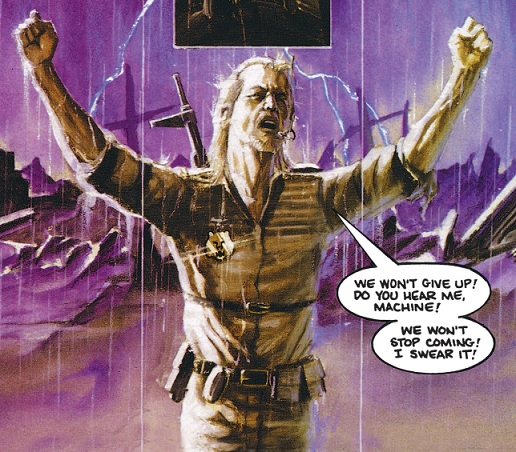
Team Leader: John Connor from ‘The Terminator: The Burning Earth’

Image: Dark Horse Comics

There’s no shortage of leaders in fiction who could lead a small group of people trying to survive a zombie apocalypse, but John Connor’s resume is particularly impressive: As the man destined by fate to save humanity from Skynet, a middle-aged John has kept humanity alive as the war against the machines reaches its 40th and final year, a testament to his leadership skills. But John’s no armchair general; even at his advanced age, he’s still fit enough to climb cliffs, run, and engage in combat with Skynet’s forces while getting only an hour of sleep at a time, and has the ability to think quickly and efficiently in life and death situations. And when worst comes to worst, John is willing to make impossible choices, such as euthanizing injured people who can’t be saved, a decision that would be valuable (if unwanted) in a zombie apocalypse.

Strengths:

*Decades of combat experience leading humanity in a war against a highly-intelligent supercomputer with legions of zombie-like enemies.

*High level of compassion towards people and reverence for human life, which would help survivors trust him.

*Great physical stamina and combat abilities for a man his age, reducing his chance of becoming a burden to others.

*Destined by fate to save the human race, whether it be from Skynet or a zombie apocalypse.

Brawler: Indiana Jones

Image: Disney

The world’s most famous archaeologist would be a great addition to any zombie team: his decades of experience in exploring tombs, lost cities, and swinging around on his whip would be invaluable when it comes to getting through abandoned cities, towns, and dangerous locations left to crumble in the wake of a zombie onslaught. And while there are others who are stronger, bigger, and faster, Indy takes up the mantle of the group’s brawler because of his ability to quickly improvise when taking on opponents – sometimes several at a time – who are better at fighting than he is. It also helps that Indy has almost supernatural amounts of luck; no matter how bad or hard things get, the universe always seems to step in to give Indy a way out, whether when trying to save the Ark from a convoy of Nazis, or when taking on another convoy of Nazis armed with a tank; such a gift would be a huge advantage in taking on the undead and hostile humans in a post-apocalyptic world.

Strengths:

*Extensive experience in one-on-one fights, which would come in handy when fighting hostile survivors.

*Able to improvise on the fly and frequently defeat opponents with more skill, strength, and numbers than him.

*Possesses incredible, almost supernatural luck when it comes to getting out of hostile situations.

*Years of experience exploring dangerous locations would translate well to exploring abandoned cities.

Weapons Expert: Gabe Logan

Image: Sony Computer Entertainment

The protagonist of the Syphon Filter video game series joins my team as its weapons expert: as a former soldier in the US’s special forces, and a secret agent who single-handily took down a huge, secretive black-ops agency who tried to unleash a manufactured virus upon the world, Gabe is a master of modern combat, equally capable of using stealth and raw firepower to achieve his objectives, and can use virtually any modern weapon, whether they be pistols, submachine guns, rifles, shotguns, grenade launchers, explosives, and even knives with incredible accuracy. When Gabe’s skill with firearms is coupled with his incredible physical strength (he can hang one-armed and fire a one-handed weapon with perfect accuracy), and tactical abilities (he’s taken on and defeated soldiers in bullet-proof armor, attack helicopters, and even tanks) he becomes the group’s all-around weapons expert who can engage zombies in a full-on assault, quietly take them out one-by-one, or snipe them from afar. Finally, Gabe is very trusting towards other people and is a natural leader, having led the Agency after bringing it down, making him an invaluable member of any team going through a zombie-infested wasteland.

Strengths:

*Over thirty years of combat experience in a multitude of environments around the world that required both open combat and stealth, allowing him to tackle any situation involving zombies or hostile humans.

*Excellent marksman with almost every known modern weapon.

*Good inter-personnel and leadership skills.

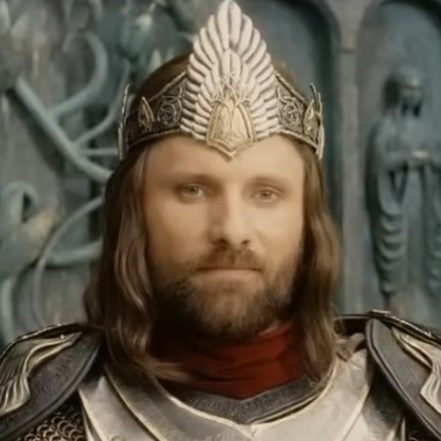
Brains: Aragorn II

Image: Warner Bros. Pictures

When most people think of the brains of a group, they imagine a computer genius who can hack any computer system and help restart civilization after the zombies are wiped out. But I think a certain kind of intelligence is needed in a zombie apocalypse: with technology all-but guaranteed to fail and be decades away from being restarted, a better choice would be someone who is skilled in the art of surviving off the land, and Aragorn, son of Arathorn, is the right man for the job.

While he’s best known for being a great swordsman and the king of Gondor after Sauron was defeated (spoiler alert for a 69 year old book), one of Aragorn’s often overlooked abilities is his time spent wandering Middle-Earth as a ranger for 57 years, giving him plenty of experience in hunting, finding food, and using natural resources to cure and treat wounds and diseases in lands full of orcs, bandits and monsters, all of which would serve him well in the desolate lands of a zombie hellscape. Those skills are further augmented from the knowledge and wisdom Aragorn learned from growing up with elves in Rivendell, and from the wizard Gandalf.

If you’re looking for someone who has the smarts to help you survive in the wild when you’re not being attacked by brain-eating zombies, and to help you take out zombies when they are attacking, Aragorn’s your man.

Strengths:

*Almost 60 years of experience surviving and thriving in the wildness against monsters and hostile humans, making survival in a post-apocalyptic wasteland much easier.

*Excellent leadership skills from serving as king of Gondor for 122 years, giving him unmatched experience when dealing with friendly and hostile groups, as well as diplomacy. (John Connor remains team leader due to leading armies in fighting Skynet non-stop for decades, where Aragorn primarily ruled in a time of peace.)

*Excellent melee and swordsmanship skills, an invaluable asset in a world where bullets would become very rare.

Medic: Dr. Beverly Crusher

Image: Paramount Pictures

It was surprisingly hard coming up with a pop culture healer who didn’t have magical abilities, but I ended up going with Beverly Crusher, chief medical officer on the Starship Enterprise D and E. Her biggest advantage in taking on the role of the group’s healer is that she has the best medical equipment the 24th century has to offer. Even if she can only carry what’s in an expanded medkit, that would include a dermal regenerator for treating minor skin wounds, an osteogenic stimulator for minor bone fractures, and a medical tricorder, an invaluable device that could help in the treatment of (presumably) almost any known ailment, and possibly a regular tricorder, which can possibly act as a miniature library of 24th century data and information, which would be very handy when it comes to rebuilding the world after the zombie apocalypse is over. But that doesn’t stop there: as shown in ‘The Next Generation’ episode, ‘The Survivors’, portable replicators exist, so if Beverly knows she’s going into a zombie apocalypse wasteland, she’d make sure to carry one to replicate an almost limitless supply of food, drink, medical supplies, and clothing. And because Starfleet personnel don’t go into the field unarmed, Beverly would also carry a personal phaser, and possibly a phaser rifle, both of which would be an invaluable tool and weapon against the living dead.

However, even 24th century technology requires energy to operate, and would eventually die and become useless. But even then, Beverly would still have her medical training to fall back on, and like almost everyone else on this list, Beverly has an aptitude for leadership, benefiting her roles as head of the Enterprise’s medical teams, and Starfleet Medical in general. Throw in her ability to be cool under pressure and ability to fight when needed, and Beverly becomes an invaluable member of any zombie-fighting team.

Strengths:

*Carries multiple weapons and tools from the 24th century that would make survival much, much easier.

*Extensive medical training, allowing her to treat a wide array of ailments and injuries.

*Ability to remain cool under pressure.

*Apt at both leadership and combat when the need arises.

Speed Fighter: Doom Guy

Image: id Software

Finding a human who can fight hard and fight fast without supernatural abilities or technology that would inevitably run out of power is tricky… but there’s one guy who is not only fast, but arguably the best fighter out of anyone in this group: Doomguy, the protagonist of the long-running Doom series. For the purposes of this list, we’re sticking with Doomguy as he appeared in the original 1990 series, where he is an ordinary human without the supernatural abilities from later games. But why does a heavily-muscled space marine become a speedster? Easy: Doomguy is so fast, he can outrun rockets! To be more specific, he can reach speeds of up to 90 miles an hour while weighing over 1,200 pounds, meaning he has the strongest legs in human history. Couple this with his unbreakable will and experience in fighting zombies (and demons), and Doomguy becomes the group’s sledgehammer against the zombie hordes; the only thing stopping Doomguy from taking care of everything himself while the others relax and sip pina coladas from Beverly’s replicator is that he’s just as vulnerable to damage as any other human, meaning that if he’s shot enough or ganged up on, he’d still be killed. But even as a glass cannon, Doomguy’s speed, brawn, and combat skills make him an unbeatable ally in the fight against the undead.

Strengths:

*Endless stamina and the fastest running speed of any human who has ever lived.

*Unbreakable will from fighting thousands, if not millions of zombies and demons both in our world, and in Hell itself.

*Experience in using a variety of weapons ranging from his fists, rocket launchers, and plasma weapons.

Mascot: Ellen Ripley

Image: Disney

Mascots are supposed to be cute, adorable, an animal, or otherwise sympathetic person. But for my group’s mascot, I went with Ellen Ripley. She’s not cute, she’s not adorable, and she’s not a happy-go-lucky innocent, but Ellen represents some of the best humanity has to offer: Gifted with the ability to think and act through fear no matter how frightened she is, Ellen can combine that with her pragmatic, no-nonsense leadership to become a force to be reckoned with, so much so that a bunch of battle-hardened marines turned to her – an untrained civilian – to help lead them when aliens wiped out half their squad.

Yet, beneath her fierce, focused exterior is a woman who cares about others and is capable of acts of extreme bravery in the face of overwhelming danger. While Ellen can fight, her biggest strength is being the rock that people can cling to when things are at their worst. More than anyone else in the group, Ellen demonstrates humanity at its bravest, and that earns her the mantle as the face, heart, and soul of the team.

Strengths:

*Extraordinary ability to think and act through fear.

*Pragmatic, no-nonsense leadership abilities.

*Extreme bravery in the face of danger.

Guy Who Dies First: Helena Shaw

Image: Disney

As the co-protagonist of Indiana Jones and the Dial of Destiny, Helena may be quick on her feet and cunning, but she would be the first to die: As a con artist who ultimately only cares about herself, Helena wouldn’t hesitate to sacrifice everyone else to save her own life the moment things got dangerous, or bolt after grabbing whatever supplies she could carry. Either way, Helena would quickly find herself alone and surrounded by dozens or hundreds of the undead. While she’d be able to evade them for a time, she would inevitably reach a point where she has no one to help her (or she’s being actively shot at by people she’s double-crossed), and be quickly turned into Purina zombie chow. While ruthlessness and cunning would be useful assets in a zombie apocalypse, having friends and allies to help you is an even greater advantage, and selfish con artists would quickly find themselves in short supply of both.

Strengths:

*Being able to emotionally manipulate and deceive people.

*Quick on her feet.

Conclusion:

When it comes to survival in a zombie apocalypse, it’s tempting to assemble a team of people who are excellent warriors, tough, and all-around badasses who can survive just fine on their own. But if a zombie outbreak rally happened, there’s one thing that would matter more than anything else: being able to work together with others. While pop-culture loves lone wolves like Rambo, a group would realistically have a much higher chance of survival when it comes to fighting millions, if not billions of zombies: being able to cooperate with others, sharing resources, and having someone to watch your back leads to a higher chance of survival compared to a lone individual who gets injured with no one around to help them. That’s why I think my team, which relies heavily on those who are skilled in both leadership and combat, would have an excellent chance of survival. But what about you? Who would you have on your team? Let us know in the comments below!

Perfect Moments: The Stories That Really Mattered…

Once in a while, you come across a moment in a story that is so perfect that it stays in with you for years, or even a lifetime. These are moments that, in my opinion, are flawless; perfect gems of storytelling that cannot be improved in any way, and are a joy to treasure and revisit again and again.

***

The Movie:

‘The Lord of the Rings: The Two Towers’

The Scene:

Why it’s perfect:

There are so many wonderful moments in The Lord of the Rings film trilogy that picking just one above all others is nearly impossible. Would you take an action scenes, or a moment of drama? I don’t know what I’d pick… but one of the top contenders comes at the end of the second film, where Sam gives Frodo one of the greatest inspirational talks in the history of film.

This scene is so beautiful, and so timeless, because it sums up exactly what The Lord of the Rings – and what all great stories – is about: good people who, when faced with overwhelming, all-powerful evil, choose to keep going. They could give up at any time. They could lie down and die. They could go home and give in to despair… but they don’t. Even if they’re scared out of their minds, they choose to take another step, to go one more mile, to get through just one more day, because they believe that there are things in the world worth saving, no matter how bad things get.

This isn’t just syrupy sentiment on Sam’s part: In Tolkien’s universe, evil is very real, and it is powerful, and it can and does triumph. Heroes die, kingdoms fall, and innocent people suffer… But in the long run, evil cannot win. It can conquer entire races, it can enslave so many people, and it can destroy so much, but it can never destroy the desire of all good people to live in peace with one another, no matter where they come from or who they are. Some are great warriors and others are just ordinary, everyday people. But all of them resist, in ways both big and small, flashy and quiet, and when evil dies, whether it’s a year later, a decade, or even a century, those people are still there, still going, and proving that evil will always fail in its quest to achieve total victory over all that is good.

Perfect Moments: The Last Stand of Men

Once in a while, you come across a moment in a story that is so perfect that it stays in with you for years, or even a lifetime. These are moments that, in my opinion, are flawless; perfect gems of storytelling that cannot be improved in any way, and are a joy to treasure and revisit again and again.

***

The Movie:

‘The Lord of the Rings: The Return of the King’

The Scenes:

Why they’re perfect:

When it comes to doing the climax of a story of a villain who wants to take over the world – and has the power to do it – writers need to step up and give their best, and the film adaptation of The Lord of the Rings: The Return of the King does it perfectly.

In these two scenes, the surviving members of the Fellowship and a small group of soldiers from Rohan and Gondor have come to the Black Gate to distract Sauron and keep his eye away from his home turf, giving Frodo and Sam the best chance of making it to Mt. Doom without being seen so they can destroy the One Ring. The problem is, Aragorn and his forces are outnumbered and have no chance of surviving, leading to Aragorn rallying his men with one of the best speeches in all of fantasy, and subsequently charging Sauron’s forces.

While fans love the speech and Aragorn’s subsequent charge, what’s not talked about are Aragorn’s men: every soldier who marched with him to the Black Gate did so knowing that they were going to die. They marched knowing that they would never see their loved ones again, and that they were going to war against a seemingly invincible enemy, one who has fought to enslave their world for thousands of years, who lied, deceived, and abused his own fanatical followers, who has refused to give up, caring only about himself and his glory. If Sauron wins, all of Middle-Earth will fall, and he will have dominion over all of Middle-Earth until the end of the world.

But these men refused to stay behind. They knew that this was their last, best, and final chance to save their world and their families from unspeakable evil, and chose to fight in the hopes that, against all odds, good will win. And so when Aragorn, Gandalf, Legolas, Gimli, Merry, Pippin, and Eomer charge into battle, the ordinary, everyday people charge with them into the last and greatest battle of their lives. They don’t know if Sauron will fall… But they’re going to do their best to ensure that he does.

11 Great Things About David Gordon Green’s ‘Halloween’ trilogy

Note: This post spoils the stories of the 2018 film Halloween and its two sequels: Halloween Kills and Halloween Ends. It also contains videos depicting fictional gore and violence that is not safe for work. It also contains a clip of a fictional character killing themselves.

It’s spooky season once more, and you know what that means: horror movies, slasher villains, and buckets of blood and gore. We’ve gotten a lot of horror franchises over the years, but only the classics endure, and the granddaddy of them is the Halloween franchise. While quite tame by today’s standards, the original was groundbreaking when it was release back in 1978, introducing the seemingly unkillable Michael Myers to silver screens everywhere, and beginning one of horror’s longest-running franchises.

Two years ago, David Gordon Green’s sequel trilogy – which acted as a direct followup to the original 1978 film – came to an end with Halloween Ends. Although the trilogy has gotten a mixed reception from fans, I think that, despite some narrative inconsistances, there’s a lot to like about the films. Here are eleven of my favorites:

11. Michael Meyers, Child Killer

While horror films can get away with a lot that other genres can’t, killing children is one of the things normally frowned upon. But Halloween, Kills, and Ends has no problem with Michael killing children.

While Michael was never even remotely a good guy, having him kill children in painful ways (I don’t even want to know what happened to the poor kid who wore that blood-drenched skull mask) shows viewers that he’s one killer who doesn’t mess around and is willing to kill anyone he comes across. Yet, even then he spares an infant in the first film, and we never find out why, further cementing that he’s a force of evil that doesn’t bother to explain itself to his victims.

10. Laurie and Michael’s Reunion

Throughout the first film of the sequel trilogy, we get to see how Laurie prepared herself for an inevitable rematch with Michael, and what follows isn’t so much a fight, but a one-man siege:

What I like about this even though Laurie has been preparing for this fight for years, she still can’t kill Michael with guns or brute force, and has to resort to trickery and help from her daughter and granddaughter, and even then it’s still not enough to kill Michael (who, at this point, is 61 years old).

One little thing that makes this scene even better is the moment when Laurie calls out for Ray: you can almost hear Michael thinking, “Wait a minute… I know that voice.” And then, turning his head, he sees Laurie through the door, recognizes the girl who got away so long ago, and decides to finish what he started back in ‘78.

9. Old Man Michael

One of my favorite things about the Halloween sequel trilogy is that the films acknowledge Michael’s age. Instead of trying to make him an eternally youthful man, Michael has aged to the point where he could collect social security checks and get senior discounts at the grocery store. By acknowledging that the bogeyman is getting old, it makes Michael’s kills all the more unique because we rarely get to see a senior-citizen slasher villain in stories, much less one who has three movies to play around in.

8. The Innocent Inmate’s Suicide

Though the trilogy is focused on horror and kills, it’s most emotional moment is when one of Michael’s fellow inmates from the asylum realizes that an enraged mob – who believes that he’s Michael – is going to tear him limb-from-limb. They can’t be stopped, they can’t be reasoned with, and the man – who is harmless and terrified – decides that the only thing he can do is jump to his death rather than face an even worse death at their hands.

Afterwords, the shock from all those present drives home how they’ve realized that their fear, paranoia, and desire to kill Michael have turned them into monsters on par with Michael himself.

7. Michael vs the Mob

The climax of ‘Kills’ sees Michael’s bloodiest, goriest, and highest body count in any of his films when he’s attacked by dozens of Haddonfield’s citizens.

He’s shot, clubbed, hit, beaten to the ground and seemingly defeated; it’d be a perfect ending to the series to have ordinary people unite and take Michael down for good… and then he lashes out, gets right back up, and kills everyone in the crowd.

Though the trilogy flip-flops on if Michael is supernatural or just a man, this scene proves that while Michael may look human, he is anything but.

6. Michael’s Evil Infecting Haddonfield

Though Michael is and always will be the face of the Halloween franchise, an idea that’s been brought up again and again is that evil always changes shape, and that killing Michael will mean that someone will eventually take his place. However, there’s another aspect of this that is subtly implied throughout the trilogy: that the evil within Michael corrupts everyone around it. When Michael returns to Haddonfield, the people there start to become paranoid and act violently to try and stop him, only succeeding in killing innocents and themselves, until Corey is seduced and corrupted in Ends, almost becoming Michael’s successor.

Michael may be a remorseless killer, but he is also a tumor that infects, corrupts, and destroys everyone around him. He’s a prime example of how evil can create a cycle of fear, death, and revenge that is almost impossible to stop.

5. Michael’s Supernatural Abilities

There’s been many theories on why Michael is so durable and hard to kill, and while Ends says that he’s just a man, I don’t think that’s true: Michael takes damage throughout the trilogy that would kill a man half his age and demonstrates endurance, durability, and strength beyond anything any normal person could endure: name any other man in his 60’s who can beat someone to death with their fists, he can crush a man’s head into pulp by smashing it with his boot, take a firehose of water to the chest without flinching, and hit someone with a baseball bat so hard that the bat itself is broken into two.

I’m of the theory that while Michael himself is human, the evil he contains makes him so much stronger and durable than any man could ever be, and while that power fades with age, it’s still always there, always driving him on, always giving him what he needs to continue his killing spree.

4. Michael vs the Firefighters

Michael gets into a lot of fights throughout the trilogy, but in terms of sheer ‘cool’ factor, this is my favorite:

Not only does this fight have a fantastic setting (taking place in front of a burning house), it demonstrates just how inhumanly strong Michael as as he takes down nine firemen who are armed with axes, firehoses, and even saws. But this fight is also a moment of awesome for the firefighters themselves: the moment they see Michael step outside, they instantly know who he is, but they don’t panic, run, or call for backup: instead, they stand their ground and fight. And while they all die, at least they go down fighting.

Fun fact: The house burning down during the scene? That was done for real, which meant that the filmmakers had about an hour to finish filming before the house collapsed. Thankfully, they did!

3. The Final Confrontation Between Laurie and Michael

The first sequel had a fight to the death between Laurie and Michael, but in my opinion, the final battle between the two in Ends is so much more gripping: Michael – now worn down from years of untreated injuries – comes to Laurie’s house and realizes she’s nearby. Laurie – who has given up on being a highly-trained survivalist – has no time to prepare as Michael comes for her, ending in a final, no-holds-barred beatdown between the two.

While the fight isn’t flashy or filled with fancy choreography, I love its atmosphere: this fight really feels like a final confrontation over 40 years in the making, both in-universe and out. Predator and Prey – both of whom are past their physical prime – fight to the death with nothing to lose and throw everything they have at each other, all backed with a near-apocalyptic soundtrack that makes things so much more intense. This is the last time Laurie and Michael will ever fight, and they give it their all. Many a fan has decried how Michael should have been able to kill her easily, but having Michael be old, worn out, and worn down from all the injuries he’s accumulated makes things more evenly matched between the two, and makes Laurie’s final victory all the more satisfying.

2. Michael is Killed For Good

There’s a saying in the world of comics: no one ever stays dead (except Uncle Ben), and the same can be said for slasher franchises: no matter how many times a villain is supposedly killed off for real, box office profits ensure he or she will always come back, no matter how convoluted the explanation may be. But while Michael will return for the inevitable reboot of the Halloween franchise, this timeline ends him in the most concrete way possible: by throwing his body into an industrial shredder and tearing him into bloody pulp.

There’s no way, NONE, that Michael can come back from this, and there’s one aspect of this scene that makes it so satisfying beyond seeing an evil man finally getting his just deserts: Throughout the series, Michael always comes back from every injury he takes. Whether it’s immediately, in a minute, a few hours, or even years, he always comes back, and I believe that Michael did not actually die in the fight with Laurie. Instead, he was so weakened from the loss of blood and his accumulated injuries that he couldn’t move, and while the evil possessing him was working to try and heal his body, the process couldn’t be completed when he was thrown into the shredder. Thus, Michael Myers truly died when the shredder tore him apart, and he felt all the pain that came with it: a far more just and deserved ending after all the lives Michael took, the fear he spread, and the suffering he inflicted on so many.

1. A Hopeful Ending

One reason I generally avoid horror films and franchises is the constant trope of downer endings where evil wins and nothing good comes from all the sacrifices, struggles, and suffering of the protagonists. Thankfully, Ends avoids this with a bittersweet, but hopeful ending:

After so many decades, Laurie finally kills Michael and frees both herself and Haddonfield from his reign of terror. While she cannot get back all the years and loved ones she’s lost, Laurie can now heal and create a new life for herself, complete with a new relationship with officer Hawkins. And best of all, in the final shots of the film, there’s no sound of Michael breathing. His mask remains, but the man – and the evil he carried – is truly gone, and it’s a great way to end the original Halloween timeline.