16 Great Things about ‘The Lord of the Rings: The Rings of Power’ Season 2

In my last article about The Rings of Power, I talked about my 15 favorite things about Season 1. Here – in no particular order – are my 16 favorite things about Rings’ second season. Be warned that this list contains spoilers for not only Season 2, but also future events in the series, and the Lord of the Rings as well.

*All pictures in this article are the property of Amazon.*

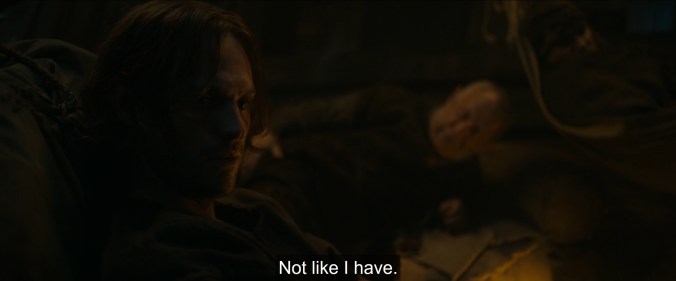
1. Sauron’s Death

Season 2 opens with a flashback to Sauron trying to take command of Middle-Earth’s orcs following Morgoth’s fall. Unsurprisingly, the orcs (and Adar) don’t take kindly to being told that they’ll be sacrificed to achieve Sauron’s goals, so they express their displeasure by stabbing Sauron a few hundred times until he explodes, turning the surrounding terrain into a winter wonderland.

Many fans of Tolkien’s works have decried this scene for contradicting Sauron’s character (he tries to reason with the orcs, where he dominates them in the books with fear and terror), but I think this scene is a clever look at Sauron’s journey as a character. Originally, he was a being who loved order and perfection, but during his time as Morgoth’s servant Sauron was corrupted into being willing to enslave, torture, and kill others to get what he wanted. With Morgoth gone, some of Sauron’s original goodness is poking through, and this scene shows him at the halfway point between the good spirit he was originally, and the hate-filled tyrant of the Lord of the Rings trilogy.

Despite contradicting Season One of Rings’ (Adar said that he killed Sauron after the latter experimented on so many orcs; here, he and the orcs kill Sauron before those experiments begin), this prologue is a great way to open the season.

2. Sauron’s Rebirth

Something never elaborated on in Tolkien’s works is how Sauron creates a new body for himself each time he was killed, saying only that it took Sauron longer and longer with each subsequent death. Rings lets us see how the process might have gone: after being killed by the orcs, Sauron slowly rebuilds himself from a few drops of blood, taking the lives of insects, rats, and eventually people before he can finally create a new body for himself and resume his quest to conquer Middle-Earth.

What I like about this scene is that, compared to everything else we’ve seen of Tolkien’s world onscreen, this is something out of a story by H.P. Lovecraft: we’re watching the birth of an abomination from the dark, moldy depths of the earth, something that doesn’t belong to the natural order of things. And while this putrid mass of cancerous growth may look weak and frail, it’s still one of the most powerful and evil things in existence. And in a nice nod to Tolkien’s mythology, the whole sequence ties into his recurring theme that evil cannot create new things, only corrupt what has already been made: where Sauron could once manifest a beautiful form before his fall, now he is forced to take life from others to create a body for himself, one that may seem normal, but is only a mask to hide the evil within.

3. Choose Good

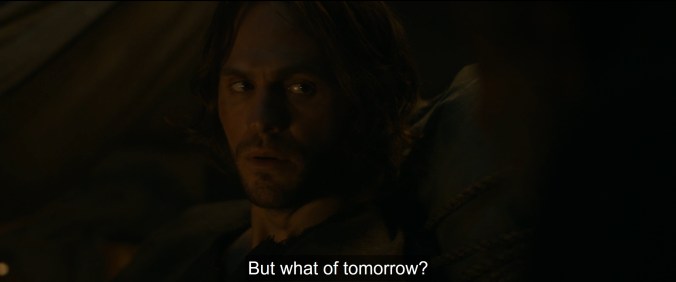
Sauron may have created a new body for himself, but he is now at the lowest point of his entire existence: he’s lost his position as Morgoth’s right hand. He has no armies to command, he’s been exiled from his home in Valinor, and his dreams of creating a perfect, orderly world are in tatters. But being humbled presents him with an opportunity to realize what he’s done and turn his life around, something that he seems to seriously consider when he comes across a group of refugees, one of whom unknowingly offers him the chance to leave his destructive path and choose a new, better one.

Later, when talking on a ship, the same man gives Sauron a brief, but perfect summary of what it means to turn from evil and become good:

I like to imagine that this meeting isn’t due to chance, but actually an act of fate: in The Fellowship of the Ring, Gandalf told Frodo that Bilbo was meant to find the Ring, and that Frodo was also meant to have it. During the events of The Hobbit, Gandalf and Thorin seem to have been guided to meet each other in Bree, which ultimately led to the Quest of Erebor and the death of Smaug, saving Middle-Earth from his wrath.

With all that said, I believe that Eru subtly guided the old man into meeting Sauron and inspired him to say the right things in hopes of helping the fallen Maiar find his way back to the light… but, alas, Sauron chooses instead to be a big meany butt and be evil (and confirming that he was lying to Galadriel about trying to redeem himself in Season 1).

Had Sauron listened to the man and chosen differently, the fate of Middle-Earth would have been very different, indeed.

4. Rhûn

If there’s one thing The Lord of the Rings, The Hobbit, and The Silmarillion has in common, it’s that we don’t get to see a world outside of the standard European fantasy environment (tall mountains, forests, castles, and the like). That’s why it’s such a delight in Season 2 that we finally get to see the deserts of Rhûn – the homeland of the Easterlings – on screen for the very first time.
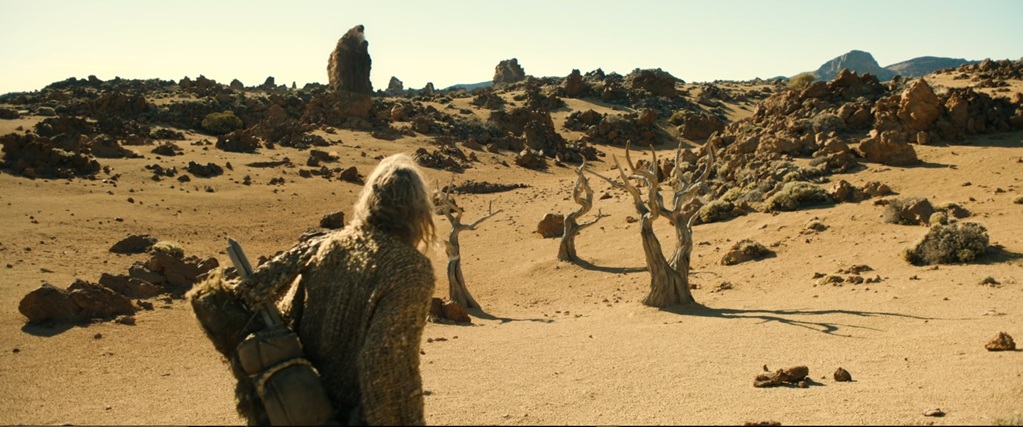
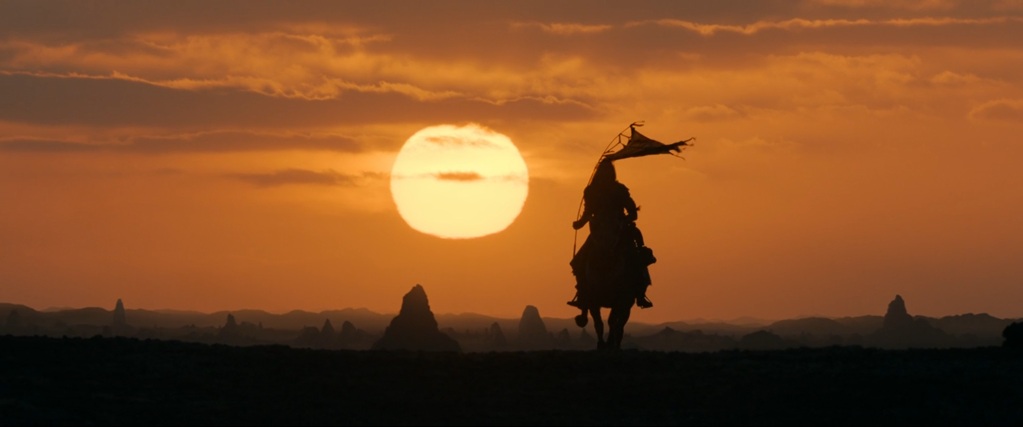
While we don’t get much outside of rocks, dead trees, barren canyons, and lots of sand, it’s great to finally see something other than European climates, and remember that Middle-Earth is so much bigger and varied than what we’ve seen in Tolkien’s books.

5. Celebrimbor

Though he had an important role to play in Season 1 of Rings, where he forged the three rings of the Elves, Season 2 is where Celebrimbor gets to come into his own and shine as one of the most famous elves of the Second Age. As the descendant of the famously fiery and temperamental Fëanor, Celebrimbor is an elf who doesn’t desire fame, power, or ruling others, but only in creating beautiful things and trying to undo the mistakes of his ancestor… a desire that makes him him all-too vulnerable to Sauron’s manipulations.

While he has all the qualities of being a noble hero like Gandalf, Aragorn, and Galadriel, Celembrimbor is unfortunately like Isildur and Bromoir: beings who fight and strive to do what is right at great personal cost, but who’s tales are told as tragedies by those who come after them. Celebrimbor’s a noble and kind-hearted elf, but his determination to make his mark on the world has catastrophic consequences for the world at large.

Yet, his noble intentions, determination to do what is right after realizing he’s been lied to and deceived by Sauron, and only wanting to do good makes him endearing and likeable. Like Diza, he’s an elf you’d be happy to share ale with at a tavern after a long day’s work.

6. Celebrimbor’s Anvil
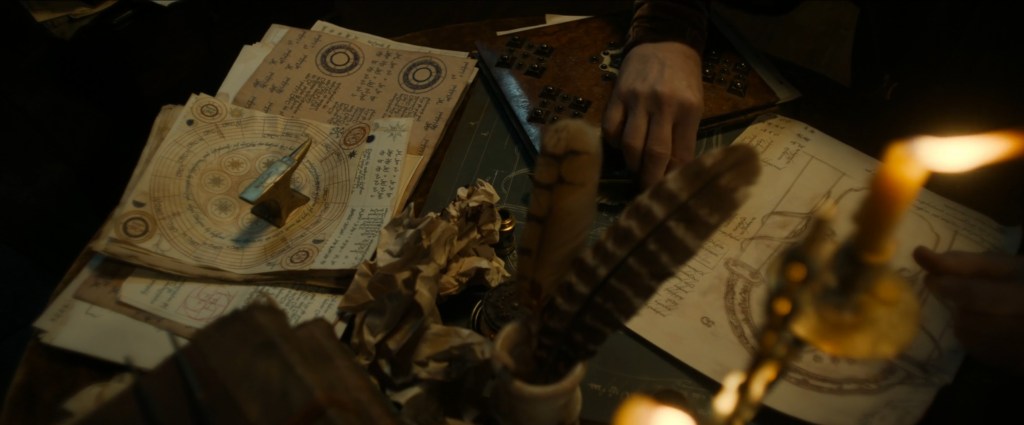
It’s only onscreen for a few seconds, but when Celebrimbor is doing some paperwork in his office, sharp-eyed viewers will see that he uses a tiny anvil as a paperweight, implying that the mighty Celebrimbor, greatest Elven smith of the Second Age, has a good sense of humor. Plus, the image of noble and graceful elves going through the effort to craft, shape, and forge an itty-bitty, widdle anvil is hilarious. Why haven’t we gotten this thing as an officially licensed collectible yet?

7. The Hammer and the Crown

Middle-Earth has its fair share of historical objects that Indiana Jones would be happy to track down, and ‘Rings’ has two big ones in Season 2: Fëanor’s hammer, and Morgoth’s crown.

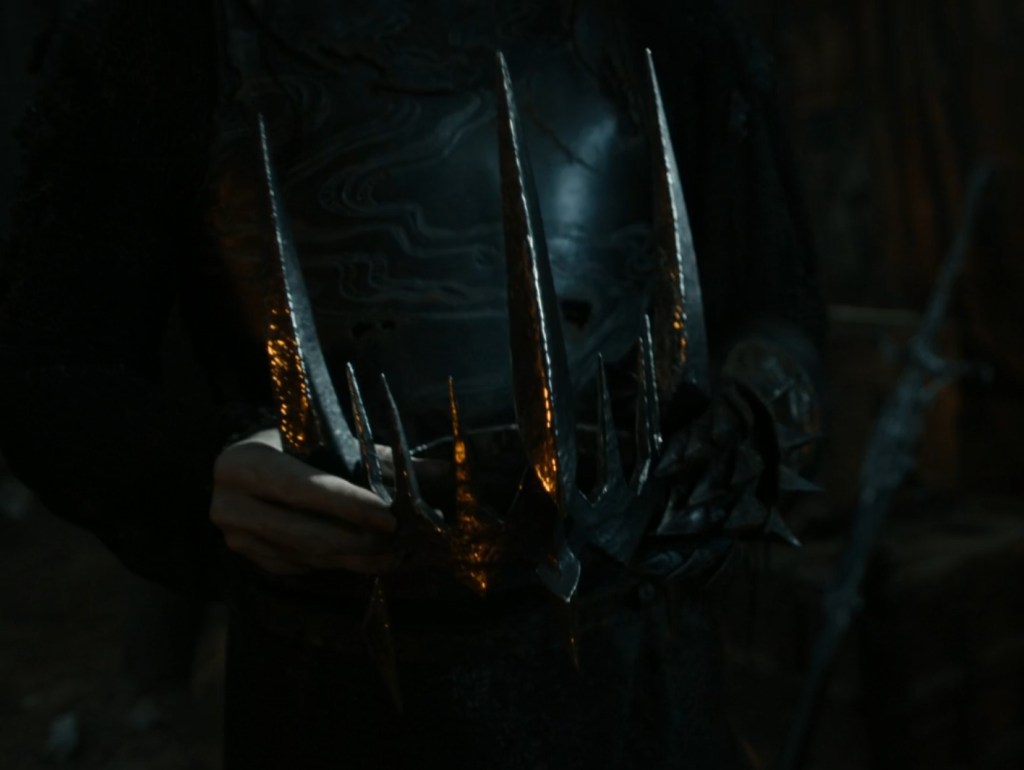
While fans who have only watched the films or seen the show can understand that these are important artifacts, readers of Tolkien’s works will get the most enjoyment out of seeing the hammer forged the most beautiful objects in all of creation (the Silmarils), and that crown that was worn by the most evil being who will ever exist (and that held the aforementioned jewels in its spiky embrace). Both go a long way to help make the world of Middle-Earth feel ancient and lived in, and that they played huge parts in changing the course of history long before the show began.

8. The Nameless Thing

One of the most fascinating parts of Tolkien’s world are the nameless things: eldritch horrors that live in the deepest, darkest fissures deep beneath the mountains of the world that are even older than Sauron. They are only mentioned briefly in Tolkien’s works, but are apparently so frightening that even Gandalf refuses to describe these abominations after encountering them when pursuing the balrog after their fall into the pit of Khazad-dûm. Season 2 gives us a glimpse of one in the form of a giant, grotesque worm-thing that tries to eat Isildur and Arondir before being sliced up from the inside and being (presumably) turned into nameless thing-burgers for dinner.

Is this a scene that doesn’t really add anything to the overall plot? Yes. Could it have been cut out without any effect on the story? Yes. Is it cool to see one of the most mysterious, dark, and vicious things that Tolkien ever wrote about? Heck yes.

9. Mirdania Sees Sauron’s True Form

One of Tolkien’s smartest decisions in writing The Lord of the Rings was not describing what Sauron looks like: he’s an unseen evil, a force so powerful and so dreadful that you don’t even have to be anywhere near him to experience the power of his malice. And despite having more screentime in Rings of Power than both the Hobbit and Lord of the Rings films combined, Rings has never shown Sauron’s true form, only his armor from the First Age and the disguises he wears to interact with others.

The closest we get to getting a glimpse of Sauron’s true form is when one of Celebrimbor’s assistants, Mirdania, accidentally enters the unseen world and sees Sauron as he really is (without realizing who she’s looking at), the experience shaking her to her core… but we don’t see that. All we get is Mirdania describing a tall being with pitiless eyes and skin made of flames. By describing the moment, but not showing it, Rings follows Tolkien’s example by leaving it up to the viewer’s imagination to visualize what Sauron’s true, malevolent form must look like.

One last little twist about the scene: after Mirdania describes what she saw, who’s the first one to comfort her? Sauron himself.

10. The Raid on the Temple

One of season 2’s strongest storylines is showing Numenor’s gradual downfall. While season 1 hinted that the greatest kingdom of Men in Middle-Earth was starting to crumble from within, season 2 brings this rot out into the open as a power-hungry Ar-Pharazôn begins his campaign to take control of the island empire and persecute those loyal to the Valar, the elves, and their ways.

The one scene that perfectly embodies Numenor’s descent into evil is the raid on the Faithful’s temple. Starting off as a peaceful funeral ceremony bidding farewell to all who died on the mainland in the last season, it devolves into Pharazôn’s sniveling weasel of a son – Kemen – gleefully interrupting the ceremony and announcing the destruction of the temple, destroying sacred artifacts for the fun of it, and then emotionally manipulating Isildur’s friend Valandil into starting a fight to justify using lethal force against the faithful, ending with Kemen stabbing Valandil in the back.

This scene, more than any other in the series, showcases the cruelty and moral rot of Numenor. What’s more chilling is that there are no orcs here, no supernatural monsters or ancient evils emotionally manipulating everyone present. It’s just humans being evil to one another, and it’s arguably scarier than any demon Tolkien could conjure up. And the worst part is that this is only a taste of the evil that Numenor is going to unleash upon Middle-Earth at large in the years to come.

(As an aside, I think there’s a very good chance that Kemen will end up being one of the Ringwraiths: Tolkien’s writings strongly imply that at least three Ringwraiths were of Numenorian descent, and it’s easy to see Kemen being nasty and power-hungry enough to accept a ring of power by Sauron. And if he wants to take the throne of Numenor, only to be denied, then Sauron might offer to make him a great lord and promise him a kingdom of his own to rule… Angmar, perhaps?)

11. Sauron’s Deceptions

One of Sauron’s greatest strengths is his ability to deceive and manipulate almost anyone he encounters, including the smartest, wisest, and most powerful elves in Middle-Earth. Yet, the books are vague about how he does this beyond his ability to take fair forms and cast illusions. While most of his manipulations in Season 2 follows the pattern of narcissists abusing others (lovebombing, gaslighting, ignoring boundaries, victim blaming, etc.), we get to see Sauron’s supernatural abilities at work when he conjures a vision of Eregion to subtly trap Celebrimbor. Like the holodeck from Star Trek, Celebrimbor can walk around in this vision, touch things, interact with other elves, and continue his work… completely unaware that the real Eregion is being bombed into rubble by orcs.

This illusion is a fascinating demonstration of Sauron’s power and his ability to deceive others, and makes you wonder how he’s used this ability on others throughout his time in Middle-Earth: It’s one thing to resist lies and flattery, but it’s much harder to resist when the very world around you is a lie and you don’t know it.

12. Who’s Will Is Stronger?

So often in fantasy stories, dark lords and evil-doers have all the power and all the advantages over their good counterparts, including the willingness to do whatever needs to be done to achieve their goals. But Celebrimbor gets a moment to prove that the good guys can be equally as strong-willed: shackled to his desk and unable to stop Sauron from taking the rings that he will use to enslave men and create the ringwraiths, Celebrimbor realizes the only way he can get free is to cut off his own thumb so he can slip through his shackle. But doing so means that he will never again be able to use a hammer, an anvil, and a forge to create things. Celebrimbor’s Eru-given gifts of forging and creating will be forfeit, and his dreams of making Middle-Earth beautiful will be gone.

Knowing all that, Celebrimbor still cuts off his thumb.

While gruesome, this is one of Celebrimbor’s best character moments: when everything is on the line, he is willing to give up his life’s dream for the chance to stop Sauron and save others. While it is, unfortunately, all for nothing in the long run, never let it be said that Celebrimbor did something most of us wouldn’t have the courage to do.

13. Celebrimbor’s Death

Celbrimbor’s death is one of the more gruesome in Middle-Earth media: tortured by being shot repeatedly with arrows from Sauron himself, threatened with supernatural means to ensure he doesn’t die, and then being impaled with a spear through the gut before finally dying, it’s a gruesome spectacle. Yet, one thing that’s puzzled me ever since watching it is why Sauron cries after Celebrimbor’s death. He wouldn’t see Celebrimbor as a friend, nor would a being such as himself be frightened at a prophecy that his rings will one day destroy him. So why the tears?

After mulling things over, I’ve come to think that the reason Sauron cries is because he’s realized he’s crossed the point of no return. All throughout Season 1 and 2, Sauron says that his greatest goal is to heal Middle-Earth of the hurts he helped inflict upon it. Yet, when staring at Celebrimbor’s corpse, Celebrimbor’s words cut through all the lies he’s told himself:

“I go now to the west, blown forth on a wind that you can never follow.”

I think Sauron realized that Celebrimbor was right: After all he’s done, and after all the times he’s rejected the chance to turn away from evil, it now hits Sauron that he can never go back to Valinor, his home. If he did, the Valar would imprison him, find him irredeemable, and thrust him into the void to join his master in endless darkness.

In my opinion, this is the moment where the last piece of good in Sauron dies. From here, he will fully embrace evil to achieve his goals and abandon any attempt to kid himself that he’s doing this to help others. Celebrimbor may have died here, but so did a tiny, flickering spark of light that will never be re-kindled.

14. Adar Turns Back to the Light.

One of my favorite storytelling tropes is when a villain sincerely and truly repents of their ways and turns their backs on evil. That’s why one of my favorite scene in all of Rings – tied with Sauron being offered the chance to turn from evil, as described above – comes with Adar turning back to the light.

Having obtained Galadriel’s ring, Adar seems poised to use it as a weapon to turn the tide in his war against Sauron and finally defeat him once and for all… but that’s not what happens. Though exactly what happened isn’t shown, it’s logical to assume that Adar’s mind was healed by Galdriel’s ring, making him realize how much evil, death, and destruction he had caused since beginning his quest to create a homeland for the orcs. But instead of giving into despair and hopelessness, or telling himself even more lies to cover up the pain as Sauron did, Adar instead chooses to pursue a path of peace.

While his quest for redemption only lasted a few minutes, Adar holds the unique distinction of being the only true villain in Tolkien’s universe – whether in books, films, games, and TV shows – to sincerely repent, something that Sauron, Saruman, Grima Wormtongue, and so many others never did.

While his ultimate quest to have the orcs live in peace was doomed to never succeed, I hope Adar can return in future seasons (due to Elves being able to reincarnate in Valinor if they are killed), and become of the good guys fighting against Sauron.

15. “Dwarves!”

Dwarves!

16. Sauron vs Galadriel

In Tolkien’s writing, an interesting paradox is introduced regarding Sauron: Despite his overwhelming power, strength, and innate magical abilities, he always loses whenever he gets into a physical fight with someone. That trend is played with at the climax of Season 2, when we get our very first scene of the Dark Lord going toe-to-toe with an opponent onscreen when he fights Galadriel for the 9 rings of power. For the majority of the fight, Sauron easily has the upper hand, toying with her mind and easily deflecting her blows before finally defeating her with a stab from Morgoth’s crown, and taking the 9 rings.

While I enjoy the fight for being able to see my favorite fictional villain getting to show off his fighting skills (and using Morgoth’s crown as a weapon is an ingenious and clever idea), I also like how the fight shows that even if Sauron defeated Galadriel, destroyed Eregion, and got his rings, he still lost: Galadriel escapes, and his potential ally and slave will instead be a thorn in his side for the rest of his days, giving hope, comfort, and aid to those who fight against Sauron, and will be one of the major players in his final and permanent defeat.

Sauron may have won this battle, but though it will take centuries for it to happen, he has ultimately lost his war to enslave Middle-Earth, and Galadriel escaping is just the first of many twists of fate that will finally lead to his final and ultimate defeat.

That’s it for Season 2, which I think is a big improvement over Season 1; come back in 2027 when we’ll take a look of my favorite moments from the third season of ‘The Rings of Power’.
Favorite Moments: The Exploding Vampire Baby

We all have our favorite moments in movies, books, and games, moments that stay with us long after the story is over. This column is my attempt to examine my favorite moments and see why they stick with me.

***

The Movie: The Twilight Saga: Breaking Dawn – Part 2

The Scene:

Why It’s Great:

In these troubled times, we all need a break from the horrors and fear of life. There are many ways this can be done: Meditation, exercise, mindfulness, and knowing that, no matter what problems we face, they can be overcome in the end. But most doctors, if asked, would say that the best way to relieve stress is to watch vampire babies explode when tossed into bonfires.

You don’t need to know the context of why said baby is being chucked into a roaring fire, only that we watch a freaking vampire baby exploding, and that the actress chucking the baby puppet is trying her hardest not to laugh, turning this 4 second clip into comedy gold.

11 Great Things About David Gordon Green’s ‘Halloween’ trilogy

Note: This post spoils the stories of the 2018 film Halloween and its two sequels: Halloween Kills and Halloween Ends. It also contains videos depicting fictional gore and violence that is not safe for work. It also contains a clip of a fictional character killing themselves.

It’s spooky season once more, and you know what that means: horror movies, slasher villains, and buckets of blood and gore. We’ve gotten a lot of horror franchises over the years, but only the classics endure, and the granddaddy of them is the Halloween franchise. While quite tame by today’s standards, the original was groundbreaking when it was release back in 1978, introducing the seemingly unkillable Michael Myers to silver screens everywhere, and beginning one of horror’s longest-running franchises.

Two years ago, David Gordon Green’s sequel trilogy – which acted as a direct followup to the original 1978 film – came to an end with Halloween Ends. Although the trilogy has gotten a mixed reception from fans, I think that, despite some narrative inconsistances, there’s a lot to like about the films. Here are eleven of my favorites:

11. Michael Meyers, Child Killer

While horror films can get away with a lot that other genres can’t, killing children is one of the things normally frowned upon. But Halloween, Kills, and Ends has no problem with Michael killing children.

While Michael was never even remotely a good guy, having him kill children in painful ways (I don’t even want to know what happened to the poor kid who wore that blood-drenched skull mask) shows viewers that he’s one killer who doesn’t mess around and is willing to kill anyone he comes across. Yet, even then he spares an infant in the first film, and we never find out why, further cementing that he’s a force of evil that doesn’t bother to explain itself to his victims.

10. Laurie and Michael’s Reunion

Throughout the first film of the sequel trilogy, we get to see how Laurie prepared herself for an inevitable rematch with Michael, and what follows isn’t so much a fight, but a one-man siege:

What I like about this even though Laurie has been preparing for this fight for years, she still can’t kill Michael with guns or brute force, and has to resort to trickery and help from her daughter and granddaughter, and even then it’s still not enough to kill Michael (who, at this point, is 61 years old).

One little thing that makes this scene even better is the moment when Laurie calls out for Ray: you can almost hear Michael thinking, “Wait a minute… I know that voice.” And then, turning his head, he sees Laurie through the door, recognizes the girl who got away so long ago, and decides to finish what he started back in ‘78.

9. Old Man Michael

One of my favorite things about the Halloween sequel trilogy is that the films acknowledge Michael’s age. Instead of trying to make him an eternally youthful man, Michael has aged to the point where he could collect social security checks and get senior discounts at the grocery store. By acknowledging that the bogeyman is getting old, it makes Michael’s kills all the more unique because we rarely get to see a senior-citizen slasher villain in stories, much less one who has three movies to play around in.

8. The Innocent Inmate’s Suicide

Though the trilogy is focused on horror and kills, it’s most emotional moment is when one of Michael’s fellow inmates from the asylum realizes that an enraged mob – who believes that he’s Michael – is going to tear him limb-from-limb. They can’t be stopped, they can’t be reasoned with, and the man – who is harmless and terrified – decides that the only thing he can do is jump to his death rather than face an even worse death at their hands.

Afterwords, the shock from all those present drives home how they’ve realized that their fear, paranoia, and desire to kill Michael have turned them into monsters on par with Michael himself.

7. Michael vs the Mob

The climax of ‘Kills’ sees Michael’s bloodiest, goriest, and highest body count in any of his films when he’s attacked by dozens of Haddonfield’s citizens.

He’s shot, clubbed, hit, beaten to the ground and seemingly defeated; it’d be a perfect ending to the series to have ordinary people unite and take Michael down for good… and then he lashes out, gets right back up, and kills everyone in the crowd.

Though the trilogy flip-flops on if Michael is supernatural or just a man, this scene proves that while Michael may look human, he is anything but.

6. Michael’s Evil Infecting Haddonfield

Though Michael is and always will be the face of the Halloween franchise, an idea that’s been brought up again and again is that evil always changes shape, and that killing Michael will mean that someone will eventually take his place. However, there’s another aspect of this that is subtly implied throughout the trilogy: that the evil within Michael corrupts everyone around it. When Michael returns to Haddonfield, the people there start to become paranoid and act violently to try and stop him, only succeeding in killing innocents and themselves, until Corey is seduced and corrupted in Ends, almost becoming Michael’s successor.

Michael may be a remorseless killer, but he is also a tumor that infects, corrupts, and destroys everyone around him. He’s a prime example of how evil can create a cycle of fear, death, and revenge that is almost impossible to stop.

5. Michael’s Supernatural Abilities

There’s been many theories on why Michael is so durable and hard to kill, and while Ends says that he’s just a man, I don’t think that’s true: Michael takes damage throughout the trilogy that would kill a man half his age and demonstrates endurance, durability, and strength beyond anything any normal person could endure: name any other man in his 60’s who can beat someone to death with their fists, he can crush a man’s head into pulp by smashing it with his boot, take a firehose of water to the chest without flinching, and hit someone with a baseball bat so hard that the bat itself is broken into two.

I’m of the theory that while Michael himself is human, the evil he contains makes him so much stronger and durable than any man could ever be, and while that power fades with age, it’s still always there, always driving him on, always giving him what he needs to continue his killing spree.

4. Michael vs the Firefighters

Michael gets into a lot of fights throughout the trilogy, but in terms of sheer ‘cool’ factor, this is my favorite:

Not only does this fight have a fantastic setting (taking place in front of a burning house), it demonstrates just how inhumanly strong Michael as as he takes down nine firemen who are armed with axes, firehoses, and even saws. But this fight is also a moment of awesome for the firefighters themselves: the moment they see Michael step outside, they instantly know who he is, but they don’t panic, run, or call for backup: instead, they stand their ground and fight. And while they all die, at least they go down fighting.

Fun fact: The house burning down during the scene? That was done for real, which meant that the filmmakers had about an hour to finish filming before the house collapsed. Thankfully, they did!

3. The Final Confrontation Between Laurie and Michael

The first sequel had a fight to the death between Laurie and Michael, but in my opinion, the final battle between the two in Ends is so much more gripping: Michael – now worn down from years of untreated injuries – comes to Laurie’s house and realizes she’s nearby. Laurie – who has given up on being a highly-trained survivalist – has no time to prepare as Michael comes for her, ending in a final, no-holds-barred beatdown between the two.

While the fight isn’t flashy or filled with fancy choreography, I love its atmosphere: this fight really feels like a final confrontation over 40 years in the making, both in-universe and out. Predator and Prey – both of whom are past their physical prime – fight to the death with nothing to lose and throw everything they have at each other, all backed with a near-apocalyptic soundtrack that makes things so much more intense. This is the last time Laurie and Michael will ever fight, and they give it their all. Many a fan has decried how Michael should have been able to kill her easily, but having Michael be old, worn out, and worn down from all the injuries he’s accumulated makes things more evenly matched between the two, and makes Laurie’s final victory all the more satisfying.

2. Michael is Killed For Good

There’s a saying in the world of comics: no one ever stays dead (except Uncle Ben), and the same can be said for slasher franchises: no matter how many times a villain is supposedly killed off for real, box office profits ensure he or she will always come back, no matter how convoluted the explanation may be. But while Michael will return for the inevitable reboot of the Halloween franchise, this timeline ends him in the most concrete way possible: by throwing his body into an industrial shredder and tearing him into bloody pulp.

There’s no way, NONE, that Michael can come back from this, and there’s one aspect of this scene that makes it so satisfying beyond seeing an evil man finally getting his just deserts: Throughout the series, Michael always comes back from every injury he takes. Whether it’s immediately, in a minute, a few hours, or even years, he always comes back, and I believe that Michael did not actually die in the fight with Laurie. Instead, he was so weakened from the loss of blood and his accumulated injuries that he couldn’t move, and while the evil possessing him was working to try and heal his body, the process couldn’t be completed when he was thrown into the shredder. Thus, Michael Myers truly died when the shredder tore him apart, and he felt all the pain that came with it: a far more just and deserved ending after all the lives Michael took, the fear he spread, and the suffering he inflicted on so many.

1. A Hopeful Ending

One reason I generally avoid horror films and franchises is the constant trope of downer endings where evil wins and nothing good comes from all the sacrifices, struggles, and suffering of the protagonists. Thankfully, Ends avoids this with a bittersweet, but hopeful ending:

After so many decades, Laurie finally kills Michael and frees both herself and Haddonfield from his reign of terror. While she cannot get back all the years and loved ones she’s lost, Laurie can now heal and create a new life for herself, complete with a new relationship with officer Hawkins. And best of all, in the final shots of the film, there’s no sound of Michael breathing. His mask remains, but the man – and the evil he carried – is truly gone, and it’s a great way to end the original Halloween timeline.

Favorite Moments: The End of ‘Dracula 3000’

We all have our favorite moments in movies, books, and games, moments that stay with us long after the story is over. This column is my attempt to examine my favorite moments and see why they stick with me.

***

The Movie:

The scene, and why it’s great

One constant source of unintentional comedy in film is movies that are rushing to get to the end credits as quickly as possible. While great stories take the right amount of time – whether it’s a few minutes or a dozen – to wrap things up, say goodbye, and give characters closure, other stories say, ‘nah, screw that’ and just wrap things up in a few seconds. One of my favorite examples of this comes from ‘Dracula 3000,’ a story that re-imagines Bran Stoker’s timeless tale, but in space! Oh yeah, and Dracula is now called Orlock, and all vampires are now aliens who come from the planet Transylvania (yet dress up in the finest vampire apparel you can get from Spirit Halloween specially tailored for them by their fellow vampires)

As you might imagine, the film doesn’t have the best reputation. Most would say the best thing about it is the H.R. Giger inspired cover art, and maybe Coolio being in outer space. But for me, the best part is the final ten seconds. Behold:

I just love how, when the space station explodes with a cheesy stock explosion effect, it doesn’t even wait for the explosion to subside before starting the end credits. It’s like the filmmakers just gave up and wanted to go home, and the end result is several seconds of unintentional comedy genius that arguably redeems the whole experience. Well, that, and watching a man in a vampire costume running around a spaceship, getting his arm cut off, and giving one of the most amusing screams ever.

Further reading:

‘Dracula 3000’ at TVTropes.

SomethingAwful’s review of ‘Dracula 3000’

The Best Background Characters: The Worst Escort Pilot Ever

Every story has a cast of characters that we follow and watch and come to love… but what about the background characters? The nameless masses who rarely get our attention? This column examines my favorite background characters who deserve a moment in the spotlight.

The Movie:

‘White House Down’

The Character:

A fighter pilot who needs to rethink their career choices

The Scene:

(the pilot in question appears at 1:18 in the lower left part of the screen)

Why They Deserve A Moment In The Spotlight

I’m a sucker for background characters who… aren’t good at their jobs. And while I think this guy takes the cake for that title, the unseen fighter pilot in this clip comes in a close second: As one of two fighter pilots escorting Air Force One, you’d think that they would be highly trained, capable, and able to defend the President of the United States from any incoming threats. While audiences expect background guard characters to be bad a their jobs and fall with little to no effort, it’s a nice surprise when it turns out that they’re actually competent and know what they’re doing (Like Unknown Hero Agent Man) and can defend the main characters. So when an ICBM rockets towards Air Force One, our pilot notices the threat on their radar and immediately takes action, deploying flares to confuse the missile’s guidance system, causing it to veer harmlessly off course, saving the president and – by extension – America!

Just kidding! The pilot doesn’t do anything as the big missile shoots up and blasts Air Force One into scrap metal. Only then does the pilot (presumably) yell, “Deploying countermeasures!” fire off their flares, and then heroically fly away as fast as possible while Air Force One plunges to its doom. While they would no doubt be fired and given a very stern talking-to by their commander, the pilot could hopefully reflect on their failures, resolve to do better, and finally realize that, at the end of the day, the real countermeasures were the friends we made along the way.

Favorite Moments: Moon Impact

We all have our favorite moments in movies, books, and games, moments that stay with us long after the story is over. This column is my attempt to examine my favorite moments and see why they stick with me.

***

The Video

Why it’s great

As a lifelong fan of disaster movies, I’ve always had a fascination watching the big-scale destruction of cities, continents, and even entire planets, all brought to life with the best visual effects Hollywood money can buy… but as I’ve gotten older, I’ve come to appreciate disaster scenes that are told not with wide, epic-sweeping shots designed to showcase as much carnage as possible, but with smaller, more intimate moments where the camera stays with a small group of people, or even a single person, letting us experience a disaster from their point of view: It’s easy to focus on carnage when there’s no one to be seen, but it’s more gripping when we follow a single person fighting for their life.

This video, which showcases what would happen if the Moon smashed into Earth (hint: It would be kinda bad), but told from multiple perspectives around the globe, and each one in first-person. It’s a clever way to give us an intimate look at the end of the world, as experienced by ordinary people witnessing the end of everything they know. Terrifying? Yes… but also awe-inspiring.

Why Morbius is the greatest film of all time

April 1rst, 2022 will be remembered as the day when the human race reached its peak, for that was the day when Morbius was released in cinemas worldwide, earning over a trillion dollars within a week and an astonishing 302% approval rating on Rotten Tomatoes from both critics and audiences. North and South Korea ended their decades-long feud as border guards abandoned their posts to go watch Morbius; police officers and criminals put aside their differences to sit side-by-by side in theaters, and families depleted their life savings, their children’s college funds, and sold their houses and cars to buy enough tickets so they could see Morbius thousands of times.

I, too, am one of those who fell under Morbius’ spell: ever since the film was released on home media, I have spent 23 ½ hours a day, every day, analyzing Morbius. Existing sorely on Morbius-themed popcorn and Morbius energy drinks, I have pored over every single frame of Morbius, analyzed every word, the camera angles, the use of color and framing, stopping only to sleep for fifteen minutes and spare a few seconds every now and then on other articles for my site. But all my efforts have paid off, as I have concluded that Morbius is the movie of all time, a movie that will still be watched and celebrated hundreds of years from now. The elderly, on their deathbeds, will ask their loved ones to play Morbius again so that they can depart this life watching the living vampire declare, “It’s Morbin’ time!” and children will frolic and play with actors in Morbius and Milo costumes in Morbinland theme parks.

While I will not live long enough to see that joyous future, my work spreading the word of the morb is not yet completed, for there are six people on Earth who think that Morbius is really a mediocre vampire superhero film. Thankfully, I am here to show them the light and prove that Morbius is the greatest film in history by comparing it to the previous greatest film of all time: Citizen Kane. For decades, snobby film critics and the Hollywood elite have beaten into film students and the common folk that Citizen Kane is the greatest film of all time, a most laughable claim if there ever was one, and a claim that I will now show to be 100% false by comparing the two films in several categories, such as the title, poster, plot, main characters, side characters, antagonists, conflict, cinematography, special effects, music, best scene, ending, and cultural impact. You may think this will be no contest, and you’re right: Morbius is going to win by a landslide.

To begin, let’s do a quick summary of both films:

1. Morbius is a 2022 film directed by acclaimed Swedish filmmaker Jorge Daniel Espinosa that follows the saga of a doctor-turned vampire as he struggles to remain his humanity while battling to save New York City from his best friend who has also turned into a vampire.

2. Citizen Kane is a 1941 film directed by a frozen peas spokesperson that follows the saga of why some old dead guy liked a sled so much.

Let the battle begin!

Title:

A movie’s title can sometimes make or break a picture, for it has to grab perspective viewers and give them an idea of what the film is about. Good examples include, Star Wars, The Lord of the Rings, The Towering Inferno, and Sharknado. Compared to these evocative titles, both Citizen Kane and Morbius are lackluster: Citizen Kane implies that the story is about some citizen named Kane, and Morbius gives no clue what it’s about. But by being similar to ‘morbid,’ it suggests something dark, yet mysterious, resulting in a curiosity that draws people in to find out what it’s about.

Winner: Morbius

Poster:

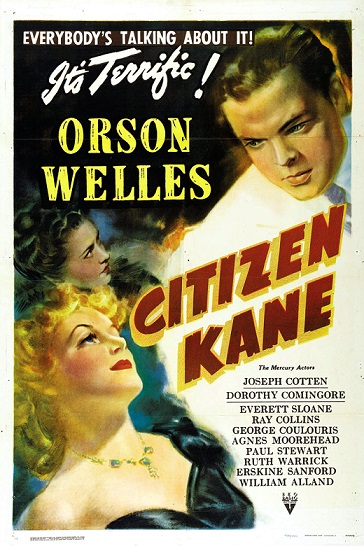
Citizen Kane’s poster shows some guy looking down at a woman. There’s no hint about what the movie’s about, and the marketing team had to resort to telling us that the movie’s terrific and everyone loves it! But ask any literary agent and they’ll tell you that a great story doesn’t need anyone to tell you it’s terrific, and doing so is a sign that the creators know their work isn’t actually terrific.

Morbius’ poster doesn’t resort to telling you how terrific it is: it shows instead uses a stylish teal and black color scheme, and the image of a man who’s both a man and a snarling man-beast to instantly grab your attention, informs you that a new Marvel legend has arrived, and uses the color red on the title, hinting that whatever is going to happen, there will be blood. Citizen Kane, by comparison, does not have blood, which is why it fails.

Winner: Morbius

Plot:

Citizen Kane’s story follows some reporter named Jerry as he tries to figure out why a dead guy said ‘Rosebud’ just before he died and what kind of man he was. Jerry eventually gives up, never learning what ‘Rosebud’ means. Man, what a loser.

Morbius’ story follows doctor Michael Morbius, a genius doctor who has dedicated his life to helping mankind. One day, while experimenting on a cure for his rare blood condition, he unknowingly transforms himself into a vampire, granting him extraordinary powers, but at the cost of constantly needing human blood. Worse still, his childhood friend, Milo, has also become a vampire. With time running out before he permanently loses his humanity, Morbius must fight to not only stop Milo, but the darkness within.

Winner: Morbius

Main Character:

Citizen Kane’s protagonist is Charles Foster Kane. He was once a nice little kid before becoming really rich and taking over a newspaper and getting an ego the size of a planet and subsequently ruining all the friendships and relationships he ever had before dying alone and reminiscing about a sled.

Morbius’ protagonist is Michael Morbius. Unlike Kane, he is a good man who strives to help those around him, and even when he is turned into a vampire and given extraordinary powers that would allow him to dominate and destroy everyone around him, he refuses to use those powers and tries to get rid of them while simultaneously trying to save his lifelong best friend from the same condition, and a government determined to hunt him down for a murder he didn’t commit. And throughout it all, Morbius constantly tries to do the right thing, no matter the cost to himself, making him not only a hero for our time, but the hero of all time.

Winner: Morbius

Side characters:

Citizen Kane’s side characters are boring. How many of them have become staples in pop culture? Can you name any of them off the top of your head? No? I thought not. Pfffft.

Morbius’ side characters, however, are a complex and wildly interesting bunch. Among them are:

*Morbius’ research assistant, Martine, who’s willing to work with Morbius even after he’s turned into a vampire, and also sacrifices her life to give Morbius the strength he needs to defeat Milo, only to then be resurrected as a vampire herself.

*FBI agent Simon Stroud, a tough, competent, yet fair man who owes his life to Morbius for the artificial blood Morbius invented, which is what allowed him to survive being wounded in Afghanistan. Yet, tragically, he has to hunt down Morbius, seeking to bring him to justice. But unlike so many other fictional, power-hungry or by-the-book agents, Stroud doesn’t compromise his morals to accomplish his goals.

*Alberto Rodriguez, Stroud’s partner, who appears to be nothing more than your typical, bumbling comic-relief sidekick, having no comprehension of feline behavior or how litterboxes work. Yet, he is surprisingly brave and unfazed at the prospect of facing off with a vampire, and shows no fear when the time comes, proving he’s far braver than most mortal men.


*Dr. Emil Nicholas, who helps sick children and acts as a surrogate father to Morbius and Milo, trying to be kind and understanding to both, but unconsciously favoring Morbius, with tragic results.

*Nicque Marina, who only appears a few times as a reporter for the Daily Bugle, who is clearly infatuated with Morbius (making her an audience surrogate for everyone on Earth), but who is dedicated to telling the truth and doing her job.

*Nurse Kristen Sutton, a kind and well-meaning nurse who’s brutal death at Milo’s hands made me cry harder than when Jack turned into a corpsicle in Titanic.

Every face in Morbius, no matter how briefly they may appear, is so memorable that they put every other supporting cast in every movie ever to shame.

Winner: Morbius

Antagonists:

Citizen Kane has only one antagonist: Kane himself, who, while pursing wealth and power, alienates everyone around him and ensures he’ll die alone, the fool.

Morbius faces not only the government during his cinematic journey, but also Milo, his best friend. Though crippled by a rare blood disease that leaves him weak and barely able to walk, Milo is fabulously rich and has helped fund all of Morbius’ work into curing their condition. Yet, when he takes the cure that turns him into a creature of the night, Milo goes on a blood-drenched rampage through the streets of New York City. But despite his viciousness, Milo still genuinely cares about Morbius and wants him to embrace being a vampire, too, so they can be best buddies forever and eventually take over the earth, complete with awesome castles, capes, and being suave, sexy creatures of the night.

Winner: Morbius

Conflict:

Citizen Kane’s conflict revolves around what ‘Rosebud’ means. Can you imagine anything more boring?

Morbius’ conflict centers around Michael Morbius’ desperate attempts to hold onto his humanity after becoming a vampire, while simultaneously trying to stop Milo’s rampage though New York City. Success will mean having to kill his best friend, and failure will mean losing his humanity and leading to the deaths of countless people.

Winner: Morbius

Cinematography:

In the cinematography department, Citizen Kane is surprisingly good, featuring complex camera moves and excellent cinematography with many memorable shots that have stood the test of time.

Unfortunately for Citizen Kane, Morbius’ cinematography is the gold standard for all films forever: besides being in vibrant color instead of boring black and white, Morbius has lots of pretty shots of New York City, highlighting man’s achievement in taming his environment, allowing him to create grand settlements filled with millions of people living peaceful, happy lives. But these shots subtly reminds us that if Morbius doesn’t stop Milo, all of these people will die, giving each shot a subtle menace and dread.

Plus, the film is a masterpiece of a wide and varied color palette, from the 80’s inspired credits, to the white, green, and orange subway, to the aforementioned colorful cityscapes. Plus, thanks to advanced filmmaking techniques, Morbius has many shots of Morbius flying through the sky, fighting Milo in slow motion, and plunging through a half-built skyscraper, shots that the salesman of frozen peas couldn’t even dream of using. And to cap it all off, there’s this awesome shot of a menacing green hallway at night with a vampire hopping around.

Does Citizen Kane have a spooky, green hallway at night with vampires hopping around? Didn’t think so.

Winner: Morbius

Special effects:

Citizen Kane‘s creepy bird is certainly memorable.

Morbius is filled to the brim with breathtaking computer generated images that allow actors Jared Leto and Matt Smith to do feats that are physically impossible, such as displaying enhanced strength, flying through the air, using echolocation, battling through a half-built skyscraper, and even summoning thousands of bats to aid them in battle. Could Charles Kane summon bats to help him battle his enemies on the campaign trail? I think not.

Winner: Morbius

Music:

Can you hum a single tune from Citizen Kane? Yeah, me neither.

Morbius, however, has a swelling, heart-stirring soundtrack, but nothing can top the auditory masterpiece that is ‘Off The Meds’ by EKSE, with it’s timeless, heart-wrenching lyrics:

‘I poop my answer, yes,’

‘Have sex!’

‘Poop my pants’

‘Poop my tent’

Sorry, Bernard Herrmann, but your noble efforts have been morbed!

Winner: Morbius

Best Scene:

To it’s credit, Citizen Kane does have a few memorable scenes that have endured throughout the years, like him talking before a poster of himself, clapping furiously after humiliating his wife like the bastard he is, him whispering, ‘Rosebud’ before dying, and the revelation that Rosebud is a sled.

Trying to pick the best scene from Morbius however, is more difficult than when Hercules embarked on his 12 labors. While I was tempted to go with the now-legendary scene of him saying, “It’s Morbin’ time!” and morbing all over Satan while on top of an erupting volcano, I ultimately chose what will surely be remembered as the greatest scene in movie history: Milo dancing.

Why is this scene the best scene ever? There are many reasons:

1. It has a shirtless Matt Smith doing pushups.

2. The architecture and look of the room, complete with black and white marble, mustard-colored curtains, and ‘color-inverted zebras being shot at by arrows’ wallpaper.

3. The joy of seeing a crippled man finally gaining a perfect, disease-free body and celebrating being able to move pain-free without the need of a walking stick.

4. The music, with its timeless lyrics, such as, ‘I poop my answer, yes,’ ‘Have sex!’ “Poop my pants,’ and ‘poop my tent.’

5. Milo’s dance choreography, which puts every musical ever to shame. Somewhere in the afterlife, Fred Astaire is weeping at both being able to see such talent, and grief that he was not able to live up to Milo’s standards while he was still alive.

There is no competition: Milo dancing is pure cinematic gold. When I one day depart this mortal coil, I want to watch this scene on repeat, with the last words my dying brain ever hears is ‘poop my tent’

Winner: Morbius

Ending:

Citizen Kane ends with Jerry mulling over everything he’s learned about Kane, coming to the conclusion that he doesn’t have a clue what Rosebud means and gives up, presumably to go home and cry while gulping down ice cream to soothe the pain of his failure as both a reporter and a man. And as he’s no doubt eating his way to type two diabetes, we, the audience, see Kane’s belongings being burned, including his beloved sled, Rosebud. That’s kinda sad, I guess.

Morbius ends so heartwrenchingly that I can barely type this without tears staining my keyboard: Despite all his efforts, Morbius is forced kill his greatest friend and end his rampage of destruction before flying off with his bat friends to an unknown future, leaving us to wonder if he has held onto his humanity or given in to his inner vampire… but the mid-credits teaser sequence, in which Morbius teams up with the Vulture – Spider-Man’s greatest, most famous, and most dangerous foe – reveals that he has indeed fallen to the inescapable grasp of evil, and that the noble doctor is no more.

Such power. Such gravitas. Not even Shakespeare himself could craft such a heart-wrenching tragedy.

Winner: Morbius

Cultural impact:

Citizen Kane’s lasting impact on pop culture is to allow professors at film schools to feel special by telling their students over and over that Citizen Kane is the best film in human history. Too bad they won’t be able to do that anymore!

Morbius’ impact on pop culture is difficult to determine, only because it’s been a year since it came out, but all reliable sources say that no other film or franchise will ever have as great an impact on human culture. The output of Morbius merchandise, fan art, fan videos, clothing, theme parks, happy meals, shampoo, and Halloween candy has surpassed Star Wars, Jurassic World, LEGO, and every franchise ever, and will doubtless continue to grow in popularity for centuries to come.

Winner: Morbius

Conclusion:

When we compare the winners in each category, it becomes clear that this is no contest: Morbius clobbers (or should I say, morbs) Citizen Kane in every aspect. Kane, once the pinnacle of cinema, is no longer the king, or even a pretender to the throne. Morbius has come and morbed all over Kane, and is now the king of the mountain, the zenith of humanity’s creative endeavors, and the greatest film of all time, bar none. This movie is what God created us for; our time to ascend to the stars and take our place alongside our peers throughout the cosmos has come, for we have proven that we are worthy of joining them with the cinematic tale of a doctor-turned vampire, leaving Citizen Kane to fade into dust, as it rightfully should.

Now, if you’ll excuse me, I need to go pop some more Morbius popcorn and watch the movie for the 9,528th time. Because it’s just that good.

Perfect Moments: Toy Story 5’s Ending

Once in a while, you come across a moment in a story that is so perfect that it stays in with you for years, or even a lifetime. These are moments that, in my opinion, are flawless; perfect gems of storytelling that cannot be improved in any way, and are a joy to treasure and revisit again and again.

***

The Video:

Why it’s Perfect

Like many people, I was surprised and a little dismayed with the recent announcement that we’re getting another Toy Story sequel. Not because I hate the series, but because Toy Story 3 already had a perfect ending that tied everything up. Then Toy Story 4 came along and undid it all, and had an ending that had nowhere near the emotional weight it was going for. The thought of Pixar trying to undo that makes it seem like Disney is just trying to wring more money out of a story that should have ended for good over twelve years ago.

While it probably will be nothing like this fan-made pitch on what Toy Story 5 should be about, the idea here is fascinating: if Toy Story 3 was about accepting the inevitability of loss, and Toy Story 4 was about eventually finding a new path for yourself once your purpose in life is complete, then Toy Story 5 should logically be about accepting the inevitability of death. This pitch does a great job of setting that up… and then it ends with a scene that would be the most powerful, most emotional, and most heartbreaking thing Pixar has EVER done. If you haven’t seen the video yet, please do so before reading any further.

Done? Okay then.

The thought of Toy Story 5 ending with Woody reuniting with an elderly Andy on his deathbed, and Andy realizing that Woody is alive is an idea that’s so simple, but emotionally powerful. After decades apart, two old friends reunite for the last time, and Woody breaks the golden rule of toys to never reveal themselves as being alive to comfort Andy on his deathbed. And for a little while, the two reminisce about their lives before both of them pass away together of old age.

Pixar is almost certainly going to do something different than this idea, but if they went with this, it would be the perfect way to end the series for good. At its core, the Toy Story saga is about a toy’s relationship with his owner. And while they naturally grow apart as the series goes on, having them reunite at the very end shows how both have grown and changed, yet the love they have for each other is still there. As the the series’ theme song says, ‘our friendship will never die.’ It faded as time went on, but bloomed in full at the very end.

Beautiful.

Perfect Moments: ‘A Christmas Miracle’

Once in a while, you come across a moment in a story that is so perfect that it stays in with you for years, or even a lifetime. These are moments that, in my opinion, are flawless; perfect gems of storytelling that cannot be improved in any way, and are a joy to treasure and revisit again and again.

***

The Video:

NOTE: This video has language that is not safe for work.

Why it’s Perfect

Another Thanksgiving has come and gone, and as we all settle down into our post-dinner comas, we dream of finally being able to put up all the Christmas decorations once again.

But with Christmas comes something else: something malevolent, malicious, and that infects the soul. No matter where you go, no matter what you do, you cannot escape it. But no one who works in our stores can escape it, and they will spend the next month fighting off the madness that will attempt to destroy us all. Please spare a moment to thank them for their sacrifice so that we can continue to get the consume goods we need while they struggle not to go insane.

What is this evil? Well, just watch the video and find out. And if you have scars from having to wrestle with this madness then you’ll hopefully get a laugh out of it like I did.

The Best Background Characters: The Tip-toeing Nazi Soldier

Every story has a cast of characters that we follow and watch and come to love… but what about the background characters? The nameless masses who rarely get our attention? This column examines my favorite background characters who deserve a moment in the spotlight.

***

The Game:

‘Wolfenstein II – The New Colossus’

The Character:

A tip-toeing Nazi soldier.

The Scene:

(The soldier appears at 2:03)

Why He Deserves A Moment In The Spotlight

In the opening of 2017’s, ‘Wolfenstein: The New Colossus,’ the player’s enormous U-boat hideout is boarded by dozens of Nazi commandos intent on killing him and his allies. At one point, the player meets up with Set, a Jewish scientist, who defends both of them with the use of a microwave-lined hallway, which obliterates multiple Nazis as they blindly run through it. But near the end, one soldier realizes that something’s not right about the hallway and stops to consider his next course of action, which is to carefully – and hilariously – tippy-toe through the hallway… only to be blown up like everyone else.

The common Nazi in ‘The New Colossus’ exists (as they rightfully should) to be mowed down by the hundreds. Players expect them to be little more than cannon fodder, which makes moments like these great because it gives individual soldiers a little personality and makes them stand out in a crowd of characters we’re conditioned not to care about… but because this soldier’s still part of the most monstrous regime ever to exist in human history, we laugh at his explosive death instead of mourning him, because f*** Nazis.