There comes a time where every parent must make vital choices regarding their children: how shall they be disciplined? What do I feed them? How do I balance work and spending time with them? And, most important of all: What order do they watch the Star Wars movies in on their first viewing?
Back in 2011, the internet went abuzz with the introduction of the Star Wars Machete order, an attempt to create a way for first-time viewers to watch the series in a particular order that would preserve the franchise’s biggest surprise (that Darth Vader is Luke’s Father), while still allowing the prequels to play a part. In short, you start with ‘A New Hope,’ then go to ‘Empire Strikes Back,’ and then go to ‘Attack of the Clones,’ and ‘Revenge of the Sith’ to see Anakin’s fall (while omitting ‘The Phantom Menace’, if you choose), and then finishing with ‘Return of the Jedi.’
Recently, I wondered if this idea of out-of-order-viewing could be applied to the Terminator series as well. With James Cameron revealing in an interview with Empire magazine last year that future Terminator movies will move away from Sarah Connor, John Connor, and the T-800, this means that story Terminator films have been telling for over 40 years – the quest to protect John Conner so he can defeat Skynet – has come to an end.
There’s just one problem: That story never got a conclusion.
‘Terminator 2: Judgment Day’ was meant to wrap the Terminator saga up with an open – but hopeful – ending. But since it made more money than the total GDP of several developing nations, we got four more movies that kept postponing Judgment Day and ending with the promise of more sequels. But the law of diminishing returns eventually took hold, and after the box office failure of ‘Dark Fate,’ we never got the movie that chronicled the destruction of Skynet and the ultimate triumph of humanity… until now.
After reading about Star Wars’ machete order, I’ve been wondering if such a tactic could be applied to the Terminator films, and began to ponder, brainstorm, and try to come up with a way that can re-tell the John Connor saga in a way that is logical, keeps as many of the films in as possible, and, most importantly, end the story for good without needing any more sequels or follow-ups. And to that end, I have created what I’ve dubbed, The Terminator Machete Timeline.
To begin, here’s the films included in this timeline, and the order in which we watch them:
1. The Terminator
2. Terminator: Dark Fate
3. Terminator 3: Rise of the Machines
4. Terminator: Salvation
5. Terminator 2: Judgment Day (extended cut)
While this may look confusing and nonsensical at first glance, I’ve come up with a backstory that connects these five films via the magic of time-travel in a way that, I believe, creates a new narrative that has a definitive beginning, middle, and, most importantly, a conclusive ending.
The Machete timeline begins with the one that started it all: ‘The Terminator.’
But when it ends with Sarah driving towards the mountains and the coming war, we then proceed not to ‘Judgment Day,’ but to ‘Dark Fate.’
In this dark future, John is killed, an aged Sarah learns about Legion, a new machine hellbent on destroying humanity, and Dani begins her journey to becoming the leader of the resistance and the savior of the human race.
But in the Machete timeline, this is where things change.
At the beginning of ‘Dark Fate,’ John is shocked to see the T-800. That’s understandable, considering he saw Uncle Bob melt himself into slag to stop Skynet from being created. But in the Machete timeline, Skynet sent back not only a T-1000 to kill a young John in 1995, but also a T-800 to act as a partner and as backup to his robot brethren. Thus, Sarah and John had to stop Cyberdyne while also trying to stop two Terminators working together trying to kill John. Against all odds, Sarah succeed (how she pulled it off will remain a riddle for the ages). Thus, when John is stunned at seeing the T-800, it’s not because he’s seeing his robot buddy again, but because he realizes that his old enemy has finally tracked him down, and this time, Sarah can’t save him.
At the end of the movie, Sarah and Dani drive off to prepare for the inevitable war against Legion. But as they drive, Sarah has an epiphany: she realizes that time travel will inevitably be created and put to use in the war against Legion… why not hijack that technology and use it to save John? But Sarah isn’t dumb: while she’ll do anything to save her son, she also knows that, no matter how many times an intelligent AI defense system is destroyed, another will inevitably take its place, meaning that a human-machine war is inevitable.
But what if it isn’t?
While training Dani on how to be both a warrior and a leader, Sarah tries to figure out how the inevitable war between humans and machines can be stopped, and eventually realizes that if humanity can move past the tribal instinct to have bigger, better weapons than your adversaries, then there will be no need for an AI military system, and Skynet will never be created.
Perhaps, Sarah realizes, John can be humanity’s savior without being a military commander. Maybe he can work to inspire humanity to use AI for benevolent purposes instead of as a weapon of war.
With her idea in motion, Sarah tells Dani her plan: When Legion develops time travel, Sarah will go back in time to save her son as a child and teach him to be a leader, not a warrior. If she succeeds, then Skynet will never be created, Legion won’t take its place, and the endless cycle of war between machines and humans will end. Dani – not wanting to lose her family or Grace – agrees to the plan. And so Sarah finishes Dani’s training, stockpiles supplies for Legion’s attack, and goes to hide in a bunker (presumably playing Angry Birds to pass the time).
When the war finally begins, Dani plays her role, becomes the leader of the Resistance, gets wounded, and Grace is augmented and goes back in time. Shortly afterwords, Sarah emerges and becomes augmented herself to ensure that her aging body will last long enough to complete her mission. Thus, with Dani and the rest of the Resistance watching, Sarah travels back in time to save her son… but because time travel is not a perfect science, the time machine malfunctions, and Sarah finds herself not in 1995, but in the year 2005, arriving just before the events of ‘Terminator 3: Rise of the Machines’ play out.
Having landed in a remote part of the world (say, somewhere in Asia), Sarah has no chance of reaching John in time to help him. She is, however, able to use her cybernetic implants to learn that Skynet is taking over the world’s computer systems and manages to evacuate to the wilds, where she survives Judgment Day. Once the dust clears, and the nuclear winter begins, Sarah starts out towards Los Angeles, knowing that John will establish his headquarters there. But with most of humanity’s jets, planes, and vehicles now either destroyed or running out fuel, Sarah’s journey takes several years; as she nears its end, the events of ‘Terminator: Salvation’ take place.
After John is evacuated from his assault on Skynet’s San Francisco headquarters, given a new heart, and prepares to head back into battle, Sarah finally catches up with her now-adult son and is reunited with him. Though shocked to see his now-augmented and elderly mother, an overjoyed John listens as Sarah recounts the events of ‘Dark Fate’ and explains that she’s trying to get back to 1995, and how she has to get a T-800, reprogram it, and send it back to be John’s protector instead of his killer: a young John will then realize that machines can learn to live peacefully with humans, and hopefully work to create a future where such a thing is only possible, but happening.
John and the Resistance agree to this plan. They manage to capture the T-850 that was going to kill John in 2032 (who’s organic covering has not aged to the point that it was in ‘Rise of the Machines’), and Sarah reprograms it with her implants. Skynet is defeated in a final battle and sends the T-1000 back, but the Resistance stops it from sending the original T-800 back, and instead send back the reprogrammed T-850, and the events of ‘Terminator 2: Judgment Day’ play out.
But before we reach the end of this timeline, we’re going to make one more change: instead of watching the theatrical cut, we instead watch the extended edition of the film, which ends with an alternate 2029 where Skynet was never built, Judgment Day never happened, John works to make benevolent AI the norm, and humanity’s future has never looked brighter.
Sarah’s time-traveling quest to save humanity has succeed, John has worked tirelessly to help machines and humanity live together in peace, and the original Sarah – un-augmented and now in her 60’s – can live her life in peace, with the only thing she has to fear in this future being hideous 2029 fashion.
***
And there you have it: The Terminator Machete Timeline. While ‘Terminator: Genysis,’ was not included in this timeline due to having little overall impact on the series as a whole, this timeline preserves all the other films and allows them to be part of one continuity, but it also does two things not present in the original series:
1. Sarah takes a far more active role in saving humanity, and succeeds in her quest, becoming even more heroic than she was in the original series. (albeit, off-screen)
2. By going with ‘Judgment Day’s alternate ending, this viewing order – combined with the backstory that connects the films – creates a story where Skynet is defeated not by force or by acts if violence, but by John fulfilling his role of humanity’s savior by being a leader in peacetime instead of a wartime commander, inspiring humanity to finally put aside the endless arms race that humanity has had for all of its existence, which means there’s no reason for Skynet to be created in the first place.
There’s also one more thing this continuity does: it gives Terminator fans an ending that truly finishes John’s story, ties up all the loose ends, and gives everyone – including those who were spared by Judgment day never happening – a happy ending.
As is often said in the films, there is no fate but what we make for ourselves: maybe part of that is not relying on a studio deciding to do the right thing and finish a story that should have ended long ago, but to take it upon ourselves to give that story the ending it deserves.
Or you could just stick with T1 and T2. That works too, I guess.
As December draws ever closer, and retail workers start going mad from hearing Mariah Carey singing about Christmas several thousand times a day, I figured it would be fun to extend spooky season just a bit longer to counter the too-early holiday cheer by trying my hand at the ‘My Zombie Survival Team’ meme that’s been floating around the internet since 2010. For those who aren’t aware, the meme’s exactly what it sounds like: You are heading out into a zombie apocalypse, but you get to choose who will be on your team: The leader, the brawler, the weapons expert, the smart one, the medic, the one who can move really fast, the team mascot, and the inevitable annoying guy or gal who will die first.
While it would be easy to recruit non-humans who could wipe the floor with the undead menace (Optimus Prime, Dracula, the Terminator, etc.) let’s make things interesting and pick only humans with no supernatural powers. Here’s who’d be on my team:
Team Leader: John Connor from ‘The Terminator: The Burning Earth’
Image: Dark Horse Comics
There’s no shortage of leaders in fiction who could lead a small group of people trying to survive a zombie apocalypse, but John Connor’s resume is particularly impressive: As the man destined by fate to save humanity from Skynet, a middle-aged John has kept humanity alive as the war against the machines reaches its 40th and final year, a testament to his leadership skills. But John’s no armchair general; even at his advanced age, he’s still fit enough to climb cliffs, run, and engage in combat with Skynet’s forces while getting only an hour of sleep at a time, and has the ability to think quickly and efficiently in life and death situations. And when worst comes to worst, John is willing to make impossible choices, such as euthanizing injured people who can’t be saved, a decision that would be valuable (if unwanted) in a zombie apocalypse.
Strengths:
*Decades of combat experience leading humanity in a war against a highly-intelligent supercomputer with legions of zombie-like enemies.
*High level of compassion towards people and reverence for human life, which would help survivors trust him.
*Great physical stamina and combat abilities for a man his age, reducing his chance of becoming a burden to others.
*Destined by fate to save the human race, whether it be from Skynet or a zombie apocalypse.
Brawler: Indiana Jones
Image: Disney
The world’s most famous archaeologist would be a great addition to any zombie team: his decades of experience in exploring tombs, lost cities, and swinging around on his whip would be invaluable when it comes to getting through abandoned cities, towns, and dangerous locations left to crumble in the wake of a zombie onslaught. And while there are others who are stronger, bigger, and faster, Indy takes up the mantle of the group’s brawler because of his ability to quickly improvise when taking on opponents – sometimes several at a time – who are better at fighting than he is. It also helps that Indy has almost supernatural amounts of luck; no matter how bad or hard things get, the universe always seems to step in to give Indy a way out, whether when trying to save the Ark from a convoy of Nazis, or when taking on another convoy of Nazis armed with a tank; such a gift would be a huge advantage in taking on the undead and hostile humans in a post-apocalyptic world.
Strengths:
*Extensive experience in one-on-one fights, which would come in handy when fighting hostile survivors.
*Able to improvise on the fly and frequently defeat opponents with more skill, strength, and numbers than him.
*Possesses incredible, almost supernatural luck when it comes to getting out of hostile situations.
*Years of experience exploring dangerous locations would translate well to exploring abandoned cities.
Weapons Expert: Gabe Logan
Image: Sony Computer Entertainment
The protagonist of the Syphon Filter video game series joins my team as its weapons expert: as a former soldier in the US’s special forces, and a secret agent who single-handily took down a huge, secretive black-ops agency who tried to unleash a manufactured virus upon the world, Gabe is a master of modern combat, equally capable of using stealth and raw firepower to achieve his objectives, and can use virtually any modern weapon, whether they be pistols, submachine guns, rifles, shotguns, grenade launchers, explosives, and even knives with incredible accuracy. When Gabe’s skill with firearms is coupled with his incredible physical strength (he can hang one-armed and fire a one-handed weapon with perfect accuracy), and tactical abilities (he’s taken on and defeated soldiers in bullet-proof armor, attack helicopters, and even tanks) he becomes the group’s all-around weapons expert who can engage zombies in a full-on assault, quietly take them out one-by-one, or snipe them from afar. Finally, Gabe is very trusting towards other people and is a natural leader, having led the Agency after bringing it down, making him an invaluable member of any team going through a zombie-infested wasteland.
Strengths:
*Over thirty years of combat experience in a multitude of environments around the world that required both open combat and stealth, allowing him to tackle any situation involving zombies or hostile humans.
*Excellent marksman with almost every known modern weapon.
*Good inter-personnel and leadership skills.
Brains: Aragorn II
Image: Warner Bros. Pictures
When most people think of the brains of a group, they imagine a computer genius who can hack any computer system and help restart civilization after the zombies are wiped out. But I think a certain kind of intelligence is needed in a zombie apocalypse: with technology all-but guaranteed to fail and be decades away from being restarted, a better choice would be someone who is skilled in the art of surviving off the land, and Aragorn, son of Arathorn, is the right man for the job.
While he’s best known for being a great swordsman and the king of Gondor after Sauron was defeated (spoiler alert for a 69 year old book), one of Aragorn’s often overlooked abilities is his time spent wandering Middle-Earth as a ranger for 57 years, giving him plenty of experience in hunting, finding food, and using natural resources to cure and treat wounds and diseases in lands full of orcs, bandits and monsters, all of which would serve him well in the desolate lands of a zombie hellscape. Those skills are further augmented from the knowledge and wisdom Aragorn learned from growing up with elves in Rivendell, and from the wizard Gandalf.
If you’re looking for someone who has the smarts to help you survive in the wild when you’re not being attacked by brain-eating zombies, and to help you take out zombies when they are attacking, Aragorn’s your man.
Strengths:
*Almost 60 years of experience surviving and thriving in the wildness against monsters and hostile humans, making survival in a post-apocalyptic wasteland much easier.
*Excellent leadership skills from serving as king of Gondor for 122 years, giving him unmatched experience when dealing with friendly and hostile groups, as well as diplomacy. (John Connor remains team leader due to leading armies in fighting Skynet non-stop for decades, where Aragorn primarily ruled in a time of peace.)
*Excellent melee and swordsmanship skills, an invaluable asset in a world where bullets would become very rare.
Medic: Dr. Beverly Crusher
Image: Paramount Pictures
It was surprisingly hard coming up with a pop culture healer who didn’t have magical abilities, but I ended up going with Beverly Crusher, chief medical officer on the Starship Enterprise D and E. Her biggest advantage in taking on the role of the group’s healer is that she has the best medical equipment the 24th century has to offer. Even if she can only carry what’s in an expanded medkit, that would include a dermal regenerator for treating minor skin wounds, an osteogenic stimulator for minor bone fractures, and a medical tricorder, an invaluable device that could help in the treatment of (presumably) almost any known ailment, and possibly a regular tricorder, which can possibly act as a miniature library of 24th century data and information, which would be very handy when it comes to rebuilding the world after the zombie apocalypse is over. But that doesn’t stop there: as shown in ‘The Next Generation’ episode, ‘The Survivors’, portable replicators exist, so if Beverly knows she’s going into a zombie apocalypse wasteland, she’d make sure to carry one to replicate an almost limitless supply of food, drink, medical supplies, and clothing. And because Starfleet personnel don’t go into the field unarmed, Beverly would also carry a personal phaser, and possibly a phaser rifle, both of which would be an invaluable tool and weapon against the living dead.
However, even 24th century technology requires energy to operate, and would eventually die and become useless. But even then, Beverly would still have her medical training to fall back on, and like almost everyone else on this list, Beverly has an aptitude for leadership, benefiting her roles as head of the Enterprise’s medical teams, and Starfleet Medical in general. Throw in her ability to be cool under pressure and ability to fight when needed, and Beverly becomes an invaluable member of any zombie-fighting team.
Strengths:
*Carries multiple weapons and tools from the 24th century that would make survival much, much easier.
*Extensive medical training, allowing her to treat a wide array of ailments and injuries.
*Ability to remain cool under pressure.
*Apt at both leadership and combat when the need arises.
Speed Fighter: Doom Guy
Image: id Software
Finding a human who can fight hard and fight fast without supernatural abilities or technology that would inevitably run out of power is tricky… but there’s one guy who is not only fast, but arguably the best fighter out of anyone in this group: Doomguy, the protagonist of the long-running Doom series. For the purposes of this list, we’re sticking with Doomguy as he appeared in the original 1990 series, where he is an ordinary human without the supernatural abilities from later games. But why does a heavily-muscled space marine become a speedster? Easy: Doomguy is so fast, he can outrun rockets! To be more specific, he can reach speeds of up to 90 miles an hour while weighing over 1,200 pounds, meaning he has the strongest legs in human history. Couple this with his unbreakable will and experience in fighting zombies (and demons), and Doomguy becomes the group’s sledgehammer against the zombie hordes; the only thing stopping Doomguy from taking care of everything himself while the others relax and sip pina coladas from Beverly’s replicator is that he’s just as vulnerable to damage as any other human, meaning that if he’s shot enough or ganged up on, he’d still be killed. But even as a glass cannon, Doomguy’s speed, brawn, and combat skills make him an unbeatable ally in the fight against the undead.
Strengths:
*Endless stamina and the fastest running speed of any human who has ever lived.
*Unbreakable will from fighting thousands, if not millions of zombies and demons both in our world, and in Hell itself.
*Experience in using a variety of weapons ranging from his fists, rocket launchers, and plasma weapons.
Mascot: Ellen Ripley
Image: Disney
Mascots are supposed to be cute, adorable, an animal, or otherwise sympathetic person. But for my group’s mascot, I went with Ellen Ripley. She’s not cute, she’s not adorable, and she’s not a happy-go-lucky innocent, but Ellen represents some of the best humanity has to offer: Gifted with the ability to think and act through fear no matter how frightened she is, Ellen can combine that with her pragmatic, no-nonsense leadership to become a force to be reckoned with, so much so that a bunch of battle-hardened marines turned to her – an untrained civilian – to help lead them when aliens wiped out half their squad.
Yet, beneath her fierce, focused exterior is a woman who cares about others and is capable of acts of extreme bravery in the face of overwhelming danger. While Ellen can fight, her biggest strength is being the rock that people can cling to when things are at their worst. More than anyone else in the group, Ellen demonstrates humanity at its bravest, and that earns her the mantle as the face, heart, and soul of the team.
Strengths:
*Extraordinary ability to think and act through fear.
*Pragmatic, no-nonsense leadership abilities.
*Extreme bravery in the face of danger.
Guy Who Dies First: Helena Shaw
Image: Disney
As the co-protagonist of Indiana Jones and the Dial of Destiny, Helena may be quick on her feet and cunning, but she would be the first to die: As a con artist who ultimately only cares about herself, Helena wouldn’t hesitate to sacrifice everyone else to save her own life the moment things got dangerous, or bolt after grabbing whatever supplies she could carry. Either way, Helena would quickly find herself alone and surrounded by dozens or hundreds of the undead. While she’d be able to evade them for a time, she would inevitably reach a point where she has no one to help her (or she’s being actively shot at by people she’s double-crossed), and be quickly turned into Purina zombie chow. While ruthlessness and cunning would be useful assets in a zombie apocalypse, having friends and allies to help you is an even greater advantage, and selfish con artists would quickly find themselves in short supply of both.
Strengths:
*Being able to emotionally manipulate and deceive people.
*Quick on her feet.
Conclusion:
When it comes to survival in a zombie apocalypse, it’s tempting to assemble a team of people who are excellent warriors, tough, and all-around badasses who can survive just fine on their own. But if a zombie outbreak rally happened, there’s one thing that would matter more than anything else: being able to work together with others. While pop-culture loves lone wolves like Rambo, a group would realistically have a much higher chance of survival when it comes to fighting millions, if not billions of zombies: being able to cooperate with others, sharing resources, and having someone to watch your back leads to a higher chance of survival compared to a lone individual who gets injured with no one around to help them. That’s why I think my team, which relies heavily on those who are skilled in both leadership and combat, would have an excellent chance of survival. But what about you? Who would you have on your team? Let us know in the comments below!
On July 17th, 1987, the world of cinema was changed forever as humanity witnessed the cinematic spectacle of Jaws: The Revenge, a film that thrilled moviegoers, took the world by storm, and became the first movie to earn over a billion dollars at the box office, win every academy award, and be heralded by many as the stunning and moving conclusion to the Jaws saga… or, at least, that probably happened in a parallel universe. In ours, Jaws: The Revenge was such a critical and financial flop that the Jaws franchise dropped dead, continuing only in the form of the occasional video game, LEGO set, and clothing line.
But what if I told you that the Jaws series, while seemingly dead, is actually part of a much larger narrative that has continued to this day?
What if I told you that the Jaws series was actually part of the Terminator film series?
But how could a movie series about a family fighting shark after shark after shark share a world with time-traveling killer robots, you might ask? Simple: My theory is that the events of the Jaws series chronicle Skynet dispatching robotic Terminator-sharks to kill Sean and Michael Brody, who will eventually grow up to become high-ranking lieutenants in the Resistance, and – supported and helped by their parents – become invaluable in humanity winning the war against the machines.
Impossible, you might say; there’s no evidence to support such a theory. But when you examine all four Jaws films, there is! This evidence can be grouped into three categories:
*The behavior of the sharks in the series
*The appearance of the sharks in the series
*Time travel erasing the events of the third film from existence.
Shark Behavior
Let’s begin with the behavior of the sharks in all four films, and how they reveal that all six sharks (yes, six) are Terminators.
Jaws
*When hunting sharks, Quint fires harpoons into their skin, which are then tethered to barrels, which serves to tire the sharks out and prevent them from diving. However, the film’s shark can dive down and stay underwater even with three barrels attached to it, something which even Quint admits is impossible. Could a normal shark do that? No… but a robot shark from the future can!
*At the film’s climax, Brody defeats the shark by shooting an air tank in its mouth, causing both to explode.
*Early in the movie, the corpse of a killer whale is discovered with teeth marks that match that of a great white shark.
However, killer whales are natural predators of great white sharks due to their size, speed, and intelligence, and travel in pods, making it very unlikely (though not impossible) that the film’s shark could have killed this orca… unless it was a killer robot with an extremely powerful bite force that had to attack the orca to prevent damage to its outer skin that could reveal its metallic interior and blow its cover.
*The shark survives being next to an exploding boat. At such close range, a normal shark would have been blown up or killed by the resulting shockwave. Yet, this one survives without so much as a scratch.
*In perhaps the most irrefutable piece of evidence that the shark is a terminator, notice how when it tries to eat Michael, its metallic innards can clearly be seen!
*The shark is strong enough to not only stop a helicopter from taking off from the water, but is also able to overturn it.
*The shark is defeated by a massive jolt of electricity.
While this would kill an ordinary shark, it also makes sense that a Terminator could be killed by a massive, sustained current of electricity. While this has never been shown on-screen, The T-X in Terminator 3, and the T-800 in Terminator: Genysiswere momentarily incapacitated when exposed to an electric current. In Jaws 2, it’s conceivable that a stronger and more sustained current would short-circuit and destroy the terminator trying to kill Chief Brody.
Jaws 3
*Compared to the sharks in the previous two films, the sharks in this movie display an increasingly mechanical, non-lifelike appearance, something consistent with a robotic shark covered with a crude rubber skin.
*The smaller shark (a Terminator sent back with a larger unit to infiltrate small areas) is a very weak model; not only is unable to kill its chosen targets when it could have easily done so, but upon being stabbed by an incredibly lucky hit from Kay into a motor servo, the shark is paralyzed and unable to do anything.
Later, the continued exposure to salt water finally short-circuits the Terminator’s CPU and it becomes inoperable.
*When approaching the underwater control room, the main shark freezes up, appearing to glide into the windows, only opening its mouth at the last second. A normal, organic shark wouldn’t try to ram a building, much less just glide towards it, but a robot that’s glitching and experiencing mechanical problems certainly would.
*When stuck inside the control room after crashing through the glass, the shark doesn’t suffocate; Great White Sharks need to continuously keep moving in order to get oxygen through their gills, and since the shark can move around and attack for a few minutes without breathing (as well as swim backwards, which it did inside the filtration pipe, which is enormously difficult for a real Great White, even more so when the creature is suffocating), it is clearly a non-organic organism.
Jaws The Revenge
*In the opening scene, the shark purposefully damages a buoy to lure Sean out to the area, where it then attacks and kills him.
Seeing as Great Whites cannot lay traps for humans, the only way this makes sense if if the shark was a robot with knowledge that Sean was a police officer, and thus likely to be called out to deal with a damaged buoy.
*When Ellen, Michael, and his family fly to the Bahamas, it’s commonly assumed that the shark pursues them, a journey of about 1,359 miles, in a day or two. Even for a Terminator with nigh-infinite stamina, crossing that distance in that time is impossible. Thus, I would like to propose that there are not one, but two Terminator sharks in the film: One at Amity, and one in the Bahamas: when the Brody family leaves Amity, the Terminator stationed there (who got a visual ID on Michael, Ellen, Carla, and Thea) dispatches a message to its peer in the Bahamas, who is then ready and waiting when Michael and the others arrive.
*In the Bahamas, the shark repeatedly targets the Brody family and ignores other humans, even when it would be easy to kill them:
-The shark swims next to Jake’s minisub and, upon realizing that he’s not Michael, ignores him. Later, when Michael is piloting the same submarine, the shark immediately goes after him.
-When the shark pursues Michael through the ship, it rams a ladder at one point, briefly exposing it’s mechanical innards.
-The shark goes after Thea on the banana boat, but terminates the wrong person by mistake.
-The shark attacks Hoagie on his boat, but upon realizing that he’s not a Brody, lets him go.
-The shark attacks Jake and injures him, but, once again, notices that he isn’t a designated target and lets him go.
*Michael’s plan of using electrical impulses to disrupt the shark’s brain probably wouldn’t work in real life (I couldn’t find any information online if it would, so I’m leaning towards no), making the scene of the shark hopping around and roaring impossible under any circumstance.
However, the scene does work if the pulse is scrambling the Terminator’s CPU and internal circuitry, causing it to malfunction and act erratically, including making the aforementioned roaring; though rarely seen in the Terminator films, Terminators do have the ability to vocally mimic voices and presumably sounds. Perhaps the roar was on file if it really wanted to scare its victims.
*The shark has a heartbeat that can be picked up using sensors. However, the heartbeat momentarily stops just before Jake is attacked. Can an organic shark momentarily stop its heart? No. Can a terminator with an artificial heart do the same? Yes.
*When impaled by the boat at the climax, the shark explodes. Again, impossible for a real shark, but possible if Ellen hit an explosive component of the Terminator’s innards, like how Martin destroyed the Terminator in the first film.
The Shark’s Appearances
Now to the second piece of evidence: the shark’s appearance in all four films: Where T-800 and subsequent Terminators have perfect organic coverings, Terminator sharks… don’t.
Why is this? Having placed a priority on infiltrating human resistance groups on land, Skynet has little need to use aquatic Terminators, so much less effort is spent developing a perfect appearance for them. While they do have skin, blood, and internal organs to allow them to pass as sharks, they become noticeably more fake-looking as the series goes on, suggesting that Skynet is resorting to rush jobs in a desperate attempt to go after the Brody family before its defeat at the hands of the Resistance.
The Third Film Never Happening
While all four films take place in the same continuity, Sean and Michael look completely different in Revenge compared to the third film, complete with different careers (Mike was an engineer for Seaworld, but is then a marine research scientist). Why is that? Because Skynet managed to alter the timeline at one point strongly enough that the events of the third film never happened, erasing it from existence, and subsequently altering history so that Michael and Sean aged differently and followed different paths in life.
The idea of the past being altered to cause subsequent stories never take place has happened numerous Terminator films; Genysis erased Judgement Day, Rise of the Machines, and Salvation from continuity, while Dark Fate ignores every film that takes place after Judgement Day.
Problems With The Theory:
Despite the three lines of evidence mentioned above, there are still problems that need to be addressed:
1. Why didn’t Skynet just send back T-800’s to take out the Brody siblings like it did in the Terminator films?
-We don’t know how many T-800 and humanoid Terminators Skynet has. We also don’t know the energy requirements on sending a single infiltrator unit back in time, but considering how Skynet has sent only a handful throughout the films, it can be deduced that sending Terminators through time costs considerable resources, and thus Skynet can’t send tens of thousands through history to wipe out the Connors and their lieutenants.
Though they are valuable targets, the Brody family are not as high a priority as Sarah and John Connor. By wiping out the leader of the Resistance, Skynet has a much higher chance of winning its war against humanity, with everyone else in Connor’s line of command being secondary targets at best. Thus, it makes more sense to send advanced infiltrator units after the Connors, and less-advanced units like the Terminator sharks after everyone else.
2. Why do the Terminators in the first three films go after random people instead of exclusively targeting the Brodys?
-Skynet knows that the Brody family lived on Amity island, but because of records being lost on Judgement Day, Skynet does not know exactly where they lived or what they looked like. Thus, because it can’t spare valuable T-800’s to go after them, and can’t send cruder models like the T-600 (who would be easily detectable), the only logical choice is to dispatch multiple Terminator sharks through time to kill the Brodys, attacking people who fit the description of their targets (a middle-aged woman, man, and two adolescent boys) in the hope of chomping down on their targets. This is averted in the fourth film, where, as noted above, the first Terminator in Amity manages to get visual identification of Michael, Ellen, and Thea, and sends that information to its counterpart in the Bahamas.
3. If the shark in the first film is trying to kill the Brody family, why doesn’t the shark just ram the Orca and quickly kill everyone aboard?
-I admit that there is no easy answer to this problem. Perhaps due to being manufactured relatively quickly and being nowhere near as advanced as their landlocked peers, the Terminator sharks might be vulnerable to the effects of salt water and subsequently find their CPUs glitching out at random moments, forcing them to retreat in order to try and correct the problem, only returning when they are back to 100% operational efficiency. Thus, the reason the Terminator in Jaws doesn’t just ram the boat and sink it instantly is because these glitches are happening more and more frequently, forcing it to retreat more often. This also explains why the Terminator swims right by Michael in the first film when it could have easily killed him.
Conclusion
While the aforementioned problem does put a dent in this theory (along with other little nitpicks, such as the Terminator killing a fish for no reason in Jaws 3), adding up the three bodies of evidence still produces a very strong case that the Jaws and Terminator films take place in the same universe. Though silly, this theory has the advantage of retroactively helping improve the quality of the sequels by resolving plot holes, production errors, and the nonsensical idea of sharks seeking revenge on specific individuals (while roaring).
But most importantly, the sequels – long-seen as inferior and unnecessary followups to the original film – can now be seen as important parts of a larger, two-franchise narrative, where a family unknowingly fights off and defeats the agents of a malevolent supercomputer that wants to kill them before they can help save humanity. While Martin and Sean are ultimately killed (indirectly, in Martin’s instance), Michael and Ellen make it through and survive to one day join the Resistance and save the human race. And when viewed in this light, the Jaws series is given something it hasn’t had since 1987: a fitting and satisfying conclusion that ties everything together, and ends the saga of the Brody family on a high note.
If you could choose one fictional place to live in, what would it be? Would you go live in Hogwarts? A penthouse somewhere on Coruscant? Or maybe getting your very own Hobbit-hole in the Shire is more up your alley? Anyone who’s fallen in love with a book, a movie, or a game has fantasized about living in a particularly loved location; here are ten of my favorites.
10. The Matrix (The Matrix franchise)
Image created by me using Deviantart’s DreamUp AI art generator.
Why I’d love to live there: Wait a minute! you might say; why would you want to live inside the Matrix?! Isn’t it a prison for humanity? Well, the first six were, but the Matrix I’m referring to would be one that takes place after the film series, where humanity is aware that they live in virtual reality, but they and the machines are no longer at war. While the machines work to rebuild the surface of the Earth to make it habitable for humans again, humanity chills out in the Matrix to give the machines the power they need, and thanks to their world being virtual, people can now alter it so that they can choose how they look, what clothes they wear, and have increased physical abilities, including – if you’re lucky – flight! And since real estate isn’t an issue, humanity could finally reach a state where everyone is housed and poverty is eliminated forever. Yeah, it may be all digital trickery, but as Morpheus pointed out, your mind would make it real.
Potential drawbacks: While I think everyone would love being able to bend the laws of physics, the possibility of people abusing these new abilities is very high. While most people would be content to be able to fly around in the digital world, abusers, criminals, sociopaths, and bullies would abuse their new powers, and conflicts could become even more dangerous than they are now. So while the Matrix would be very cool, it could also be very dangerous.
9. The Enterprise D (Star Trek: The Next Generation)
Image: Paramount Pictures
Why I’d love to live there: The Enterprise D is a huge spaceship filled with all the wonders the 24th century has to offer, including one of the greatest fictional devices ever created: the holodeck, a place where almost any fantasy you can dream up can come to life. And when you’re not living out your favorite daydreams, you can visit the arboretum, watch the stars from Ten Forward, enjoy a stroll through the ship while listening to the hum of the engines, and visit the onboard dolphins. (No, really, there are dolphins on the Enterprise.) Accommodations are nice, too; if you can snag one of the officer’s quarters, you get a lovely view of space and funky iridescent bedding! Coupled with the ship’s enormous size, and the timeless 80’s sci-fi design, you’d have a nice place to call home.
Potential drawbacks: As Q so memorably pointed out, space is no place for the timid: Being assimilated by the Borg, being dissolved by giant crystal entities, encountering space anomalies that turn you into monkeys or trap you inside a never-ending time loop, and any other number of galactic hazards are some of the things you might encounter, so if you want to live on the Enterprise, maybe do so when it becomes a museum ship.
8. The Glass Tower (The Towering Inferno)
Image: 20th Century Fox/Warner Bros.
Why I’d love to live there: The Glass Tower is, in my opinion, one of the most beautiful skyscrapers ever to appear in film. Not only is the gold exterior a beautiful, simple, timeless look, but the interior has a wonderfully charming 70’s decor, right down to the interior elevators. But the big perk is the views: no matter where you live in the tower, you would get breathtaking views of the city, the bay, and the surrounding areas.
Potential drawbacks: Well, there is the itsy, bitsy, tiny fact that the tower catches on fire due to faulty wiring due to cut corners and cost saving measures during construction. And considering that the tower is in San Francisco, your monthly rent would be about 18 trillion dollars. So unless you magically get a free, lifetime lease, you’d have to be quite rich to live there.
7. Mêlée Island (The Secret of Monkey Island)
Image: Lucasfilm Games
Why I’d love to live there: As a night owl, the never-ending nightlife of Melee Island (It’s always 10 PM), is a big plus for me, as is the peaceful town and wilderness to explore: nothing can hurt you here, there are plenty of shops to visit, and the island’s vast forests are beautiful to walk through without fear of wild animals and other threats.
Potential drawbacks: As this is also a pirate town in the 1700’s, you don’t have things like electricity, the internet, movies, or TV shows to keep you occupied on Melee Island, so once you’ve explored and seen everything, there’s not much else to do.
6. Equestria (My Little Pony: Friendship is Magic)
Image: Hasbro
Why I’d love to live there: Who says you have to live somewhere with nothing but humanoids to keep you company? Equestria is a land filled with adorable ponies who are happy to be your friend, and there are plenty of places to live with them, from towns to deserts, palaces and islands, and even floating cities, all but guaranteeing that you’ll find somewhere you like. Plus, Equestria is watched over by a benevolent monarch who has ruled it for over 1,000 years without succumbing to madness or becoming a dictator; if only we were blessed with leaders that good.
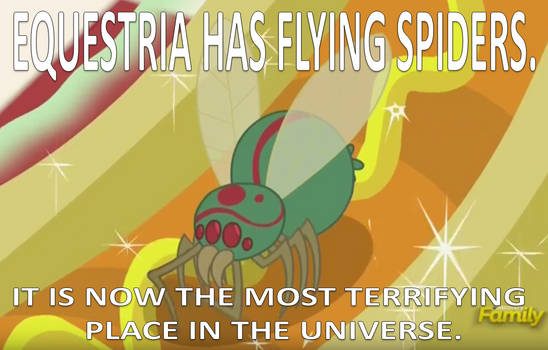
Potential drawbacks: Magic is real in this universe, and while there are beneficial spells, there’s also plenty of harmful and destructive spells that can brainwash you, turn you into other creatures, or kill you. And despite having lots of friendly ponies to live with, there are also lots of unfriendly ponies and monsters who either want to eat you or conquer the world, and have the ability to do so thanks to aforementioned magic. Oh yeah, and there are flying spiders.
5. Cape Suzette (Talespin)
Image: Disney
Why I’d love to live there: Saturday morning cartoons of my childhood had lots of cool fictional places where adventures took place, but the only one I’d like to live in as an adult would be Cape Suzette from Disney’s Talespin. Set in a fictional 1930’s inhabited by anthropomorphic animals, Suzette is a sequestered, art-deco metropolis nestled in a towering mountain range and a beautiful cove, making it the perfect hub for the adventurous type. But the biggest draw is the apartment of Rebecca Cunningham:
Image: Disney
Even as a little kid, I thought her place was incredible, and as an adult it’s a strong contender for the most beautiful fictional apartment I’ve ever seen. Assuming money wasn’t a problem, this is where I’d love to live!
Potential drawbacks: Aside from being the only human in the city, you’d have to contend with raids by air-pirates, and every trip outside of the city’s boundaries is fraught with danger. There’s also the fact that the city’s de-facto ruler is a ruthless tiger who isn’t afraid to do anything and everything to increase his own wealth and power, so if he decided to ruin your life, there’s a strong chance he could get away with it.
4. Valinor (The Silmarillion/ The Lord of the Rings)
Image: Amazon Studios
Why I’d love to live there: Valinor, the land of Middle-Earth’s gods, is one of the most fascinating places to me in JRR Tolkien’s universe, and the one place I’d love above all others to visit, or, better yet, live in: being free from evil, you could explore all its wonders, from the tallest mountains in existence, to the most majestic trees in creation, and the magical Gardens of Lórien, the most beautiful place in all of Arda. And if you wanted to, you could even visit the Halls of Mandos, the dwelling place of the dead; that sounds fun, right? But one of the most amazing draws would be living amongst elves and the gods themselves, beings who helped shape and create Arda and have seen the creator god – Eru – face to face.
Potential drawbacks: It’s said many times throughout Tolkien’s mythology – and by Tolkien himself – that mortals cannot live in Valinor because their lives would be greatly shortened due to the overwhelming magical power of the island, and they’d die cursing that they alone aged while everything around them seemed to never change. Yet, Frodo, Sam, and Gimili lived there in a state of peace and healing, suggesting that mortals can stay in the blessed realm if they accept death and don’t seek immortality. Thus, any would-be-mortal-resident would have to decide if living among elves, gods, and all their wonders is worth a greatly-reduced lifespan.
3. Dinotopia (The Dinotopia series by James Gurney)
Image: James Gurney
Why I’d love to live there: IT’S A UTOPIA WHERE HUMANS LIVE SIDE BY SIDE WITH DINOSAURS HOLY S**T THAT IS AWESOME.
Ahem; sorry.
To tone down my inner child, Dinotopia is one of the most wondrous, peaceful, utopian places I’ve ever found in fiction. A place where dinosaurs have survived to the present day and live peacefully with humans in cities, towns, jungles, mountaintop temples, and seaside communities, all brought to life by James Gurney’s beautiful artwork. For children and adults alike, it’s a place so many would love to call home, myself among them.
Potential drawbacks: Encountering carnivores who are not afraid to embrace their more savage side. Thankfully, you have to go out of your way to encounter them, so the threat is minimal, meaning that most of Dinotopia is one of the safer places on this list.
2. The Culture (The Culture series by Iain Banks)
Image created by me using Deviantart’s DreamUp AI image generator
Why I’d love to live there: When it comes to utopias in fiction, The Culture is arguably the one that probably gets closest to making one that you’d actually want to live in: A highly advanced, post-scarcity society where benevolent AI’s keep society running, allowing citizens of the Culture to do literally anything they want, as long as it doesn’t hurt or harm other individuals. With a high value on personal liberty and freedom, as well as technology that allows individuals to live up to 400 years (or even longer), people living in the Culture have it made: You can pursue all your passions, dreams, and hobbies as much as you want without worrying about having to pay the bills. Sweet!
Potential drawbacks: While the Culture does run into occasional problems and even more advanced civilizations dwelling in the cosmos, there really aren’t any hazards or drawbacks its citizens have to worry about; some would say that the Minds (the aforementioned AI’s that keep the Culture running) run a surveillance state, even if it is a completely benevolent one, but when you look at all the benefits the Culture’s technology can offer, and almost unlimited freedom everyone enjoys, the Culture is as close to an earthly heaven as you can get. And speaking of paradise…
1. Heaven
Image created by me with Deviantart’s DreamUp AI image generator
Why I’d love to live there: While we will likely never know for sure if there is continued existence after death (though considering the volume of near death experiences and other otherworldly phenomena reported throughout the centuries, I’m in the ‘there’s probably something after we die’ camp), Heaven, as seen in countless books, movies, TV shows, and video games, would be the absolute perfect place to live: a realm of peace, joy, and bliss, where all your dreams can come true, and where you can live without any of the negative parts of Earthy life, like death, aging, paying the bills, late-stage capitalism that puts the acquisition of money above human well being, etc. Plus, assuming the Supreme Being is benevolent and all-loving, you can chill out with God; who wouldn’t want to do that?! (I’ve always loved how in the book, ‘David Vs. God,’ you can even go surfing with God!)
There are countless versions of Heaven in fiction, but I especially like the version presented in the online webcomic, ‘The Order of the Stick,’: essentially, you get to enjoy every earthly delight you want, and when you’ve had your fill you get to go further up into Paradise to greater and greater joys.
Potential drawbacks: Depending on the rules of which universe you’re in (such as the movie, ‘What Dreams May Come’), the worst part of living in Heaven is the possibility that your loved ones don’t make it in, which would make living there hell. But since stories featuring getting into Heaven at the end tend to be more on the positive side, the odds of that happening are low, and the possibility remains that said loved ones can still eventually get there, even if they have to be rescued/fight their way out of Hell/the Underworld, etc.
Those are my favorite fictional places to live in; what are yours? Tell us your favorite fictional living places in the comments below!
I loved the part where Godzilla said, “It’s nap time!” and took three naps during the movie.
I was so touched when that veterinary guy said, “It’s veterinary time!” and did dental work on Kong.
I also liked the part where the tree said, “It’s tree time!” and totally ate that guy.
I was so touched when Kong said, “It’s dinner time!” and gave mini-Kong some Purina sea serpent chow.
I loved the part where the Iwi said, “…” and stared ominously at everyone.
I cheered when mini-Kong said, “It’s murdrin’ time!” and murdered his fellow homicidal rage-apes with really big rocks.
I especially loved the part where Mothra said, “It’s Mothra time!” and Mothrad’ all over those homicidal rage apes in the crystal kingdom in the center of the Earth while gravity was cancelled due to pouring red liquid inside another liquid which turned some crystals on.
But most of all, I cheered when Kong said, “It’s democracy time!” and brought democracy to all the homicidal rage apes in their lava prison in the center of the Earth after killing the Skar King like Jason did to that girl in the movie where he went to space. At least, I think Kong brought democracy to the rage apes. America!
Truly, this was a movie of all time. 10,000,000 stars out of 10.
Last year marked the 30th anniversary of Jurassic Park, one of the most important and influential movies of the 90’s. With stellar performances, a great story, amazing visuals, and a breathtaking musical score, Jurassic Park remains a timeless classic that is as enjoyable and thrilling today as it was in 1993. While it would be customary to do a retrospective of the film (albeit, a year late), the recent announcement of an upcoming seventh film gave me the idea to go through the series and list my favorite moments from all six films up to this point.
30. Finding Eric’s Camera
Anyone can relate to parents wanting to save their child from danger, but Jurassic Park 3 has a great scene that emphasizes the fear that the Kirbys have about their missing son. While traveling through Isla Sorna’s jungle, the group finds the parachute that Ben and Eric used for their ill-advised tour, along with Eric’s camera, allowing them to see what happened leading up to the crash. It’s harrowing seeing Eric and Ben’s horror at realizing that they’re going to crash, and moving seeing Amanda clutching Eric’s life preserver, powerless to stop something that already happened.
Then, to make this scene even more harrowing, we get a very effective jump scare of Ben’s decomposing corpse. While the Jurassic series often pushes it’s PG-13 rating, it’s surprising that something this gory made it into the finished film (and inspired a lot of fan theories about what happened to Ben; the current consensus is that he died from internal bleeding due to injuries sustained from the crash and rapidly decomposed in the tropical climate.)
29. Alan!
The Jurassic series has had its ups and downs over the years, and Alan’s dream of a velociraptor talking to him in the third film has been touted as the series’ worst moment. Yet, I’ve always loved it: it’s logical that Alan would have nightmares about what he went through on Isla Nublar, and I love the humor of seeing a dinosaur casually talking to him (complete with its claws holding onto the seat in front of it), and it’s impressive how the filmmakers managed to make the animatronic lip-synch Billy’s voice (its tongue even moves!). It may be a goofy moment, but I like it.
28. Escape From Malta
Leading up to ‘Dominion,’ I had hoped that we would get scenes of dinosaurs running amok in urban areas, but, alas, the Malta sequence is the only part of the film that embraces that idea. Still, it’s not a bad scene, and I especially like the climax, which features Owen racing after Kayla’s plane as it takes off while being pursued by two Atrociraptors. We’ve got a very effective ticking clock (the plane taking off), a dangerous threat (two tireless raptors who can keep pace with a motorcycle), and a clever way of getting rid of them once Owen’s onboard (letting the sliding motorcycle knock the last one out of the plane and into the ocean). Great stuff!
27. To Free or Not To Free
One of the most dramatic moments in any story is the point of no return, a line that, once crossed, is impossible to undo, and ‘Fallen Kingdom’ has a great one: With all the dinosaurs at the Lockwood Estate at risk of being gassed to death, Claire has to choose whether to set them free or leave them to die. As Owen says, if she pushes the button to free them, there is no turning back. Then, in a subversion, Claire chooses to let them die… only for Maisie to then free them, dooming humanity to having to live with carnivorous dinosaurs running about and eating people, cementing her as the greatest force of evil in the Jurassic universe.
‘Fallen Kingdom’ is admirable for willing to break the saga’s status quo, but this moment is the one that truly separates the ‘Escaping from a dinosaur infested island’ era from ‘Dinosaurs running amok all over the planet’ era in a way that cannot be undone, and the film’s to be commended for having the courage to go through with it.
26. Return to the Visitor’s Center
Over the years, I’ve come to appreciate how Jurassic World does its own thing instead of trying to be a remake of Jurassic Park, a rarity in all the legacy sequels we’ve gotten over the past several years. But there’s a moment where Zach and Grey come across the ruins of the original visitor center from the first film, and what follows is a nostalgia-filled trip back through time as they go through the rotunda, the dining room, and then come across those famous goggles and the very same jeeps that Alan and co. rode in when they first arrived at the island.
While this scene may be fan service, it’s fan service with a point, giving the kids a way to get back to the main park. And as someone who was only seven when the first movie came out, I had a lump in my throat going back to where it all started. World set out to tell its own story, but it didn’t forget what came before, and that it’s okay to visit the past every now and then.
25. The Indominus Rex Breaks Out Of Its Paddock
When introducing a new villain, any story has to give them a big moment to prove how dangerous they are. Jurassic Park had Rexy breaking out of her pen, destroying a car, and eating a lawyer. Jurassic Park 3 had the Spinosaurus tear a plane to shreds and kill a T-Rex, and Jurassic World’s introduction to the Indominus showcases not only its strength and power, but its intelligence: it not only lured people into its pen by making them believe she escaped, but also deliberately waited to eat the security guard, so as to let him realize how he was already dead and couldn’t do anything about it. Even better is that we get to see Owen’s resourcefulness is by having him douse himself with motor oil to make the Indominus find him unappetizing, cementing his status as a smart, no-nonsense guy, and a worthy heir to Alan Grant as a dinosaur expert/action hero.
While this scene does have quite a few lapses in logic, it’s a memorable introduction to the series’ newest apex predator.
24. Claire Escapes The Therizinosaurus
When compared to the original trilogy, the Jurassic World films was light on horror, especially Dominion. But this scene more than makes up for it, where Claire comes face to face with the Therizinosaurus, a truly bizarre dinosaur that looks like the offspring of Freddy Kruger and a feather duster. Half-blind and hyper-violent, this plant eater acts like a slasher villain, slowly and methodically walking after Claire as she scrambles to reach safety, knowing full well that if the thing catches up to her, she’s dead. Unfolding without any dialogue, and scored by a haunting drone, this is chilling stuff.
23. Indominus Rex vs Ingen Soldiers
Despite the series as a whole being about the conflict of man vs dinosaur, the Jurassic series has surprisingly few scenes of humans actually fighting dinosaurs. Taking inspiration from ‘Aliens,’ this scene showcases how such an encounter might go, and while things would have gone differently if the soldiers had rocket launchers, high-caliber rifles, and the like, it still shows us just how dangerous the Indominus is; so much so that, after this scene, the goal is no longer to contain the beast, but to evacuate the park before it can kill anyone else.
22. The Raptor Jump Scare
In my opinion, this is the best jump scare in the Jurassic series. By showing Sarah looking outside the shed and not seeing anything, you expect that it’s safe for Kelly to get out of the shed… only for a raptor to nosedive into the hole seconds later. I still remember jumping in my seat when that happened, along with most of the audience in the theater!
21. The Ringtone of Doom
I’ve written before how much I love this scene, and it remains Jurassic Park 3’s most clever moment: by having Eric hear the jingle from his dad’s phone, he thinks his parents are nearby, and turns out to be right, leading to the two groups being reunited, only to realize that no one has the satellite phone… at which point it goes off again, revealing that the phone is inside the Spinosaurus’ stomach, and that said beast is patiently watching the reunion.
This is a brilliant moment because at this point the audience has forgotten about the satellite phone and thinks that Paul Kirby still has it, only to realize with the others that he doesn’t. Having the jingle be so cheerful happy and uplifting also creates a funny contrast to the dire situation, making it the icing on a great scene.
20. The Spinosaurus Destroys the Plane
Built up as the new super-predator of the franchise and successor to the T-Rex, the Spinosaurus needed to make a big first impression, and boy did it ever. Not only does it frighten off two battle-hardened mercenaries (and their booking agent), but it survives being rammed by a plane, and then tears the plane apart like it was made out of cardboard, forcing Alan and the others to run for their lives. It’s a great introduction to the power and strength this beast has, and shows the audience that this newcomer is just as fearsome as the rexes who came before it.
19. Retrieving the Bone Sample
One thing I wish the Jurassic series did more often was lean heavily into the horror angle of humans trying to escape dinosaurs, something that primarily happens only in the original film. Fallen Kingdom comes close, though, with an opening scene that’s not only a great way to start the movie, but also is an effective mini-horror film in its own right. Not only is it … *groan* … a dark and stormy night, but the deaths are so unnerving. Not only do we not see the submarine crew’s deaths, leaving the horrifying details to our imagination (according to the junior novelization, the submarine was swallowed, meaning they were going to die screaming in the Mosasaurus‘ stomach), but then the radio operator, who just narrowly avoided being left behind to die, then gets eaten alive by the Mosasaurus, too. Yikes.
18. The Dying Apatosaur
For a series focused on dinosaurs attempting to eat humans, and humans trying not to be eaten, there aren’t many moments of the two interacting that doesn’t involve violence. This is one of the more touching moments, if a sad one; as any pet owner can attest, when an animal is hurt, you just want to help it, even if all you can do is just be with it as it dies, as Owen and Claire do, and in the process, Claire realizes that the dinosaurs in the park aren’t just attractions to be used for profit, but living beings, starting her journey from a typical money-focused executive to dinosaur advocate.
17. The Boat Attack
While the actual climax of Jurassic Park 3 is… not as exciting as it should have been, there’s no denying that the boat attack scene beforehand is a great way to wrap things up: having a battle on a boat during a storm at night was a nice chance of scenery from the visitor center of the first film and the San Diego chase in the second. The tension of Alan trying to call Ellie is great, and Paul Kirby gets his chance to shine by risking his life to draw the Spinosaurus away from everyone else, letting Grant drive it away via a flare gun, nicely echoing how he distracted Rexy with a flare in the first film. The whole scene is arguably ‘3’s best scene, and a good way to send the Spinosaurus off in style.
16. Nighttime Visitor in San Diego
Like so many others, I had high hopes that Dominion would have dinosaurs roaming through forests, parks, and neighborhoods, where panicked ordinary people would fight to survive against prehistoric predators. What I didn’t know is that the the scene of the Bull T-Rex wandering through a neighborhood back in 1997 was the best we were ever going to get.
There’s something so eerie about seeing this enormous dinosaur walking through the empty, silent streets, and it’s easy to imagine the terror of someone going out for a late-night walk, only to come face to face with this thing and not knowing what to do. And then we get to see an ordinary family dealing with a dinosaur in their backyard with shock, disbelief, and screams of terror.
If you want to get the tear ducts flowing in a story, kill off a beloved animal. Nowhere is that more true than this, the saddest scene in the entire Jurassic series, and the only time I almost cried. After the exhilaration of seeing Claire, Owen, and Franklin managing to escape Nublar before it’s engulfed in lava, we’re suddenly hit with seeing a Brachiosaurus arriving at the docks just a minute too late. What makes it worse is that she clearly knows that humans are friendly, and all but begs for them to come back and save her before she’s engulfed in smoke and fire. And to twist the knife in as deeply as possible, ‘Kingdom’s director, J.A. Boynetta, confirmed that this is the exact same Brachiosaurus Alan, Ellie, and Ian saw when they arrived on the island in 1993. She was the first dinosaur we ever saw, and now she’s the last one we see as Isla Nublar is destroyed. She was there for the beginning of Jurassic Park, and the was there for its end, in the saddest possible way
14. Jurassic Park’s Ending
After all the action, the horror, and the struggle to survive, Jurassic Park ends not with a bang, but with a quiet, thoughtful scene of everyone in the helicopter as it flies away to safety. Not a word is spoken, yet so much is said: Hammond reflects on the death of his dream, Alan realizes that he doesn’t dislike kids anymore, and then, looking out on the pelicans outside the helicopter, the film reminds us that, even though dinosaurs don’t belong in our world, their descendants live on, all backed by a wonderfully quiet, almost lullaby-like piece of music by John Williams, and a flight into the sunset. A perfect ending to a near perfect film.
13. Alan, Ellie, and Ian Reunite
In a movie filled to the brim with dinosaurs, it’s surprising to me how one of my favorite scenes in Dominion is when Ian, Alan, and Ellie reunite for the first time in almost thirty years. As a kid who fell in love with the original movie back in the day, seeing these three again is like reuniting with friends you haven’t seen for decades, and discovering that they still get along well and are as charismatic and charming as ever. And it’s amazing to think that this, to my knowledge, the ONLY time in a theatrically released legacy sequel where all of the original protagonists come back, are played by the same performers, and share the screen at the same time, something that the Matrix, Indiana Jones, and even Star Wars series couldn’t pull off.
12. Hammond Realizes that his Dream is Dead
Jurassic Park is full of scenes that you don’t care about when you’re a kid, but that hit much harder when you’re an adult. Remembering Petticoat lane is one of them, and arguably hits the hardest, as it’s Hammond’s turning point in the story. Here, he explains why he made Jurassic Park in the first place, and in the process shows who he really is as a person: Someone who isn’t interested in money, but a dream, and who still believes it can work despite everything that’s happened. But then Ellie points out that despite all the technological marvels at John’s command, the park has still failed and people are dying as a result. The resulting silence from John – done so beautifully by Richard Attenborough – sells that no matter how badly he doesn’t want to believe it, he realizes that Ellie is right: his dream isn’t going to work, and people are dying because of his mistakes. This is the moment that John’s dream truly dies… and he turns away from trying to save it, and focuses only on saving as many lives as he can.
This is, in my opinion, one of the most moving scenes in the entire series, and one of its best character moments, all set to a beautifully bittersweet lullaby courtesy of John Williams.
11. Hammond’s Dream Comes True
What if Jurassic Park was a success? It’s an idea that fans tossed about for years after the first movie was released, and World lets us see exactly how it would turn out, and it’s a blast! Seeing the park fully operational, the visitor’s center being open, the getting a brief glimpse of Rexy eating a goat, kids playing with baby dinosaurs, and above all, showing everyone having a wonderful time is a heartwarming way to show that John Hammond’s dream did come true, and it was everyone he could have hoped it to be… even if it’s not going to last.
10. Roland Tembo vs the Bull
Though it takes a while for him to appear, Roland Tembo establishes in his very first scene that he’s a no-nonsense, experienced hunter who has faced the most dangerous beasts nature has to offer. But it isn’t until late in The Lost World that Tembo brings that expertise into play when he hunts the bull T-Rex. Alone, and wielding only a tranquilizer gun, he demonstrates how he has nerves of titanium as he shoots the bull, then calmly backs away while reloading his gun as a very pissed off dinosaur starts after him. If I was going onto a dinosaur-infested island and had to choose only one person to take along to help me survive, Tembo would be my man.
9. Hearing the T-Rexes roar
As an 11 year old kid, I was the perfect age to go see The Lost World in theaters, which I did with my friends after celebrating my 11th birthday (complete with Lost World-themed paper plates, cups, and the like), and the one thing I was looking forward to most was seeing the T-rex again. And just like the first film, The Lost World takes its time before revealing the island’s apex predator, letting us stew in anticipation. And then this happens:
I remember freezing up when I heard that roar in theaters. The entire atmosphere went from excitment to absolute dread. Even after six movies, I think this is the best ‘oh shit’ moment in the series: the T-rexes are coming, and they’re pissed.
8. Attack on the Trailers
Matching the intensity of Rexy’s attack on the cruisers in the first film was always going to be a tall order, but The Lost World lives up to it with two Tyrannosaurs attacking Ian and Co’s (very cool) trailer. But the Rexes aren’t attacking with the mindless determination of animals wanting food: the Rexes are attacking the trailers as payback for Ian and his companions seemingly kidnapping their child. The dinosaurs effortlessly overturn the back half and then shove the trailers off a cliff, showing how even humanity’s most advanced machines and vehicles are no match for the destructive might of two of nature’s most terrifying predators. Then, after Eddy’s heroic efforts to save his friends, they come back and kill him in the goriest death in the series, capping off one of the most intense and nail-biting scenes in the franchise.
7. Hammond Says Goodbye to Jurassic Park
As a kid, you love Jurassic Park for the dinosaurs. When you’re an adult, you still love the dinosaurs, but you also learn to love the human characters and their journeys, and none of them have a stronger journey than Hammond. He starts out as a cheerful, good-natured, and naive businessman before realizing that his dream was never going to work, and that people have died because of it. While he’s wise enough to accept this and work to save as many lives as he can, the end of Hammond’s journey is, for me, the saddest moment in the film, and the series as a whole: On the precipice of being evacuated to safety, John stops to look back at the park he’s spent so many years creating. And like his realization that it wasn’t going to work after talking with Ellie, Richard Attenborough conveys Hammond’s regret, heartache, and grief without a single word, all backed up by John William’s beautifully bittersweet music, and the quiet call of the Brachiosaurus. It’s so wonderfully, beautifully heartbreaking.
6. The Philosophical Discussions about the Park
Much has been written over the years about the World trilogy’s attempt to engage in philosophical discussions about the ethics of breeding dinosaurs and playing god, but those efforts were doomed to fail. Why? Because the first film has the best philosophical debate about those issues.
Up to this point, everyone is still in awe at what they’re seeing at Isla Nublar, yet there are hints everywhere that not everything is as perfect as it appears: from Grant and Co. escaping from the science ride, to Ian pointing out that life cannot be controlled, and how the raptors are more intelligent than they should be. Then comes lunch, where Hammond’s endless enthusiasm and eagerness to open a park full of dinosaurs runs into its first real test as Ian, Ellie, and Grant make excellent points that maybe this isn’t such a great idea, and that it might not have been better to do it in the first place… and with the benefit of hindsight, we see how all of them are right. There’s no music, no action, no CGI, or explosions: it’s just people engaging in a philisophical debate, but is one of the most riveting and thought-provoking scenes in the franchise, setting up all the problems that would really happen if we tried to bring dinosaurs back to life, not of least is the question of if we should even try.
One other reason I like this scene so much when watching it with adult eyes is Hammond telling Gennaro that everyone in the world has the right to enjoy seeing the dinosaurs. This solidifies that Hammond is not a greedy man who only wants money, but to really share something wonderful with others, no matter where they are on the social ladder. If only we had more entrepreneurs and CEO’s like that in both fiction and real life.
5. Two Generations Against the Giganotosaurus
One of the biggest draws of Dominion, was seeing two generations of Jurassic survivors meeting each other, and it lives up to the hype. Unlike so many other ‘two generations meet’ scenes in other legacy sequels, there’s no competition between the two on who’s the most experienced, capable, or cool: Both the Park and World generations get along just fine, and their first scene after meeting each other is to team up to survive being stalked by the Giganotosaurus. Everyone gets a moment to shine, from Owen and Claire getting into hand-to-claw combat with the Giga, to Alan pulling Ian to safety, and Ian facing the beast head-on to buy the others time to break into the outpost. Dominion may not be that great of a film, but this scene is so much fun.
4. Rexy vs the Giga
As the climax and supposed end to the Jurassic saga, Dominion needed to go big for its climax, and it doesn’t disappoint, featuring a showdown between Rexy and the Giga in Biosyn’s courtyard surrounded by a forest fire, while the two generations of survivors try to escape and get to safety.
While this finale is similar to the climax of World, we have the added bonus of seeing Alan, Ellie, and Ian in action once again (love that shot of the three of them standing before the Giga), and what’s at stake: If they all fail to escape with Dr. Wu, any hope of stopping the locusts are lost, which means that they will eat the world’s wheat, leading to mass starvation across the globe. But Rexy proves that despite her great age (34, which is ancient by T-Rex standards), she can use her intelligence and experience to defeat younger, stronger opponents, which she does, inadvertently helping the humans escape. Thus, the locust threat is finally neutralized, and Rexy – having fought her last battle – is finally allowed to retire and live out her days in peace in the Biosyn sanctuary.
Yes, there are some issues with the scene (the camera work isn’t the best), the Spinosaurus doesn’t show up like many fans wanted it to, and the Giga doesn’t deserve the death it gets, but gosh dangit, I’m a sucker for dinosaur vs. dinosaur fights, and seeing Jurassic’s longest-lasting dinosaur, three of its best characters, and the spectacular arena all at once still makes this a fun scene. Plus, by escaping the valley with Wu, the Park and World generations end up saving the world from mass starvation, and Rexy helped make that happen, making the old gal the only T-Rex in cinema history that helped save the human race! Awesome!
3. Rexy’s Breakout
From the moment Hammond gleefully tells Alan and Ellie that Jurassic Park has a T-rex, the audience is left waiting for it’s appearance; if a Brachiosaurus is brought back to life so beautifully on screen, how will the T-rex be handled? We have to wait for that moment to arrive, but the buildup is never frustrating or annoying, and the closer we get to the rex’s appearance, the more excited we become. And then, when we finally see the poor goat, we know the moment’s here, and the film doesn’t disappoint: if the introduction of the Brachiosaurus inspired awe and wonder, than Rexy (the name given to the Rex by the fandom at large) inspires terror and fear at seeing one of the most powerful animals to ever live walking the earth. And her attack on the cruisers is a masterpiece of tight editing, outstanding sound effects, phenomenal CGI, and a complete lack of music, showing us what would would really happen if humans came face to face with such a dangerous animal.
Even now, over thirty years after it was released, the scene is as powerful now as it was then; Rexy’s breakout is the scariest scene in the franchise, one of the greatest film scenes of the 90’s, and arguably one of the greatest dinosaur scenes ever put to film.
2. Rexy vs the Indominus Rex
When we’re kids, we all have our favorite characters from books and movies, and one of the greatest pleasures in life is having those same characters come back when we’re adults and be as awesome as they ever were. Jurassic World has one such moment near the climax, where Claire has run out of options to stop the Indominus Rex: soldiers didn’t work; a helicopter assault didn’t work. Trained velociraptors didn’t work, and now she has only one, final, desperate option… releasing Jurassic World’s T-Rex. And this isn’t some random T-Rex; this is Rexy, the same T-Rex from the first film, coming back after 22 years to save the day once again.
There are scarier moments in the Jurassic series, more majestic moments, and more moving moments. But none of them are as fun as this; The last time I saw Rexy, I was an 8 year old in grade school. Since then, I had gone through high school and graduated from college, and as I watched her emerge from the darkness of her paddock to the shouts and cheers of the audience – mine included – all those years just melted away, and for four glorious minutes I was 8 again, watching my favorite childhood dinosaur saving the day once more, and it. Was. AWESOME.
But what could top this, the most awesome moment of the series? Easy…
1. Welcome to Jurassic Park
29 years. Six movies. Countless video games, and one animated series has produced so many incredible moments in the Jurassic Park franchise, but no scene is as famous, iconic, and above all, awe-inspiring as the moment that started it all… the moment we finally see a dinosaur.
For the very first time, we had a photo-realistic, computer-generated animal on screen, and it is completely believable. Not only is the visual effects, music, and acting of this scene great, but it has something more important: the all-consuming awe of seeing something impossibly beautiful, to the point where even Ian, the cynical nihilist, is overcome with joy, all building to a crescendo when Alan, Ellie, and John see dinosaurs roaming the Earth for the first tine in 66 million years.
Every sequel in the series since has tried to re-capture the awe and wonder of seeing dinosaurs, but nothing can top this, my favorite scene of the Jurassic saga, one of the greatest movie moments of the 90’s, and one of the most famous in cinema history.
And with that, those are my favorite 30 moments from the Jurassic saga. For extra fun, here’s a breakdown of all the characters, dinosaurs, locations, and vehicles featured in the list:
Films with the Most Moments:
Characters Who Appear the Most:
Dinosaurs Who Appear The Most:
Movie Environments that Show Up the Most:
Vehicles That Show Up the Most:
The Type of Weather In the Scenes:
The Time of Day in the Scenes:
Comparison of Scenes That Have Dinosaurs vs No Dinosaurs:
Thus, if I were to take the data from these graphs, plug it into an AI script generator, it would probably come out with a story like this:
Alan Grant, Ian Malcom, and Claire Dearing – along with a group of expendable mercenaries – journey into the jungles of Jurassic Park between the events of the first and second film with a fleet of planes carrying a lot of jeeps. While on the island, they have to endure repeated attacks by Brachiosaurs, Apatosaurs, and Parasaurolophus’ as they are stressed out by rampaging Tyrannosaurs, Spinosaurs, and velociraptors. Eventually, the island is engulfed in fire, and Alan, Ian, and Claire escape in a helicopter and decide that it really isn’t worth it to keep coming back to islands filled with dinosaurs.
Okay, so Morbiusisn’t the greatest film of all time. While I may hold a soft spot for it, Morbius is – at best – an average superhero origin story that would have been better received back in the early 2000’s; after over a decade of Marvel epics featuring Iron Man, Captain America, Spider-Man, and the Avengers, Morbius never stood a chance, and was instead relegated to being a punchline for many, many jokes.
However, that does not mean that Morbius is entirely devoid of merit: if you put aside all the ironic jokes about the film being a life-changing masterpiece, there are genuinely good things to be found. Thus, in the interest of giving the poor movie a break, here are ten great things about Morbius.
1. Michael Morbius
By far the best part of Morbius is the title character himself: unlike most superheroes who start out as ordinary people, only to level up into people capable of doing great things, Michael Morbius is a subversion of the trope: he starts off as a genius doctor who has helped save millions with his invention of artificial blood, but while trying to cure his own rare disease, he gains superhuman abilities, but only if he consumes the blood of others, and the longer the film goes on, the harder it becomes to resist his increasing bloodlust.
This clash of Michael’s inherent goodness and the evil powers he gains makes him a fascinating character. He wants to do the right thing, but is fighting a losing battle against his darker urges that only grow stronger over time, making Michael a perfect example of bad powers given to good people.
2. Hyper-lethal vampires
There’s been a trend in recent years of depicting cinematic vampires as almost unbeatable killers with super-speed, super-endurance, and super-strength, and Morbius is no exception, giving us vampires so strong, fast, and lethal, that even Spider-Man, Iron Man, and other non-magical heroes would have a difficult time defeating them. Morbius and Milo – in their vampire forms – are capable of taking ordinary people down in the blink of an eye and enduring damage and wounds that would kill anyone a dozen times over, including falling from a skyscraper and smashing through concrete with barely a scratch. These vampires are a serious threat, and I like how fast, lethal, and deadly they are, to the point where it’s possible that Milo or Michael might be able to take on Thanos in a fight.
3. The Boat Battle
While Morbius shies away from showing what would really happen if a bloodthirsty vampire tore people apart in a feral rage, Michael’s first transformation onboard a boat is still a great demonstration of his super-speed, endurance, and how utterly screwed any normal person would be in a fight against him. But even among the carnage, there’s still hints that Michael isn’t a mindless savage: he refrains from attacking his assistant, Martine, while slaughtering the mercenaries on the boat after he thinks they hurt her, foreshadowing their (rather sudden) romance later on.
4. Milo trying to help Michael
Bless its heart, Morbius tries so hard to have lots of emotional moments between its characters, especially Milo and Michael, so that we feel sorry for Milo at his death at the end of the film. Sadly, most of them don’t work, save one early on when Michael is having a breakdown in his lab. Milo comes in to see him and, seeing Michael suffering from the advancing effects of his vampirism, immediately tries to help him, rushing about as best he can in his crippled body. Better yet, he has no ulterior motive or secret desire to become an evil vampire; he’s just a man trying to save his best friend, making this the only character moment that really works.
5. The Subway Fight
It’s not really a fight in that Michael and Milo only exchange a few blows (and it reflects badly on Michael that he just walks away instead of trying to stop Milo from hurting more people), but the subway confrontation has a rather cool long shot of Michael pursues Milo, followed by Milo demonstrating how ordinary people have no chance against him in a fight (complete with a goofy dance and squeaky sneakers), and then ends with Michael learning to fly. As an added bonus, I like how, when Michael and Milo slide to a stop after falling off the escalators, some of the pedestrians don’t even slow down as they walk past them. They’re probably so jaded by superhero battles at this point that they’re like, “Okay, yeah, whatever,” and continue on with their day.
6. The Hallway Kill
Yes, I played it up for humor, but the hallway death of Nurse Sutton is the closest Morbius comes to being a horror film, and it does a good job of it! Sutton is all alone inside this dark hallway in the dead of night, and then sees something moving with inhuman speed further down the hall. Instead of freaking out and running away in a blind panic as the rest of us would, Sutton somehow manages to keep her cool for an impressive amount of time before getting the lights on. She still dies, but the buildup to her death is surprisingly effective, and an excellent example of how you can have a horror scene without any blood, gore, or fancy visual effects. And on a personal note, I love the black and green lighting in this scene. It’s such a cool combination that we don’t get too much of in movies these days.
7. Milo’s dance
It’s become the stuff of internet legend, and like Bully Maguire in Spider-Man 3, Milo’s goofy dance scene is memorable for all the wrong reasons: the easily-misunderstood lyrics that sound like the singer telling us to have sex and that he poops both his pants and his tent (?!), the bizarre zebra-and-arrow wallpaper, the white and black marble styling, and Matt Smith hamming it up for the camera. It’s a perfect storm of goofiness, and it’s easy to see why the internet mocked it relentlessly.
But aside from the jokes, the scene does serve an important purpose: for the first half of the film, Milo is a sick cripple who relies on a cane to get around, and can only move quickly with great effort. But now, after a lifetime of illness, he has a chiseled, healthy body and the ability to do whatever he wants. It’s easy to understand why he is so happy at what he’s become, and all of us would celebrate if we were in his position.
8. The Final Battle
It’s admitingly a bit rushed, but the final battle between Milo and Michael is still a memorable one: half of it takes place in a freefall fight as the two plunge down the side of a half-built skyscraper, slicing, smashing, and hitting things before plunging through at least a hundred feet of rock and concrete before slamming into a half-built subway station, and ending with Michael summoning his bat friends to help him beat back Milo just long enough to deliver the compound that kills him.
What makes this final fight unique, though, is something I didn’t notice until watching it a few times: Michael doesn’t land a single blow against Milo. Not one. Unlike so many climactic superhero beatdowns we’ve gotten over the decades, Milo doesn’t win by getting a heroic second wind, pushing through his pain to save those he loves, or by unlocking some ultimate superpower at the last second. Instead, he uses cunning by summoning his bats to pin Milo before injecting him with the cure to his vampirism. It’s the first time I can remember where a superhero protagonist wins without throwing a punch or landing a single hit.
9. The Ending
Unlike most superhero origin stories where the hero beats the bad guy, accepts his or her fate, and heads off to begin their career, Morbius plays with the formula by having Michael kill his childhood friend before flying off to an uncertain future, the movie smartly leaving it ambiguous on if he’s succumbed to his vampirism or not, leaving the audience to imagine what might happen next, rather than tying everything up and leaving no mysteries for us to mull over. And while the post-credit scene with the Vulture may have been derided, the movie still doesn’t tell us if Michael is now a good guy or an antagonist.
10. The memes!
In the years to come, Morbius will be remembered not for its quality, its story, characters, or its box office numbers, but for the memes and jokes it inspired. Instead of fans gathering online to praise the movie and share their collective love, people decided it’d be pretty funny to praise a mediocre superhero film as if it were the greatest thing the human race has ever made, complete with fake catchphrases (“It’s Morbin’ time!”) and goofy fan videos; these are my favorites:
Like a team of random people showing up to cheer on a bunch of kids at a Little League game, there’s something heartwarming about people elevating a movie that would otherwise be forgotten within a month into a joke that’s arguably more enjoyable than the movie itself. In it’s own way, Morbius has earned cinematic immortality in the veins of Plan 9 From Outer Space, Birdemic, and The Room. It tried to be the next superhero blockbuster and failed, but in the process, morbed its way into our hearts, and for that it deserves a little recognition.
April 1rst, 2022 will be remembered as the day when the human race reached its peak, for that was the day when Morbius was released in cinemas worldwide, earning over a trillion dollars within a week and an astonishing 302% approval rating on Rotten Tomatoes from both critics and audiences. North and South Korea ended their decades-long feud as border guards abandoned their posts to go watch Morbius; police officers and criminals put aside their differences to sit side-by-by side in theaters, and families depleted their life savings, their children’s college funds, and sold their houses and cars to buy enough tickets so they could see Morbius thousands of times.
I, too, am one of those who fell under Morbius’ spell: ever since the film was released on home media, I have spent 23 ½ hours a day, every day, analyzing Morbius. Existing sorely on Morbius-themed popcorn and Morbius energy drinks, I have pored over every single frame of Morbius, analyzed every word, the camera angles, the use of color and framing, stopping only to sleep for fifteen minutes and spare a few seconds every now and then on other articles for my site. But all my efforts have paid off, as I have concluded that Morbius is the movie of all time, a movie that will still be watched and celebrated hundreds of years from now. The elderly, on their deathbeds, will ask their loved ones to play Morbius again so that they can depart this life watching the living vampire declare, “It’s Morbin’ time!” and children will frolic and play with actors in Morbius and Milo costumes in Morbinland theme parks.
While I will not live long enough to see that joyous future, my work spreading the word of the morb is not yet completed, for there are six people on Earth who think that Morbius is really a mediocre vampire superhero film. Thankfully, I am here to show them the light and prove that Morbius is the greatest film in history by comparing it to the previous greatest film of all time: Citizen Kane. For decades, snobby film critics and the Hollywood elite have beaten into film students and the common folk that Citizen Kane is the greatest film of all time, a most laughable claim if there ever was one, and a claim that I will now show to be 100% false by comparing the two films in several categories, such as the title, poster, plot, main characters, side characters, antagonists, conflict, cinematography, special effects, music, best scene, ending, and cultural impact. You may think this will be no contest, and you’re right: Morbius is going to win by a landslide.
To begin, let’s do a quick summary of both films:
1. Morbius is a 2022 film directed by acclaimed Swedish filmmaker Jorge Daniel Espinosa that follows the saga of a doctor-turned vampire as he struggles to remain his humanity while battling to save New York City from his best friend who has also turned into a vampire.
2. Citizen Kane is a 1941 film directed by a frozen peas spokesperson that follows the saga of why some old dead guy liked a sled so much.
Let the battle begin!
Title:
A movie’s title can sometimes make or break a picture, for it has to grab perspective viewers and give them an idea of what the film is about. Good examples include, Star Wars, The Lord of the Rings, The Towering Inferno, and Sharknado. Compared to these evocative titles, both Citizen Kane and Morbius are lackluster: Citizen Kane implies that the story is about some citizen named Kane, and Morbius gives no clue what it’s about. But by being similar to ‘morbid,’ it suggests something dark, yet mysterious, resulting in a curiosity that draws people in to find out what it’s about.
Winner: Morbius
Poster:
Citizen Kane’s poster shows some guy looking down at a woman. There’s no hint about what the movie’s about, and the marketing team had to resort to telling us that the movie’s terrific and everyone loves it! But ask any literary agent and they’ll tell you that a great story doesn’t need anyone to tell you it’s terrific, and doing so is a sign that the creators know their work isn’t actually terrific.
Morbius’ poster doesn’t resort to telling you how terrific it is: it shows instead uses a stylish teal and black color scheme, and the image of a man who’s both a man and a snarling man-beast to instantly grab your attention, informs you that a new Marvel legend has arrived, and uses the color red on the title, hinting that whatever is going to happen, there will be blood. Citizen Kane, by comparison, does not have blood, which is why it fails.
Winner: Morbius
Plot:
Citizen Kane’s story follows some reporter named Jerry as he tries to figure out why a dead guy said ‘Rosebud’ just before he died and what kind of man he was. Jerry eventually gives up, never learning what ‘Rosebud’ means. Man, what a loser.
Morbius’ story follows doctor Michael Morbius, a genius doctor who has dedicated his life to helping mankind. One day, while experimenting on a cure for his rare blood condition, he unknowingly transforms himself into a vampire, granting him extraordinary powers, but at the cost of constantly needing human blood. Worse still, his childhood friend, Milo, has also become a vampire. With time running out before he permanently loses his humanity, Morbius must fight to not only stop Milo, but the darkness within.
Winner: Morbius
Main Character:
Citizen Kane’s protagonist is Charles Foster Kane. He was once a nice little kid before becoming really rich and taking over a newspaper and getting an ego the size of a planet and subsequently ruining all the friendships and relationships he ever had before dying alone and reminiscing about a sled.
Morbius’ protagonist is Michael Morbius. Unlike Kane, he is a good man who strives to help those around him, and even when he is turned into a vampire and given extraordinary powers that would allow him to dominate and destroy everyone around him, he refuses to use those powers and tries to get rid of them while simultaneously trying to save his lifelong best friend from the same condition, and a government determined to hunt him down for a murder he didn’t commit. And throughout it all, Morbius constantly tries to do the right thing, no matter the cost to himself, making him not only a hero for our time, but the hero of all time.
Winner: Morbius
Side characters:
Citizen Kane’s side characters are boring. How many of them have become staples in pop culture? Can you name any of them off the top of your head? No? I thought not. Pfffft.
Morbius’ side characters, however, are a complex and wildly interesting bunch. Among them are:
*Morbius’ research assistant, Martine, who’s willing to work with Morbius even after he’s turned into a vampire, and also sacrifices her life to give Morbius the strength he needs to defeat Milo, only to then be resurrected as a vampire herself.
*FBI agent Simon Stroud, a tough, competent, yet fair man who owes his life to Morbius for the artificial blood Morbius invented, which is what allowed him to survive being wounded in Afghanistan. Yet, tragically, he has to hunt down Morbius, seeking to bring him to justice. But unlike so many other fictional, power-hungry or by-the-book agents, Stroud doesn’t compromise his morals to accomplish his goals.
*Alberto Rodriguez, Stroud’s partner, who appears to be nothing more than your typical, bumbling comic-relief sidekick, having no comprehension of feline behavior or how litterboxes work. Yet, he is surprisingly brave and unfazed at the prospect of facing off with a vampire, and shows no fear when the time comes, proving he’s far braver than most mortal men.
*Dr. Emil Nicholas, who helps sick children and acts as a surrogate father to Morbius and Milo, trying to be kind and understanding to both, but unconsciously favoring Morbius, with tragic results.
*Nicque Marina, who only appears a few times as a reporter for the Daily Bugle, who is clearly infatuated with Morbius (making her an audience surrogate for everyone on Earth), but who is dedicated to telling the truth and doing her job.
*Nurse Kristen Sutton, a kind and well-meaning nurse who’s brutal death at Milo’s hands made me cry harder than when Jack turned into a corpsicle in Titanic.
Every face in Morbius, no matter how briefly they may appear, is so memorable that they put every other supporting cast in every movie ever to shame.
Winner: Morbius
Antagonists:
Citizen Kane has only one antagonist: Kane himself, who, while pursing wealth and power, alienates everyone around him and ensures he’ll die alone, the fool.
Morbius faces not only the government during his cinematic journey, but also Milo, his best friend. Though crippled by a rare blood disease that leaves him weak and barely able to walk, Milo is fabulously rich and has helped fund all of Morbius’ work into curing their condition. Yet, when he takes the cure that turns him into a creature of the night, Milo goes on a blood-drenched rampage through the streets of New York City. But despite his viciousness, Milo still genuinely cares about Morbius and wants him to embrace being a vampire, too, so they can be best buddies forever and eventually take over the earth, complete with awesome castles, capes, and being suave, sexy creatures of the night.
Winner: Morbius
Conflict:
Citizen Kane’s conflict revolves around what ‘Rosebud’ means. Can you imagine anything more boring?
Morbius’ conflict centers around Michael Morbius’ desperate attempts to hold onto his humanity after becoming a vampire, while simultaneously trying to stop Milo’s rampage though New York City. Success will mean having to kill his best friend, and failure will mean losing his humanity and leading to the deaths of countless people.
Winner: Morbius
Cinematography:
In the cinematography department, Citizen Kane is surprisingly good, featuring complex camera moves and excellent cinematography with many memorable shots that have stood the test of time.
Unfortunately for Citizen Kane, Morbius’ cinematography is the gold standard for all films forever: besides being in vibrant color instead of boring black and white, Morbius has lots of pretty shots of New York City, highlighting man’s achievement in taming his environment, allowing him to create grand settlements filled with millions of people living peaceful, happy lives. But these shots subtly reminds us that if Morbius doesn’t stop Milo, all of these people will die, giving each shot a subtle menace and dread.
Plus, the film is a masterpiece of a wide and varied color palette, from the 80’s inspired credits, to the white, green, and orange subway, to the aforementioned colorful cityscapes. Plus, thanks to advanced filmmaking techniques, Morbius has many shots of Morbius flying through the sky, fighting Milo in slow motion, and plunging through a half-built skyscraper, shots that the salesman of frozen peas couldn’t even dream of using. And to cap it all off, there’s this awesome shot of a menacing green hallway at night with a vampire hopping around.
Does Citizen Kane have a spooky, green hallway at night with vampires hopping around? Didn’t think so.
Can you hum a single tune from Citizen Kane? Yeah, me neither.
Morbius, however, has a swelling, heart-stirring soundtrack, but nothing can top the auditory masterpiece that is ‘Off The Meds’ by EKSE, with it’s timeless, heart-wrenching lyrics:
‘I poop my answer, yes,’
‘Have sex!’
‘Poop my pants’
‘Poop my tent’
Sorry, Bernard Herrmann, but your noble efforts have been morbed!
Trying to pick the best scene from Morbius however, is more difficult than when Hercules embarked on his 12 labors. While I was tempted to go with the now-legendary scene of him saying, “It’s Morbin’ time!” and morbing all over Satan while on top of an erupting volcano, I ultimately chose what will surely be remembered as the greatest scene in movie history: Milo dancing.
Why is this scene the best scene ever? There are many reasons:
1. It has a shirtless Matt Smith doing pushups.
2. The architecture and look of the room, complete with black and white marble, mustard-colored curtains, and ‘color-inverted zebras being shot at by arrows’ wallpaper.
3. The joy of seeing a crippled man finally gaining a perfect, disease-free body and celebrating being able to move pain-free without the need of a walking stick.
4. The music, with its timeless lyrics, such as, ‘I poop my answer, yes,’ ‘Have sex!’ “Poop my pants,’ and ‘poop my tent.’
5. Milo’s dance choreography, which puts every musical ever to shame. Somewhere in the afterlife, Fred Astaire is weeping at both being able to see such talent, and grief that he was not able to live up to Milo’s standards while he was still alive.
There is no competition: Milo dancing is pure cinematic gold. When I one day depart this mortal coil, I want to watch this scene on repeat, with the last words my dying brain ever hears is ‘poop my tent’
Winner: Morbius
Ending:
Citizen Kane ends with Jerry mulling over everything he’s learned about Kane, coming to the conclusion that he doesn’t have a clue what Rosebud means and gives up, presumably to go home and cry while gulping down ice cream to soothe the pain of his failure as both a reporter and a man. And as he’s no doubt eating his way to type two diabetes, we, the audience, see Kane’s belongings being burned, including his beloved sled, Rosebud. That’s kinda sad, I guess.
Morbius ends so heartwrenchingly that I can barely type this without tears staining my keyboard: Despite all his efforts, Morbius is forced kill his greatest friend and end his rampage of destruction before flying off with his bat friends to an unknown future, leaving us to wonder if he has held onto his humanity or given in to his inner vampire… but the mid-credits teaser sequence, in which Morbius teams up with the Vulture – Spider-Man’s greatest, most famous, and most dangerous foe – reveals that he has indeed fallen to the inescapable grasp of evil, and that the noble doctor is no more.
Such power. Such gravitas. Not even Shakespeare himself could craft such a heart-wrenching tragedy.
Winner: Morbius
Cultural impact:
Citizen Kane’s lasting impact on pop culture is to allow professors at film schools to feel special by telling their students over and over that Citizen Kane is the best film in human history. Too bad they won’t be able to do that anymore!
Morbius’ impact on pop culture is difficult to determine, only because it’s been a year since it came out, but all reliable sources say that no other film or franchise will ever have as great an impact on human culture. The output of Morbius merchandise, fan art, fan videos, clothing, theme parks, happy meals, shampoo, and Halloween candy has surpassed Star Wars, Jurassic World, LEGO, and every franchise ever, and will doubtless continue to grow in popularity for centuries to come.
Winner: Morbius
Conclusion:
When we compare the winners in each category, it becomes clear that this is no contest: Morbius clobbers (or should I say, morbs) Citizen Kane in every aspect. Kane, once the pinnacle of cinema, is no longer the king, or even a pretender to the throne. Morbius has come and morbed all over Kane, and is now the king of the mountain, the zenith of humanity’s creative endeavors, and the greatest film of all time, bar none. This movie is what God created us for; our time to ascend to the stars and take our place alongside our peers throughout the cosmos has come, for we have proven that we are worthy of joining them with the cinematic tale of a doctor-turned vampire, leaving Citizen Kane to fade into dust, as it rightfully should.
Now, if you’ll excuse me, I need to go pop some more Morbius popcorn and watch the movie for the 9,528th time. Because it’s just that good.
To close out my analysis and summary of the Resident Evil movies, here’s my own personal ranking of each film in the series, starting from the least enjoyable and working its way up to the most enjoyable.
It has threegoodscenes and twogreatmusical pieces, but no amount of production values, music, or cool sequences can save a generic zombie film with the Resident Evil brand slapped onto it at the last minute. This is a Resident Evil film in name only, and is the most disappointing overall.
The Final Chapter feels like the first draft of a script written by someone who wants to end the series on their terms without caring about what came before. Not only is the story filled with retcons that don’t work, it also suffers from disposable characters and awful editing that makes the movie physically painful to watch. However, the film does have some good ideas, some gorgeous post-apocalyptic scenery, and the surprisingly effective ending saves the movie from being a complete failure.
Favorite Scene: The ending, where Alice is given Alicia’s memories and sets out to continue fighting the undead.
Of all six films, Apocalypse is the one that feels like the most faithful adaptation of the games, due to following the basic story of Resident Evil 3: Nemesis, complete with corresponding characters, monsters, and Nemesis himself coming to life via fantastic practical effects. Plus, LJ – while a walking stereotype – is a welcome source of comic relief. Unfortunately, Alice is at her worst here, acting like a smug high schooler who thinks she’s the toughest girl around and doesn’t give a shit about anyone but herself, going out of her way to steal everyone’s thunder for her own glory.
Favorite Scene: Nemesis attacking the STARS members and sparing LJ
Retribution is in the unenviable position of being a commercial for The Final Chapter, and rewatching it knowing that all of the plot points it sets up will never be fulfilled makes it a bittersweet experience. However, it does has a lot of funactionsequences, the greatest variety of locations from any of the films, and the ending is still the best in the series.
The most original film of the series, Extinction is a satisfying, post-apocalyptic, Mad Max-style daylight horror film set almost entirely in a desert wasteland, a setting that has never appeared in the games. Coupled with good action sequences, a fantastic third-act fight against Dr. Issacs, and agreatsoundtrack, it’s a fun film that succeeds at carving out its own identity while staying true to the Resident Evil spirit.
The best film of the series is a blast, starting with an exciting assault on Umbrella headquarters before turning into a perfectly-paced siege film with plenty of memorable action sequences, including a fight against the Axeman, who’s my favorite monster from the games, and like Nemesis, was brought to life perfectly, and finishing with a duel against Albert Wesker, the most memorable character in the series. While the cliffhanger ending does prevent the movie from being self-contained and acting as a satisfying series finale, the rest of the film is a great watch, and I always enjoy watching it again and again.
Favorite Scene: The battle between Claire and the Axeman, which is my favorite scene of the entire series. The water, that massive axe, the music, all of it is just perfect!
After 12 long years, Indiana Jones is coming back to theaters for his final adventure in ‘Indiana Jones and the Dial of Destiny,’ the trailer for which was released a few days ago:
Jokes about Indy whipping kids off his lawn aside, part of the fun after seeing the trailer and reading Empire’s exclusive coverage of the upcoming film is theorizing about what’s going to happen. So far, this is what we know for sure:
*The film takes place in 1969
*The opening features Indy fighting Nazis in the 1940’s.
*Indy’s main adversary is a former Nazi
*Sallah is back
*Indy has a goddaughter
Beyond that though, everything is up for grabs. But after a few days of thinking and brainstorming, I think I might have an idea about what will happen in the film… and if it turns out to be true, then Indy will face his single greatest challenge of his life, and find the fate of Earth in his hands.
To begin with, let’s start with a very interesting quote from Empire Magazine regarding Indy’s nemesis, Jürgen Voller:
Considering how the film has long been rumored to feature time travel, this quote seemingly all but confirms that it will be present in some form: After all, what would an ex-Nazi love more than the chance to go back in time and use more modern technology and advancements to give the Nazis what they need to win World War 2?
There’s another hint that this might happen: Empire’s magazine features a special subscribers-only cover featuring artwork inspired by the film. Looking at the picture and Indy’s body language makes me think of a man who is baffled at seeing something beyond his comprehension, like someone who has been transported from his own time to another (notice how Indy’s hair is dark, not white). Perhaps Indy’s watching New York City be morphed into something different; maybe that light is some sort of cosmic wave washing over New York and morphing it into an alternate version of itself due to messing with time?
There is, however, a far more sinister interpretation: What if the light doesn’t represent some sort of time-warping wave, but the Sun Gun? For those who don’t know, the Sun Gun is a hypothetical superweapon that the Nazis were researching as early as the 1920’s. To quote Wikipedia:
“The scientists calculated that a huge reflector, made of metallic sodium and with an area of 9 square kilometres (900 ha; 3.5 sq mi), could produce enough focused heat to make an ocean boil or burn a city. After being questioned by officers of the United States, the Germans claimed that the sun gun could be completed within 50 or 100 years.”
If Voller really wanted to help the Nazis turn the tide of the war, what better way to do it than by spending 24 years researching rocketry, technology, and weapons, and then using time travel to go back and give that research to Nazi scientists, who could then use rocket technology of the 1960’s to leap ahead of the Allies, construct the sun gun, and use it to incinerate Allied cities, armies, and fleets? Nowhere on Earth would be safe, and there would be nothing the Allies could do to stop the Nazis. It’s conceivable that what we’re seeing on Empire’s cover is the power of the sun being used to incinerate Manhattan with Indy watching on, helpless to stop it… unless he uses time travel to make sure the gun is never made.
Of course, this is all speculation, and we’ll have to wait until June 30th of next year to find out if the theory is true or not. In the meantime, here are a few other thoughts:
*What if the train that Indy rides in the 1940’s is the fabled Nazi gold train? He might find something of great importance on it, including research into time travel, or the dial itself. The train appears to be very well-guarded, suggesting that there’s something very valuable on it.
*If Indy does time-travel to a version of a world ruled by Nazis, it’s conceivable that he’ll run into Hitler again, giving him a second chance to either punch him or shoot him. After all, if he restores the timeline, then Hitler will die as he does historically, giving us two Hitler deaths for the price of one!
*Speaking of time travel, if it is involved, we’re likely to see Del Glocke, another Nazi superweapon that will likely be used as a power source, or as a way to find and retrieve the Dial of Destiny.
*Time travel may seem like a cheesy gimmick, but since this is Indy’s last adventure, I think it can be used well if handled carefully: As he nears his 80’s, Indy is seen as an old relic from a different time, someone who has no real place in the modern world. But thanks to his efforts, he manages to save everyone, and can walk off into the sunset knowing that he literally saved the world from being taken over by the Nazis. If you’re looking for a perfect ending for one of the most famous cinematic heroes of all time, it’s hard to top that.
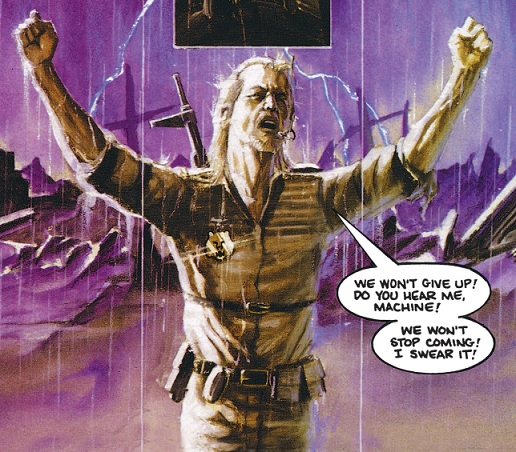


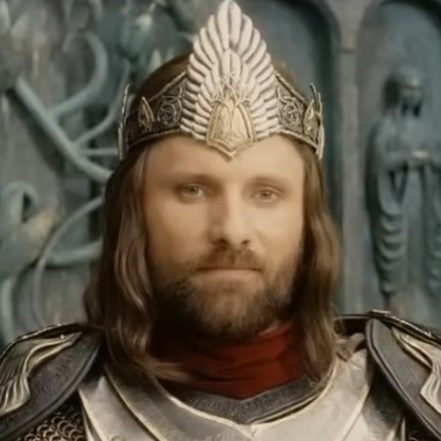




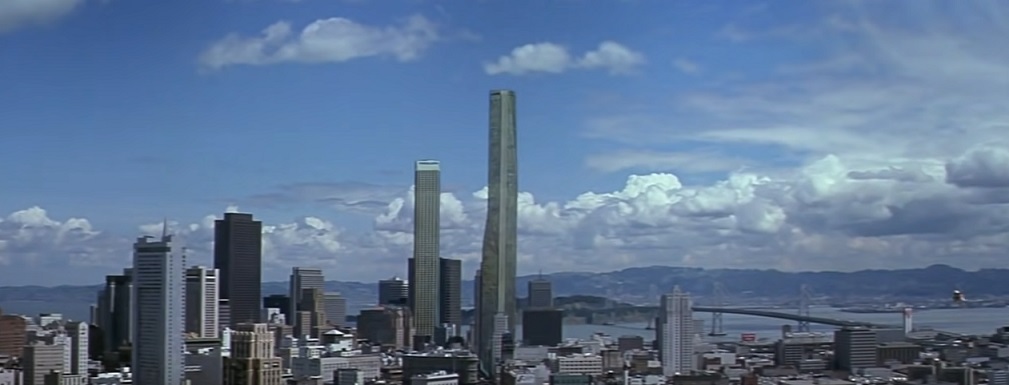


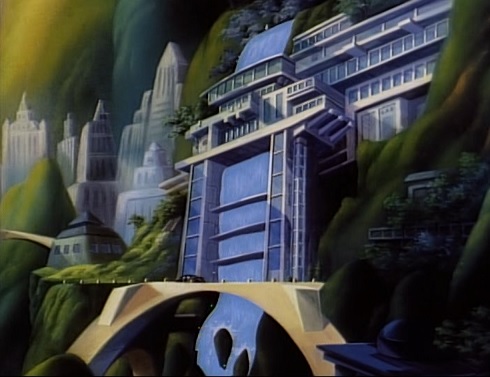
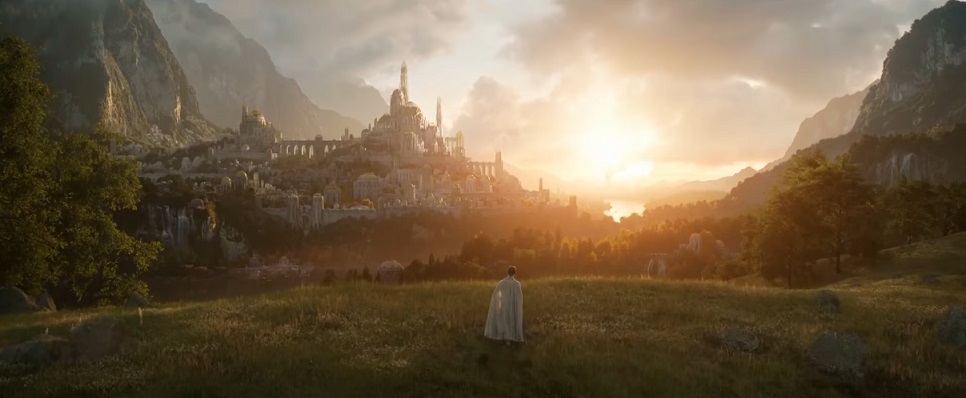
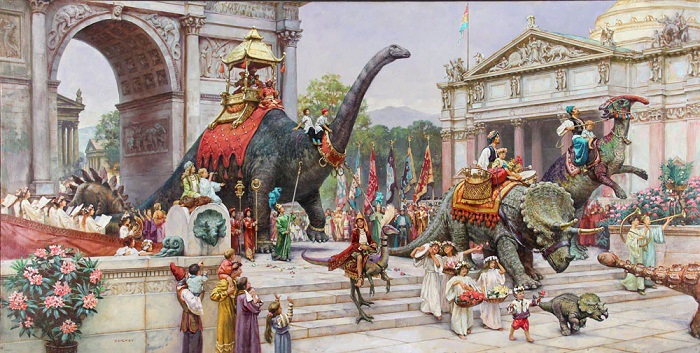



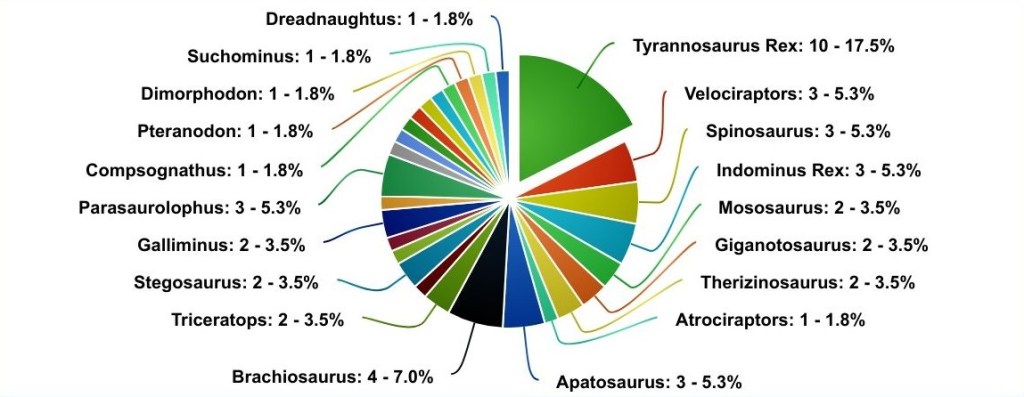
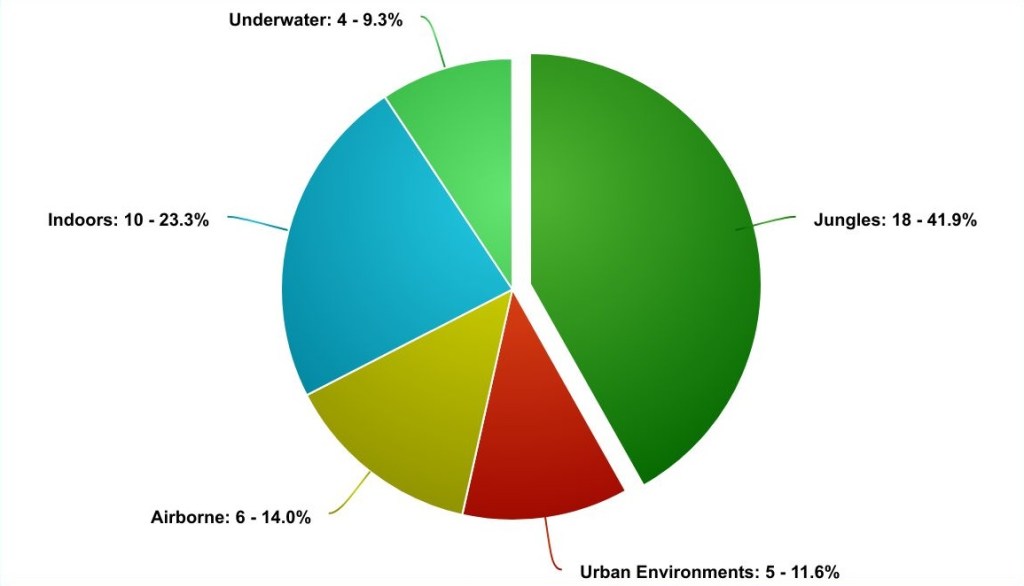


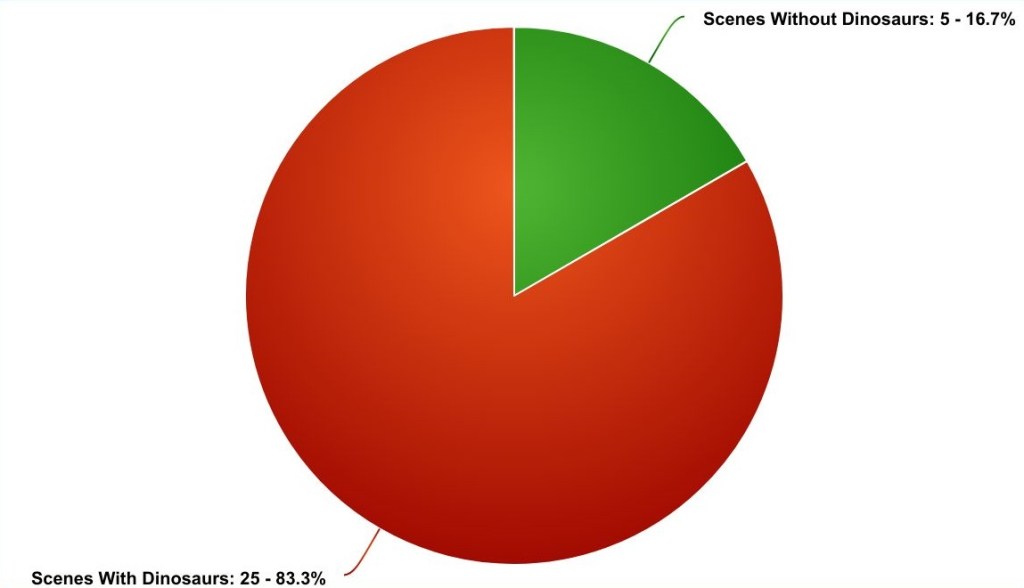


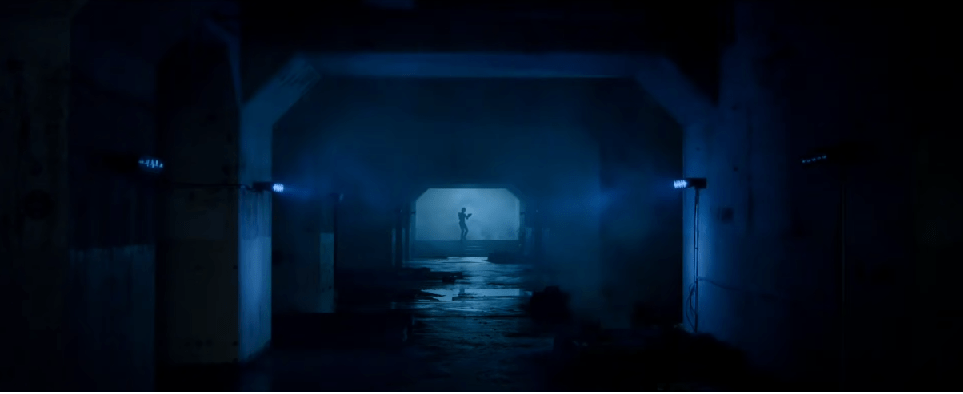


 Imperfect Glass