16 Great Things about ‘The Lord of the Rings: The Rings of Power’ Season 2

In my last article about The Rings of Power, I talked about my 15 favorite things about Season 1. Here – in no particular order – are my 16 favorite things about Rings’ second season. Be warned that this list contains spoilers for not only Season 2, but also future events in the series, and the Lord of the Rings as well.

*All pictures in this article are the property of Amazon.*

1. Sauron’s Death

Season 2 opens with a flashback to Sauron trying to take command of Middle-Earth’s orcs following Morgoth’s fall. Unsurprisingly, the orcs (and Adar) don’t take kindly to being told that they’ll be sacrificed to achieve Sauron’s goals, so they express their displeasure by stabbing Sauron a few hundred times until he explodes, turning the surrounding terrain into a winter wonderland.

Many fans of Tolkien’s works have decried this scene for contradicting Sauron’s character (he tries to reason with the orcs, where he dominates them in the books with fear and terror), but I think this scene is a clever look at Sauron’s journey as a character. Originally, he was a being who loved order and perfection, but during his time as Morgoth’s servant Sauron was corrupted into being willing to enslave, torture, and kill others to get what he wanted. With Morgoth gone, some of Sauron’s original goodness is poking through, and this scene shows him at the halfway point between the good spirit he was originally, and the hate-filled tyrant of the Lord of the Rings trilogy.

Despite contradicting Season One of Rings’ (Adar said that he killed Sauron after the latter experimented on so many orcs; here, he and the orcs kill Sauron before those experiments begin), this prologue is a great way to open the season.

2. Sauron’s Rebirth

Something never elaborated on in Tolkien’s works is how Sauron creates a new body for himself each time he was killed, saying only that it took Sauron longer and longer with each subsequent death. Rings lets us see how the process might have gone: after being killed by the orcs, Sauron slowly rebuilds himself from a few drops of blood, taking the lives of insects, rats, and eventually people before he can finally create a new body for himself and resume his quest to conquer Middle-Earth.

What I like about this scene is that, compared to everything else we’ve seen of Tolkien’s world onscreen, this is something out of a story by H.P. Lovecraft: we’re watching the birth of an abomination from the dark, moldy depths of the earth, something that doesn’t belong to the natural order of things. And while this putrid mass of cancerous growth may look weak and frail, it’s still one of the most powerful and evil things in existence. And in a nice nod to Tolkien’s mythology, the whole sequence ties into his recurring theme that evil cannot create new things, only corrupt what has already been made: where Sauron could once manifest a beautiful form before his fall, now he is forced to take life from others to create a body for himself, one that may seem normal, but is only a mask to hide the evil within.

3. Choose Good

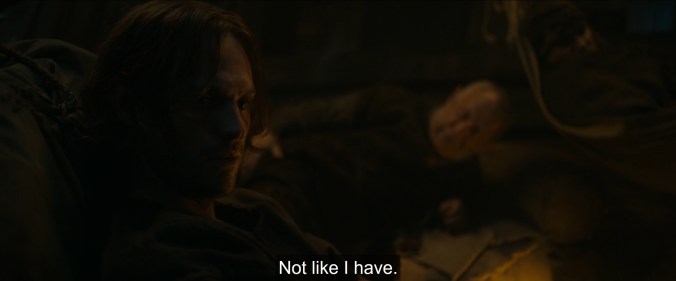
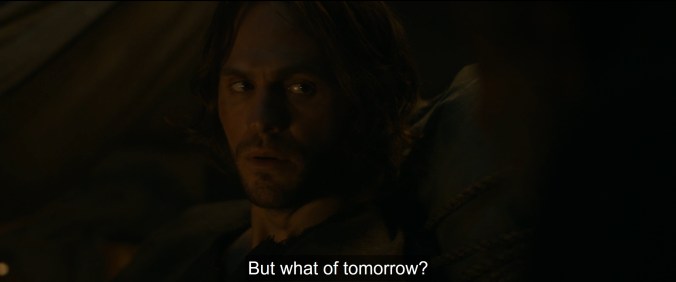
Sauron may have created a new body for himself, but he is now at the lowest point of his entire existence: he’s lost his position as Morgoth’s right hand. He has no armies to command, he’s been exiled from his home in Valinor, and his dreams of creating a perfect, orderly world are in tatters. But being humbled presents him with an opportunity to realize what he’s done and turn his life around, something that he seems to seriously consider when he comes across a group of refugees, one of whom unknowingly offers him the chance to leave his destructive path and choose a new, better one.

Later, when talking on a ship, the same man gives Sauron a brief, but perfect summary of what it means to turn from evil and become good:

I like to imagine that this meeting isn’t due to chance, but actually an act of fate: in The Fellowship of the Ring, Gandalf told Frodo that Bilbo was meant to find the Ring, and that Frodo was also meant to have it. During the events of The Hobbit, Gandalf and Thorin seem to have been guided to meet each other in Bree, which ultimately led to the Quest of Erebor and the death of Smaug, saving Middle-Earth from his wrath.

With all that said, I believe that Eru subtly guided the old man into meeting Sauron and inspired him to say the right things in hopes of helping the fallen Maiar find his way back to the light… but, alas, Sauron chooses instead to be a big meany butt and be evil (and confirming that he was lying to Galadriel about trying to redeem himself in Season 1).

Had Sauron listened to the man and chosen differently, the fate of Middle-Earth would have been very different, indeed.

4. Rhûn

If there’s one thing The Lord of the Rings, The Hobbit, and The Silmarillion has in common, it’s that we don’t get to see a world outside of the standard European fantasy environment (tall mountains, forests, castles, and the like). That’s why it’s such a delight in Season 2 that we finally get to see the deserts of Rhûn – the homeland of the Easterlings – on screen for the very first time.
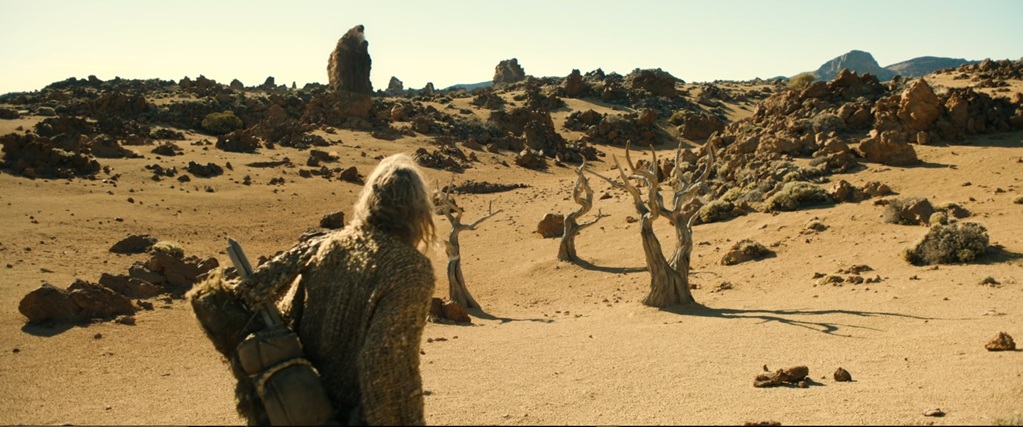
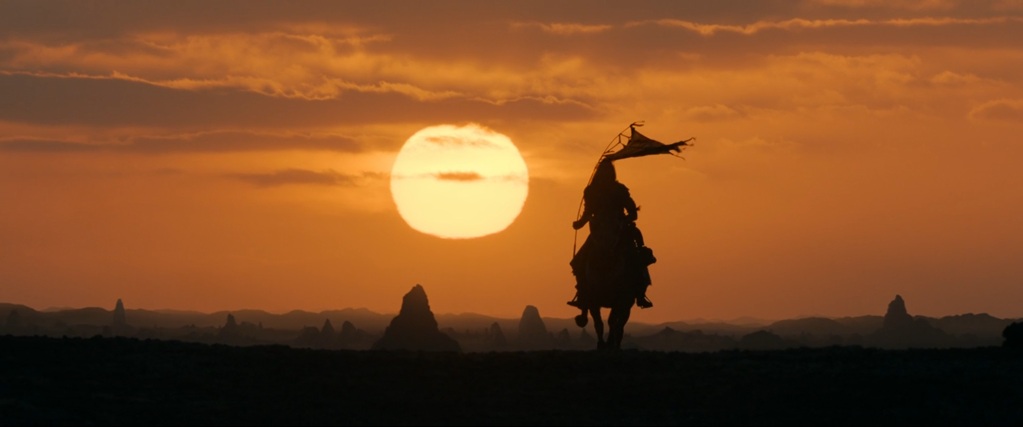
While we don’t get much outside of rocks, dead trees, barren canyons, and lots of sand, it’s great to finally see something other than European climates, and remember that Middle-Earth is so much bigger and varied than what we’ve seen in Tolkien’s books.

5. Celebrimbor

Though he had an important role to play in Season 1 of Rings, where he forged the three rings of the Elves, Season 2 is where Celebrimbor gets to come into his own and shine as one of the most famous elves of the Second Age. As the descendant of the famously fiery and temperamental Fëanor, Celebrimbor is an elf who doesn’t desire fame, power, or ruling others, but only in creating beautiful things and trying to undo the mistakes of his ancestor… a desire that makes him him all-too vulnerable to Sauron’s manipulations.

While he has all the qualities of being a noble hero like Gandalf, Aragorn, and Galadriel, Celembrimbor is unfortunately like Isildur and Bromoir: beings who fight and strive to do what is right at great personal cost, but who’s tales are told as tragedies by those who come after them. Celebrimbor’s a noble and kind-hearted elf, but his determination to make his mark on the world has catastrophic consequences for the world at large.

Yet, his noble intentions, determination to do what is right after realizing he’s been lied to and deceived by Sauron, and only wanting to do good makes him endearing and likeable. Like Diza, he’s an elf you’d be happy to share ale with at a tavern after a long day’s work.

6. Celebrimbor’s Anvil
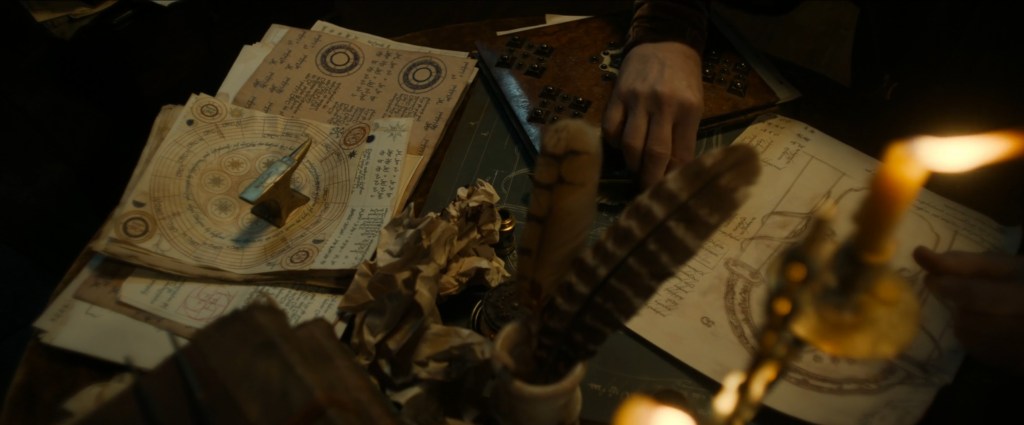
It’s only onscreen for a few seconds, but when Celebrimbor is doing some paperwork in his office, sharp-eyed viewers will see that he uses a tiny anvil as a paperweight, implying that the mighty Celebrimbor, greatest Elven smith of the Second Age, has a good sense of humor. Plus, the image of noble and graceful elves going through the effort to craft, shape, and forge an itty-bitty, widdle anvil is hilarious. Why haven’t we gotten this thing as an officially licensed collectible yet?

7. The Hammer and the Crown

Middle-Earth has its fair share of historical objects that Indiana Jones would be happy to track down, and ‘Rings’ has two big ones in Season 2: Fëanor’s hammer, and Morgoth’s crown.

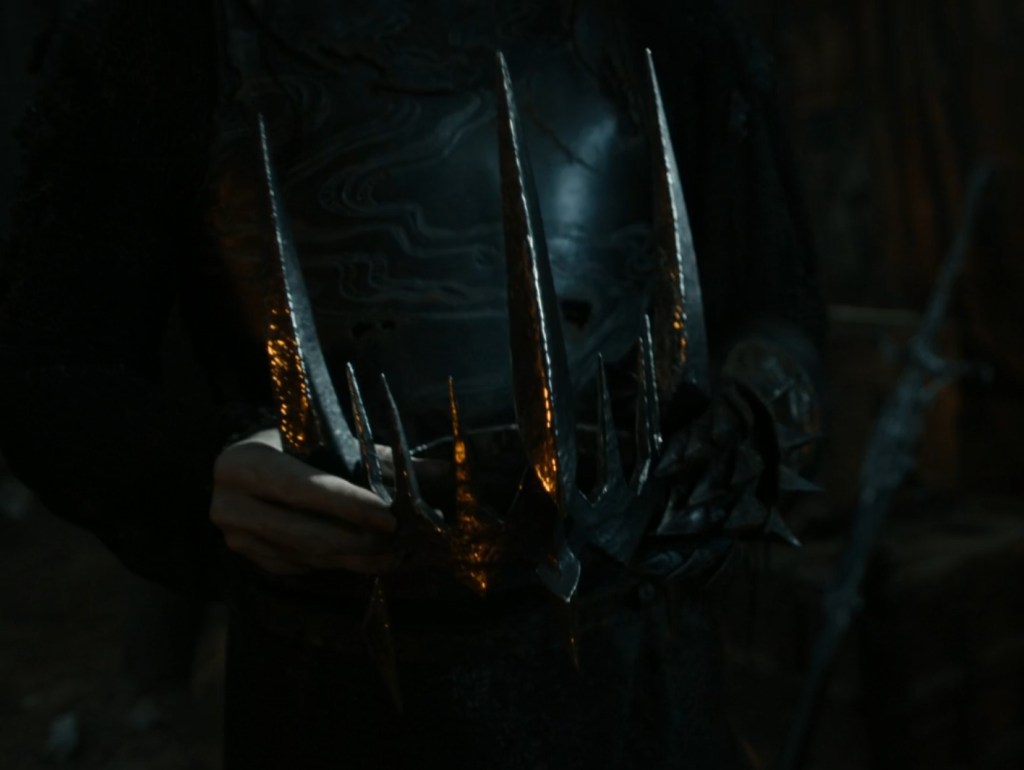
While fans who have only watched the films or seen the show can understand that these are important artifacts, readers of Tolkien’s works will get the most enjoyment out of seeing the hammer forged the most beautiful objects in all of creation (the Silmarils), and that crown that was worn by the most evil being who will ever exist (and that held the aforementioned jewels in its spiky embrace). Both go a long way to help make the world of Middle-Earth feel ancient and lived in, and that they played huge parts in changing the course of history long before the show began.

8. The Nameless Thing

One of the most fascinating parts of Tolkien’s world are the nameless things: eldritch horrors that live in the deepest, darkest fissures deep beneath the mountains of the world that are even older than Sauron. They are only mentioned briefly in Tolkien’s works, but are apparently so frightening that even Gandalf refuses to describe these abominations after encountering them when pursuing the balrog after their fall into the pit of Khazad-dûm. Season 2 gives us a glimpse of one in the form of a giant, grotesque worm-thing that tries to eat Isildur and Arondir before being sliced up from the inside and being (presumably) turned into nameless thing-burgers for dinner.

Is this a scene that doesn’t really add anything to the overall plot? Yes. Could it have been cut out without any effect on the story? Yes. Is it cool to see one of the most mysterious, dark, and vicious things that Tolkien ever wrote about? Heck yes.

9. Mirdania Sees Sauron’s True Form

One of Tolkien’s smartest decisions in writing The Lord of the Rings was not describing what Sauron looks like: he’s an unseen evil, a force so powerful and so dreadful that you don’t even have to be anywhere near him to experience the power of his malice. And despite having more screentime in Rings of Power than both the Hobbit and Lord of the Rings films combined, Rings has never shown Sauron’s true form, only his armor from the First Age and the disguises he wears to interact with others.

The closest we get to getting a glimpse of Sauron’s true form is when one of Celebrimbor’s assistants, Mirdania, accidentally enters the unseen world and sees Sauron as he really is (without realizing who she’s looking at), the experience shaking her to her core… but we don’t see that. All we get is Mirdania describing a tall being with pitiless eyes and skin made of flames. By describing the moment, but not showing it, Rings follows Tolkien’s example by leaving it up to the viewer’s imagination to visualize what Sauron’s true, malevolent form must look like.

One last little twist about the scene: after Mirdania describes what she saw, who’s the first one to comfort her? Sauron himself.

10. The Raid on the Temple

One of season 2’s strongest storylines is showing Numenor’s gradual downfall. While season 1 hinted that the greatest kingdom of Men in Middle-Earth was starting to crumble from within, season 2 brings this rot out into the open as a power-hungry Ar-Pharazôn begins his campaign to take control of the island empire and persecute those loyal to the Valar, the elves, and their ways.

The one scene that perfectly embodies Numenor’s descent into evil is the raid on the Faithful’s temple. Starting off as a peaceful funeral ceremony bidding farewell to all who died on the mainland in the last season, it devolves into Pharazôn’s sniveling weasel of a son – Kemen – gleefully interrupting the ceremony and announcing the destruction of the temple, destroying sacred artifacts for the fun of it, and then emotionally manipulating Isildur’s friend Valandil into starting a fight to justify using lethal force against the faithful, ending with Kemen stabbing Valandil in the back.

This scene, more than any other in the series, showcases the cruelty and moral rot of Numenor. What’s more chilling is that there are no orcs here, no supernatural monsters or ancient evils emotionally manipulating everyone present. It’s just humans being evil to one another, and it’s arguably scarier than any demon Tolkien could conjure up. And the worst part is that this is only a taste of the evil that Numenor is going to unleash upon Middle-Earth at large in the years to come.

(As an aside, I think there’s a very good chance that Kemen will end up being one of the Ringwraiths: Tolkien’s writings strongly imply that at least three Ringwraiths were of Numenorian descent, and it’s easy to see Kemen being nasty and power-hungry enough to accept a ring of power by Sauron. And if he wants to take the throne of Numenor, only to be denied, then Sauron might offer to make him a great lord and promise him a kingdom of his own to rule… Angmar, perhaps?)

11. Sauron’s Deceptions

One of Sauron’s greatest strengths is his ability to deceive and manipulate almost anyone he encounters, including the smartest, wisest, and most powerful elves in Middle-Earth. Yet, the books are vague about how he does this beyond his ability to take fair forms and cast illusions. While most of his manipulations in Season 2 follows the pattern of narcissists abusing others (lovebombing, gaslighting, ignoring boundaries, victim blaming, etc.), we get to see Sauron’s supernatural abilities at work when he conjures a vision of Eregion to subtly trap Celebrimbor. Like the holodeck from Star Trek, Celebrimbor can walk around in this vision, touch things, interact with other elves, and continue his work… completely unaware that the real Eregion is being bombed into rubble by orcs.

This illusion is a fascinating demonstration of Sauron’s power and his ability to deceive others, and makes you wonder how he’s used this ability on others throughout his time in Middle-Earth: It’s one thing to resist lies and flattery, but it’s much harder to resist when the very world around you is a lie and you don’t know it.

12. Who’s Will Is Stronger?

So often in fantasy stories, dark lords and evil-doers have all the power and all the advantages over their good counterparts, including the willingness to do whatever needs to be done to achieve their goals. But Celebrimbor gets a moment to prove that the good guys can be equally as strong-willed: shackled to his desk and unable to stop Sauron from taking the rings that he will use to enslave men and create the ringwraiths, Celebrimbor realizes the only way he can get free is to cut off his own thumb so he can slip through his shackle. But doing so means that he will never again be able to use a hammer, an anvil, and a forge to create things. Celebrimbor’s Eru-given gifts of forging and creating will be forfeit, and his dreams of making Middle-Earth beautiful will be gone.

Knowing all that, Celebrimbor still cuts off his thumb.

While gruesome, this is one of Celebrimbor’s best character moments: when everything is on the line, he is willing to give up his life’s dream for the chance to stop Sauron and save others. While it is, unfortunately, all for nothing in the long run, never let it be said that Celebrimbor did something most of us wouldn’t have the courage to do.

13. Celebrimbor’s Death

Celbrimbor’s death is one of the more gruesome in Middle-Earth media: tortured by being shot repeatedly with arrows from Sauron himself, threatened with supernatural means to ensure he doesn’t die, and then being impaled with a spear through the gut before finally dying, it’s a gruesome spectacle. Yet, one thing that’s puzzled me ever since watching it is why Sauron cries after Celebrimbor’s death. He wouldn’t see Celebrimbor as a friend, nor would a being such as himself be frightened at a prophecy that his rings will one day destroy him. So why the tears?

After mulling things over, I’ve come to think that the reason Sauron cries is because he’s realized he’s crossed the point of no return. All throughout Season 1 and 2, Sauron says that his greatest goal is to heal Middle-Earth of the hurts he helped inflict upon it. Yet, when staring at Celebrimbor’s corpse, Celebrimbor’s words cut through all the lies he’s told himself:

“I go now to the west, blown forth on a wind that you can never follow.”

I think Sauron realized that Celebrimbor was right: After all he’s done, and after all the times he’s rejected the chance to turn away from evil, it now hits Sauron that he can never go back to Valinor, his home. If he did, the Valar would imprison him, find him irredeemable, and thrust him into the void to join his master in endless darkness.

In my opinion, this is the moment where the last piece of good in Sauron dies. From here, he will fully embrace evil to achieve his goals and abandon any attempt to kid himself that he’s doing this to help others. Celebrimbor may have died here, but so did a tiny, flickering spark of light that will never be re-kindled.

14. Adar Turns Back to the Light.

One of my favorite storytelling tropes is when a villain sincerely and truly repents of their ways and turns their backs on evil. That’s why one of my favorite scene in all of Rings – tied with Sauron being offered the chance to turn from evil, as described above – comes with Adar turning back to the light.

Having obtained Galadriel’s ring, Adar seems poised to use it as a weapon to turn the tide in his war against Sauron and finally defeat him once and for all… but that’s not what happens. Though exactly what happened isn’t shown, it’s logical to assume that Adar’s mind was healed by Galdriel’s ring, making him realize how much evil, death, and destruction he had caused since beginning his quest to create a homeland for the orcs. But instead of giving into despair and hopelessness, or telling himself even more lies to cover up the pain as Sauron did, Adar instead chooses to pursue a path of peace.

While his quest for redemption only lasted a few minutes, Adar holds the unique distinction of being the only true villain in Tolkien’s universe – whether in books, films, games, and TV shows – to sincerely repent, something that Sauron, Saruman, Grima Wormtongue, and so many others never did.

While his ultimate quest to have the orcs live in peace was doomed to never succeed, I hope Adar can return in future seasons (due to Elves being able to reincarnate in Valinor if they are killed), and become of the good guys fighting against Sauron.

15. “Dwarves!”

Dwarves!

16. Sauron vs Galadriel

In Tolkien’s writing, an interesting paradox is introduced regarding Sauron: Despite his overwhelming power, strength, and innate magical abilities, he always loses whenever he gets into a physical fight with someone. That trend is played with at the climax of Season 2, when we get our very first scene of the Dark Lord going toe-to-toe with an opponent onscreen when he fights Galadriel for the 9 rings of power. For the majority of the fight, Sauron easily has the upper hand, toying with her mind and easily deflecting her blows before finally defeating her with a stab from Morgoth’s crown, and taking the 9 rings.

While I enjoy the fight for being able to see my favorite fictional villain getting to show off his fighting skills (and using Morgoth’s crown as a weapon is an ingenious and clever idea), I also like how the fight shows that even if Sauron defeated Galadriel, destroyed Eregion, and got his rings, he still lost: Galadriel escapes, and his potential ally and slave will instead be a thorn in his side for the rest of his days, giving hope, comfort, and aid to those who fight against Sauron, and will be one of the major players in his final and permanent defeat.

Sauron may have won this battle, but though it will take centuries for it to happen, he has ultimately lost his war to enslave Middle-Earth, and Galadriel escaping is just the first of many twists of fate that will finally lead to his final and ultimate defeat.

That’s it for Season 2, which I think is a big improvement over Season 1; come back in 2027 when we’ll take a look of my favorite moments from the third season of ‘The Rings of Power’.

Perfect Moments: Toy Story 5’s Ending

Once in a while, you come across a moment in a story that is so perfect that it stays in with you for years, or even a lifetime. These are moments that, in my opinion, are flawless; perfect gems of storytelling that cannot be improved in any way, and are a joy to treasure and revisit again and again.

***

The Video:

Why it’s Perfect

Like many people, I was surprised and a little dismayed with the recent announcement that we’re getting another Toy Story sequel. Not because I hate the series, but because Toy Story 3 already had a perfect ending that tied everything up. Then Toy Story 4 came along and undid it all, and had an ending that had nowhere near the emotional weight it was going for. The thought of Pixar trying to undo that makes it seem like Disney is just trying to wring more money out of a story that should have ended for good over twelve years ago.

While it probably will be nothing like this fan-made pitch on what Toy Story 5 should be about, the idea here is fascinating: if Toy Story 3 was about accepting the inevitability of loss, and Toy Story 4 was about eventually finding a new path for yourself once your purpose in life is complete, then Toy Story 5 should logically be about accepting the inevitability of death. This pitch does a great job of setting that up… and then it ends with a scene that would be the most powerful, most emotional, and most heartbreaking thing Pixar has EVER done. If you haven’t seen the video yet, please do so before reading any further.

Done? Okay then.

The thought of Toy Story 5 ending with Woody reuniting with an elderly Andy on his deathbed, and Andy realizing that Woody is alive is an idea that’s so simple, but emotionally powerful. After decades apart, two old friends reunite for the last time, and Woody breaks the golden rule of toys to never reveal themselves as being alive to comfort Andy on his deathbed. And for a little while, the two reminisce about their lives before both of them pass away together of old age.

Pixar is almost certainly going to do something different than this idea, but if they went with this, it would be the perfect way to end the series for good. At its core, the Toy Story saga is about a toy’s relationship with his owner. And while they naturally grow apart as the series goes on, having them reunite at the very end shows how both have grown and changed, yet the love they have for each other is still there. As the the series’ theme song says, ‘our friendship will never die.’ It faded as time went on, but bloomed in full at the very end.

Beautiful.

The Best Background Characters: The Backflipping Goon

Every story has a cast of characters that we follow and watch and come to love… but what about the background characters? The nameless masses who rarely get our attention? This column examines my favorite background characters who deserve a moment in the spotlight.

***

The Movie:

‘The Matrix Revolutions’

The Character:

A goon with radical backflipping skills.

The Scene:

(The guy in question appears at 2:03)

Why He Deserves A Moment In The Spotlight

You’ve probably heard the saying, ‘Don’t bring a gun to a knife fight.’ Another equal saying should be, ‘Don’t expect aerobatics to save you in a gun fight.’

The goon in this scene distinguishes himself when, after running out of ammo for his pistols, decides that the best course of action is to do backflips across the room. Then he’s shot and dies, complete with a ‘you failed!’ music cue on the soundtrack.

Much like one of Snoke’s guards, this goon stands out because his actions are so nonsenscial. Tactical backflips may look cool, but it’d have been more effective to take cover behind a pillar and survive to keep fighting. But with his sacrifice, Backflip Goon provides a valuable lesson to fighters in fiction: Unless you’re in a comedy where exaggerated actions are used for humorous effect, staying alive in a fight is more important than showing off how acrobatic you are.

For John

2017 was an exciting year for Terminator fans. Not only was it announced that we would get a new film that would be a direct sequel to ‘Judgement Day,’ but it would feature Arnold Schwarzenegger returning as the T-800, and Linda Hamilton reprising her role as Sarah Connor on-screen for the first time since 1996’s, ‘T2-3D: Battle Across Time’. It was a Terminator fan’s dream come true; yet, as filming began and the first promotional material came out, I realized something.

Where was John Connor?

Like many fans, I was wondering why there were no casting announcements for John. Was he not in the film? Were they trying to keep his role a secret? It wasn’t until July of 2019 that James Cameron announced that Edward Furlong would indeed be returning as John, and I was ecstatic. After almost 30 years, we were finally going to have Arnold, Linda, and Edward on screen together again!

Then the movie came out.

Predictably, fans of the Terminator franchise were outraged at John’s death. We had followed John’s exploits, adventures, and growth in TV shows, books, video games, and comics for almost 30 years, only to see him be senselessly killed off. There was no historic last stand, inspiring final words, or seeing John sacrificing himself to save the human race. Instead, we got to see all the struggles and sacrifices to protect him in T1 and T2 be rendered meaningless. ‘Dark Fate’ was the ultimate slap in the face to John, mocking him and his fans.

But what if it isn’t?

Like most Terminator fans, I was angry at John being killed. I had hoped that we would get to see a grown-up John (played by Mr. Furlong) rising from an ordinary life to take up the mantle as humanity’s savior with his mother and a T-800 one last time. Instead, I left the theater disappointed at what could have been.

Yet, as the months have passed, and I’ve thought about the film, I’ve come to realize that, while John’s death was still a mistake, ‘Dark Fate’ shows that he’s still the most important character in both the film and the series. He’s so important that if he were removed from the movie entirely, the resulting consequences would have led to the extinction of the human race.

Madness? The desperate grasps of a fan trying to make sense of a senseless and tragic event? Perhaps. But we’re told on the C-5 Galaxy in the third act that Dani led humanity to victory over Legion, the malevolent AI (‘we took our world back’). In order for that to take place, two things must happen:

1. Dani has to survive.

2. Dani has to learn how to become a leader.

‘Dark Fate’ spends most of its time fulfilling the first task. Dani initially is protected by augmented super-soldier Grace; yet, while Grace is a powerful warrior, she is unable to stop the REV-9 on her own, and would have been killed with Dani in Mexico without Sarah’s intervention. But even with Sarah, the group still wouldn’t have been able to destroy the REV-9. They need Carl – the T-800 who killed John – to finally defeat the REV-9 for good and ensure Dani’s survival.

Yet, Sarah and Carl wouldn’t have been able to help Dani if it wasn’t for John. If we imagine a future where he had lived, Sarah would not have known of Dani’s existence, and would not have come to her rescue on the bridge in Mexico. Dani and Grace would have been killed, and Legion would have won the second machine war.

Carl, too, would not have been present to protect Dani if John had lived. If, say, Sarah had managed to destroy him, then there would have been no T-800 to take on the REV-9. Carl was the one who ultimately had the necessary strength and endurance to destroy the REV-9, but he never would have done so had he not eventually realized what he had taken from Sarah, and then willingly sacrifice himself in the end.

‘Dark Fate’ ends with Sarah setting out to train Dani in how to become a leader and a warrior. Here, too, John also comes into play. Because of Sarah’s experience hunting terminators before and after John’s death, she is the only person on Earth who can train Dani how to fight and destroy them. Furthermore, Sarah still has all the tactical and leadership training she has from the first two films, which she will presumably pass on to Dani as well. With all three sets of skills given to her, Dani will have all she needs to fight – and ultimately destroy – Legion.

Though the mantra of the Terminator series is, ‘There is no fate but what we make for ourselves,’ it almost seems as if the opposite is true: Humanity is destined to fight malevolent AI at some point. It may be Skynet, it may be Legion, but a war is inevitable. Yet, it also seems that there will always be a figure who will rise up and lead humanity to victory. For years, we’ve believed that John was that leader, but ‘Dark Fate’ shows that there can be multiple leaders. When we step back and look at the broad picture, it seems – hard as it is to accept – that John’s death is necessary in the Terminator universe. John, Sarah, and Uncle Bob succeeded in destroying Skynet, and in the process, John had fulfilled his purpose of saving the human race. But would he have been able to do the same against Legion? While fans – myself included – would have loved to see a middle-aged John fighting and defeating an enemy neither he nor Sarah know anything about, I doubt he would have been able to pull it off.

To use a war analogy, let’s say John is the greatest Allied commander of World War 1. His knowledge and experience in trench warfare, chemical warfare, and the like are without compare, and he leads the Allied forces to victory. He’s hailed as a hero and the savior of the civilized world. But what if he suddenly had to lead the allies again in World War 2? While many principles of warfare would remain the same, John’s skills would be obsolete against opponents who have much better technology, weapons, and tactics than he went up against decades earlier. And while there’s a chance he can still win the war, having a younger person who learned from the lessons of the first, and is more familiar with the latest technology, has a better chance of victory.

If the story of the Terminator franchise is humanity’s ultimate victory against malevolent AI, then John can be seen as the commander who, having stopped the machine’s first offensive, ensures that his successor can see the war through to its completion. He is the spark that sets humanity’s ultimate victory in motion. Without John, neither Sarah or Carl would have saved Dani. Without him, Dani would have died.

Without John, humanity would have perished… But it didn’t happen.

Whatever you may think about the movie, in my opinion, ‘Dark Fate’ proves that even in death, John is still the savior of humanity.

Or, if you prefer, you can pretend that this is how the movie ended.

The Third Dimension In Cheeseiness: The Merits of ‘Jaws 3’

https://www.youtube.com/watch?v=5_O8YAy9fG4

The 80’s were an interesting time for Hollywood: Synth music was becoming popular, the era of the muscle-bound hero was born, and we got a brief resurgence of the 3D fad that has poked its head up every few decades; while most of the resulting films have been consigned to obscurity, perhaps none have been both as immortalized and derided than ‘Jaws 3.’

Released in 1983, ‘Jaws 3’ marks a major turning point in the Jaws franchise: It’s the first not to star Roy Schenider and to not take place in Amity. It also marks the point when the series, having run out of a natural way to continue the ‘Jaws’ saga, resorted to gimmicks to keep viewers interested. Instead of a shark attacking a seaside down and threatening its residents and livelihood, we have a theme park in Florida being attacked by not one, but two sharks, as well as focusing on on the sequel trope of having a franchise’s main character’s children take over.

To this day, fans of the Jaws series remain divided on which sequel is worse: ‘3’, or ‘Revenge.’ But as stated earlier in this series, we’re not here to settle the argument, but to see what each film does well, and despite its rather tepid reception (and the fact that if you remove Michael and Sean, the film has nothing to do with the previous movies), ‘3’ is a guilty pleasure, with it’s so-bad-its-good visual effects, late 70’s and early 80’s design (just look at that fabulous underwater restaurant!), and an excellent soundtrack that has some of my favorite pieces in the series (Like this, this, and especially this). With that said, let’s take a look at the third dimension in terror to see what stands the test of time:

5. Sea World is a more visually interesting location than Amity:

Compared to the blues, grays, and whites of Amity, Sea World is refreshingly bright and colorful, and the undersea kingdom has a lot of potential for undersea mayhem, complete with a sunken ship that’s the location for a frantic escape from the shark, and an underwater complex where tourists are trapped and have to be rescued, as well as an underwater control room that is definitely resistant to sharks breaking the windows. Compared to the beaches and open water of Amity, ‘Jaws 3’ has a lot of opportunities for more interesting action at unique locations, and takes full advantage of it.

4. Michael and Sean’s relationships

One of the film’s biggest strengths isn’t the shark, the action, or the effects, but a grown-up Michael and Sean. I like how, unlike so many other horror movie sequels featuring kids who are now adults, their experiences with sharks in childhood haven’t emotionally crippled them: they get along just fine with each other, complete with playful, good-natured teasing and satisfying relationships with their girlfriends. It’s a refreshing change to see them not be nightmare-riddled adults who poop their pants at the mere sight of the ocean.

I also like how, while Sean and Michael are emotionally well-adjusted, there are still some mental scars left from their encounters with two killer sharks, especially Sean. He’s not fond of going in the water, and needs to be coaxed by his girlfriend, Kelly, to even go on a bumper-boat ride. I wish this phobia had been explored more (such as Sean having to overcome his fear of sharks and the ocean to save Kelly), but the film is to be commended for having Sean and Michael be mostly well-adjusted adults.

3. The Professionals are… well, professional

In monster movies, so-called professionals often end up being useless, bumbling idiots, or both. Thankfully, ‘Jaws 3’ averts that by having almost everyone in a position of authority be actually good at their jobs, or at least, not losing their heads when things go wrong. FitzRoyce and his assistant Jack initially come off as smug gloryhounds, but are often the first to drop the cameras and jump in to help when the sharks are swimming around, and their plan to capture the shark – by trapping it in a flow pipe – would have worked if it wasn’t for a safety rope that would have come undone through no fault of their own. Likewise, a tour guide in the undersea kingdom manages to keep guests calm and get them out when things get hairy instead of panicking like everyone else. That kind of professionalism is refreshing to see.

Calvin is a bit mixed: He has a greedy, impatient streak to him, but when he realizes how bad things get, he quickly works to try and make things right. Unlike Mayor Vaughn, when things get bad, he doesn’t try to pretend its not happening or to try and cover it up, and he gets a nice moment at the climax where he manages to save an unconscious worker and get her to safety when the shark attacks the control room (presumably; we never actually see the two get to safety, but let’s be optimistic and assume they did).

2. This unsettling death

Chrissie’s death at the beginning of ‘Jaws’ is rightfully regarded as one of the scariest deaths in horror cinema (sweet Zeus, those screams), but ‘Jaws 3’ has a pretty good one of its own with FitzRoyce’s demise: through a rather unfortunate series of circumstances, he ends up being sucked alive into the shark’s mouth. It’s unnerving to see him still alive in the shark’s throat and unable to get out. Much like the helicopter pilot in the previous film, FitzRoyce faces an awful choice: he can die either by drowning, being shredded by the shark’s teeth, or by blowing himself up with one of his grenades. All the options are horrible, and knowing that there’s no way he’s getting out alive only makes it worse.

1. The most unique climax of the series

If there’s one thing that ‘Jaws 3’ nails, it’s the climax, where the shark rams the underwater control room, floods it, and traps our heroes, who have to kill it by activating the grenade being gripped by FitzRoyce’s corpse, blowing it to smithereens. This is a really unique scenario: our heroes are trapped in an environment that will eventually kill them (they’re underwater and only have a limited amount of air), cornered by a beast that wants to eat them. They have no weapons and no way to defend themselves, and the only way to win is to risk being eaten by the beast to trigger a hard-to-reach weapon that can save them.

While the effects of this sequence are… not that great, the idea behind it is a really cool one, and in my opinion, it’s the most unique climax in the ‘Jaws’ series. The first is unquestionably the best, but in my opinion, ‘Jaws 3’ has a more interesting idea behind it.

While the below-average story, lack of cohesion with the previous two films, and subpar effects drag ‘Jaws 3’ down, it’s helped out with likable characters, a unique location, a pretty horrific death scenario, and the most unique climaxes in the series. But is that enough to make it better than its successor? The debate will no doubt rage for years to come, but tune in next time as we take a look at ‘Jaws: The Revenge’ and see if we can find some redeeming factors in one of the most legendary bombs in Hollywood history.

What we can learn from the many deaths of Jar Jar Binks

NOTE: This post contains videos that feature Jar Jar getting parts of his body ripped off, and depictions of blood.

‘Star Wars: The Rise of Skywalker’ comes out in 17 days, and ends a storyline that’s been going for over 40 years. While much of that story has been embraced by fans of the saga, there are a few elements that most would like to forget, like Ewoks, the holiday special (if you value your sanity, don’t click that link) and Jar Jar Binks, infamous comic relief (and possible Sith lord). With the advent of computer editing, some fans take it upon themselves to rid the galaxy of the infamous gungan; one such video is ‘Han Solo VS Jar Jar Binks’ by Darren Wallace on Youtube:

For many fans out there, this is the catharsis they’ve dreamed of since 1999 (doesn’t hurt that the CGI is impressive, and the rotoscoping on Harrison Ford is top-notch), but at the risk of incurring the wrath of the Star Wars Fandom, I think this video is a good example of how not to kill off an annoying character. Yes, Jar Jar is smashed into paste, thus fulfilling the dreams of millions, but in the process, Han Solo is turned into a cold-blooded murderer.

Consider what happens: Jar Jar lands on the Millenium Falcon while searching for Anakin, briefly struggles with Han (who attacks him first) before having an ear ripped off, and is then thrown into the void of space before being smashed into bloody paste on the Falcon’s windshield. He’s not attacking Han, he’s not trying to hurt anyone, and he doesn’t dance, goof around, or do any of his usual antics; heck, he even surrenders before being killed! Your mileage may vary on how annoying Jar Jar was in ‘The Phantom Menace,’ (personally, I don’t find him annoying), but in this situation, Jar Jar doesn’t do anything to merit such a painful death. It feels heartless and senselessly cruel, like Zara’s death in ‘Jurassic World’

https://youtu.be/LBTE3aH5gpw

For the crime of being annoyed at having to babysit a teenager and her younger brother, Zara is eaten alive and drowns in the lightless void of a mosassaur’s stomach. It’s cruel, ghastly, and grotesque, feeling completely unearned for someone who isn’t the main antagonist. Jar Jar’s death here feels the same way: He may be despised by many in the Star Wars fandom, but does he deserve to have such a cruel death? In my opinion, no.

Now, let’s look at another example of a fan-made Jar Jar demise:

This version, while not as cruel as the first, still features Jar Jar being killed despite not doing anything offensive. However, in this version, his tone of voice at the beginning can be interpreted as being sarcastic, so in this video, he at least antagonizes the main character, making his death feel a little more earned, for who doesn’t like to see bullies and sarcastic thugs get their comeuppance?

Here’s a third death, edited together from a deleted scene from ‘The Phantom Menace’

This one features Jar Jar being smashed to pieces against rocks while doing his best impersonation of the Hamburglar. Here, Jar Jar doesn’t die from the actions of others (who, in their defense, try to save him), but from his own mistakes. Thus, this is a neutral death: He dies by own faults, not from being murdered.

And now, a fourth and final death:

This version of Jar Jar’s death goes for comedy and succeds admirably. Here, Jar Jar irritates Vader to no end, refusing to listen to his orders to leave him alone. It’s easy to imagine ourselves being annoyed by someone who’s as bothersome and pestering as Jar Jar, so it’s easy to side with Vader when Jar Jar is ejected into space… only to come back as an even more-annoying force ghost. Yet, despite Jar Jar being murdered, having it played for laughs and with no long-term consequences makes it easy to accept and fun to watch.

When comparing all four of these deaths, a common thread appears: The ones where the Jar Jar is annoying or antagonizing someone else makes his deaths feel more justified. The ones where he’s not trying to harm or do anything evil make his deaths feel less justified. Therein lies the an important lesson:

If an annoying character is going to be killed off, make their death be earned by being annoying, antagonistic, or playing it for comedy.

While it may be cathartic to see a reviled character bite the dust in a bloody manner, and tempting to write such a demise, doing so risks making those deaths feel sadistic. The most satisfying deaths are the ones that are deserved, not the ones that are cruel.

BONUS DEATH SCENE: Minutes after posting this article, I found out that Jar Jar has actually been blown up in an official Disney cartoon! (he gets better, but good grief, the poor guy just can’t catch a break).

What we can learn from ‘Limbo with Lyrics’

NOTE: The music video for this song features a child drawn in a stylistic manner repeatedly dying violent deaths.

When it came out in 2010, ‘Limbo’ quickly became one of the most famous independent video games ever created, quickly putting developer Playdead on the map. With it’s beautifully dark art style, bleak aesthetics, brutal violence, and haunting soundtrack, ‘Limbo’ is a masterpiece of grim video games… so, naturally, parodies starting coming our way, including this rather amusing song.

There’s only one lesson to learn from this video, but it’s a good one:

Be cautious when doing making light of real-life horrors

If you haven’t played ‘Limbo’, here are two videos to show you what kind of game it is:

https://www.youtube.com/watch?v=YqEw19RhHpk&feature=youtu.be

When I initially started this article, I was going to write about how the use of an upbeat tune and comedic sound effects makes for comedy gold when contrasted with very dark media (which it does very well). After all, such a mix has worked before:

However, I then realized that while that combination of lighthearted fun and horrific suffering is funny for fictional stories, it doesn’t work as well when used in real life: A fun Reggie song about concentration camps in Nazi Germany would be rather… tasteless. So would a happy jazz tune about atrocities committed by ISIS to innocent people. It’s easy and fun to parody Jason Vorhees, Darth Vader, and the Alien and Predator, but when it comes to poking fun at torture, genocide, or the mutilation and murder of ordinary people, we walk a very dangerous line between making a point and being tasteless.

Now, nothing is off limits when it comes to comedy. Writers should be free to do dark comedy if they wish, on whatever subject they wish. But discretion is important: Doing a parody song about how millions can’t pay their bills, afford insulin, or even a place to live can be funny because it critiques society and makes a point. Doing a Reggie song about children having limbs hacked off because their parents couldn’t make daily quotas on a rubber plantation probably won’t have the same effect.

When audiences watch or read comedy, they want to laugh and get away from the horrors of the world, if only for a few minutes or even a few seconds. As writers, we have to be careful how we use horror to make them laugh. If we use the horrors of a fictional world, we have more leeway because those horrors don’t really exist. But if we use the evil that surrounds us in everyday life, we must be careful of the point we’re trying to make… unless we’re talking about people who push shopping carts in grocery stores at half a mile an hour and block isles so that no one can get past them. They’re fair game.

What we can learn from: ‘Ring One’


One of the greatest pleasures of our digital age is how easy it’s become for fans to create crossovers of their favorite franchises and play around with all manner of ‘what if?’ scenarios. Most of these revolve around characters and factions from different franchises fighting each other, but every so often, we get a crossover that tries something a little different.

This mashup of ‘The Return of the King’ and ‘Rogue One’ sounds like it would focus on, say, the Fellowship of the Ring infiltrating Scarif to steal the Death Star plans (Oh, how I would love to see Legolas taking out stormtroopers with his arrows), but  ‘Ring One’ tries something we don’t see very often in these mashups: Tragedy.

While it’s fun to imagine the Empire and the free people of Middle Earth fighting one another, and our heroes saving Middle-Earth, this mashup shows how it would really go: Everyone would die. Frodo, Gandalf, Aragorn, Sauron, and everyone else are obliterated by the Death Star. Yet, while such a situation can be depressing, ‘Ring One’ makes it a great example of the ‘Face Death with Dignity‘ trope. We’re so used to seeing characters be brave and courageous when facing impossible odds in everyday life, but what happens when they face their inevitable deaths? Are they still brave and courageous? Do they try to flee, even when it’s hopeless? Do they pray? Do they try to comfort others?

For writers, having our characters know they’re going to die is a fantastic way to see their deepest qualities, to find out who they really are when they face the end. Here, Frodo still tries to get to the Crack of Doom, Sam spends his final moments of life trying to comfort him, and Gimil and Legolas finally reconcile from their trilogy-long distrust of each other.

Is it sad to see the Fellowship all die? Yes. But it’s beautiful in a bittersweet way: some of fiction’s most memorable moments occur only at the end of a character’s life, moments that can stay with us like nothing else can. We remember those who give their lives to save others, who spend their final minute trying to comfort someone else, or refuse to give in to fear. When you bring your character’s stories to a close, you have a chance to give them one final, shining moment of glory. Take advantage of that, and you’ll give your audience a moment that will stay with them forever.

Favorite moments: ‘You’re going to die. That’s what’s happening.’

We all have our favorite moments in movies, books, and games, moments that stay with us long after the story is over. This column is my attempt to examine my favorite moments and see why they stick with me.

***

The Movie

‘The Grey’

The Scene

Why it’s Great

It happens all the time: Someone gets injured. They’re bleeding out, they’re in shock, and their comrades, friends, and those they love are frantically telling them that they have to hang on, that help will be there soon, and that they’ll pull through.

How often do you see someone tell the injured person that they’re going to die?

When I first saw ‘The Grey’ back in 2011, this is the scene that stuck with me after I left the theater. Very rarely had I come across a story where a dying person was told, point-blank, that they’re going to die. But while Ottway’s honesty seems as cold as the frozen wastes of Alaska, the resulting scene is – surprisingly – quite touching. While he doesn’t mince words with Lewenden about what’s happening, Ottway does his best to make Lewenden’s last moments as comforting as possible.

Death has a way of revealing who someone really is when they’re faced with the unknown, and all their defenses are gone. There might be no better way to find out what a character is like than when they’re staring death in the face. in ‘The Grey’ we learn everything we need to know about Ottway in one scene: he’s a man who doesn’t hold back on telling the truth, no matter how hard or uncomfortable it is. Yet, he’s not a cruel, heartless person, and does his best to help others, no matter how grim things are, even if it’s only making someone’s death a little less fearful, a little terrifying as they slip away, turning what could have been a sad, heartless scene into one of the most touching moments of the film.