My Zombie Apocalypse Team

As December draws ever closer, and retail workers start going mad from hearing Mariah Carey singing about Christmas several thousand times a day, I figured it would be fun to extend spooky season just a bit longer to counter the too-early holiday cheer by trying my hand at the ‘My Zombie Survival Team’ meme that’s been floating around the internet since 2010. For those who aren’t aware, the meme’s exactly what it sounds like: You are heading out into a zombie apocalypse, but you get to choose who will be on your team: The leader, the brawler, the weapons expert, the smart one, the medic, the one who can move really fast, the team mascot, and the inevitable annoying guy or gal who will die first.

While it would be easy to recruit non-humans who could wipe the floor with the undead menace (Optimus Prime, Dracula, the Terminator, etc.) let’s make things interesting and pick only humans with no supernatural powers. Here’s who’d be on my team:

Team Leader: John Connor from ‘The Terminator: The Burning Earth’
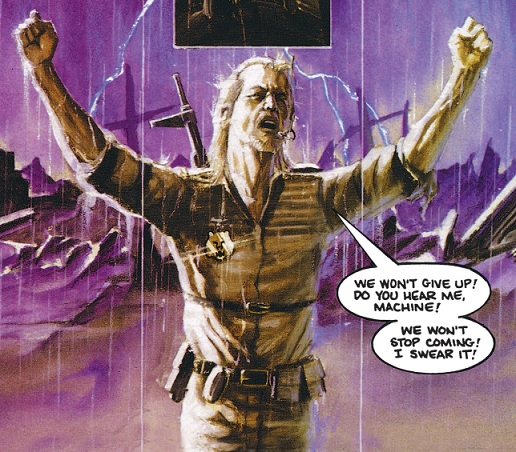
Image: Dark Horse Comics

There’s no shortage of leaders in fiction who could lead a small group of people trying to survive a zombie apocalypse, but John Connor’s resume is particularly impressive: As the man destined by fate to save humanity from Skynet, a middle-aged John has kept humanity alive as the war against the machines reaches its 40th and final year, a testament to his leadership skills. But John’s no armchair general; even at his advanced age, he’s still fit enough to climb cliffs, run, and engage in combat with Skynet’s forces while getting only an hour of sleep at a time, and has the ability to think quickly and efficiently in life and death situations. And when worst comes to worst, John is willing to make impossible choices, such as euthanizing injured people who can’t be saved, a decision that would be valuable (if unwanted) in a zombie apocalypse.

Strengths:

*Decades of combat experience leading humanity in a war against a highly-intelligent supercomputer with legions of zombie-like enemies.

*High level of compassion towards people and reverence for human life, which would help survivors trust him.

*Great physical stamina and combat abilities for a man his age, reducing his chance of becoming a burden to others.

*Destined by fate to save the human race, whether it be from Skynet or a zombie apocalypse.

Brawler: Indiana Jones

Image: Disney

The world’s most famous archaeologist would be a great addition to any zombie team: his decades of experience in exploring tombs, lost cities, and swinging around on his whip would be invaluable when it comes to getting through abandoned cities, towns, and dangerous locations left to crumble in the wake of a zombie onslaught. And while there are others who are stronger, bigger, and faster, Indy takes up the mantle of the group’s brawler because of his ability to quickly improvise when taking on opponents – sometimes several at a time – who are better at fighting than he is. It also helps that Indy has almost supernatural amounts of luck; no matter how bad or hard things get, the universe always seems to step in to give Indy a way out, whether when trying to save the Ark from a convoy of Nazis, or when taking on another convoy of Nazis armed with a tank; such a gift would be a huge advantage in taking on the undead and hostile humans in a post-apocalyptic world.

Strengths:

*Extensive experience in one-on-one fights, which would come in handy when fighting hostile survivors.

*Able to improvise on the fly and frequently defeat opponents with more skill, strength, and numbers than him.

*Possesses incredible, almost supernatural luck when it comes to getting out of hostile situations.

*Years of experience exploring dangerous locations would translate well to exploring abandoned cities.

Weapons Expert: Gabe Logan

Image: Sony Computer Entertainment

The protagonist of the Syphon Filter video game series joins my team as its weapons expert: as a former soldier in the US’s special forces, and a secret agent who single-handily took down a huge, secretive black-ops agency who tried to unleash a manufactured virus upon the world, Gabe is a master of modern combat, equally capable of using stealth and raw firepower to achieve his objectives, and can use virtually any modern weapon, whether they be pistols, submachine guns, rifles, shotguns, grenade launchers, explosives, and even knives with incredible accuracy. When Gabe’s skill with firearms is coupled with his incredible physical strength (he can hang one-armed and fire a one-handed weapon with perfect accuracy), and tactical abilities (he’s taken on and defeated soldiers in bullet-proof armor, attack helicopters, and even tanks) he becomes the group’s all-around weapons expert who can engage zombies in a full-on assault, quietly take them out one-by-one, or snipe them from afar. Finally, Gabe is very trusting towards other people and is a natural leader, having led the Agency after bringing it down, making him an invaluable member of any team going through a zombie-infested wasteland.

Strengths:

*Over thirty years of combat experience in a multitude of environments around the world that required both open combat and stealth, allowing him to tackle any situation involving zombies or hostile humans.

*Excellent marksman with almost every known modern weapon.

*Good inter-personnel and leadership skills.

Brains: Aragorn II
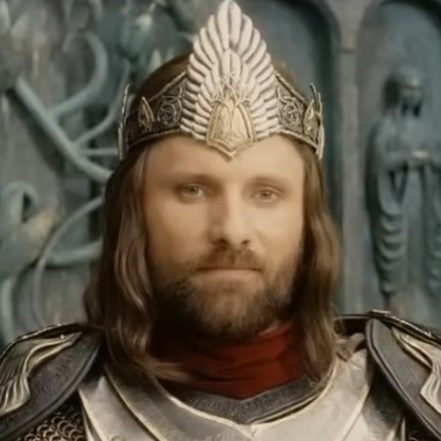
Image: Warner Bros. Pictures

When most people think of the brains of a group, they imagine a computer genius who can hack any computer system and help restart civilization after the zombies are wiped out. But I think a certain kind of intelligence is needed in a zombie apocalypse: with technology all-but guaranteed to fail and be decades away from being restarted, a better choice would be someone who is skilled in the art of surviving off the land, and Aragorn, son of Arathorn, is the right man for the job.

While he’s best known for being a great swordsman and the king of Gondor after Sauron was defeated (spoiler alert for a 69 year old book), one of Aragorn’s often overlooked abilities is his time spent wandering Middle-Earth as a ranger for 57 years, giving him plenty of experience in hunting, finding food, and using natural resources to cure and treat wounds and diseases in lands full of orcs, bandits and monsters, all of which would serve him well in the desolate lands of a zombie hellscape. Those skills are further augmented from the knowledge and wisdom Aragorn learned from growing up with elves in Rivendell, and from the wizard Gandalf.

If you’re looking for someone who has the smarts to help you survive in the wild when you’re not being attacked by brain-eating zombies, and to help you take out zombies when they are attacking, Aragorn’s your man.

Strengths:

*Almost 60 years of experience surviving and thriving in the wildness against monsters and hostile humans, making survival in a post-apocalyptic wasteland much easier.

*Excellent leadership skills from serving as king of Gondor for 122 years, giving him unmatched experience when dealing with friendly and hostile groups, as well as diplomacy. (John Connor remains team leader due to leading armies in fighting Skynet non-stop for decades, where Aragorn primarily ruled in a time of peace.)

*Excellent melee and swordsmanship skills, an invaluable asset in a world where bullets would become very rare.

Medic: Dr. Beverly Crusher

Image: Paramount Pictures

It was surprisingly hard coming up with a pop culture healer who didn’t have magical abilities, but I ended up going with Beverly Crusher, chief medical officer on the Starship Enterprise D and E. Her biggest advantage in taking on the role of the group’s healer is that she has the best medical equipment the 24th century has to offer. Even if she can only carry what’s in an expanded medkit, that would include a dermal regenerator for treating minor skin wounds, an osteogenic stimulator for minor bone fractures, and a medical tricorder, an invaluable device that could help in the treatment of (presumably) almost any known ailment, and possibly a regular tricorder, which can possibly act as a miniature library of 24th century data and information, which would be very handy when it comes to rebuilding the world after the zombie apocalypse is over. But that doesn’t stop there: as shown in ‘The Next Generation’ episode, ‘The Survivors’, portable replicators exist, so if Beverly knows she’s going into a zombie apocalypse wasteland, she’d make sure to carry one to replicate an almost limitless supply of food, drink, medical supplies, and clothing. And because Starfleet personnel don’t go into the field unarmed, Beverly would also carry a personal phaser, and possibly a phaser rifle, both of which would be an invaluable tool and weapon against the living dead.

However, even 24th century technology requires energy to operate, and would eventually die and become useless. But even then, Beverly would still have her medical training to fall back on, and like almost everyone else on this list, Beverly has an aptitude for leadership, benefiting her roles as head of the Enterprise’s medical teams, and Starfleet Medical in general. Throw in her ability to be cool under pressure and ability to fight when needed, and Beverly becomes an invaluable member of any zombie-fighting team.

Strengths:

*Carries multiple weapons and tools from the 24th century that would make survival much, much easier.

*Extensive medical training, allowing her to treat a wide array of ailments and injuries.

*Ability to remain cool under pressure.

*Apt at both leadership and combat when the need arises.

Speed Fighter: Doom Guy

Image: id Software

Finding a human who can fight hard and fight fast without supernatural abilities or technology that would inevitably run out of power is tricky… but there’s one guy who is not only fast, but arguably the best fighter out of anyone in this group: Doomguy, the protagonist of the long-running Doom series. For the purposes of this list, we’re sticking with Doomguy as he appeared in the original 1990 series, where he is an ordinary human without the supernatural abilities from later games. But why does a heavily-muscled space marine become a speedster? Easy: Doomguy is so fast, he can outrun rockets! To be more specific, he can reach speeds of up to 90 miles an hour while weighing over 1,200 pounds, meaning he has the strongest legs in human history. Couple this with his unbreakable will and experience in fighting zombies (and demons), and Doomguy becomes the group’s sledgehammer against the zombie hordes; the only thing stopping Doomguy from taking care of everything himself while the others relax and sip pina coladas from Beverly’s replicator is that he’s just as vulnerable to damage as any other human, meaning that if he’s shot enough or ganged up on, he’d still be killed. But even as a glass cannon, Doomguy’s speed, brawn, and combat skills make him an unbeatable ally in the fight against the undead.

Strengths:

*Endless stamina and the fastest running speed of any human who has ever lived.

*Unbreakable will from fighting thousands, if not millions of zombies and demons both in our world, and in Hell itself.

*Experience in using a variety of weapons ranging from his fists, rocket launchers, and plasma weapons.

Mascot: Ellen Ripley

Image: Disney

Mascots are supposed to be cute, adorable, an animal, or otherwise sympathetic person. But for my group’s mascot, I went with Ellen Ripley. She’s not cute, she’s not adorable, and she’s not a happy-go-lucky innocent, but Ellen represents some of the best humanity has to offer: Gifted with the ability to think and act through fear no matter how frightened she is, Ellen can combine that with her pragmatic, no-nonsense leadership to become a force to be reckoned with, so much so that a bunch of battle-hardened marines turned to her – an untrained civilian – to help lead them when aliens wiped out half their squad.

Yet, beneath her fierce, focused exterior is a woman who cares about others and is capable of acts of extreme bravery in the face of overwhelming danger. While Ellen can fight, her biggest strength is being the rock that people can cling to when things are at their worst. More than anyone else in the group, Ellen demonstrates humanity at its bravest, and that earns her the mantle as the face, heart, and soul of the team.

Strengths:

*Extraordinary ability to think and act through fear.

*Pragmatic, no-nonsense leadership abilities.

*Extreme bravery in the face of danger.

Guy Who Dies First: Helena Shaw

Image: Disney

As the co-protagonist of Indiana Jones and the Dial of Destiny, Helena may be quick on her feet and cunning, but she would be the first to die: As a con artist who ultimately only cares about herself, Helena wouldn’t hesitate to sacrifice everyone else to save her own life the moment things got dangerous, or bolt after grabbing whatever supplies she could carry. Either way, Helena would quickly find herself alone and surrounded by dozens or hundreds of the undead. While she’d be able to evade them for a time, she would inevitably reach a point where she has no one to help her (or she’s being actively shot at by people she’s double-crossed), and be quickly turned into Purina zombie chow. While ruthlessness and cunning would be useful assets in a zombie apocalypse, having friends and allies to help you is an even greater advantage, and selfish con artists would quickly find themselves in short supply of both.

Strengths:

*Being able to emotionally manipulate and deceive people.

*Quick on her feet.

Conclusion:

When it comes to survival in a zombie apocalypse, it’s tempting to assemble a team of people who are excellent warriors, tough, and all-around badasses who can survive just fine on their own. But if a zombie outbreak rally happened, there’s one thing that would matter more than anything else: being able to work together with others. While pop-culture loves lone wolves like Rambo, a group would realistically have a much higher chance of survival when it comes to fighting millions, if not billions of zombies: being able to cooperate with others, sharing resources, and having someone to watch your back leads to a higher chance of survival compared to a lone individual who gets injured with no one around to help them. That’s why I think my team, which relies heavily on those who are skilled in both leadership and combat, would have an excellent chance of survival. But what about you? Who would you have on your team? Let us know in the comments below!

Revisiting The Syphon Filter Trilogy: Part 4 – Conclusion

If you were fortunate to have played video games in your youth, you probably had some favorites that you loved going through again and again, and the idea of going back to them years, if not decades later, can feel like a trip back to a more innocent time. But time is a cruel thing, and revisiting said games often reveals outdated graphics, a story that isn’t as gripping as you thought it was, frustrating gameplay, or being so outdated that you just can’t enjoy it anymore. But for me, the Syphon Filter trilogy manages to withstand the test of time. While graphically and technologically outdated, the gameplay is still as gripping as ever, the story and characters still hold up, and the music is as awesome today as it was over twenty years ago. From beginning to end, the PS1 Syphon Filter trilogy is a solid example of an action-adventure spy thriller done well… with one exception.

When going back through the trilogy, I expected the first two games to hold up well, which they do. When it came to the third game, I was expecting to be a fun experience, albeit with the weakest story. But with the passage of time, I was surprised at how much Syphon Filter 3‘s story stumbles, sometimes quite badly. In the first two games, every level – no matter how frustrating or mediocre – advances the story in a meaningful way. But Syphon Filter 3 has several levels that don’t do that, due to its biggest issue: there are too many flashback missions.

Like every literary tool, flashbacks are not inherently bad, but Syphon Filter 3’s problem is that half the game consists of flashbacks, and most don’t add anything to the main conflict of stopping the Syphon Filter virus. All the Afghan missions, Montana militia missions, and Costa Rica missions could have been removed and the story wouldn’t have been harmed by their absence. By comparison, there’s only four levels from the first two games that could be removed to similar effect (Pharcom Elite Guards, Colorado 70 highway, returning to the Pharcom museum in Syphon Filter 2, and Volkov park). Had Syphon Filter 3’s flashbacks been removed, it would have freed up more time for modern-day missions that would have continued to move the story forward.

When we step back and view the Syphon Filter trilogy as a whole, it has a very strong first act, an equally strong second act (with a few stumbles), but comes to a halt in the third act, only finding its footing again at the very end when Gabe starts gunning down terrorists in the Senate hearing building. And with that in mind, I believe the greatest lesson the trilogy offers writers is this: limit using flashbacks in stories as much as possible, and if they do appear, to have them directly contribute to the story’s main conflict. While it’s nice to take the time to develop protagonists and see what adventures they had before the story, that development shouldn’t come at the expense of the story, especially not one that’s in its final act. And much like revisiting a beloved game series, there’s nothing wrong with reminiscing about the past, but not when it comes at the expense of the present.

Revisiting The Syphon Filter Series: Part 3

The year is 2001, and the Playstation era is coming to an end. The next generation of video game consoles are coming out with games that take advantage of new hardware to deliver unparalleled graphics and experiences. It was easy to assume that the Syphon Filter story would jump ship and continue on the Playstation 2, but Sony, to the surprise and delight of people like me who couldn’t afford a shiny new console, released Syphon Filter 3 on the original Playstation instead, bring Gabe Logan’s story to an end. (While leaving things open for further sequels, which would eventually come along a few years later.)

Syphon Filter 3 is something of an odd duck in the original trilogy: the story consists of Gabe, Lian, Lawrence Mujari, and others testifying in Congress about their involvement with the Agency and the Syphon Filter virus, meaning that half the missions are flashbacks, with the other half mainly treading water until the finale. Coupled with only a few new additions to the franchise (a few new weapons, slightly better graphics, and the addition of mini-games), and it’s easy to see why many fans see Syphon Filter 3 as a mission-pack sequel. I agree with that assessment, but that doesn’t make Syphon Filter 3 a bad game, though I do think it’s the weakest of the trilogy; most of the present-day missions feel like padding that doesn’t advance the story (such as everything that takes place in Ireland), and I would have preferred to have a longer climax instead of just two levels. But the game does have the most variety of the series when it comes to locations and playable characters, and it continues the series’ trademark of unique action sequences. Best of all, though the story is left open for further sequels, the main storyline of the Agency and the virus itself is wrapped up well enough that the saga could have ended here. And for people like me who aren’t fans of what came after, this is indeed the preferred ending. (Mara’s submarine in the post-credit scene? It developed a leak and imploded, so the virus is still lost on the ocean floor.)

Let’s take a look at Syphon Filter 3’s levels and see how well they stand the test of time. And as with the previous two articles, this list will spoil the story for anyone who hasn’t played the game yet.

19. Aztec Ruins

It’s only fitting that the last game in the PS1 trilogy goes back to where everything started and explores Gabe and Lian’s mission to Costa Rica that we saw in the opening cutscene of the first game. While SF3 lets us discover that Gabe got to do lots of cool stuff, we also learn that poor Lian was stuck running around the labyrinthine levels of some Aztec ruins to rescue lots of scientists, destroy virus samples, destroy computers, retrieve artifacts, warn Gabe about mines, file her taxes, and do a book report on War and Peace. Okay, maybe not the last two, but like the Agency Bio-Labs of SF2, and the abandoned cathedral of SF1, this is a huge level, but nowhere near as fun, and twice as long, and it’s surprisingly easy to miss some of the things you need to find or destroy, leading to lots of tedious backtracking. It also has a whopping 26 checkpoints, the highest of any level in the series!

Best story moment: Meeting Dr. Elsa Weissinger for the first time, story-wise, the same woman who will infect and experiment on Lian and so many others in future games.

18. Waterfront

Despite their importance when it comes to receiving and shipping goods responsible for the functioning of modern society, I’ve never found docks to be interesting places for action sequences, and the Waterfront level is no exception. Aside from the ever-solid gameplay, there’s nothing really memorable here.

Best story element: Gabe and his new partner Maggie Powers learning that the IRA has the virus and is trying to escape so they can unleash it upon Europe, giving the player a very good reason to go after them.

17. Dockyards

More of the same as the Waterfront level, save learning that the guy you’ve been sent to save is actually an IRA operative. Oh no! Thankfully, you manage to kill him before he escapes with the virus. Yay!

Best story element: Watching the SS Lorelli be sunk, taking the virus with it to the bottom of the Atlantic ocean and stopping anyone else from getting their hands on it, ensuring that all your efforts were successful. Plus, the bubble sound effects of the sinking crates is cartoonish and unintentionally funny.

16. Australian Outback

Lady power time! This modern-day mission has Lian tracking down Dr. Weissinger to kidnap her and gain more information about who’s truly behind the Syphon Filter virus, but ends up with her doing everything she can to save the local Aboriganies, who have become unwilling test subjects. Gameplay-wise, there’s nothing extraordinary here, but but I like how this is the first mission in the series where all the main characters are women (Lian, Weissinger, and Powers), which is a refreshing change of pace from the normally testosterone-filled spy genre.

Best story element: Lian changing her mission and refusing to give up on the test subjects, as she knows exactly what it’s like to be infected by the virus and wants to spare others from suffering as she did.

15. Pugari Goldmine

Lawrence Mujari gets his chance to shine with a flashback mission detailing his efforts to free trapped slaves from a mine in Africa… though there’s not too much to this level, aside from the satisfaction of freeing workers being held against their will.

Best story element: The protagonist infiltrating a facility to free people being held against their will.

14. Pugari Complex

A continuation of the previous mission, this one starts off with Lawrence getting to ride a mine cart out of a collapsing mine, a great way to start things off. Aside from that, though, this is another average level with no bad elements or standout moments.

Best story element: Finally learning the origin of the Syphon Filter virus: That it came from a mine in South Africa, rather than being something engineered in a lab.

13. Yuendumu Village

Continuing on the previous mission, this one has Lian sneaking into a remote village to save innocent Aborigines before they can be executed. The Syphon Filter series have few missions dedicated to saving innocent people, and this is one of the better ones, combining stealth with a moral imperative. Being able to eliminate the man responsible for it all is just icing on the cake.

Best story element: Elsa Weissinger deciding that if she’s going to be betrayed, she has no qualms about betraying her former employers, and gives Lian a data disk that will allow her and the others to finally unravel who is behind the entire Syphon Filter operation.

12. Underground Bunkers

Every Syphon Filter game features a level revolving around sneaking through darkened, underground passages without a map, and SF3’s contribution is the Underground Bunker, where Teresa has to escort her new survivalist friend, Dusty, and his pregnant mother to safety while being swarmed with rogue NSA agents. So not only do you have to get through a very dark and easy-to-die mine complex, but you have a dreaded escort mission as well. Still, the claustrophobia here is effective, and it’s satisfying to get Dusty and his mom to safety at the end.

Best story element: Having to escape rogue government agents with a pregnant woman who could give birth at any moment, making said escape all the more challenging.

11. Kabul, Afghanistan

The Afghanistan levels of Syphon Filter 3 are dark, moody, and atmospheric, and the first one sets the stage with Lian infiltrating the war-torn ruins of Kabul. The stage excels at feeling like a warzone that’s momentarily quiet, but the big draw here is learning how Gabe and Lian met for the first time, beginning a partnership and friendship that would last for decades… but you know what’s even cooler? Getting your hands on a gun that can shoot through walls!

Best story element: Saving an extraction helicopter from four goons with grenade launchers by shooting said goons with a gun that can shoot through walls.

10. Costa Rica Plantation

Years after we first saw it in the opening cutscene of SF1, we finally get to see exactly what happened when Gabe and Lian reached Rhomer’s plantation in Costa Rica. While the cutscene just revealed that poor Ellis was executed, and that Rhomer set everything on fire, we get to see what really happened, which includes Gabe gathering samples of the virus, freeing slaves, sabotaging helicopters, and avoiding land mines. What’s more impressive is that this is the trilogy’s first jungle level, and it’s pulled off well considering the technical limitations of the original Playstation.

Best story element: Seeing Gabe freeing slaves, and then gunning down the people who were keeping them against their will.

9. Militia compound

With the treasonous rogue agents exposed, Teresa has to try and save as many survivalists as she can from those determined to wipe them out. This is a standard level, but like it’s immediate predecessor, the atmosphere and music are top-notch, and it’s neat to meet Stevens – the mastermind of the Australian massacre – decades before that happened. While it’s tempting to kill him, alas, that would create a time paradox, which means the player has to let Stevens live, while knowing how he will meet his ultimate end decades later.

Best story element: Some of the survivalists remembering how Teresa helped them out and returning the favor by giving her a grenade launcher to help blow up those dastardly rogue agents.

8. Paradise Ridge

In a twist I didn’t see coming, it turns out that Teresa was only wounded by Jason Chance at the end of SF2, leaving her to pop up unexpectedly near the end of SF3‘s second act, allowing her to recount a mission where the raided a survivalist compound in the snow-covered mountains of Montana with the ATF and unknowingly helped rogue NSA agents who wanted to wipe out the survivalists. While my teenage brain had a hard time keeping track of all the factions shooting each other, the mission is a nice change of pace from Syphon Filter’s usual urban locations, and features survivalists depicted as innocents (albeit, ones who aren’t afraid to shoot first and ask questions later). The music’s pretty sweet, too.

Best story element: Portraying militia members as innocents in a combat situation. Not friendly and pure of heart, mind you, but still innocent.

7. S.S Loreli

Gabe’s been everywhere from Washington DC, Russia, the jungles of Costa Rica, and abandoned cathedrals in Europe, and now he finally gets to go on a ship that’s setting sail with large shipments of the Syphon Filter virus. This is a great level filled with plenty of running and gunning in an environment we haven’t seen before in the SF series.

Best story element: Seeing a particularly cheerful crewmember, making him stand out among his serious, gun-toting brethren.

6. Convoy

Chronicling one of Gabe’s earliest combat missions, this mission takes us back to a late 80’s Afghanistan, where Gabe teams up with Ellis (the guy shot by Mara in the opening cutscene of SF1) and Benton (the guy Gabe killed in the first museum level of SF1) to get a damaged truck full of weapons to safety, all while under attack by Afghan rebels and a road littered with landmines. The Syphon Filter series hasn’t done desert environments before, so going through a desert at night is a unique situation, and the moody music helps set the mood for an intense mission filled with plenty of gunfights.

Best story element: Working with Ellis and Benton, which gives two minor side characters a chance to take on a starring role, despite knowing how their lives will end in twenty years time.

5. The Beast

While Solid Snake may be video gaming’s secret agent who has the record for most unique boss fights, Gabe’s no slouch either, having taken on a helicopter, multiple adversaries in bullet-proof armor, and, thanks to this level, a tank! Unlike Solid Snake, though, Gabe has to be much more careful in how he engages this Soviet monstrosity, making it feel more like a horror level (the sound of the tank treads is downright chilling), as he has no health powerups and has to lure the tank into a trap rather then engage it in a one-on-one fight. While a short level, it’s one of the most intense in the series.

Best story element: Seeing Gabe – a lone infantryman – taking on a tank by himself and winning.

4. Senate Building

It isn’t until the last two missions that SF3 finally starts wrapping up the PS1’s story, and boy does it start with a bang, revealing that Gabe’s interrogator, Secretary of State Vince Hadden, is the man who has been in charge of the Syphon Filter project all along. But with him dead, Mara Aramov and her men have filled Congress with over twenty bombs, taken hostages, and intends to detonate a viral bomb in Washington DC. It’s one hell of a way to start the finale of the game, and the series as a whole, as Gabe rushes to stop the bombs and save hostages.

Best story element: Gabe having to save a famous landmark and seat of power for a government (Congress) before it’s destroyed.

3. Hotel Fukushima

Every Syphon Filter features a strong opening, and I think Syphon Filter 3 has the best one, featuring Gabe infiltrating a hotel in Tokyo during a nighttime rainstorm to assassinate a Chinese rebel leader who wants the virus for himself. What follows is a sneaky infiltration mission, a high-rise shootout, and then a fast-paced gunfight to escape the hotel and rescue an innocent hostage in the process. It’s a fantastic way to kick the game off and get players hyped for the rest of the game.

Best story element: a shootout that takes place between two high rises where Gabe manages to take out the leaders of a terrorist organization.

2. C5 Galaxy

He’s been in cathedrals, burning subway stations, ships, underground labs, and runaway trains, and now Gabe heads to the skies in a C-5 Galaxy (which, for some reason, is depicted as a C-130 in cutscenes) in an attempt to stop Rhomer from escaping from his Costa Rica plantation. Essentially a boss fight level, this stage features a very clever way of having Gabe fight and defeat Rhomer while leaving him alive to be killed off for good at the end of SF1: bring back Chance’s body armor from the end of SF2 for Rhomer to wear, making it impossible for Gabe to kill him. While the level is short, being able to face off against Rhomer once again in a unique situation makes it a great one.

Best story element: Gabe being able to fight and defeat Rhomer once again inside a flying cargo plane, but in such a way that Rhomer survives to reappear in the original game.

1. DC Subway

One of my favorite sayings is that, while it’s good to begin well, it’s better to end well, and SF3 wraps up the PS1 trilogy by taking the player back to Washington DC, where the series first began. With her plan to destroy Congress foiled, Mara Aramov takes a subway train and plans to unleash the Syphon Filter virus in the Washington DC subway system, infecting and killing millions of innocent people. Only Gabe has a chance to stop her, and to do so he’ll have to fight his way through the subway as it races through the same tunnels where he and Mara first fought years ago, and the ensuing gunfights, hostage rescues, and final confrontation with Mara makes it a great way to end the series.

Best story element: Gabe climbing up onto the top of a speeding subway train and shooting Mara in the head with a gun that can shoot through metal.

And with that, that’s a wrap for the Playstation one trilogy. Tune in next time for an analysis of the best and least-enjoyable levels to see what story lessons the Syphon Filter series has to offer.

Revisiting The Syphon Filter Series: Part 2

Continuing our look back at my favorite levels of the Syphon Filter Playstation 1 trilogy, let’s continue with the second game, Syphon Filter 2. Released less than a year after its predecessor, Syphon Filter 2 is everything a great sequel should be: it expands upon the world from the first, advances the plot in a logical and meaningful way, and has the protagonists take on bigger obstacles: Gabe and Lian are both being hunted by the US government and the Agency, Lian is still infected with the virus and running on borrowed time, and some of their new allies may not who they seem to be…

Typically seen by fans as the best of the original three games, I agree with them that Syphon Filter 2 is really, really good… with the caveat that the game relies too much on frustrating trial-and-error gameplay that leaves little to no room for mistakes. With that said, here are my favorite levels, ranked from least-enjoyable to best. Note that, like before, this breakdown will spoil every big story detail.

21. McKinzie Airbase Interior

While the opening level in the Colorado Rockies is a good introduction to the game, and a good way to ease players back into Gabe Logan’s shoes, the second level, the airbase hospital, introduces players to SF2’s biggest gameplay change: Trial-and-error gameplay. Whereas players had a fairly forgiving difficulty in the first game, SF2 is nowhere near as merciful, where a single mistake will result in an instant game over, and the Hospital is a jarring introduction to said gameplay. You have to sneak around the hospital with no map, no weapons, and cannot raise the alarm. No mistakes are allowed, and rather than leading excited players deeper into a world of spy-adventure, it instead makes them wonder what they’re getting into.

Best story element: In the ending cutscene, Lian is found by a security guard. However, he realizes that Lian is being held illegally, and, having taken an oath to uphold the law, allows her to escape and will cover up said escape as long as he can. While he’s never seen or mentioned after this level, this soldier leaves an impression as a nameless mook who chooses to do the right thing, even at (presumably) great cost to himself.

20. Pharcom Exhibition Center

Gabe returns to the Pharcom Museum from the first game to track down an important object. While it is fun to revisit a level from the previous game and explore more of its previously-unseen wings, the trial-and-error gameplay makes it a frustrating slog, especially when Agency mooks chuck grenades into the air vents while you’re scurrying about. (and how do the soldiers stationed in the building not hear that?)

Best story element: Gabe showcasing his moral code by having no qualms about killing Agency mooks, but refusing to kill soldiers, due to them being innocents unaware of the espionage taking place all around them.

19. McKinzie Airbase Exterior

If the hospital escape was a frustrating mess, escaping the military base is even worse; where the hospital was fairly small, this enormous level can test your patience. Thankfully, you have a map this time around, and more things to hide behind. Plus, it’s great seeing how your actions here will make things easier for Gabe and his troops in subsequent levels, making this level a good example of how one character’s actions can help someone else further along in a story.

Best story element: Lian ensuring that Gabe and his soldiers won’t be gassed on the mountain, making their journey easier.

18. Moscow Club 32

SF1’s most unique location had players going through an abandoned cathedral, and SF2’s most unique romp takes place in Club 32, a Russian dance club that’s come under siege from bad guys as Lian tries to catch up with an old friend fleeing the chaos. There’s nothing overly great or bad about this level, but the techno-Russian dance music sure is catchy.

Best story element: Lian demonstrating her moral code by refusing to kill innocent police officers, no matter how hard they make things for her.

17. Agency Bio-Lab

If the hospital escape was a pain, and sneaking out of a military base was hard, then the Agency Bio-Labs are a nightmare, and the worst example of SF2’s trial-and-error gameplay. You, as Gabe, are trapped in a massive underground laboratory with no map, no equipment, a flimsy disguise to keep you safe, and a knife for self-defense. Your to-do list is long, and you’re surrounded by guards who won’t hesitate to shoot first and ask questions later, and all it takes is a single mistake to send you back to the last checkpoint. The only reason this mission isn’t at the bottom of the list is because Gabe has a very good reason for being here (getting Lian’s vaccine), giving the player a good incentive to keep going; she helped Gabe out so much, so now it’s only fair that he help her in return.

Best story element: Having to kill agency scientists to stop the alarm from being raised. They’re innocent and don’t attack you, but Gabe has no choice but to kill them to avoid being overwhelmed and captured. It’s a good – if uncomfortable – example of how protagonists sometimes have to be ruthlessly pragmatic in order to achieve a greater goal.

16. Volkov Park

Compared to it’s predecessor, SF2 features some genuinely creepy, almost horror-inspired levels, and a prime example is Moscow Park with it’s spooky, moody atmosphere of running through a park in the dead of night during a snowstorm. While the level itself is a straightforwards run-and-gun mission that has you trying to catch up to Yuri while under attack by his goons, the atmosphere is what makes the level memorable.

Best story element: Taking on several snipers in the middle of the night in a snowy forest with a night-vision-equipped rifle.

15. Colorado Interstate 70

Having made it to the freeway after their transport crashed, Gabe and Chance now have to make their way further down the mountain to escape. As a breather level after making it through the hospital, The interstate doesn’t have any real standout moments, but it helps build up Gabe and Chance’s camaraderie.

Best story element: If you’re killed during the mission, the Agency goons stop shooting at both you and Chance, foreshadowing that he’s secretly working with them.

14. New York Sewers

What’s a modern-day spy game without a journey into some sewers? SF2’s penultimate level has Gabe and his partner Teresa going through some of Manhattan’s sewers on their quest to finally kill Agency leader Stevens… but they’ve to go through an army of infinitely respawning Agency mooks before a pitched and tense fight in a parking garage, where Gabe finally ends Stevens for good, ensuring a happy ending for everyone!… right?

Best story element: Killing Agency leader Stevens is so satisfying, but nothing can top learning that Chance, your ally from the first third of the game, is actually a traitor who’s been working for the Agency from the beginning, and is the one ultimately responsible for Lian being captured and so many deaths, including his own men. Yet, as he points out, he was just doing his job as an Agency operative and asks Gabe how many men he killed to get this point. It’s a perfect example of an antagonist justifying their actions (rightly or wrongly) and correctly pointing out that the protagonist has done a lot of morally questionable things, too.

13. New York Slums

Having finally escaped from the Agency’s labs, Gabe now has to flee through the slums of New York City to reach safety and save Lian’s life. Of course, it won’t be easy, as not only is the Agency deploying legions of photocopied goons to stop him, but the police believe Gabe is a terrorist and are after him as well. What follows is a race through city streets, burning buildings, and fighting off everyone who wants you dead. After the stress of the previous two Bio-lab levels, the slums are refreshingly straightforward.

Best story element: Gabe comes to the rescue of a police officer pinned down by Agency goons, but instead of thanking him and letting him go in gratitude, she still tries to carry out her duty and arrest him, a nice subversion from how said rescues usually go in these kind of games.

12. Aljir Prison Break-In

Unquestionably the most tense stage in the Syphon Filter trilogy, Aljir prison is a bleak, depressing, gloomy, and intense level that has Lian sneaking through a Russian maximum-security prison to free the real Yuri from being executed in an hour. This level is pure stealth, where one mistake results in an instant game-over. While other missions that rely heavily on this type of gameplay are frustrating, the unexpected horror-style atmosphere of this level (just listen to the music) make it stand out, and finally making it to the very end is an incredibly rewarding experience.

Best story element: making it to the very end of the level, only to learn that Yuri’s execution has suddenly been moved up, leaving Lian with just one minute to reach him before he’s fried to a crisp, ramping up the tension even more.

11. Aljir Prison Escape

You thought sneaking into Aljir Prison was tough? Try breaking out! Having rescued Yuri, Lian now has to fight her way out of the prison while protecting Yuri. Thankfully, stealth is largely dropped here, and you get the satisfaction of being able to shoot your way out, taking out the sadistic guards responsible for running such a horrible place, a cathartic experience if there ever was one.

Best story element: Finding your way blocked by some crazed prisoners with guns. While you’re responsible for setting them free, they don’t care, and will kill you as quickly as they would the guards, forcing you to take them out non-lethally in order to proceed.

10. Colorado Mountains

Having survived his C-130 transport being shot down over the Colorado Rockies, Gabe has to rally the surviving GI’s who flew with him, and start his way down the mountain while under attack by the Agency. Though it’s the lesser of the three opening missions for the PS1 trilogy, the Rocky Mountains do a good job of establishing the stakes of what Gabe will face going forward, as well as increasing the difficulty compared to the opening level of SF1, letting players know that things aren’t going to be as easy this time around.

Best story element: Gabe rallying the surviving GI’s and working to keep everyone’s spirits up. While it isn’t long before the shooting starts, it’s refreshing to have Gabe focused on helping others instead of having to get into fight after fight like most of the other levels in the series

9. Industrial District

Syphon Filter doesn’t do too many urban levels throughout the three PS1 games, but Moscow’s Industrial District are easily the most unique: having escaped Club 32, Lian chases Yuri through the streets of Moscow, which includes fighting on the streets, avoiding getting run over by cars in alleys, jumping from rooftop to rooftop, and dodging headshots from Yuri while chasing him into a park. It’s a solid, action-filled level with more catchy music.

Best story element: Having to act fast to avoid being crushed by a car in an alley when you have nowhere to hide.

8. Volkov Park – Gregorov Fight

Remember having to stop Mara Aramov from killing Phagan in the last game without killing her? SF2 revisits the concept, only this time it’s harder: having been cornered by Lian in Moscow’s Park, Yuri decides to turn and fight to the death, forcing Lian to stop Yuri without killing him. How do you do that? Shoot out all the lights, sneak up to Yuri in the dark, and taser him. But even then, Yuri can still sense and kill you if you’re not careful, but oh is it satisfying to finally taser the bastard after he’s spent the last three levels making your life miserable.

Best story element: Learning that ‘Yuri’ is actually an imposter, making you see the events of the past three levels in a new light.

7. Pharcom Expo Center: Ancient China Exhibit

This new wing of Pharcom’s museum has Gabe and Teresa involved in a race to stop the Agency’s second-in-command, Morgan, from detonating bombs to send the whole place up in flames. After protecting Teresa while she disarms said bombs, the climax features Gabe facing off against Morgan, who’s armed with an M-79 grenade launcher. While the first half of this fight involves just staying out of Morgan’s line of sight while he does the standard bad-guy monologue, the second half requires Gabe to actually take him out. One mistake, and Gabe gets a grenade to the face. The tension’s high, the pace is swift, and it’s one of the series’ most intense boss battles.

Best story element: Taking on a boss who dies as easily as anyone else, but who has a weapon that can kill the protagonist in one shot, leaving no room for error.

6. Bio-Lab Escape

Compared to the long stealth sections of the prior level, escaping the Agency’s bio-lab is refreshingly straightforward… but it’s anything but easy. You’re being hunted down by Agency goons wearing head-to-toe bullet-proof body armor, the place is in lockdown, and even at the very beginning you’re faced with one such goon and no way to kill him… unless you shoot the glass beakers on the table in front of you, causing them to explode, which the game doesn’t even hint is possible. Thankfully, the rest of the mission is more enjoyable, and a great example of escaping a sealed underground base, faced with nearly insurmountable odds, and fighting your way to freedom.

Best story element: Gabe – having no other way forward – is forced to leap into a large air vent to grab onto a tiny opening two stories below. One slip-up, and he’ll be chopped into bite-sized pieces by a giant, unshielded fan right below him, making it a nail-biting drop (and demonstrating Gabe’s incredible grip-strength)

5. 1-70 Mountain Bridge

In my opinion, this is one of the best levels of the Syphon Filter series, and one of the more clever ones: you have to stop the Agency from blowing up a bridge on the mountains to trap Gabe and his GI friends so they can be saturated with nerve gas. To accomplish this, you have to sneak around said bridge, quietly eliminate Agency goons and their commanders, and disarm bombs without being seen, as doing so will result in the bridge being blown up immediately. Not only that, but you also have to make your way along the bridge’s girders, where one fall will result in death as well. And then, after all that, you have to save two GI’s from being killed by Agency goons by shooting said goons with a single bullet to achieve a double-headshot. And THEN you have to take on one last convoy of Agency goons before finally escaping… and being blown off another bridge.

Though this is a very tough level, saving the bridge and making it to safety makes you feel like a badass more than any other point in the game… oh yeah, and the music here is also cool.

Best story element: A tie this time around:

  1. The protagonist facing off a numerically superior enemy force and stopping them from doing something terrible without them being aware that you’re there that saves not only you, but others as well.
  2. Gabe somehow falling at least 15 stories onto a moving train and surviving without a scratch. Totally impossible, but funny at the same time, and continuing the series’ tradition of him falling fatal distances without a scratch.

4. United Pacific Train 101

After several levels of stealth, trial-and-error gameplay, and countless mission restarts, Pacific Train 101 is a breath of fresh air where all you have to do is make your way to the front of said train and gun down any goon who tries to stop you. There’s no stealth, no mission parameters, and no one you have to save or protect. It’s just good, old-fashioned running and gunning with a kickass soundtrack.

Best story element: Gabe rightfully calling an Agency mook an idiot for throwing a hand grenade onto a fuel car less than ten feet in front of him.

3. United Pacific Train 101 – Part 2

Essentially the previous train level, only now there’s a time-limit, which gives you an extra incentive to reach the front of the train before it crashes.

Best story element: Gabe leaping from a moving train onto a helicopter as the train plunges into a canyon. Awesome!

2. C-130 Wreck Site

Finally arriving at the C-130 crash site, you need to retrieve the data disks required to help save Lian’s life. But getting to them won’t be easy: the Agency has reached the site first and has deployed some of their best soldiers to stop you, requiring you to use all your combat skills to make it through, culminating in a desperate fight to stop Archer from escaping the site with the disks while he hangs underneath a helicopter that’s flying away. And to top it all off, the PS1’s graphic limitations makes it look like you’re fighting not through a crash site, but hell itself, and it’s here that you’re introduced to the series’ most pulse-pounding music. A hard level, but intense and fun.

Best story element: Stopping an important adversary who’s not only hanging from a helicopter that’s flying away, but who’s wearing body armor, forcing you to either tear through said armor in a nonstop barrage of bullets, or take him out with an incredibly well-aimed headshot.

1. Syke’s Parking Garage

Sticking the landing of any story is difficult, doubly-so for video games. The final level needs to be a culmination of your experience and offer something engaging to finish the story, and SF2 nails it with what is, in my opinion, the best boss fight in the series. Chance, your so-called-friend who was actually an Agency mole, is out to kill you after having murdered Teresa. Problem is, his body armor is so thick that not even grenades can pierce it. Defeating Chance seems impossible at first, but eventually you’ll realize that you can use the VAS-12 automatic shotgun to knock him back into your helicopter’s blades, slicing him to ribbons (and if your timing is perfect, doing so after he taunts you by yelling, “Is that the best you can do, Gabe?!”).

Though it’s the shortest level in the game, Chance’s boss fight has it all: A neigh-invulnerable foe, emotional stakes, incredible music, and forcing a protagonist to find an a creative way to defeat a foe when raw firepower won’t work. It’s the best level in the game, and one of the best in the series, and a perfect way to end Syphon Filter 2.

Best Story Element: Fighting a former friend turned traitor who massively outclasses the protagonist in every way, yet still emerging triumphant.

Come back next time, when we’ll take a look at Syphon Filter 3, the last game in the Playstation 1 trilogy.

Perfect Moments: Fighting with Gabe Logan


Once in a while, you come across a moment in a story that is so perfect that it stays in with you for years, or even a lifetime. These are moments that, in my opinion, are flawless; perfect gems of storytelling that cannot be improved in any way, and are a joy to treasure and revisit again and again.

***

The Video Game:

‘Syphon Filter: The Omega Strain’ (skip to 8:36 to reach the relevant part)


Why it’s perfect:

‘Syphon Filter: The Omega Strain’, while ambitious in design, is, at best, a mediocre game since its release in 2004, due to the lack of an online mode, frustrating trial-and-error gameplay, and a story that has the unenviable task of extending a series that ended perfectly at the end of the previous installment. However, it does have one segment at the end that makes the game worth playing: The player character fighting side by side with series hero Gabe Logan.

When I was growing up, Gabe Logan was my favorite gaming character, beating out the likes of Mario, Sonic, Solid Snake, and so many other video game mascots. I played through all three games of the original Playstation One trilogy, so I was looking forward to seeing how the series had continued in the Playstation Two followup, ‘The Omega Strain.’ Unfortunately, I wasn’t that impressed, due to the limitations mentioned above. Still, I trudged on, creating a digital version of myself to help save the world, trying to find what fun I could in the process.

Then I played the final level.

Near the end of the final mission, I ran into a terrorist base to help stop the nuclear destruction of Russia. It’s a pretty standard mission, with plenty of running, gunning, and dying over and over again, but then something happened that made my inner child scream with glee: my in-game self was face to face with Gabe himself, who needed my help to save the day. And when I had calmed down enough, I unpaused the game and experienced gaming bliss: Gabe and me running through the base, blowing away terrorists in a fight to save millions of innocent lives.

I was fighting side by side with my favorite videogame character, and to this day it remains one of my favorite videogaming moments.

One advantage video games have over all other forms of storytelling is that they give the player to chance to actually interact with their favorite characters, but player-created characters doing so is extremely rare; the only other time I can think of it happening is ‘Sonic Forces,’ but ‘Strain’ remains special for me. I tried playing the ensuing sequels after this one, but didn’t like them, and thus, ‘Strain’ remains the series finale of the Syphon Filter franchise for me, if only for the final level. I began the series as an impressionable teenager guiding Gabe Logan in his quest to defeat the agency, and I finished the series fighting side by side with him, a treat that no movie, book, or tv series has ever come close to duplicating.