The Terminator Machete Timeline

There comes a time where every parent must make vital choices regarding their children: how shall they be disciplined? What do I feed them? How do I balance work and spending time with them? And, most important of all: What order do they watch the Star Wars movies in on their first viewing?

Back in 2011, the internet went abuzz with the introduction of the Star Wars Machete order, an attempt to create a way for first-time viewers to watch the series in a particular order that would preserve the franchise’s biggest surprise (that Darth Vader is Luke’s Father), while still allowing the prequels to play a part. In short, you start with ‘A New Hope,’ then go to ‘Empire Strikes Back,’ and then go to ‘Attack of the Clones,’ and ‘Revenge of the Sith’ to see Anakin’s fall (while omitting ‘The Phantom Menace’, if you choose), and then finishing with ‘Return of the Jedi.’

Recently, I wondered if this idea of out-of-order-viewing could be applied to the Terminator series as well. With James Cameron revealing in an interview with Empire magazine last year that future Terminator movies will move away from Sarah Connor, John Connor, and the T-800, this means that story Terminator films have been telling for over 40 years – the quest to protect John Conner so he can defeat Skynet – has come to an end.

There’s just one problem: That story never got a conclusion.

‘Terminator 2: Judgment Day’ was meant to wrap the Terminator saga up with an open – but hopeful – ending. But since it made more money than the total GDP of several developing nations, we got four more movies that kept postponing Judgment Day and ending with the promise of more sequels. But the law of diminishing returns eventually took hold, and after the box office failure of ‘Dark Fate,’ we never got the movie that chronicled the destruction of Skynet and the ultimate triumph of humanity… until now.

After reading about Star Wars’ machete order, I’ve been wondering if such a tactic could be applied to the Terminator films, and began to ponder, brainstorm, and try to come up with a way that can re-tell the John Connor saga in a way that is logical, keeps as many of the films in as possible, and, most importantly, end the story for good without needing any more sequels or follow-ups. And to that end, I have created what I’ve dubbed, The Terminator Machete Timeline.

To begin, here’s the films included in this timeline, and the order in which we watch them:

1. The Terminator

2. Terminator: Dark Fate

3. Terminator 3: Rise of the Machines

4. Terminator: Salvation

5. Terminator 2: Judgment Day (extended cut)

While this may look confusing and nonsensical at first glance, I’ve come up with a backstory that connects these five films via the magic of time-travel in a way that, I believe, creates a new narrative that has a definitive beginning, middle, and, most importantly, a conclusive ending.

The Machete timeline begins with the one that started it all: ‘The Terminator.’

But when it ends with Sarah driving towards the mountains and the coming war, we then proceed not to ‘Judgment Day,’ but to ‘Dark Fate.’

In this dark future, John is killed, an aged Sarah learns about Legion, a new machine hellbent on destroying humanity, and Dani begins her journey to becoming the leader of the resistance and the savior of the human race.

But in the Machete timeline, this is where things change.

At the beginning of ‘Dark Fate,’ John is shocked to see the T-800. That’s understandable, considering he saw Uncle Bob melt himself into slag to stop Skynet from being created. But in the Machete timeline, Skynet sent back not only a T-1000 to kill a young John in 1995, but also a T-800 to act as a partner and as backup to his robot brethren. Thus, Sarah and John had to stop Cyberdyne while also trying to stop two Terminators working together trying to kill John. Against all odds, Sarah succeed (how she pulled it off will remain a riddle for the ages). Thus, when John is stunned at seeing the T-800, it’s not because he’s seeing his robot buddy again, but because he realizes that his old enemy has finally tracked him down, and this time, Sarah can’t save him.

At the end of the movie, Sarah and Dani drive off to prepare for the inevitable war against Legion. But as they drive, Sarah has an epiphany: she realizes that time travel will inevitably be created and put to use in the war against Legion… why not hijack that technology and use it to save John? But Sarah isn’t dumb: while she’ll do anything to save her son, she also knows that, no matter how many times an intelligent AI defense system is destroyed, another will inevitably take its place, meaning that a human-machine war is inevitable.

But what if it isn’t?

While training Dani on how to be both a warrior and a leader, Sarah tries to figure out how the inevitable war between humans and machines can be stopped, and eventually realizes that if humanity can move past the tribal instinct to have bigger, better weapons than your adversaries, then there will be no need for an AI military system, and Skynet will never be created.

Perhaps, Sarah realizes, John can be humanity’s savior without being a military commander. Maybe he can work to inspire humanity to use AI for benevolent purposes instead of as a weapon of war.

With her idea in motion, Sarah tells Dani her plan: When Legion develops time travel, Sarah will go back in time to save her son as a child and teach him to be a leader, not a warrior. If she succeeds, then Skynet will never be created, Legion won’t take its place, and the endless cycle of war between machines and humans will end. Dani – not wanting to lose her family or Grace – agrees to the plan. And so Sarah finishes Dani’s training, stockpiles supplies for Legion’s attack, and goes to hide in a bunker (presumably playing Angry Birds to pass the time).

When the war finally begins, Dani plays her role, becomes the leader of the Resistance, gets wounded, and Grace is augmented and goes back in time. Shortly afterwords, Sarah emerges and becomes augmented herself to ensure that her aging body will last long enough to complete her mission. Thus, with Dani and the rest of the Resistance watching, Sarah travels back in time to save her son… but because time travel is not a perfect science, the time machine malfunctions, and Sarah finds herself not in 1995, but in the year 2005, arriving just before the events of ‘Terminator 3: Rise of the Machines’ play out.

Having landed in a remote part of the world (say, somewhere in Asia), Sarah has no chance of reaching John in time to help him. She is, however, able to use her cybernetic implants to learn that Skynet is taking over the world’s computer systems and manages to evacuate to the wilds, where she survives Judgment Day. Once the dust clears, and the nuclear winter begins, Sarah starts out towards Los Angeles, knowing that John will establish his headquarters there. But with most of humanity’s jets, planes, and vehicles now either destroyed or running out fuel, Sarah’s journey takes several years; as she nears its end, the events of ‘Terminator: Salvation’ take place.

After John is evacuated from his assault on Skynet’s San Francisco headquarters, given a new heart, and prepares to head back into battle, Sarah finally catches up with her now-adult son and is reunited with him. Though shocked to see his now-augmented and elderly mother, an overjoyed John listens as Sarah recounts the events of ‘Dark Fate’ and explains that she’s trying to get back to 1995, and how she has to get a T-800, reprogram it, and send it back to be John’s protector instead of his killer: a young John will then realize that machines can learn to live peacefully with humans, and hopefully work to create a future where such a thing is only possible, but happening.

John and the Resistance agree to this plan. They manage to capture the T-850 that was going to kill John in 2032 (who’s organic covering has not aged to the point that it was in ‘Rise of the Machines’), and Sarah reprograms it with her implants. Skynet is defeated in a final battle and sends the T-1000 back, but the Resistance stops it from sending the original T-800 back, and instead send back the reprogrammed T-850, and the events of ‘Terminator 2: Judgment Day’ play out.

But before we reach the end of this timeline, we’re going to make one more change: instead of watching the theatrical cut, we instead watch the extended edition of the film, which ends with an alternate 2029 where Skynet was never built, Judgment Day never happened, John works to make benevolent AI the norm, and humanity’s future has never looked brighter.

Sarah’s time-traveling quest to save humanity has succeed, John has worked tirelessly to help machines and humanity live together in peace, and the original Sarah – un-augmented and now in her 60’s – can live her life in peace, with the only thing she has to fear in this future being hideous 2029 fashion.

***

And there you have it: The Terminator Machete Timeline. While ‘Terminator: Genysis,’ was not included in this timeline due to having little overall impact on the series as a whole, this timeline preserves all the other films and allows them to be part of one continuity, but it also does two things not present in the original series:

1. Sarah takes a far more active role in saving humanity, and succeeds in her quest, becoming even more heroic than she was in the original series. (albeit, off-screen)

2. By going with ‘Judgment Day’s alternate ending, this viewing order – combined with the backstory that connects the films – creates a story where Skynet is defeated not by force or by acts if violence, but by John fulfilling his role of humanity’s savior by being a leader in peacetime instead of a wartime commander, inspiring humanity to finally put aside the endless arms race that humanity has had for all of its existence, which means there’s no reason for Skynet to be created in the first place.

There’s also one more thing this continuity does: it gives Terminator fans an ending that truly finishes John’s story, ties up all the loose ends, and gives everyone – including those who were spared by Judgment day never happening – a happy ending.

As is often said in the films, there is no fate but what we make for ourselves: maybe part of that is not relying on a studio deciding to do the right thing and finish a story that should have ended long ago, but to take it upon ourselves to give that story the ending it deserves.

Or you could just stick with T1 and T2. That works too, I guess.
My Zombie Apocalypse Team

As December draws ever closer, and retail workers start going mad from hearing Mariah Carey singing about Christmas several thousand times a day, I figured it would be fun to extend spooky season just a bit longer to counter the too-early holiday cheer by trying my hand at the ‘My Zombie Survival Team’ meme that’s been floating around the internet since 2010. For those who aren’t aware, the meme’s exactly what it sounds like: You are heading out into a zombie apocalypse, but you get to choose who will be on your team: The leader, the brawler, the weapons expert, the smart one, the medic, the one who can move really fast, the team mascot, and the inevitable annoying guy or gal who will die first.

While it would be easy to recruit non-humans who could wipe the floor with the undead menace (Optimus Prime, Dracula, the Terminator, etc.) let’s make things interesting and pick only humans with no supernatural powers. Here’s who’d be on my team:

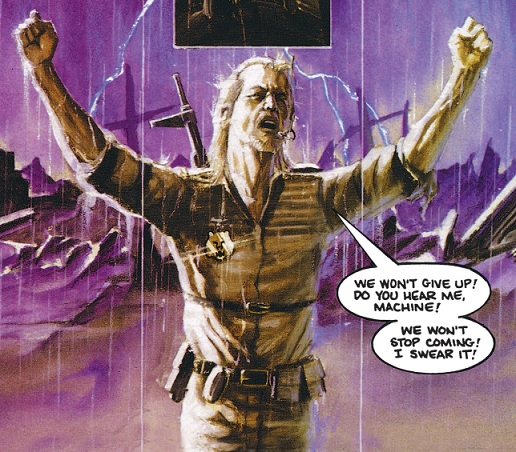
Team Leader: John Connor from ‘The Terminator: The Burning Earth’

Image: Dark Horse Comics

There’s no shortage of leaders in fiction who could lead a small group of people trying to survive a zombie apocalypse, but John Connor’s resume is particularly impressive: As the man destined by fate to save humanity from Skynet, a middle-aged John has kept humanity alive as the war against the machines reaches its 40th and final year, a testament to his leadership skills. But John’s no armchair general; even at his advanced age, he’s still fit enough to climb cliffs, run, and engage in combat with Skynet’s forces while getting only an hour of sleep at a time, and has the ability to think quickly and efficiently in life and death situations. And when worst comes to worst, John is willing to make impossible choices, such as euthanizing injured people who can’t be saved, a decision that would be valuable (if unwanted) in a zombie apocalypse.

Strengths:

*Decades of combat experience leading humanity in a war against a highly-intelligent supercomputer with legions of zombie-like enemies.

*High level of compassion towards people and reverence for human life, which would help survivors trust him.

*Great physical stamina and combat abilities for a man his age, reducing his chance of becoming a burden to others.

*Destined by fate to save the human race, whether it be from Skynet or a zombie apocalypse.

Brawler: Indiana Jones

Image: Disney

The world’s most famous archaeologist would be a great addition to any zombie team: his decades of experience in exploring tombs, lost cities, and swinging around on his whip would be invaluable when it comes to getting through abandoned cities, towns, and dangerous locations left to crumble in the wake of a zombie onslaught. And while there are others who are stronger, bigger, and faster, Indy takes up the mantle of the group’s brawler because of his ability to quickly improvise when taking on opponents – sometimes several at a time – who are better at fighting than he is. It also helps that Indy has almost supernatural amounts of luck; no matter how bad or hard things get, the universe always seems to step in to give Indy a way out, whether when trying to save the Ark from a convoy of Nazis, or when taking on another convoy of Nazis armed with a tank; such a gift would be a huge advantage in taking on the undead and hostile humans in a post-apocalyptic world.

Strengths:

*Extensive experience in one-on-one fights, which would come in handy when fighting hostile survivors.

*Able to improvise on the fly and frequently defeat opponents with more skill, strength, and numbers than him.

*Possesses incredible, almost supernatural luck when it comes to getting out of hostile situations.

*Years of experience exploring dangerous locations would translate well to exploring abandoned cities.

Weapons Expert: Gabe Logan

Image: Sony Computer Entertainment

The protagonist of the Syphon Filter video game series joins my team as its weapons expert: as a former soldier in the US’s special forces, and a secret agent who single-handily took down a huge, secretive black-ops agency who tried to unleash a manufactured virus upon the world, Gabe is a master of modern combat, equally capable of using stealth and raw firepower to achieve his objectives, and can use virtually any modern weapon, whether they be pistols, submachine guns, rifles, shotguns, grenade launchers, explosives, and even knives with incredible accuracy. When Gabe’s skill with firearms is coupled with his incredible physical strength (he can hang one-armed and fire a one-handed weapon with perfect accuracy), and tactical abilities (he’s taken on and defeated soldiers in bullet-proof armor, attack helicopters, and even tanks) he becomes the group’s all-around weapons expert who can engage zombies in a full-on assault, quietly take them out one-by-one, or snipe them from afar. Finally, Gabe is very trusting towards other people and is a natural leader, having led the Agency after bringing it down, making him an invaluable member of any team going through a zombie-infested wasteland.

Strengths:

*Over thirty years of combat experience in a multitude of environments around the world that required both open combat and stealth, allowing him to tackle any situation involving zombies or hostile humans.

*Excellent marksman with almost every known modern weapon.

*Good inter-personnel and leadership skills.

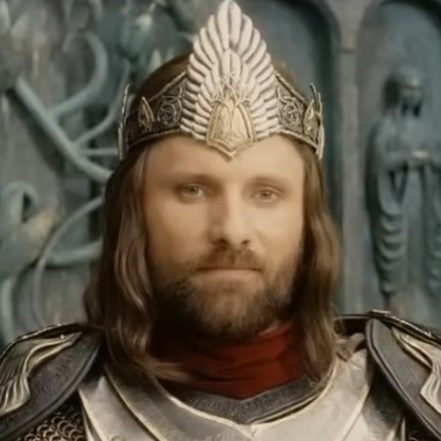
Brains: Aragorn II

Image: Warner Bros. Pictures

When most people think of the brains of a group, they imagine a computer genius who can hack any computer system and help restart civilization after the zombies are wiped out. But I think a certain kind of intelligence is needed in a zombie apocalypse: with technology all-but guaranteed to fail and be decades away from being restarted, a better choice would be someone who is skilled in the art of surviving off the land, and Aragorn, son of Arathorn, is the right man for the job.

While he’s best known for being a great swordsman and the king of Gondor after Sauron was defeated (spoiler alert for a 69 year old book), one of Aragorn’s often overlooked abilities is his time spent wandering Middle-Earth as a ranger for 57 years, giving him plenty of experience in hunting, finding food, and using natural resources to cure and treat wounds and diseases in lands full of orcs, bandits and monsters, all of which would serve him well in the desolate lands of a zombie hellscape. Those skills are further augmented from the knowledge and wisdom Aragorn learned from growing up with elves in Rivendell, and from the wizard Gandalf.

If you’re looking for someone who has the smarts to help you survive in the wild when you’re not being attacked by brain-eating zombies, and to help you take out zombies when they are attacking, Aragorn’s your man.

Strengths:

*Almost 60 years of experience surviving and thriving in the wildness against monsters and hostile humans, making survival in a post-apocalyptic wasteland much easier.

*Excellent leadership skills from serving as king of Gondor for 122 years, giving him unmatched experience when dealing with friendly and hostile groups, as well as diplomacy. (John Connor remains team leader due to leading armies in fighting Skynet non-stop for decades, where Aragorn primarily ruled in a time of peace.)

*Excellent melee and swordsmanship skills, an invaluable asset in a world where bullets would become very rare.

Medic: Dr. Beverly Crusher

Image: Paramount Pictures

It was surprisingly hard coming up with a pop culture healer who didn’t have magical abilities, but I ended up going with Beverly Crusher, chief medical officer on the Starship Enterprise D and E. Her biggest advantage in taking on the role of the group’s healer is that she has the best medical equipment the 24th century has to offer. Even if she can only carry what’s in an expanded medkit, that would include a dermal regenerator for treating minor skin wounds, an osteogenic stimulator for minor bone fractures, and a medical tricorder, an invaluable device that could help in the treatment of (presumably) almost any known ailment, and possibly a regular tricorder, which can possibly act as a miniature library of 24th century data and information, which would be very handy when it comes to rebuilding the world after the zombie apocalypse is over. But that doesn’t stop there: as shown in ‘The Next Generation’ episode, ‘The Survivors’, portable replicators exist, so if Beverly knows she’s going into a zombie apocalypse wasteland, she’d make sure to carry one to replicate an almost limitless supply of food, drink, medical supplies, and clothing. And because Starfleet personnel don’t go into the field unarmed, Beverly would also carry a personal phaser, and possibly a phaser rifle, both of which would be an invaluable tool and weapon against the living dead.

However, even 24th century technology requires energy to operate, and would eventually die and become useless. But even then, Beverly would still have her medical training to fall back on, and like almost everyone else on this list, Beverly has an aptitude for leadership, benefiting her roles as head of the Enterprise’s medical teams, and Starfleet Medical in general. Throw in her ability to be cool under pressure and ability to fight when needed, and Beverly becomes an invaluable member of any zombie-fighting team.

Strengths:

*Carries multiple weapons and tools from the 24th century that would make survival much, much easier.

*Extensive medical training, allowing her to treat a wide array of ailments and injuries.

*Ability to remain cool under pressure.

*Apt at both leadership and combat when the need arises.

Speed Fighter: Doom Guy

Image: id Software

Finding a human who can fight hard and fight fast without supernatural abilities or technology that would inevitably run out of power is tricky… but there’s one guy who is not only fast, but arguably the best fighter out of anyone in this group: Doomguy, the protagonist of the long-running Doom series. For the purposes of this list, we’re sticking with Doomguy as he appeared in the original 1990 series, where he is an ordinary human without the supernatural abilities from later games. But why does a heavily-muscled space marine become a speedster? Easy: Doomguy is so fast, he can outrun rockets! To be more specific, he can reach speeds of up to 90 miles an hour while weighing over 1,200 pounds, meaning he has the strongest legs in human history. Couple this with his unbreakable will and experience in fighting zombies (and demons), and Doomguy becomes the group’s sledgehammer against the zombie hordes; the only thing stopping Doomguy from taking care of everything himself while the others relax and sip pina coladas from Beverly’s replicator is that he’s just as vulnerable to damage as any other human, meaning that if he’s shot enough or ganged up on, he’d still be killed. But even as a glass cannon, Doomguy’s speed, brawn, and combat skills make him an unbeatable ally in the fight against the undead.

Strengths:

*Endless stamina and the fastest running speed of any human who has ever lived.

*Unbreakable will from fighting thousands, if not millions of zombies and demons both in our world, and in Hell itself.

*Experience in using a variety of weapons ranging from his fists, rocket launchers, and plasma weapons.

Mascot: Ellen Ripley

Image: Disney

Mascots are supposed to be cute, adorable, an animal, or otherwise sympathetic person. But for my group’s mascot, I went with Ellen Ripley. She’s not cute, she’s not adorable, and she’s not a happy-go-lucky innocent, but Ellen represents some of the best humanity has to offer: Gifted with the ability to think and act through fear no matter how frightened she is, Ellen can combine that with her pragmatic, no-nonsense leadership to become a force to be reckoned with, so much so that a bunch of battle-hardened marines turned to her – an untrained civilian – to help lead them when aliens wiped out half their squad.

Yet, beneath her fierce, focused exterior is a woman who cares about others and is capable of acts of extreme bravery in the face of overwhelming danger. While Ellen can fight, her biggest strength is being the rock that people can cling to when things are at their worst. More than anyone else in the group, Ellen demonstrates humanity at its bravest, and that earns her the mantle as the face, heart, and soul of the team.

Strengths:

*Extraordinary ability to think and act through fear.

*Pragmatic, no-nonsense leadership abilities.

*Extreme bravery in the face of danger.

Guy Who Dies First: Helena Shaw

Image: Disney

As the co-protagonist of Indiana Jones and the Dial of Destiny, Helena may be quick on her feet and cunning, but she would be the first to die: As a con artist who ultimately only cares about herself, Helena wouldn’t hesitate to sacrifice everyone else to save her own life the moment things got dangerous, or bolt after grabbing whatever supplies she could carry. Either way, Helena would quickly find herself alone and surrounded by dozens or hundreds of the undead. While she’d be able to evade them for a time, she would inevitably reach a point where she has no one to help her (or she’s being actively shot at by people she’s double-crossed), and be quickly turned into Purina zombie chow. While ruthlessness and cunning would be useful assets in a zombie apocalypse, having friends and allies to help you is an even greater advantage, and selfish con artists would quickly find themselves in short supply of both.

Strengths:

*Being able to emotionally manipulate and deceive people.

*Quick on her feet.

Conclusion:

When it comes to survival in a zombie apocalypse, it’s tempting to assemble a team of people who are excellent warriors, tough, and all-around badasses who can survive just fine on their own. But if a zombie outbreak rally happened, there’s one thing that would matter more than anything else: being able to work together with others. While pop-culture loves lone wolves like Rambo, a group would realistically have a much higher chance of survival when it comes to fighting millions, if not billions of zombies: being able to cooperate with others, sharing resources, and having someone to watch your back leads to a higher chance of survival compared to a lone individual who gets injured with no one around to help them. That’s why I think my team, which relies heavily on those who are skilled in both leadership and combat, would have an excellent chance of survival. But what about you? Who would you have on your team? Let us know in the comments below!

Favorite Moments: Sarah’s Last Shift

We all have our favorite moments in movies, books, and games, moments that stay with us long after the story is over. This column is my attempt to examine my favorite moments and see why they stick with me.

***

The Movie

‘The Terminator’

The Scene

Why it’s great

Some great scenes feature drama, sadness, joy, or excitement, and others are – at first glance – rather ordinary. One example is Sarah Connor’s introduction in 1984’s, ‘The Terminator.’

On the surface, there’s nothing earth-shattering about this scene: Sarah drives to work, clocks in, delivers the wrong order to a customer, and gets ice cream dumped into her apron by a brat who was probably blasted into a charred skeleton by a T-800 for his unforgivable crime. It’s an ordinary, slice-of-life moment that shows us that the mother of humanity’s savior is a perfectly ordinary woman.

It’s also the last few hours of a normal life Sarah will ever have.

If you consider ‘Terminator: Dark Fate’ to be the official third film in the franchise, then the scene of Sarah going into the employee lounge and seeing that report about another Sarah Conner being killed begins decades of fear, horror, and knowing that she’s the only person who can stop a war that will end billions of lives. And even after she succeeds, she still loses her son and eventually learns that she only delayed the inevitable war of humanity vs machines. By then, she’s in her mid 50’s and will almost certainly live long enough to see that war start, and pass away among the ruins of humanity’s civilizations.

These kind of scenes rely on hindsight and re-watching (or re-reading) to deliver their emotional punch of knowing that after this scene is over, our protagonists will never have another ordinary day as long as they live. But these scenes also encourages their audiences to realize that we often take so much for granted, assuming that our steady jobs, our families, and our blessings will last for years to come. But all it takes is one bad day to destroy everything we care about, and the lives we rebuild afterwards may never be truly happy again.

For John

2017 was an exciting year for Terminator fans. Not only was it announced that we would get a new film that would be a direct sequel to ‘Judgement Day,’ but it would feature Arnold Schwarzenegger returning as the T-800, and Linda Hamilton reprising her role as Sarah Connor on-screen for the first time since 1996’s, ‘T2-3D: Battle Across Time’. It was a Terminator fan’s dream come true; yet, as filming began and the first promotional material came out, I realized something.

Where was John Connor?

Like many fans, I was wondering why there were no casting announcements for John. Was he not in the film? Were they trying to keep his role a secret? It wasn’t until July of 2019 that James Cameron announced that Edward Furlong would indeed be returning as John, and I was ecstatic. After almost 30 years, we were finally going to have Arnold, Linda, and Edward on screen together again!

Then the movie came out.

Predictably, fans of the Terminator franchise were outraged at John’s death. We had followed John’s exploits, adventures, and growth in TV shows, books, video games, and comics for almost 30 years, only to see him be senselessly killed off. There was no historic last stand, inspiring final words, or seeing John sacrificing himself to save the human race. Instead, we got to see all the struggles and sacrifices to protect him in T1 and T2 be rendered meaningless. ‘Dark Fate’ was the ultimate slap in the face to John, mocking him and his fans.

But what if it isn’t?

Like most Terminator fans, I was angry at John being killed. I had hoped that we would get to see a grown-up John (played by Mr. Furlong) rising from an ordinary life to take up the mantle as humanity’s savior with his mother and a T-800 one last time. Instead, I left the theater disappointed at what could have been.

Yet, as the months have passed, and I’ve thought about the film, I’ve come to realize that, while John’s death was still a mistake, ‘Dark Fate’ shows that he’s still the most important character in both the film and the series. He’s so important that if he were removed from the movie entirely, the resulting consequences would have led to the extinction of the human race.

Madness? The desperate grasps of a fan trying to make sense of a senseless and tragic event? Perhaps. But we’re told on the C-5 Galaxy in the third act that Dani led humanity to victory over Legion, the malevolent AI (‘we took our world back’). In order for that to take place, two things must happen:

1. Dani has to survive.

2. Dani has to learn how to become a leader.

‘Dark Fate’ spends most of its time fulfilling the first task. Dani initially is protected by augmented super-soldier Grace; yet, while Grace is a powerful warrior, she is unable to stop the REV-9 on her own, and would have been killed with Dani in Mexico without Sarah’s intervention. But even with Sarah, the group still wouldn’t have been able to destroy the REV-9. They need Carl – the T-800 who killed John – to finally defeat the REV-9 for good and ensure Dani’s survival.

Yet, Sarah and Carl wouldn’t have been able to help Dani if it wasn’t for John. If we imagine a future where he had lived, Sarah would not have known of Dani’s existence, and would not have come to her rescue on the bridge in Mexico. Dani and Grace would have been killed, and Legion would have won the second machine war.

Carl, too, would not have been present to protect Dani if John had lived. If, say, Sarah had managed to destroy him, then there would have been no T-800 to take on the REV-9. Carl was the one who ultimately had the necessary strength and endurance to destroy the REV-9, but he never would have done so had he not eventually realized what he had taken from Sarah, and then willingly sacrifice himself in the end.

‘Dark Fate’ ends with Sarah setting out to train Dani in how to become a leader and a warrior. Here, too, John also comes into play. Because of Sarah’s experience hunting terminators before and after John’s death, she is the only person on Earth who can train Dani how to fight and destroy them. Furthermore, Sarah still has all the tactical and leadership training she has from the first two films, which she will presumably pass on to Dani as well. With all three sets of skills given to her, Dani will have all she needs to fight – and ultimately destroy – Legion.

Though the mantra of the Terminator series is, ‘There is no fate but what we make for ourselves,’ it almost seems as if the opposite is true: Humanity is destined to fight malevolent AI at some point. It may be Skynet, it may be Legion, but a war is inevitable. Yet, it also seems that there will always be a figure who will rise up and lead humanity to victory. For years, we’ve believed that John was that leader, but ‘Dark Fate’ shows that there can be multiple leaders. When we step back and look at the broad picture, it seems – hard as it is to accept – that John’s death is necessary in the Terminator universe. John, Sarah, and Uncle Bob succeeded in destroying Skynet, and in the process, John had fulfilled his purpose of saving the human race. But would he have been able to do the same against Legion? While fans – myself included – would have loved to see a middle-aged John fighting and defeating an enemy neither he nor Sarah know anything about, I doubt he would have been able to pull it off.

To use a war analogy, let’s say John is the greatest Allied commander of World War 1. His knowledge and experience in trench warfare, chemical warfare, and the like are without compare, and he leads the Allied forces to victory. He’s hailed as a hero and the savior of the civilized world. But what if he suddenly had to lead the allies again in World War 2? While many principles of warfare would remain the same, John’s skills would be obsolete against opponents who have much better technology, weapons, and tactics than he went up against decades earlier. And while there’s a chance he can still win the war, having a younger person who learned from the lessons of the first, and is more familiar with the latest technology, has a better chance of victory.

If the story of the Terminator franchise is humanity’s ultimate victory against malevolent AI, then John can be seen as the commander who, having stopped the machine’s first offensive, ensures that his successor can see the war through to its completion. He is the spark that sets humanity’s ultimate victory in motion. Without John, neither Sarah or Carl would have saved Dani. Without him, Dani would have died.

Without John, humanity would have perished… But it didn’t happen.

Whatever you may think about the movie, in my opinion, ‘Dark Fate’ proves that even in death, John is still the savior of humanity.

Or, if you prefer, you can pretend that this is how the movie ended.