Revisiting The Syphon Filter Trilogy: Part 4 – Conclusion

If you were fortunate to have played video games in your youth, you probably had some favorites that you loved going through again and again, and the idea of going back to them years, if not decades later, can feel like a trip back to a more innocent time. But time is a cruel thing, and revisiting said games often reveals outdated graphics, a story that isn’t as gripping as you thought it was, frustrating gameplay, or being so outdated that you just can’t enjoy it anymore. But for me, the Syphon Filter trilogy manages to withstand the test of time. While graphically and technologically outdated, the gameplay is still as gripping as ever, the story and characters still hold up, and the music is as awesome today as it was over twenty years ago. From beginning to end, the PS1 Syphon Filter trilogy is a solid example of an action-adventure spy thriller done well… with one exception.

When going back through the trilogy, I expected the first two games to hold up well, which they do. When it came to the third game, I was expecting to be a fun experience, albeit with the weakest story. But with the passage of time, I was surprised at how much Syphon Filter 3‘s story stumbles, sometimes quite badly. In the first two games, every level – no matter how frustrating or mediocre – advances the story in a meaningful way. But Syphon Filter 3 has several levels that don’t do that, due to its biggest issue: there are too many flashback missions.

Like every literary tool, flashbacks are not inherently bad, but Syphon Filter 3’s problem is that half the game consists of flashbacks, and most don’t add anything to the main conflict of stopping the Syphon Filter virus. All the Afghan missions, Montana militia missions, and Costa Rica missions could have been removed and the story wouldn’t have been harmed by their absence. By comparison, there’s only four levels from the first two games that could be removed to similar effect (Pharcom Elite Guards, Colorado 70 highway, returning to the Pharcom museum in Syphon Filter 2, and Volkov park). Had Syphon Filter 3’s flashbacks been removed, it would have freed up more time for modern-day missions that would have continued to move the story forward.

When we step back and view the Syphon Filter trilogy as a whole, it has a very strong first act, an equally strong second act (with a few stumbles), but comes to a halt in the third act, only finding its footing again at the very end when Gabe starts gunning down terrorists in the Senate hearing building. And with that in mind, I believe the greatest lesson the trilogy offers writers is this: limit using flashbacks in stories as much as possible, and if they do appear, to have them directly contribute to the story’s main conflict. While it’s nice to take the time to develop protagonists and see what adventures they had before the story, that development shouldn’t come at the expense of the story, especially not one that’s in its final act. And much like revisiting a beloved game series, there’s nothing wrong with reminiscing about the past, but not when it comes at the expense of the present.

Resident Evil: The Films Ranked

To close out my analysis and summary of the Resident Evil movies, here’s my own personal ranking of each film in the series, starting from the least enjoyable and working its way up to the most enjoyable.

6. Resident Evil

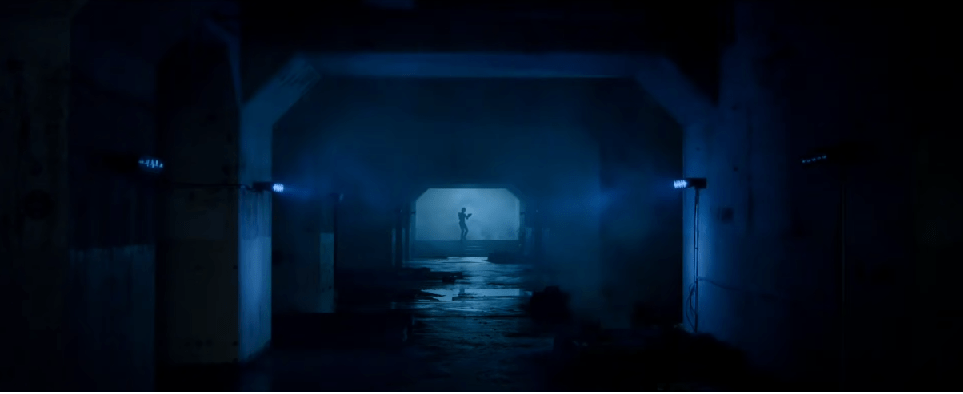
It has three good scenes and two great musical pieces, but no amount of production values, music, or cool sequences can save a generic zombie film with the Resident Evil brand slapped onto it at the last minute. This is a Resident Evil film in name only, and is the most disappointing overall.

Favorite Scene: The laser hallway

Favorite Shot:

5. Resident Evil: The Final Chapter

The Final Chapter feels like the first draft of a script written by someone who wants to end the series on their terms without caring about what came before. Not only is the story filled with retcons that don’t work, it also suffers from disposable characters and awful editing that makes the movie physically painful to watch. However, the film does have some good ideas, some gorgeous post-apocalyptic scenery, and the surprisingly effective ending saves the movie from being a complete failure.

Favorite Scene: The ending, where Alice is given Alicia’s memories and sets out to continue fighting the undead.

Favorite Shot:

4. Resident Evil: Apocalypse

Of all six films, Apocalypse is the one that feels like the most faithful adaptation of the games, due to following the basic story of Resident Evil 3: Nemesis, complete with corresponding characters, monsters, and Nemesis himself coming to life via fantastic practical effects. Plus, LJ – while a walking stereotype – is a welcome source of comic relief. Unfortunately, Alice is at her worst here, acting like a smug high schooler who thinks she’s the toughest girl around and doesn’t give a shit about anyone but herself, going out of her way to steal everyone’s thunder for her own glory.

Favorite Scene: Nemesis attacking the STARS members and sparing LJ

Favorite Shot:

3. Resident Evil: Retribution

Retribution is in the unenviable position of being a commercial for The Final Chapter, and rewatching it knowing that all of the plot points it sets up will never be fulfilled makes it a bittersweet experience. However, it does has a lot of fun action sequences, the greatest variety of locations from any of the films, and the ending is still the best in the series.

Favorite Scene: That awesome cliffhanger ending

Favorite Shot:

2. Resident Evil: Extinction

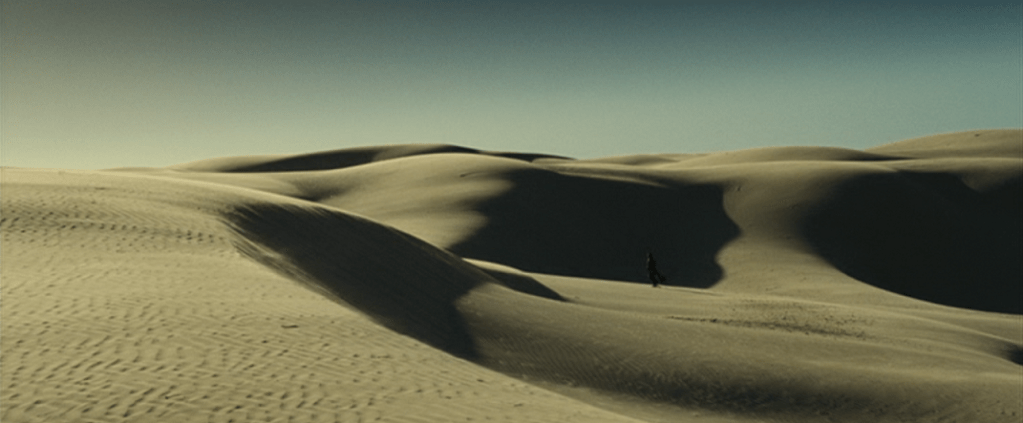
The most original film of the series, Extinction is a satisfying, post-apocalyptic, Mad Max-style daylight horror film set almost entirely in a desert wasteland, a setting that has never appeared in the games. Coupled with good action sequences, a fantastic third-act fight against Dr. Issacs, and a great soundtrack, it’s a fun film that succeeds at carving out its own identity while staying true to the Resident Evil spirit.

Favorite Scene: Carlos’ sacrifice

Favorite Shot:

1. Resident Evil: Afterlife

The best film of the series is a blast, starting with an exciting assault on Umbrella headquarters before turning into a perfectly-paced siege film with plenty of memorable action sequences, including a fight against the Axeman, who’s my favorite monster from the games, and like Nemesis, was brought to life perfectly, and finishing with a duel against Albert Wesker, the most memorable character in the series. While the cliffhanger ending does prevent the movie from being self-contained and acting as a satisfying series finale, the rest of the film is a great watch, and I always enjoy watching it again and again.

Favorite Scene: The battle between Claire and the Axeman, which is my favorite scene of the entire series. The water, that massive axe, the music, all of it is just perfect!

Favorite Shot:

I know Kung-Fu: A look at the duels in the Matrix Saga – Finale

Ever since the creation of CGI, Hollywood showdowns have become more elaborate than ever before. Once limited by what could be accomplished in camera, we can now enjoy the spectacle of people flying, jumping, kicking, and beating the tar out of each other in elaborate environments, using feats that could only be accomplished with the aid of computers. However, bigger, better effects don’t always lead to better fights.

The Matrix trilogy, as a whole, mostly avoids the problem of emotionally hollow duels. When taken in as one continuous story, the Matrix saga (including ‘The Animatrix’ and ‘Enter the Matrix’) has a strong start and a strong ending: The stakes are high, the risks are high, and Neo, Morpheus, and Trinity are all in real danger when they fight. But it’s the second act, with ‘Reloaded,’ that things stumble. There’s plenty of fights and duels, but it often feels more like spectacle than a clash where anyone can die, or be seriously injured. The fight against Seraph, for example, feels like padding in a film that’s already taking an unusually long time to get going, and the Burly Brawl – while being a visual treat – adds little to the story beyond showing that Smith can clone himself, and foreshadowing Neo’s final line in the series.

In going through the Matrix series again for these articles, I realized that there was something else I didn’t pick up on until I had seen all the movies and games: Many of the duels and fights in ‘Reloaded’ could be trimmed or even cut out, and that’s because:

1. The duels mostly feel like action for the sake of action.

2. It doesn’t feel like the characters are in danger, or that or that terrible things will happen if they fail

The first and third film’s duels work because it’s clear that if Neo and his companions fail, the repercussions will be awful; when Neo fights Bane onboard the Logos, you can feel the desperation and urgency as he and Bane clobber each other. When Morpheus fights Smith in the first film, you know he’s in a losing battle. People get hurt, scuffed up, and bleed. In ‘Reloaded,’ however, that sense of danger is mostly gone, save for When Neo and Morpheus fight Smith in the hallway on the way to the Architect. Duels frequently end with people and programs walking away none the worse for wear. If both the protagonist and the antagonist are obviously going to walk away unscathed, then there’s no urgency or danger, and the audience won’t be as involved than if they knew that, say, Trinity could have her head cut off with a chainsaw if she fails to outrun Agent Smith.

So, what can we learn from the Matrix series when it comes to duels?

*Any duel works best when it has a strong reason to take place, and that there are repercussions if the protagonist fails.

*Make sure that your characters can get tired and suffer injuries, such as being cut, sliced, smashed, or having broken noses, busted lips, or even snapped limbs (it’s jarring how Neo can fight hundreds of Smiths without so much as a bruise, scrape, or broken glasses).

*Make sure the duel have a solid reason for existing. If it assists or impedes the antagonist and protagonist in reaching their goal and moves the story along, it will likely turn out well. If the duel is primarily to showcase an action scene, it might need to be revamped, or scrapped altogether.

Follow these three guidelines, and we can make duels that grip viewers and don’t let go, whether they’re simple fistfights in a room, or elaborate spectacles made by the best CGI Hollywood has to offer.

If you’d like to reread previous entries in this series (in chronological order), you can find them here:

The Matrix

The Animatrix

The Matrix Reloaded

Enter the Matrix

The Matrix Revolutions

The Matrix: Path of Neo