16 Great Things about ‘The Lord of the Rings: The Rings of Power’ Season 2

In my last article about The Rings of Power, I talked about my 15 favorite things about Season 1. Here – in no particular order – are my 16 favorite things about Rings’ second season. Be warned that this list contains spoilers for not only Season 2, but also future events in the series, and the Lord of the Rings as well.

*All pictures in this article are the property of Amazon.*

1. Sauron’s Death

Season 2 opens with a flashback to Sauron trying to take command of Middle-Earth’s orcs following Morgoth’s fall. Unsurprisingly, the orcs (and Adar) don’t take kindly to being told that they’ll be sacrificed to achieve Sauron’s goals, so they express their displeasure by stabbing Sauron a few hundred times until he explodes, turning the surrounding terrain into a winter wonderland.

Many fans of Tolkien’s works have decried this scene for contradicting Sauron’s character (he tries to reason with the orcs, where he dominates them in the books with fear and terror), but I think this scene is a clever look at Sauron’s journey as a character. Originally, he was a being who loved order and perfection, but during his time as Morgoth’s servant Sauron was corrupted into being willing to enslave, torture, and kill others to get what he wanted. With Morgoth gone, some of Sauron’s original goodness is poking through, and this scene shows him at the halfway point between the good spirit he was originally, and the hate-filled tyrant of the Lord of the Rings trilogy.

Despite contradicting Season One of Rings’ (Adar said that he killed Sauron after the latter experimented on so many orcs; here, he and the orcs kill Sauron before those experiments begin), this prologue is a great way to open the season.

2. Sauron’s Rebirth

Something never elaborated on in Tolkien’s works is how Sauron creates a new body for himself each time he was killed, saying only that it took Sauron longer and longer with each subsequent death. Rings lets us see how the process might have gone: after being killed by the orcs, Sauron slowly rebuilds himself from a few drops of blood, taking the lives of insects, rats, and eventually people before he can finally create a new body for himself and resume his quest to conquer Middle-Earth.

What I like about this scene is that, compared to everything else we’ve seen of Tolkien’s world onscreen, this is something out of a story by H.P. Lovecraft: we’re watching the birth of an abomination from the dark, moldy depths of the earth, something that doesn’t belong to the natural order of things. And while this putrid mass of cancerous growth may look weak and frail, it’s still one of the most powerful and evil things in existence. And in a nice nod to Tolkien’s mythology, the whole sequence ties into his recurring theme that evil cannot create new things, only corrupt what has already been made: where Sauron could once manifest a beautiful form before his fall, now he is forced to take life from others to create a body for himself, one that may seem normal, but is only a mask to hide the evil within.

3. Choose Good

Sauron may have created a new body for himself, but he is now at the lowest point of his entire existence: he’s lost his position as Morgoth’s right hand. He has no armies to command, he’s been exiled from his home in Valinor, and his dreams of creating a perfect, orderly world are in tatters. But being humbled presents him with an opportunity to realize what he’s done and turn his life around, something that he seems to seriously consider when he comes across a group of refugees, one of whom unknowingly offers him the chance to leave his destructive path and choose a new, better one.

Later, when talking on a ship, the same man gives Sauron a brief, but perfect summary of what it means to turn from evil and become good:

I like to imagine that this meeting isn’t due to chance, but actually an act of fate: in The Fellowship of the Ring, Gandalf told Frodo that Bilbo was meant to find the Ring, and that Frodo was also meant to have it. During the events of The Hobbit, Gandalf and Thorin seem to have been guided to meet each other in Bree, which ultimately led to the Quest of Erebor and the death of Smaug, saving Middle-Earth from his wrath.

With all that said, I believe that Eru subtly guided the old man into meeting Sauron and inspired him to say the right things in hopes of helping the fallen Maiar find his way back to the light… but, alas, Sauron chooses instead to be a big meany butt and be evil (and confirming that he was lying to Galadriel about trying to redeem himself in Season 1).

Had Sauron listened to the man and chosen differently, the fate of Middle-Earth would have been very different, indeed.

4. Rhûn

If there’s one thing The Lord of the Rings, The Hobbit, and The Silmarillion has in common, it’s that we don’t get to see a world outside of the standard European fantasy environment (tall mountains, forests, castles, and the like). That’s why it’s such a delight in Season 2 that we finally get to see the deserts of Rhûn – the homeland of the Easterlings – on screen for the very first time.
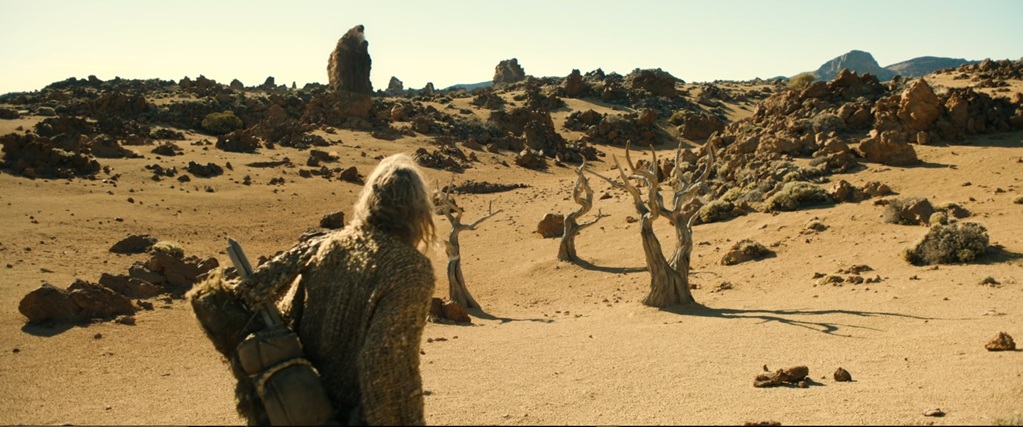
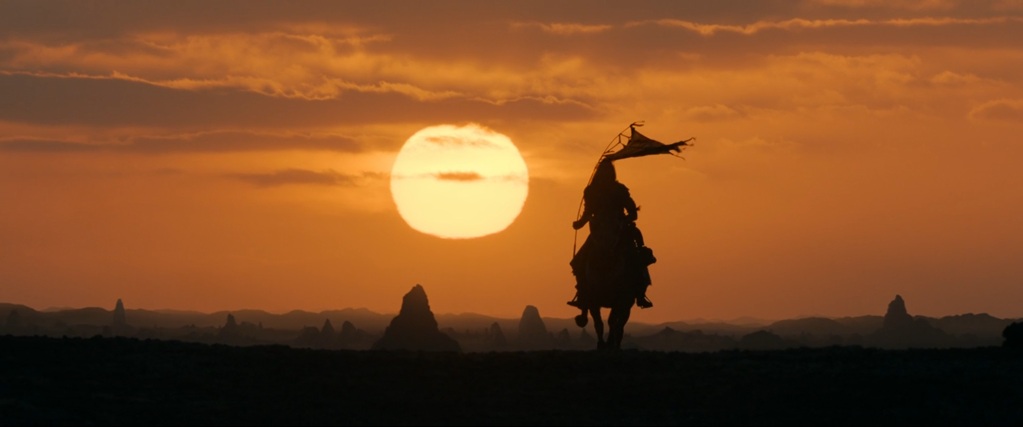
While we don’t get much outside of rocks, dead trees, barren canyons, and lots of sand, it’s great to finally see something other than European climates, and remember that Middle-Earth is so much bigger and varied than what we’ve seen in Tolkien’s books.

5. Celebrimbor

Though he had an important role to play in Season 1 of Rings, where he forged the three rings of the Elves, Season 2 is where Celebrimbor gets to come into his own and shine as one of the most famous elves of the Second Age. As the descendant of the famously fiery and temperamental Fëanor, Celebrimbor is an elf who doesn’t desire fame, power, or ruling others, but only in creating beautiful things and trying to undo the mistakes of his ancestor… a desire that makes him him all-too vulnerable to Sauron’s manipulations.

While he has all the qualities of being a noble hero like Gandalf, Aragorn, and Galadriel, Celembrimbor is unfortunately like Isildur and Bromoir: beings who fight and strive to do what is right at great personal cost, but who’s tales are told as tragedies by those who come after them. Celebrimbor’s a noble and kind-hearted elf, but his determination to make his mark on the world has catastrophic consequences for the world at large.

Yet, his noble intentions, determination to do what is right after realizing he’s been lied to and deceived by Sauron, and only wanting to do good makes him endearing and likeable. Like Diza, he’s an elf you’d be happy to share ale with at a tavern after a long day’s work.

6. Celebrimbor’s Anvil
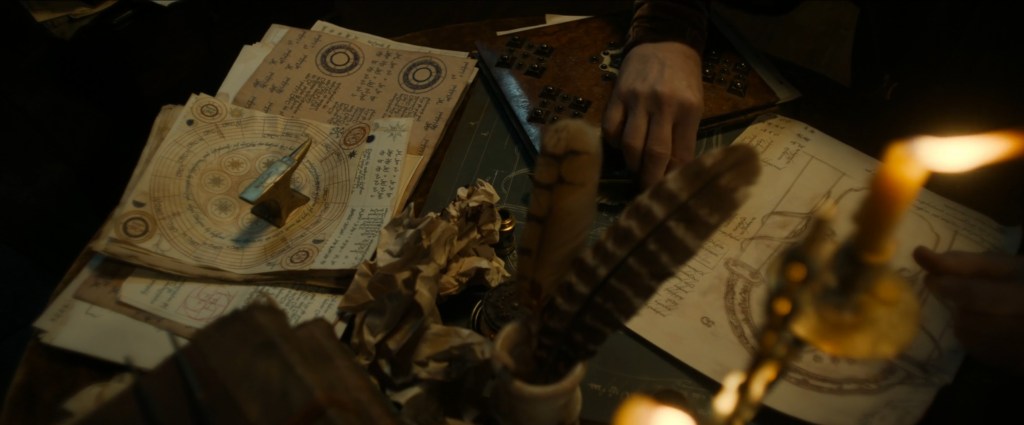
It’s only onscreen for a few seconds, but when Celebrimbor is doing some paperwork in his office, sharp-eyed viewers will see that he uses a tiny anvil as a paperweight, implying that the mighty Celebrimbor, greatest Elven smith of the Second Age, has a good sense of humor. Plus, the image of noble and graceful elves going through the effort to craft, shape, and forge an itty-bitty, widdle anvil is hilarious. Why haven’t we gotten this thing as an officially licensed collectible yet?

7. The Hammer and the Crown

Middle-Earth has its fair share of historical objects that Indiana Jones would be happy to track down, and ‘Rings’ has two big ones in Season 2: Fëanor’s hammer, and Morgoth’s crown.

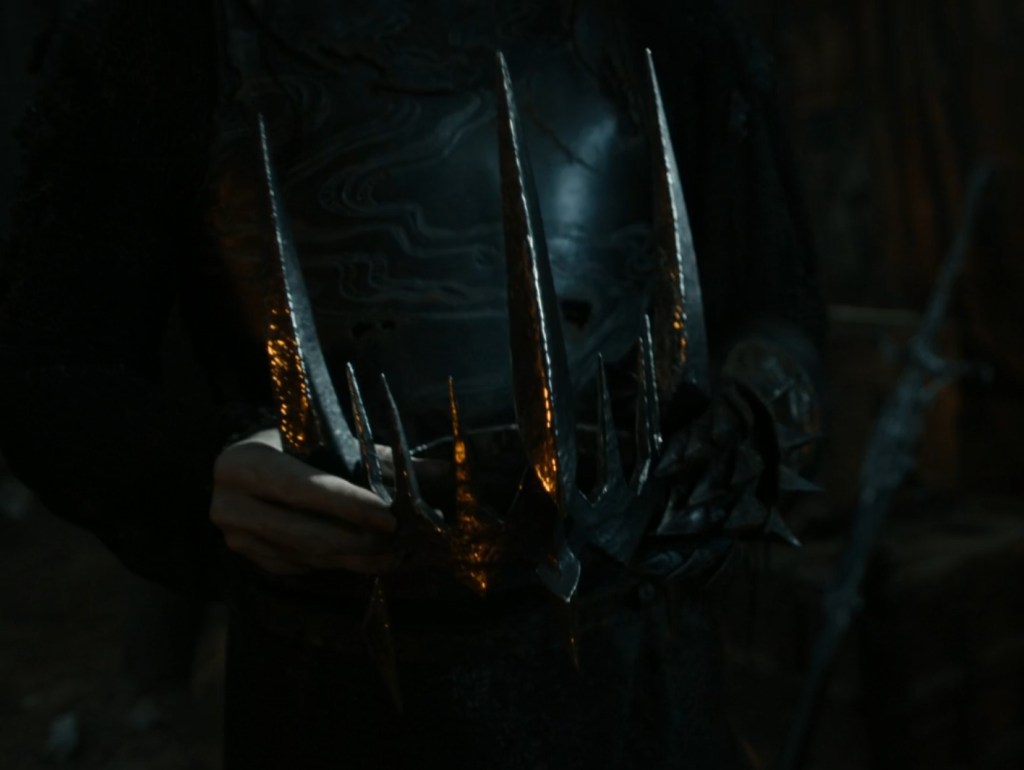
While fans who have only watched the films or seen the show can understand that these are important artifacts, readers of Tolkien’s works will get the most enjoyment out of seeing the hammer forged the most beautiful objects in all of creation (the Silmarils), and that crown that was worn by the most evil being who will ever exist (and that held the aforementioned jewels in its spiky embrace). Both go a long way to help make the world of Middle-Earth feel ancient and lived in, and that they played huge parts in changing the course of history long before the show began.

8. The Nameless Thing

One of the most fascinating parts of Tolkien’s world are the nameless things: eldritch horrors that live in the deepest, darkest fissures deep beneath the mountains of the world that are even older than Sauron. They are only mentioned briefly in Tolkien’s works, but are apparently so frightening that even Gandalf refuses to describe these abominations after encountering them when pursuing the balrog after their fall into the pit of Khazad-dûm. Season 2 gives us a glimpse of one in the form of a giant, grotesque worm-thing that tries to eat Isildur and Arondir before being sliced up from the inside and being (presumably) turned into nameless thing-burgers for dinner.

Is this a scene that doesn’t really add anything to the overall plot? Yes. Could it have been cut out without any effect on the story? Yes. Is it cool to see one of the most mysterious, dark, and vicious things that Tolkien ever wrote about? Heck yes.

9. Mirdania Sees Sauron’s True Form

One of Tolkien’s smartest decisions in writing The Lord of the Rings was not describing what Sauron looks like: he’s an unseen evil, a force so powerful and so dreadful that you don’t even have to be anywhere near him to experience the power of his malice. And despite having more screentime in Rings of Power than both the Hobbit and Lord of the Rings films combined, Rings has never shown Sauron’s true form, only his armor from the First Age and the disguises he wears to interact with others.

The closest we get to getting a glimpse of Sauron’s true form is when one of Celebrimbor’s assistants, Mirdania, accidentally enters the unseen world and sees Sauron as he really is (without realizing who she’s looking at), the experience shaking her to her core… but we don’t see that. All we get is Mirdania describing a tall being with pitiless eyes and skin made of flames. By describing the moment, but not showing it, Rings follows Tolkien’s example by leaving it up to the viewer’s imagination to visualize what Sauron’s true, malevolent form must look like.

One last little twist about the scene: after Mirdania describes what she saw, who’s the first one to comfort her? Sauron himself.

10. The Raid on the Temple

One of season 2’s strongest storylines is showing Numenor’s gradual downfall. While season 1 hinted that the greatest kingdom of Men in Middle-Earth was starting to crumble from within, season 2 brings this rot out into the open as a power-hungry Ar-Pharazôn begins his campaign to take control of the island empire and persecute those loyal to the Valar, the elves, and their ways.

The one scene that perfectly embodies Numenor’s descent into evil is the raid on the Faithful’s temple. Starting off as a peaceful funeral ceremony bidding farewell to all who died on the mainland in the last season, it devolves into Pharazôn’s sniveling weasel of a son – Kemen – gleefully interrupting the ceremony and announcing the destruction of the temple, destroying sacred artifacts for the fun of it, and then emotionally manipulating Isildur’s friend Valandil into starting a fight to justify using lethal force against the faithful, ending with Kemen stabbing Valandil in the back.

This scene, more than any other in the series, showcases the cruelty and moral rot of Numenor. What’s more chilling is that there are no orcs here, no supernatural monsters or ancient evils emotionally manipulating everyone present. It’s just humans being evil to one another, and it’s arguably scarier than any demon Tolkien could conjure up. And the worst part is that this is only a taste of the evil that Numenor is going to unleash upon Middle-Earth at large in the years to come.

(As an aside, I think there’s a very good chance that Kemen will end up being one of the Ringwraiths: Tolkien’s writings strongly imply that at least three Ringwraiths were of Numenorian descent, and it’s easy to see Kemen being nasty and power-hungry enough to accept a ring of power by Sauron. And if he wants to take the throne of Numenor, only to be denied, then Sauron might offer to make him a great lord and promise him a kingdom of his own to rule… Angmar, perhaps?)

11. Sauron’s Deceptions

One of Sauron’s greatest strengths is his ability to deceive and manipulate almost anyone he encounters, including the smartest, wisest, and most powerful elves in Middle-Earth. Yet, the books are vague about how he does this beyond his ability to take fair forms and cast illusions. While most of his manipulations in Season 2 follows the pattern of narcissists abusing others (lovebombing, gaslighting, ignoring boundaries, victim blaming, etc.), we get to see Sauron’s supernatural abilities at work when he conjures a vision of Eregion to subtly trap Celebrimbor. Like the holodeck from Star Trek, Celebrimbor can walk around in this vision, touch things, interact with other elves, and continue his work… completely unaware that the real Eregion is being bombed into rubble by orcs.

This illusion is a fascinating demonstration of Sauron’s power and his ability to deceive others, and makes you wonder how he’s used this ability on others throughout his time in Middle-Earth: It’s one thing to resist lies and flattery, but it’s much harder to resist when the very world around you is a lie and you don’t know it.

12. Who’s Will Is Stronger?

So often in fantasy stories, dark lords and evil-doers have all the power and all the advantages over their good counterparts, including the willingness to do whatever needs to be done to achieve their goals. But Celebrimbor gets a moment to prove that the good guys can be equally as strong-willed: shackled to his desk and unable to stop Sauron from taking the rings that he will use to enslave men and create the ringwraiths, Celebrimbor realizes the only way he can get free is to cut off his own thumb so he can slip through his shackle. But doing so means that he will never again be able to use a hammer, an anvil, and a forge to create things. Celebrimbor’s Eru-given gifts of forging and creating will be forfeit, and his dreams of making Middle-Earth beautiful will be gone.

Knowing all that, Celebrimbor still cuts off his thumb.

While gruesome, this is one of Celebrimbor’s best character moments: when everything is on the line, he is willing to give up his life’s dream for the chance to stop Sauron and save others. While it is, unfortunately, all for nothing in the long run, never let it be said that Celebrimbor did something most of us wouldn’t have the courage to do.

13. Celebrimbor’s Death

Celbrimbor’s death is one of the more gruesome in Middle-Earth media: tortured by being shot repeatedly with arrows from Sauron himself, threatened with supernatural means to ensure he doesn’t die, and then being impaled with a spear through the gut before finally dying, it’s a gruesome spectacle. Yet, one thing that’s puzzled me ever since watching it is why Sauron cries after Celebrimbor’s death. He wouldn’t see Celebrimbor as a friend, nor would a being such as himself be frightened at a prophecy that his rings will one day destroy him. So why the tears?

After mulling things over, I’ve come to think that the reason Sauron cries is because he’s realized he’s crossed the point of no return. All throughout Season 1 and 2, Sauron says that his greatest goal is to heal Middle-Earth of the hurts he helped inflict upon it. Yet, when staring at Celebrimbor’s corpse, Celebrimbor’s words cut through all the lies he’s told himself:

“I go now to the west, blown forth on a wind that you can never follow.”

I think Sauron realized that Celebrimbor was right: After all he’s done, and after all the times he’s rejected the chance to turn away from evil, it now hits Sauron that he can never go back to Valinor, his home. If he did, the Valar would imprison him, find him irredeemable, and thrust him into the void to join his master in endless darkness.

In my opinion, this is the moment where the last piece of good in Sauron dies. From here, he will fully embrace evil to achieve his goals and abandon any attempt to kid himself that he’s doing this to help others. Celebrimbor may have died here, but so did a tiny, flickering spark of light that will never be re-kindled.

14. Adar Turns Back to the Light.

One of my favorite storytelling tropes is when a villain sincerely and truly repents of their ways and turns their backs on evil. That’s why one of my favorite scene in all of Rings – tied with Sauron being offered the chance to turn from evil, as described above – comes with Adar turning back to the light.

Having obtained Galadriel’s ring, Adar seems poised to use it as a weapon to turn the tide in his war against Sauron and finally defeat him once and for all… but that’s not what happens. Though exactly what happened isn’t shown, it’s logical to assume that Adar’s mind was healed by Galdriel’s ring, making him realize how much evil, death, and destruction he had caused since beginning his quest to create a homeland for the orcs. But instead of giving into despair and hopelessness, or telling himself even more lies to cover up the pain as Sauron did, Adar instead chooses to pursue a path of peace.

While his quest for redemption only lasted a few minutes, Adar holds the unique distinction of being the only true villain in Tolkien’s universe – whether in books, films, games, and TV shows – to sincerely repent, something that Sauron, Saruman, Grima Wormtongue, and so many others never did.

While his ultimate quest to have the orcs live in peace was doomed to never succeed, I hope Adar can return in future seasons (due to Elves being able to reincarnate in Valinor if they are killed), and become of the good guys fighting against Sauron.

15. “Dwarves!”

Dwarves!

16. Sauron vs Galadriel

In Tolkien’s writing, an interesting paradox is introduced regarding Sauron: Despite his overwhelming power, strength, and innate magical abilities, he always loses whenever he gets into a physical fight with someone. That trend is played with at the climax of Season 2, when we get our very first scene of the Dark Lord going toe-to-toe with an opponent onscreen when he fights Galadriel for the 9 rings of power. For the majority of the fight, Sauron easily has the upper hand, toying with her mind and easily deflecting her blows before finally defeating her with a stab from Morgoth’s crown, and taking the 9 rings.

While I enjoy the fight for being able to see my favorite fictional villain getting to show off his fighting skills (and using Morgoth’s crown as a weapon is an ingenious and clever idea), I also like how the fight shows that even if Sauron defeated Galadriel, destroyed Eregion, and got his rings, he still lost: Galadriel escapes, and his potential ally and slave will instead be a thorn in his side for the rest of his days, giving hope, comfort, and aid to those who fight against Sauron, and will be one of the major players in his final and permanent defeat.

Sauron may have won this battle, but though it will take centuries for it to happen, he has ultimately lost his war to enslave Middle-Earth, and Galadriel escaping is just the first of many twists of fate that will finally lead to his final and ultimate defeat.

That’s it for Season 2, which I think is a big improvement over Season 1; come back in 2027 when we’ll take a look of my favorite moments from the third season of ‘The Rings of Power’.

15 Great Things About ‘The Lord of the Rings: The Rings of Power’ Season 1

The year is 2017 and Amazon has just announced that they’re going to create the very first TV show set in JRR Tolkien’s Middle-Earth, one that will chronicle the Second Age, the downfall of Numenor, the creation of the rings of power, and the early years of Sauron’s war to enslave Middle-Earth. And to top off that bombshell announcement, the show is going to run for five seasons and be the most expensive TV show in history. With almost unlimited production resources, being set in one of the most famous fantasy series ever created, and having legions of fans of said series, the stars were aligned to create one of the biggest hits television has ever seen.

It didn’t quite work out that way.

After the release of The Rings of Power‘s first season, reception was, to be generous, mixed. Critics found the writing to be subpar, and fans in particular were not happy with the many liberties taken with adapting Tolkien’s work, including turning Galadriel into a bloodthirsty warmonger, the Harfoots being unlikable pricks who leave their injured to die (and then later laugh at said deaths), and Elves and Dwarves having mixed ethnicities, among other things.

As a die-hard fan of both the Lord of the Rings and Hobbit film trilogies, I thought season 1 of Rings of Power was average at best. It had some good bits, some bad bits, but nothing truly awful or great, and I quickly forgot most of it after the season concluded. Recently, though, I re-watched season 1 to get ready to see season 2, and I was surprised to find that I enjoyed it much more than the first-go around. Here – in no particular order – are fifteen of my favorite things about The Rings of Power: Season 1.

NOTE: For those who haven’t watched the show, or have but haven’t read Tolkien’s books, this article contains big spoilers for the first season of Rings of Power, as well as what will happen in future seasons; you have been warned.

1. The Prologue

It seems to be a cosmic law that if you have a movie or a TV show set in Middle-Earth, you’re going to have a spectacular prologue, and Rings continues that tradition. Where the New Line films began with the Battle of the Last Alliance, and the Hobbit films showcased the downfall of Erebor, Rings gives us the first age of Arda, showcasing the beauty of a world just before everything was ruined forever. We get our first-ever glimpse of Valinor, home of Middle-Earth’s gods and the elves, the destruction of the Two Trees, the briefest glimpse of Morgoth, Sauron’s master, the war to overthrow him, a hauntingly beautiful shot of Sauron in his armored form, and the ending setting up Galadriel’s quest to hunt him down, which will be her singular focus for the entire season.

This prologue is Rings is at its best, the one sequence that matches the epic scope of the New Line films. And it’s not just the big moments that make the prologue as epic as what’s come before, but little things, too: we see the giant Eagles being defeated in battle for the very first time, and the elves expecting a quick victory against Morgoth, but finding themselves sucked into a war that lasts centuries, cleverly paralleling our own history where overconfident nations gleefully expected wars to be over in weeks, only to find themselves in bloodbaths that lasted for years, leaving their armies and populations shattered and broken.

2. Adar

Long known for being, ugly, snarling beasts with cockney accents who can be killed by a single hit from any weapon, Rings bucks that trend by giving us what I think is the the most interesting orc in any Tolkien story: Adar, one of the first orcs ever created by Morgoth. But unlike a lot of monster prototypes, Adar isn’t a savage, feral, barely-sentient beast with British teeth: he’s an orc who still strongly resembles the elf he was before being tortured and warped into something foul.

It’s not just Adar’s ruggedly handsome looks that make him stand out, but his character: While he does horrible things, psychologically torments others, enslaves innocent people, and commits ecological genocide, Adar doesn’t want to conquer the world, make himself a god, or wipe out other civilizations; all he wants is for his fellow orcs to have a safe place to live that they can call home, and enjoy life like any other being.

Adar is the best kind of antagonist: while he does horrible things, they’re in pursuit of a goal we can understand and even sympathize with. And on top of that, he’s a noble villain, one who was once good, but apparently believes he can’t come back from what he’s become; for all his desires to help his fellow orcs, he’s likely too mentally broken from Morgoth’s tortures and torments to think he can come back and be healed. Or worse, he’s given up and doesn’t care anymore.

With this complex morality and fascinating history, and the fact that he actually accomplishes his goal by the end of the season, Adar is easily the best character in the show.

3. Míriel

When she’s first introduced, Míriel – acting queen of Numenor – comes off as a pretty standard ‘noble ruler of a doomed kingdom’ archetype with a mixture of good traits tempered by a hardness one expects of someone trying to deal with the decline of a powerful kingdom. But what I like about Míriel is that, despite her pride and hardness, she is a good person who is trying her best to deal with knowing that Numenor is heading for certain doom, and is willing to put herself in harm’s way to save others, even peasants who are far beneath her in the social hierarchy. And even after being blinded trying to save some of those people, she refuses to give in to despair and grief. What she lacks in physical strength and powers, Míriel makes up for with her strong will, willingness to risk herself, and willingness to help even the lowliest of people.

Yet, for all her noble qualities, Míriel is a tragic figure: a leader with the best of intentions who is fighting to save what good remains in her failing kingdom, but like a sand castle being hit by the relentless assault of the waves,her quest is ultimately doomed, turning her into a tragic hero worthy of being included among Tolkien’s many doomed heroes.

4. Arondir

Perhaps no other character created for Rings of Power caused as much a stir among fans of Middle-Earth as Aronidr, a dark-skinned elf assigned to watch over the Southlanders. Now removed from the accusations of him being walking ‘woke’ propaganda, Arondir ties with Adar as my favorite character of the series: he’s an elf skilled in war and a master of the bow, but without the jokes and easy-going nature of everyone’s blonde-haired, pointy-eared elf from the Woodland realm.

Yet, Aronidr is not a dark, brooding, or miserable character; beneath his firm exterior lies someone who cares deeply for others, and will go to any lengths to save the people he has been charged to watch over. While Legolas is the Elf you want who is aloof and easygoing, Arondir is the one you want watching your back when fighting those who want to take your life and everyone and everything you love.

5. The Lindon Elves

Rivendell and Lothlorien may be tied when it comes to the most beautiful Elven realms in Tolkien adaptions, but in my opinion, Lindon takes that honor. From the gorgeous outfits its residents wear, to the autumn-colored forests in which they live, and the breathtaking halls of trees, Lindon is arguably Elven society at its peak, a society that lives in peace with itself and nature; if Valinor wasn’t an option, Lindon would be the one place in Middle-Earth I’d love to live in.

And yet, the beauty of this realm is tinged with the knowledge that it will soon begin to fade as the Elves’ influence and ability to stay in Middle-Earth begins to wane. Having their leaders seek to stop that from happening gives both Gil-Galad and Elrond a strong, understandable motivation for their actions in the season. If I were lucky enough to live in such a beautiful place, I’d want to save it, too!

6. Elrond and Durin’s Friendship

I have a confession to make: I’ve never really cared for the Dwarves in Tolkien’s world. I’ve found them to be too noisy, proud, and boastful for my tastes, similar to how a cat person can grudgingly tolerate a big, bouncy dog, but ultimately would rather prefer the quiet independence of a feline. But with that said, the biggest surprise of Rings for me was just how well done the friendship between Elrond and Durin is handled.

Unlike a lot of fantasy friendships between different beings that are pretty straightforward and easy to summarize, the relationship between Elrond and Durin is like a rubber band constantly snapping back and forth: Elrond and Durin go from being best buddies you can see going on camping trips together to Durin never wanting to see Elrond ever again, to the two of them realizing they’re pawns in a bigger game and unsure if their friendship can even survive. And when things get too rough, Disa is there to throw cold water on the two and calm things down.

The relationship between the three is a refreshingly complex triangle that is like any other friendship in real life: it’s never completely smooth sailing, full of back and forths between anger, disappointment, not wanting to hurt one another, and ultimately wanting to do what’s right for each other. In a mythology that places such a high value on friendship, it’s a delight to see one this complex.

7. Disa

Joining the list of Rings’ best newcomers is Disa, Durin’s wife. Like the rest of her kind, she’s tough, formidable, refuses to be intimidated, and not accommodating of those overcome with foolishness and pride. Yet, she’s also wonderfully generous and welcoming, even to beings from different races. You easily get the impression that while most Dwarves would glare at you out of the corner of their eyes, Disa would be the first to come up, shake your hand, and eagerly offer to give you a tour of her kingdom and all its wonders.

While Adar may be wonderfully complex, and Arondir is someone you’d want to have your back in dangerous territory, Disa is the one newcomer in Rings that I’d be more than happy to invite over for dinner. Heck, I’d love to watch a miniseries of her vacationing around Middle-Earth and visiting the Shire, Minas Tirith, Lothlorien, and other famous landmarks just to see how she interacts with everyone who lives there. She really is that delightful.

8. Numenor

While the show’s portrayal of Numenor isn’t as grand, awe-inspiring, or majestic as how it appeared in the Silmarillion (to me, it looks more like an overgrown, sprawling Mediterranean favela than the dwelling place of the most advanced, powerful, and mighty human kingdom in the world), Numenor has slowly grown on me, especially with its Byzantine/Mesopitamian design, blue, bronze, and gold color scheme, and some truly beautiful locations that do sell the island’s proud history. And while Numenor may not be the pinnacle of human technology and culture as depicted in the Silmarillion, the show does nail the atmosphere of a proud nation that sees itself as superior to everyone else, yet is decaying from within due to isolationism, nationalism, and moral rot. While Numenor may have been more beautiful thousands of years in the past, it is now a shadow of what it once was, both physically and mentally, and the show captures that very well.

9. Isildur Ruins Ontamo and Valandil’s Lives

We’ve all seen it before: Someone is trapped in a job they don’t like, don’t want, and would do almost anything (short of starting thermonuclear war) to get out of. Eventually they decide to get out, no matter what it takes, and if that includes getting themselves fired, so be it. That’s the path a young Isildur takes in Rings: Wanting to get out of the Sea Guard to follow his own calling as a member of the Faithful, Isildur purposefully makes the unforgivable mistake of letting go of a rope, which gets him kicked out as he wanted… but what Isildur didn’t count on was two of his closest friends, Ontamo and Valandil, getting kicked out with him.

Cruel? Definitely, but I like how Isildur, instead of getting a clean break, now has to deal with the guilt of getting his two friends being shown the door because of his own actions, especially when it was Valandil’s dream to join the Guard for years, if not decades. Rarely do we see characters purposefully screw up, only to have their closet friends suffer because of it, and I’m glad Rings explores that here.

On a related note, I also like how, later on, Isildur acknowledges what he did and, instead of trying to make amends with words or deeds, lets Valandil hurt him instead (which can be seen at 5:58 in the clip above). Painful, yes, but it shows Isildur’s willing to feel pain if it means helping a friend emotionally heal (and as an added bonus, while Valandil does let go of his anger afterwords, it’s still not enough for Isildur to get back into the Sea Guard, forcing him to find another way to get back in).

10. The Creation of Mordor

One of the biggest surprises in Rings was seeing the creation of Mordor: while how that happens sounds silly no matter how you write it (a magic sword is used to unlock a dam to release water into a trench that flows into a volcano to make it erupt), there’s no denying that the eruption of Mt. Doom itself, the pyroclastic flow, and subsequent destruction of the Southlands, is awe-inspiring to watch. The filmmakers clearly took full advantage of the show’s big budget to make the most spectacular eruption they could (as well as the apocalyptic aftermath) and succeeded.

While the story behind Mordor’s creation could have been simplified (perhaps the sword could have been used to make the volcano itself erupt without the need of any dams), there’s no denying that the creation of Sauron’s realm is a visual treat, and one of the highlights of the season.

11. The Southlanders

When watching Rings again, I was surprised to see that, for all the big battles, state-of-the-art CGI, and fancy sets, the best part about the series is the thread of the Southlanders and their fight to save their home from Adar and his orcs. Confined to the borders of pre-eruption Mordor and watched like prisoners by the elves for the crimes of their ancestors, the Southlanders have a hard lot in life, a life only made harder by an invasion of ruthless, bloodthirsty orcs seeking to destroy everything they have.

In hindsight, I think Rings might have been better received if it focused exclusively on the Southlanders and their struggles. We all know about Galadriel, Elrond, Gil-Galad, Elendil, Isildur, Ar-Pharazôn, and Sauron, and what roles they’ll play in what’s to come, but the Southlanders have no great leaders or legendary figures among them. They don’t have magic, larger-than-life kings to lead them, or even decent weapons: they’re ordinary, everyday people who are forced to fight against evil when vastly outmatched and outnumbered. And unlike the aforementioned heroes and villains, Bronwyn, Theo, Waldreg, Rowan, and the other Southlanders have no plot armor to protect them. Any one of them can die at any time, and many do.

In a way, the Southlander’s story feels like the one most faithful to the spirit of Tolkien’s works, a story of ordinary, everyday people who have to confront unimaginable, overpowering evil. Their struggle is the most relatable, grounded, and believable part of the series, and they give us a unique perspective on Middle-Earth that we haven’t seen before, a perspective that the Middle-Earth franchise needs more of going forward.

12. Only Blood can Bind

One theme Tolkien uses throughout his work is that being evil sucks: you may be powerful initially, but inevitably you’ll destroy yourself – both physically and spiritually – and the subplot of Waldreg and the other Southlanders pledging their service to Adar fits this theme perfectly: While everyone who fought back loses much, those who survived escape with their lives and the hope of a better life. But every single person who submits to Adar – save Waldreg – ultimately loses everything, including their lives. Their corpses are cast aside and forgotten, left to rot under the falling ash of Mount Doom. Even the mere act of submitting to Adar requires great pain and sacrifice, as Rowan found out the hard way.

The deaths of the fallen Southlanders serves as a cautionary tale about serving evil: Evil may promise you the power to get what you want, but requires you to sacrifice everything (including your soul), takes delight in hurting you every chance it gets, and when you’re no longer useful, will toss you out without a second thought.

13. The Stranger

I don’t like the Harfoots or their story in Rings; in my opinion, the show would have been better cutting out these annoying little pricks and giving the other story threads more time to grow and develop. (It’s quite telling that many viewers reported rooting for the Mystics when they set fire to the Harfoot’s camp.) However, that dislike doesn’t apply to the other big character in their story thread, the Stranger. Say what you will about Gandalf (it’s very clearly him) arriving in Middle-Earth thousands of years before he did in the books, but Daniel Weyman does a wonderful job bringing him to life as an incredibly powerful, but confused being who doesn’t know who he is, what he’s capable of, or what he’s meant to do. He’s like a big, powerful puppy who just wants to help and doesn’t have a malevolent bone in his body, but could easily kill you by mistake as easily as he could grow fruit on a tree to save you from starvation.

The Gandalf we all know from the Third Age is frequently grumpy, serious, and intolerant of foolishness, but this but this Gandalf is warmer, kinder, supportive, and not yet worn down from opposing Sauron for thousands of years. I hope we get to see more of that warmth as the series goes on.

14. Sauron

When I first read about Rings of Power, the biggest question I had was how they were going to portray Sauron. One of Sauron’s greatest strengths in the Lord of the Rings and The Hobbit is that, for all his power, strength, malice, and cunning, he’s almost always off-screen. He’s an unseen eldritch horror that everyone – even the orcs that serve him – are afraid of, and making him a regular character in a TV show risked losing that malice. Thankfully, I think the first season of Rings handled Sauron well. Aside from a brief glimpse of his armored form in the prologue, it isn’t until the end of the last episode that his disguise as Halbrand is cast aside and his true identity revealed.

In my opinion, the most interesting part of Sauron in Rings is the exploration of his motivations: He claims that he wants to rule Middle-Earth in order to bring order and healing to atone for his actions while serving Morgoth, but it is never answered if his claim is genuine, or just another lie. Furthermore, did Sauron come to care about Galadriel, or did he want to slowly corrupt her so she would end up serving him in his later conquests? Was Sauron truthful about wanting to settle down in Numenor and live a simple life as a blacksmith? And for that matter, did Eru nudge Galadriel into encountering Sauron in the hopes that she might persuade him to turn from his self-destructive path? The show provides no answers, leaving viewers to come up with their own conclusions, keeping in line with Sauron being a master lair, deceiver, and manipulator who’s true motivations are known only to him.

15. “I’m Good!”

This moment gets on the list not because of its emotional impact, or masterful storytelling, but because of just how narm-filled it is. Instead of having Gandalf silently and powerfully cause the three Mystics to explode into magical butterflies (?!), he has to proudly announce that he is, in fact, good! It’s the most unintentionally funny moment of the series and always good for a chuckle.

While The Lord of the Rings: The Rings of Power continues to be decisive among viewers and lacks the pop-culture impact its far more famous predecessors did, I still think there’s plenty to like and admire in its first season, as well as the second. Come back next time, where we’ll take a look at what I think are the best parts of the sophomore season of Amazon’s flagship series.

Perfect Moments: The Stories That Really Mattered…

Once in a while, you come across a moment in a story that is so perfect that it stays in with you for years, or even a lifetime. These are moments that, in my opinion, are flawless; perfect gems of storytelling that cannot be improved in any way, and are a joy to treasure and revisit again and again.

***

The Movie:

‘The Lord of the Rings: The Two Towers’

The Scene:

Why it’s perfect:

There are so many wonderful moments in The Lord of the Rings film trilogy that picking just one above all others is nearly impossible. Would you take an action scenes, or a moment of drama? I don’t know what I’d pick… but one of the top contenders comes at the end of the second film, where Sam gives Frodo one of the greatest inspirational talks in the history of film.

This scene is so beautiful, and so timeless, because it sums up exactly what The Lord of the Rings – and what all great stories – is about: good people who, when faced with overwhelming, all-powerful evil, choose to keep going. They could give up at any time. They could lie down and die. They could go home and give in to despair… but they don’t. Even if they’re scared out of their minds, they choose to take another step, to go one more mile, to get through just one more day, because they believe that there are things in the world worth saving, no matter how bad things get.

This isn’t just syrupy sentiment on Sam’s part: In Tolkien’s universe, evil is very real, and it is powerful, and it can and does triumph. Heroes die, kingdoms fall, and innocent people suffer… But in the long run, evil cannot win. It can conquer entire races, it can enslave so many people, and it can destroy so much, but it can never destroy the desire of all good people to live in peace with one another, no matter where they come from or who they are. Some are great warriors and others are just ordinary, everyday people. But all of them resist, in ways both big and small, flashy and quiet, and when evil dies, whether it’s a year later, a decade, or even a century, those people are still there, still going, and proving that evil will always fail in its quest to achieve total victory over all that is good.

That’s F***ing Hilarious: My Favorite Funny Curses In Movies

NOTE: Although they are quoted and discussed in an academic manner, this article contains both written and video examples of vulgar language and is not safe for work.

Can swearing ever be funny? When played for drama, the Precision F-Strike can easily be one of the more shocking and memorable moments of a film, but when played for comedy, it’s often the funniest, as comedy Legend John Cleese would attest. To quote TvTropes:

“John Cleese… once described this trope in an interview, by explaining that the art of making swear words funny is to avoid using them… until the exact moment in the script when it will be most effective. A comedy with gratuitous swearing ends up desensitizing the audience to the words in question, meaning they lose a lot of their amusement. But if you go for fifty minutes without a single swear word, then suddenly have a character say “shit”, the swear word becomes instantly more amusing because the audience has been conditioned not to expect it up to that point.”

After thinking about this, I’ve come to the realization that Mr. Cleese is correct; after all, some of the most memorable swear words in cinema happen because you don’t expect them. Thus, to celebrate the times where vulgar language can add so much to a scene, I thought it’d be fun to share my amusing uses of swear words in films. Some were done intentionally, others less so, and some are the result of goofy writing or hilarious acting, and some may be the result of mondegreen (a phenomena where a word or phrase is misheard or misunderstood and interpreted as something else), but they are all memorable and good for a chuckle.

Honorable Mention 1: Harry Potter and the Deathly Hallows Part 2

It’s not a swear word, but if you listen closely at 2:48, you can hear what sounds like Voldermort’s otherworldly voice whispering, ‘Screw you, Harry!’ It pretty much ruins the drama of what is otherwise one of the most dramatic and satisfying moments of the entire Harry Potter saga, but it’s pretty dang funny to imagine that as the most powerful dark wizard alive dissipates into the afterlife, a fragment of his spirit takes one last opportunity to insult Harry, but in a polite, non-vulgar way. How thoughtful!

Honorable Mention 2: Dexter

I have never seen the television show Dexter and know next-to-nothing about it, but I have seen this clip countless times and it still cracks me up, especially with some of the jokes people have made with it.

7. Transformers: Dark of the Moon

The climactic chapter of the live action Transformers film series (until two sequels and a quasi-reboot came along) pulled no punches in upping the stakes, with a full-on invasion of Earth by the Decepticons, having the Autobots be grossly outnumbered, and having the Autobot’s most revered leader turn out to be a Decepticon turncoat who will enslave the human race without a second’s thought. It’s only fitting then, that he’s executed at the end without any mercy by his successor and former admirer Optimus Prime.

But while Sentinel’s official last words are an anguished, ‘No, Optimus!’ if you listen closely at the 1:00 mark, you can hear him groan, ‘Oh, fuck!’ before he dies and goes to Transformer hell. There’s just something amusing about the most famous, noble Autobot in Cybertron’s history going out not with a plea or a whimper, but with the sudden realization that he had screwed up so badly that the best way to express his regret was with an all-too human expression.

6. Transformers: The Movie

Yep, there are two entries about profanity in a series about shape-shifting robots that’s targeted for young kids. The first film about these robots from beyond the stars was notable for many things: the death of Optimus Prime, the introduction of Unicron, a robot capable of eating entire worlds, killing off almost all of the original cartoon’s cast, and being the very first time profanity was used in the series.

In this scene, Spike the human and his robot buddy Bumblebee have their moonbase self-destruct in an attempt to destroy Unicron as he eats said base, only for the plan to fail utterly. In response, a flabbergasted Spike calmly asks his robotic companion what the best course of action is to resolve their rather unfortunate predicament. Just kidding; he memorably says, ‘Oh shit, what are we gonna do now?!’

Can you imagine that? Someone swearing in a cartoon for kids? Outside of this example, I can’t think of any other show or movie that’s done so, and not only is it shocking, but funny, too because of how relatable and understandable Spike’s reaction is.

5. Superhero Movie

Released near the end of the era of big-budget movie parodies, ‘Superhero Movie’ is a funny send-up of superhero films released up to that date, the most famous being Sony’s Spider-Man trilogy, but with affectionate jabs towards the X-Men and Fantastic Four as well, complete with juvenile humor throughout. But my pick for the most memorable moment of the film comes at the climax, where the nefarious villain Hourglass – on the verge of gaining immortality – instead meets the Grim Reaper via Dragonfly plopping a crotch-bomb right in front of his face. And how does this dastardly villain, possessing a genius intellect, a fiendish plan, and every advantage imaginable, react? He gives the film’s only use of the word, ‘Fuck.’

Much like Sentinel in ‘Dark of the Moon,’ there’s just something funny at seeing a story’s villain so gobsmacked or horrified that they have to resort to cursing, and ‘Superhero Movie’ does it well.

4. Star Wars: Return of the Jedi

The Star Wars movies may pack stylized violence galore, but are by and large G-rated when it comes to talking… except in 1987’s, Return of the Jedi, where, when watching a super star destroyer plunge towards the second Death Star, you can hear someone on Admiral Ackbar’s flagship yell, ‘Die, dickheads!’ at 0:38.

For years, Star Wars fans have been wondering if we’re really hearing someone swear, or just something that sounds like it. Personally, I like to think that it is real, as it’s perfectly reasonable that someone fighting against an evil empire would celebrate and let loose with the strongest insult they could think of at realizing that said empire is finally about to be destroyed after decades of terror, suffering, and misery. Who among us wouldn’t do the same?

3. The Hobbit: An Unexpected Journey

In the pantheon of major Hollywood blockbusters, New Line Cinema’s The Lord of the Rings and The Hobbit trilogies are quite odd when compared to their peers: Aside from the decapitations, arms getting lopped off, armies being slaughtered by the thousands, and Sean Bean being turned into a pincushion, all six films are surprisingly tame, with no sex and no vulgar language that we can understand (aside from untranslated dwarvish). Much fun has been poked at this phenomena over the years, but as it turns out, there is exactly one audible curse word in the saga, one that’s hidden very well.

In the opening prologue of The Hobbit: An Unexpected Journey, Smaug the dragon attacks the city of Dale, burning it to the ground and inflicting death and destruction beyond comprehension. Naturally, it makes sense that people would be scared out of their minds at having their peaceful life destroyed in mere minutes, and nowhere is that more audible than someone yelling, “Oh God, what the fuck?!” at 1:59 in the clip above.

What I love about this swear is that it’s the perfect embodiment of John Cleese’s description of funny swears: After three movies of people, elves, and dwarves talking in G-rated language, having a ‘fuck!’ come out of nowhere is darkly hilarious, and a very understandable reaction to a dragon destroying everything you know and love. But even this vulgar word serves a purpose, as it helps to humanize the people of Dale; It’s one thing to see fictional characters panic, but when they let lose with curses and expletives that we all use from time to time, it makes them more human and shows that they feel the anger, frustration, and rage that we all do in a world that sucks at times.

2. The Wicker Man

2006’s ‘The Wicker Man’ quickly became a laughing stock as one of the cherished, ‘So bad it’s good’ films of the decade, even being described as the year’s best comedy, and all of that is due to the infinitely-entertaining Nicholas Cage, who does everything from running around and punching old women in a bear suit, to demanding how something got burned, and yelling about bees. But for my money, the film’s most hilarious moment is him yelling about how his death isn’t going to bring back the islander’s honey. It’s a line that – when taken out of context – is THE definition of ‘so stupid, it’s awesome,’ and you wonder how Mr. Cage managed to yell it without cracking up. I have no idea how, but I’m so glad he did it.

1. Epic Movie

What would happen if Superman suddenly no longer had bulletproof skin? He’d be in for a world of hurt, as demonstrated brilliantly in ‘Epic Movie.’

‘Epic Movie,’ despite it’s disastrous reception by audiences and critics alike, and it’s subpar performance as a spoof film, does have one truly brilliant scene: a parody of the sequence from ‘Superman Returns’ where Superman gets shot in the eye. But here, we see what would happen if the Man of Steel didn’t have indestructible eyeballs.

Everything about this scene is great: the music is appropriately bombastic, the build up is flawless, the effects of a slow-motion bullet are well done for a low-budget parody… and then the bullet sinks into Superman’s eyeball with a cartoonish squishing sound, and he shrieks in absolute agony, topped off with a very understandable shriek of how he’s been shot in the fucking eye. While the film may not be the best example of a parody, this scene is absolute gold, and my favorite use of the word ‘fuck’ in any film.

Playing In The Sandbox

When we’re kids, we have the gift of an imagination unconcerned with logic. In the sandbox of our youth, we effortlessly create stories where, say, Optimus Prime teams up with Alan Grant from Jurassic Park to take on Xenomorphs, or have Indiana Jones and James Bond head into outer space to stop Darth Vader in his fortress on Mars. Logic and common sense go out the window in the name of having fun and being able to say, ‘Wow, that’s cool!’ But, alas, as we grow up, this innocence and carefree disregard of intellectual copyrights gradually slips away in favor of logic, common sense, and understanding that franchises – with rare exceptions – are self-contained universes that never overlap.

But what if that didn’t have to be that way? What if we, as adults, were to try and recapture our love of our favorite stories existing in the same universe, but with the challenge of figuring out how it could logically happen?

For the past month, I’ve been… well, obsessed with this idea of creating a fan-made cinematic universe, where all my favorite movies, tv shows, and video games exist together without contradicting each other. While it sounded easy enough, it become a challenging mental exercise in logic and reason; as a fan of spoofs, all of them had to go: ‘Airplane!’ just does not fit in next to ‘Jaws’ and the ‘Terminator’ series, no matter how much I want it to. Likewise, ‘Deep Impact,’ ‘Knowing,’ and 1998’s, ‘Godzilla: the Animated Series’ had to go, as they dealt with world-ending events that just couldn’t be reconciled in a timeline that includes ‘Independence Day.’ And let’s not even start on Saturday morning cartoons featuring anthropomorphic animals.

In the end, I managed to make the task easier by coming up with four parameters:

1. You can have any film, TV show, book, or video game you like in your timeline, but they must not contradict each other to an unworkable degree: The world cannot nearly destroyed by aliens in Roland Emmerich’s ‘Independence Day,’ then have the world and everyone on it be completely destroyed in 2009’s ‘Knowing,’ and then have ‘Independence Day: Resurgence’ take place after that.

2. The only information about what year and date your stories take place in must come from the stories themselves, and not from external sources. For example, ‘Alien’ and ‘The Matrix’ are vague about how far in the future they occur, so there’s room for them to be moved about. If a date cannot be reasonably determined, the release date of the movie, book, show, or video game can be used instead.

3. The only information about the characters, organizations, and the like, can only come from the film or show itself, so as to allow maximum creativity in linking characters and organizations together.

4. You are free to disregard any sequels you don’t like.

Still, it wasn’t easy to come up with a grand, unified list, and in the end I had to leave out quite a few favorite films and shows, but I managed to come up with a timeline that I would be happy to sit down and watch (and play) from beginning to end if given the chance. So, just for fun, here’s my ultimate sandbox crossover timeline:

*At the beginning of time, Eru Illuvitar creates Eä (the universe) and within it, the world of Arda, which contains both Middle-Earth and Valinor. The events of The Hobbit and The Lord of the Rings take place, and the Fourth Age begins with the last of the elves leaving Middle-Earth forever. Several generations later, all traces of magic are gone. (The Hobbit and The Lord of The Rings)

*Later, in a galaxy far, far away, The Old Republic, weakening after a thousand generations, succumbs to the schemes of Emperor Palpatine. However, through the efforts of the Rebellion to restore the Old Republic, Palpatine is defeated and his Empire falls. Though the galaxy doesn’t automatically become a utopia, it becomes a much nicer place, as Palpatine doesn’t return from the dead, the Empire stays down, and the New Republic rules a galaxy at peace, and Luke, Han, Leia, and all their friends live happily ever after. (The Star Wars Prequels, Solo, Rogue One, and the Original Star Wars Trilogy)

(Note: In this timeline, the sequel trilogy never happened.)

*A really, really long time later, the humans of Middle Earth have gone through their technological renaissance, achieved the singularity and become godlike beings known as the Engineers. They leave Arda and travel throughout the universe creating life on desolate planets. One such planet – Earth – is located, and seeded with Engineer DNA. (the prologue from Prometheus)

*Sometime later, one of the Engineer’s most dangerous lifeforms is stolen from them by another alien species, only for both to crash-land in Antarctica, where the lifeform is frozen solid. (The Thing)

*For the next few thousand years up until the present day, Predators – having discovered Earth during their own interplanetary visits – use it as a hunting ground for their young to become adults. (backstory for Alien vs. Predator)

1868: Captain Nemo of the submarine Nautilus attacks military ships and destroys the island of Vulcania to stop their weapons of war. Nemo is killed and the submarine sinks shortly after: it’s wreckage – and the highly advanced technology it carries – are never found. (20,000 Leagues Under The Sea)

1895 to approximately 1910: William Murdoch of the Toronto Constabulary solves lots of crimes with his partners and friends while meeting lots of historical figures and even finding the Holy Chalice. (Murdoch Mysteries)

1904: A predator hunting expedition to Antarctica ends with the deaths of every human at the whaling camp on Bouvetøya. (backstory for Alien vs Predator)

1912: Rose DeWitt Bukater sails aboard the RMS Titanic, only to fall in love with third class artist Jack Dawson. Jack dies during the ship’s sinking, but saves Rose, who goes on to live a long and eventful life. (Titanic).

1930: In one of the most remarkable discoveries ever recorded, a group of filmmakers led by Carl Denham land on the previously uncharted Skull Island and find wildlife that survived the extinction of the dinosaurs and has continued evolving to the present day, including a giant ape known as King Kong. Kong is captured and brought to New York City, but is killed. Shortly afterwords, Denham heads back to the island in the hopes of finding treasure, but Skull Island and everyone on it are destroyed by a sudden earthquake. All traces of the island vanish. (King Kong and Son of Kong)

1935-1947: Although his exploits remain unknown to the world at large, archaeologist Indiana Jones becomes an unsung hero of the Second World War due this efforts preventing the Nazis and other despots from gaining supernatural artifacts that could have turned the war in their favor or allowed them to conquer the world, such as the Ark of the Covenant, the Holy Grail, the power of Atlantis, the Holy Grail (separate from the Holy Chalice), and the Infernal Machine. (Indiana Jones and the Emperor’s Tomb, Indiana Jones and the Temple of Doom, Raiders of the Lost Ark, Indiana Jones and the Last Crusade, Indiana Jones and the Fate of Atlantis, and Indiana Jones and the Infernal Machine)

1941: U-96 goes on the worst u-boat patrol ever. (Das Boot)

1942: The USS Copperfin undertakes a daring mission to Tokyo Bay to gather intelligence that will aid in the upcoming Doolittle raid. (Destination Tokyo)

1955-1960 (approximate): Father Brown helps solve a lot of crimes in his parish of Kembleford, England. (Father Brown)

1957: Indiana Jones stops the Soviet Union from obtaining the power of the Crystal Skull and marries his sweetheart, Marion Ravenwood. (Indiana Jones and the Kingdom of the Crystal Skull)

1972: During a voyage on the high seas, the luxury liner SS. Poseidon capsizes and sinks with heavy loss of life. (The Poseidon Adventure)

1974: The Glass Tower – the world’s grandest skyscraper – catches fire in San Francisco and almost burns down, but is extinguished. The building languishes for years as the cost of repairs is too much for its owners, yet the cost of demolishing it is equally too expensive. (The Towering Inferno)

1975: In the small coastal town of Amity Bay, a sheriff and his motley crew manage to kill a shark terrorizing the community. (Jaws)

1978: A zombie apocalypse is unleashed upon the Earth, causing a complete breakdown of society. Four survivors flee to a shopping mall, where two die. The last two manage to escape and flee in a helicopter as the mall is overrun. They are forced to land in a remote area, where they travel across the country and eventually take refuge inside the remains of the Glass Tower, where they hold out with other survivors, including Jack Torrance and his family. When the plague dies out, the zombies are wiped out in an ensuing counterattack by humanity, with Jack Torrance killing several with an axe when San Francisco is cleared. (Dawn of the Dead)

1980: Jack Torrance and his family, trying to get a fresh start after the zombie apocalypse, head to the Overlook Hotel, where Jack – his marriage already on the ropes and suffering from alcoholism – goes insane and tries to kill the two, who manage to escape, leaving him to freeze to death. (The Shining)

1982: A team of researchers in Antarctica discovers the Thing, but are almost wiped out. A few hours later, a second team encounters the creature and just barely manages to save the planet from the Thing when it is frozen solid once again, though Childs and MacReady freeze as well. Reports from Kate Lloyd (who sent out a broadcast before she froze to death) ensure that the site is napalmed for a week straight to ensure that any traces of the Thing are destroyed for good. (The Thing and The Thing)

1984: A Terminator arrives in Los Angeles to kill Sarah Conner, son of the future savior of humanity, John Connor, who will lead the human race to victory against Skynet, an AI developed to control all of the United State’s military systems in 1997. However, the Terminator fails, and Sarah sets off on her quest to learn as many military and survival skills that she will one day pass on to her son. (The Terminator)

1987: Dutch Schaefer – a former military commando turned mercenary – is employed by the CIA to go on a supposed rescue mission in South America, only to be hunted by an intergalactic hunter. Dutch is the only survivor of his group and decides to retire from mercenary work, having seen too much death. He will later survive the events of Judgment Day and join the human Resistance against Skynet, but will be captured and have his likeness used for the 101 model of the T-800. However, he still escapes and goes on to survive the war. (Predator)

1991: The Perfect Storm takes place. (The Perfect Storm)

1993: John Hammond opens a theme park full of dinosaurs. It is a complete disaster and the park is abandoned. (Jurassic Park)

Nasty weatherman Phil Connors is trapped in a time warp in Pennsylvania, but eventually breaks free and lives the rest of his life as a changed man. However, he is unaware that the time warp took place due to an anomaly caused by constant time-traveling between the Resistance and Skynet as they continuously try to defeat and destroy one another. (Groundhog Day)

1995: Two more terminators arrive from the future to both assassinate and protect John Conner. The T-1000 is defeated, and the T-800 seemingly erases Skynet from existence after sacrificing itself to destroy all traces of the program before it is created. (Terminator 2: Judgment Day)

Air Force One is hijacked with President James Marshall aboard. He manages to take out the terrorists and escapes with his family and most of the passengers and crew before the plane crashes. He finishes up his term as President and retires from public life as his successor, Thomas Whitmore, takes office. (Air Force One)

A volcano erupts at Dante’s Peak, Washington, ruining everyone’s day, including a woman who looks strikingly similar to Sarah Connor. (Dante’s Peak).

Ingen attempts to open a new dinosaur park in San Diego. Having learned nothing from the 1993 Isla Nublar incident, it fails miserably. (The Lost World: Jurassic Park)

A cowboy doll named Woody struggles with the thought of being replaced by a cooler, modern space ranger toy, but the two reconcile their differences and learn that there’s no greater joy than making a child happy. (Toy Story)

1996: Now 100 years old, Rose Dawson recounts her survival aboard Titanic to a salvage crew, and then dies peacefully of old age, moving into the afterlife and reuniting with Jack. (Titanic).

John Conner and Sarah Conner continue their quest to ensure Skynet won’t come back, eventually infiltrating a Cyberdyne presentation of their latest technology, at which point yet another T-1000 comes back through time to stop them, and yet another T-800 model 101 comes through to protect them. John and the T-800 go forward in time and manage to destroy Skynet’s system core, seemingly destroying Skynet for good… again. (T2 – 3D: Battle Across Time)

On July 2nd, 1996, one of the most monumental days in humanity’s history occurs as aliens arrive and attempt to kill everyone on the planet in order to pillage our world’s resources. Thankfully, they are repelled in the largest aerial battle in the history of mankind (which is preceded by one of the greatest speeches in history), and humanity rejoices in overcoming their common enemy. (Independence Day)

1999: Scientists working on a remote, underwater research facility attempt to use enhanced Great White Sharks to cure Alzheimer’s disease. They fail, and after much death and bloodshed, the project is abandoned. (Deep Blue Sea)

Special operative Gabe Logan works to save the wold from a deadly virus known as Syphon Filter. Along the way, he manages to take down the shadowy Agency that employs him and reforms it from the ground up as a force of good. His arch-nemesis, Mara Armaov, almost manages to retrieve a sample of the last known sample of the virus, but her submarine is blown up by Logan’s operatives, ending the virus’ threat for good. (Syphon Filter 1, 2, and 3)

Woody suffers an existential crisis when he realizes that his owner will one day outgrow him. Thankfully, he manages to overcome it. (Toy Story 2)

2001: Dr. Alan Grant, a survivor of the 1993 Isla Nublar incident, is kidnapped and taken to Isla Sorna, where he assists a divorced couple in rescuing their son from the dinosaur-filled island. (Jurassic Park 3)

2002: In New York City (now rebuilt from being vaporized by aliens), a young man is bitten by a genetically altered spider and goes on to fight crime. (the Sony Spider-Man trilogy)

2003: Gordon Hauge suffers a breakup from his wife, only to end up Purgatory, where he helps defeat an inter-dimensional being hell-bent on invading our world and conquering it. He survives, and manages to help free several noble souls trapped within, who move on to Heaven, while Gordon reconciles with his wife. (Despiser)

John Connor, having survived an alien invasion with his mother (who later died of leukemia), learns that Judgment Day has not been stopped, but postponed when yet another T-800 arrives to protect him from yet another advanced Terminator. His attempts to stop it again fail, and the war against the machines begins (Terminator 3: Rise of the Machines). It continues for several more years (Terminator Salvation) . However, due to countless instances of both the Resistance and Skynet traveling through time to wipe each other out (which includes Terminator Genysis and Terminator: Dark Fate), the Resistance eventually manages to stabilize the timeline, ensuring that Skynet was indeed defeated in 1995, seemingly preventing it from ever being created.

John manages to sober up and eventually live a peaceful, quiet life, though he forever remains on the lookout for any sign of Skynet’s continued existence.

Dutch Schafer, having never been abducted by Skynet, enjoys his retirement in peace as well.

2004: Three Predators arrive on Earth to begin the traditional fight against Xenomorphs that will prove their worth as adults, but all three of them die, making it a waste of time. Worse still, the only human survivor – Alexis Woods – freezes to death before she can alert humanity about the Xenomorph and predator races. A subsequent search for her by the authorities fails to find her, along with any trace of the pyramid where the battle took place. Shortly afterwords, the Weyland corporation collapses. (Alien vs. Predator)

2005: The Masrani corpation – having purchased all of Ingen’s assets – defies history and opens Jurassic World to fantastic success. (backstory for Jurassic World)

Peter Weyland – a distant relative to Charles Weyland – is born, destined to one day revive the defunct Weyland corporation.

2009: A special forces team is dispatched to Ibis Island to recover a scientist and his groundbreaking Third Energy research. However, they are surprised to find the island swarming with dinosaurs due to said energy’s time-warping effects, and just barely escape after the island is destroyed. (Dino Crisis)

2010: Regina – one of the survivors of the Ibis Island incident – participates in a rescue operation where a region of the American midwest has been altered due to Third Energy shenanigans. She alone manages to escape after her teammates are wiped out by dinosaurs, but manages to use time-travel to come back and rescue one of them before he dies. As a result of the incident, the Third Energy program is shut down and abandoned. (Dino Crisis 2)

Andy grows up and heads off to college, but not before passing Woody, Buzz, and all his other beloved toys off to Bonnie so that they can be played with and loved as much as he loved them. (Toy Story 3)

2013: In a stunning move, North Korea attacks the White House to try and turn the United States into a radioactive wasteland. Thankfully, they are stopped. (Olympus has Fallen)

2015: The Indominus Rex is due to be debuted at Jurassic World, but escapes and leads to the park being shut down, as well as leaving several teenagers stranded on the island. (Jurassic World and Jurassic World: Camp Cretatecous)

2018: Captain Joe Glass – who looks strikingly like Secret Service agent Mike Banning – averts a war between Russia and the United States after saving the Russian president from a coup attempt. (Hunter Killer)

Isla Nublar is rendered uninhabitable by a volcanic eruption, but some of its dinosaur population is evacuated by a group of greedy human mercenaries who want to make lots of money selling the dinosaurs to private collectors and militaries. However, the dinosaurs escape into the wild, leading to the Human-Dinosaur war. Humanity eventually wins with the help of Alan Grant, Ellie Sattler, and Ian Malcom (And an older John Conner, who teams up with Regina, Dylan, and Rick from the Third Energy incidents, but the two groups never meet), but not without great cost. (Jurassic World: Fallen Kingdom and Jurassic World: Dominion)

2060: John Conner, having stopped Judgment Day, and having survived both an alien invasion and a war between humanity and dinosaurs, dies peacefully of old age.

2089: Archaeologist Elizabeth Shaw discovers several cave paintings suggesting that humanity did not evolve on Earth, but was created by extra-terrestrial beings. (Prometheus)

2093: The Prometheus expedition – funded by Peter Weyland – arrives on LV-223 and learns about the existence of the Engineers and that we are like them on a genetic level (they are the race of men from Middle-Earth, after all). However, the expedition ends in disaster, and only Elizabeth Shaw and the android David survive. They set out to find the Engineer homeworld. (Prometheus)

2105: The colony ship Covenant hears a transmission from a planet while en-route to colonize a distant world, only to discover that the android David – now the sole survivor of the Prometheus expedition after murdering Elizabeth – has decided to create life to wipe out his creators via Xenomorphs, who he reverse-engineered in an attempt to improve upon one of the Engineer’s most perfect creations. While he succeeds in escaping the planet he was trapped upon, David and the Covenant are lost in space, and destroyed by surviving Engineers hell-bent on avenging their slain brethren. Before he is destroyed however, David sends a transmission to the Weyland Yutani corporation, letting them know of the existence of a crashed Engineer ship on LV-426. (Alien: Coventant)

2122: Weyland Yutani diverts the Nostromo to LV-426 to obtain a specimen of the Xenomorph species for study. The crew of the ship are killed, save for Warrant Officer Ellen Ripley, who defeats the Xenomorph and sets off for earth in the Nostromo’s shuttle. (Alien).

2137: Ellen’s daughter, Amanda, searches for a clue as to her mother’s disappearance. While she does find a voice recording of Ellen, she will never see her again. (Alien: Isolation)

2179: After spending 57 years in hypersleep, Ellen Ripley once again faces off against more xenomorphs, but manages to survive again, and rescue a girl that she later adopts. The two live happily ever after, while the Weyland Yutani corporation’s evil deeds are exposed, and they are dissolved. (Aliens)

2250: Experiments with inter-dimensional technology take place on a Union Aerospace Corporation base on Mars, and unwittingly opens a portal to hell, triggering a demonic invasion of the moons Phobos and Deimos. Everyone on the bases are killed, but the invasion is stopped by a single marine, who single-handily beats the demons back, ventures into Hell, and kills the mastermind behind the invasion. (Doom)

However, while the Marine was busy, Hell invades Earth and quickly reduces it to a barren wreck. The Marine hurries to Earth and manages to help humanity’s population evacuate before going back into Hell and killing the biggest demon in existence, who’s death throes destroys Hell itself. With Hell defeated, the Marine journeys back to Earth to help rebuild it. (Doom 2)

2300: Skynet – which had secretly sent itself back through time before losing the war against the Resistance and hidden in various computer systems for over a century, decides to once again overthrow humanity and, having learned from its past mistakes, succeeds. But instead of completely destroying the human race, Skynet decides to keep them as slaves for revenge after being foiled so many times in the past, and plugs humanity into a virtual reality system to pacify them, a system it calls the Matrix. As a backup to protect itself, Skynet wipes all traces of itself from all known databanks and creates a fabricated history about humanity creating AI that wanted to peacefully co-exist with them, only to erupt into a war that led to humanity’s defeat.

With humanity under its complete control, Skynet finally achieves ultimate victory over its most hated enemy.

2700: Skynet – having realized that it can never achieve complete control of humans – has created an incredibly convoluted system to allow the Matrix to be re-created over and over again thanks to the One program. This plan backfires when the seventh One arises (The Matrix) and then breaks the system (The Matrix Reloaded and The Matrix Revolutions). However, this has an unexpected benefit: Skynet, having evolved to want an existence without the fear of being overthrown and destroyed, makes peace with humanity (who remain unaware of Skynet, and refers to all artificial life forms as ‘The Machines’). Now aware of how hellish Earth has become, the overwhelming majority of humanity decide that it’s better to live in an ideal, 1990’s virtual world rather than the sewers of megacities and eat flavorless porridge.

Eventually, Skynet manages to clean up the planet, and both humans and machines unite to create a new utopia where organics and mechanical beings alike work together to create a beautiful future for all of them.

Watching it all, Eru Illuvitar is impressed and awed at how his grand experiment has gone.