16 Great Things about ‘The Lord of the Rings: The Rings of Power’ Season 2

In my last article about The Rings of Power, I talked about my 15 favorite things about Season 1. Here – in no particular order – are my 16 favorite things about Rings’ second season. Be warned that this list contains spoilers for not only Season 2, but also future events in the series, and the Lord of the Rings as well.

*All pictures in this article are the property of Amazon.*

1. Sauron’s Death

Season 2 opens with a flashback to Sauron trying to take command of Middle-Earth’s orcs following Morgoth’s fall. Unsurprisingly, the orcs (and Adar) don’t take kindly to being told that they’ll be sacrificed to achieve Sauron’s goals, so they express their displeasure by stabbing Sauron a few hundred times until he explodes, turning the surrounding terrain into a winter wonderland.

Many fans of Tolkien’s works have decried this scene for contradicting Sauron’s character (he tries to reason with the orcs, where he dominates them in the books with fear and terror), but I think this scene is a clever look at Sauron’s journey as a character. Originally, he was a being who loved order and perfection, but during his time as Morgoth’s servant Sauron was corrupted into being willing to enslave, torture, and kill others to get what he wanted. With Morgoth gone, some of Sauron’s original goodness is poking through, and this scene shows him at the halfway point between the good spirit he was originally, and the hate-filled tyrant of the Lord of the Rings trilogy.

Despite contradicting Season One of Rings’ (Adar said that he killed Sauron after the latter experimented on so many orcs; here, he and the orcs kill Sauron before those experiments begin), this prologue is a great way to open the season.

2. Sauron’s Rebirth

Something never elaborated on in Tolkien’s works is how Sauron creates a new body for himself each time he was killed, saying only that it took Sauron longer and longer with each subsequent death. Rings lets us see how the process might have gone: after being killed by the orcs, Sauron slowly rebuilds himself from a few drops of blood, taking the lives of insects, rats, and eventually people before he can finally create a new body for himself and resume his quest to conquer Middle-Earth.

What I like about this scene is that, compared to everything else we’ve seen of Tolkien’s world onscreen, this is something out of a story by H.P. Lovecraft: we’re watching the birth of an abomination from the dark, moldy depths of the earth, something that doesn’t belong to the natural order of things. And while this putrid mass of cancerous growth may look weak and frail, it’s still one of the most powerful and evil things in existence. And in a nice nod to Tolkien’s mythology, the whole sequence ties into his recurring theme that evil cannot create new things, only corrupt what has already been made: where Sauron could once manifest a beautiful form before his fall, now he is forced to take life from others to create a body for himself, one that may seem normal, but is only a mask to hide the evil within.

3. Choose Good

Sauron may have created a new body for himself, but he is now at the lowest point of his entire existence: he’s lost his position as Morgoth’s right hand. He has no armies to command, he’s been exiled from his home in Valinor, and his dreams of creating a perfect, orderly world are in tatters. But being humbled presents him with an opportunity to realize what he’s done and turn his life around, something that he seems to seriously consider when he comes across a group of refugees, one of whom unknowingly offers him the chance to leave his destructive path and choose a new, better one.

Later, when talking on a ship, the same man gives Sauron a brief, but perfect summary of what it means to turn from evil and become good:

I like to imagine that this meeting isn’t due to chance, but actually an act of fate: in The Fellowship of the Ring, Gandalf told Frodo that Bilbo was meant to find the Ring, and that Frodo was also meant to have it. During the events of The Hobbit, Gandalf and Thorin seem to have been guided to meet each other in Bree, which ultimately led to the Quest of Erebor and the death of Smaug, saving Middle-Earth from his wrath.

With all that said, I believe that Eru subtly guided the old man into meeting Sauron and inspired him to say the right things in hopes of helping the fallen Maiar find his way back to the light… but, alas, Sauron chooses instead to be a big meany butt and be evil (and confirming that he was lying to Galadriel about trying to redeem himself in Season 1).

Had Sauron listened to the man and chosen differently, the fate of Middle-Earth would have been very different, indeed.

4. Rhûn

If there’s one thing The Lord of the Rings, The Hobbit, and The Silmarillion has in common, it’s that we don’t get to see a world outside of the standard European fantasy environment (tall mountains, forests, castles, and the like). That’s why it’s such a delight in Season 2 that we finally get to see the deserts of Rhûn – the homeland of the Easterlings – on screen for the very first time.
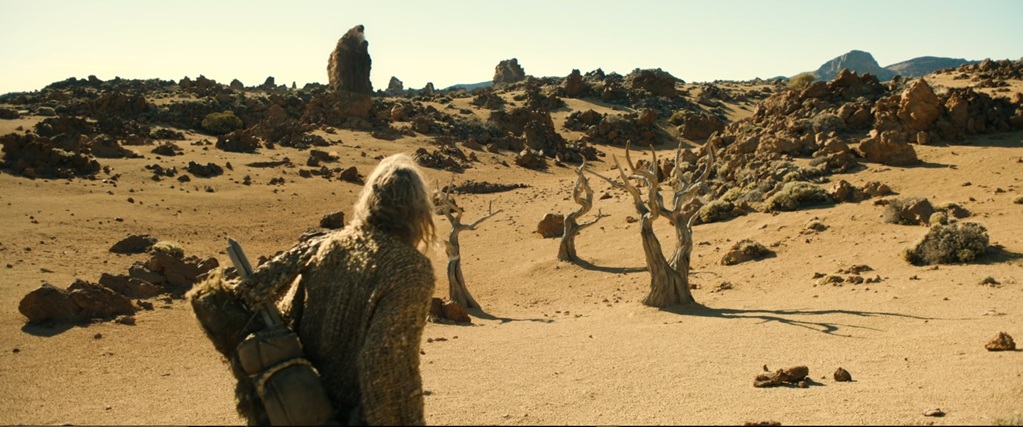
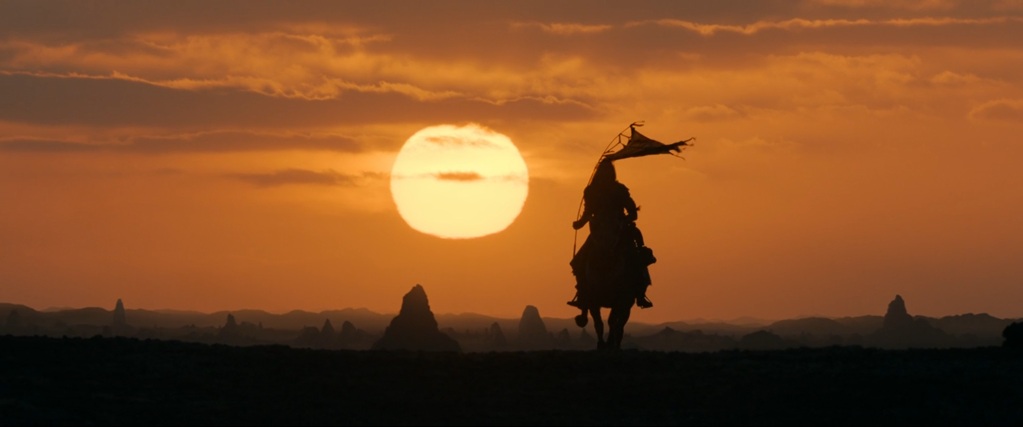
While we don’t get much outside of rocks, dead trees, barren canyons, and lots of sand, it’s great to finally see something other than European climates, and remember that Middle-Earth is so much bigger and varied than what we’ve seen in Tolkien’s books.

5. Celebrimbor

Though he had an important role to play in Season 1 of Rings, where he forged the three rings of the Elves, Season 2 is where Celebrimbor gets to come into his own and shine as one of the most famous elves of the Second Age. As the descendant of the famously fiery and temperamental Fëanor, Celebrimbor is an elf who doesn’t desire fame, power, or ruling others, but only in creating beautiful things and trying to undo the mistakes of his ancestor… a desire that makes him him all-too vulnerable to Sauron’s manipulations.

While he has all the qualities of being a noble hero like Gandalf, Aragorn, and Galadriel, Celembrimbor is unfortunately like Isildur and Bromoir: beings who fight and strive to do what is right at great personal cost, but who’s tales are told as tragedies by those who come after them. Celebrimbor’s a noble and kind-hearted elf, but his determination to make his mark on the world has catastrophic consequences for the world at large.

Yet, his noble intentions, determination to do what is right after realizing he’s been lied to and deceived by Sauron, and only wanting to do good makes him endearing and likeable. Like Diza, he’s an elf you’d be happy to share ale with at a tavern after a long day’s work.

6. Celebrimbor’s Anvil
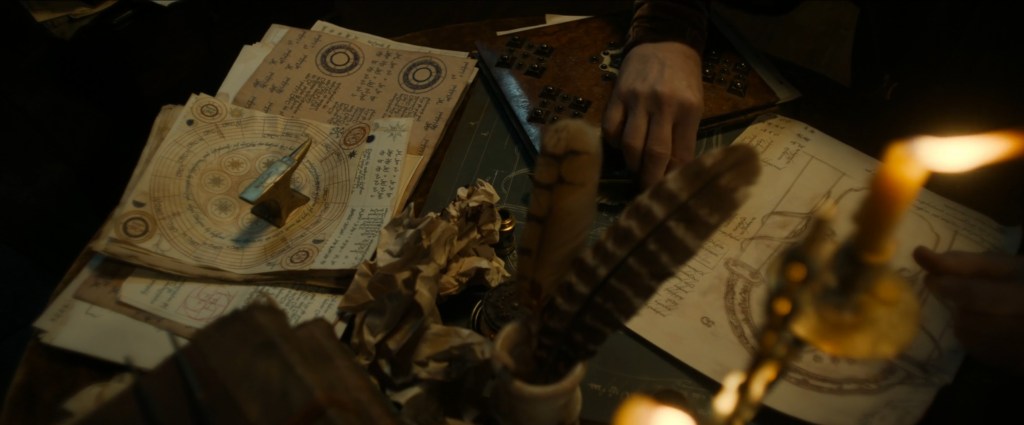
It’s only onscreen for a few seconds, but when Celebrimbor is doing some paperwork in his office, sharp-eyed viewers will see that he uses a tiny anvil as a paperweight, implying that the mighty Celebrimbor, greatest Elven smith of the Second Age, has a good sense of humor. Plus, the image of noble and graceful elves going through the effort to craft, shape, and forge an itty-bitty, widdle anvil is hilarious. Why haven’t we gotten this thing as an officially licensed collectible yet?

7. The Hammer and the Crown

Middle-Earth has its fair share of historical objects that Indiana Jones would be happy to track down, and ‘Rings’ has two big ones in Season 2: Fëanor’s hammer, and Morgoth’s crown.

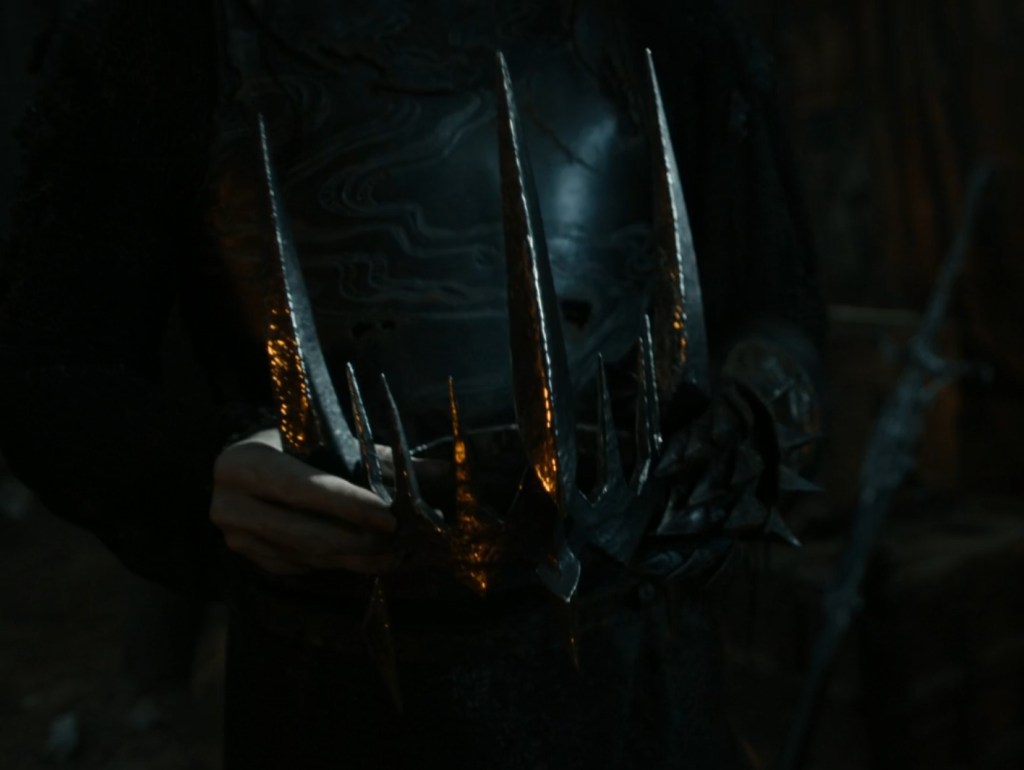
While fans who have only watched the films or seen the show can understand that these are important artifacts, readers of Tolkien’s works will get the most enjoyment out of seeing the hammer forged the most beautiful objects in all of creation (the Silmarils), and that crown that was worn by the most evil being who will ever exist (and that held the aforementioned jewels in its spiky embrace). Both go a long way to help make the world of Middle-Earth feel ancient and lived in, and that they played huge parts in changing the course of history long before the show began.

8. The Nameless Thing

One of the most fascinating parts of Tolkien’s world are the nameless things: eldritch horrors that live in the deepest, darkest fissures deep beneath the mountains of the world that are even older than Sauron. They are only mentioned briefly in Tolkien’s works, but are apparently so frightening that even Gandalf refuses to describe these abominations after encountering them when pursuing the balrog after their fall into the pit of Khazad-dûm. Season 2 gives us a glimpse of one in the form of a giant, grotesque worm-thing that tries to eat Isildur and Arondir before being sliced up from the inside and being (presumably) turned into nameless thing-burgers for dinner.

Is this a scene that doesn’t really add anything to the overall plot? Yes. Could it have been cut out without any effect on the story? Yes. Is it cool to see one of the most mysterious, dark, and vicious things that Tolkien ever wrote about? Heck yes.

9. Mirdania Sees Sauron’s True Form

One of Tolkien’s smartest decisions in writing The Lord of the Rings was not describing what Sauron looks like: he’s an unseen evil, a force so powerful and so dreadful that you don’t even have to be anywhere near him to experience the power of his malice. And despite having more screentime in Rings of Power than both the Hobbit and Lord of the Rings films combined, Rings has never shown Sauron’s true form, only his armor from the First Age and the disguises he wears to interact with others.

The closest we get to getting a glimpse of Sauron’s true form is when one of Celebrimbor’s assistants, Mirdania, accidentally enters the unseen world and sees Sauron as he really is (without realizing who she’s looking at), the experience shaking her to her core… but we don’t see that. All we get is Mirdania describing a tall being with pitiless eyes and skin made of flames. By describing the moment, but not showing it, Rings follows Tolkien’s example by leaving it up to the viewer’s imagination to visualize what Sauron’s true, malevolent form must look like.

One last little twist about the scene: after Mirdania describes what she saw, who’s the first one to comfort her? Sauron himself.

10. The Raid on the Temple

One of season 2’s strongest storylines is showing Numenor’s gradual downfall. While season 1 hinted that the greatest kingdom of Men in Middle-Earth was starting to crumble from within, season 2 brings this rot out into the open as a power-hungry Ar-Pharazôn begins his campaign to take control of the island empire and persecute those loyal to the Valar, the elves, and their ways.

The one scene that perfectly embodies Numenor’s descent into evil is the raid on the Faithful’s temple. Starting off as a peaceful funeral ceremony bidding farewell to all who died on the mainland in the last season, it devolves into Pharazôn’s sniveling weasel of a son – Kemen – gleefully interrupting the ceremony and announcing the destruction of the temple, destroying sacred artifacts for the fun of it, and then emotionally manipulating Isildur’s friend Valandil into starting a fight to justify using lethal force against the faithful, ending with Kemen stabbing Valandil in the back.

This scene, more than any other in the series, showcases the cruelty and moral rot of Numenor. What’s more chilling is that there are no orcs here, no supernatural monsters or ancient evils emotionally manipulating everyone present. It’s just humans being evil to one another, and it’s arguably scarier than any demon Tolkien could conjure up. And the worst part is that this is only a taste of the evil that Numenor is going to unleash upon Middle-Earth at large in the years to come.

(As an aside, I think there’s a very good chance that Kemen will end up being one of the Ringwraiths: Tolkien’s writings strongly imply that at least three Ringwraiths were of Numenorian descent, and it’s easy to see Kemen being nasty and power-hungry enough to accept a ring of power by Sauron. And if he wants to take the throne of Numenor, only to be denied, then Sauron might offer to make him a great lord and promise him a kingdom of his own to rule… Angmar, perhaps?)

11. Sauron’s Deceptions

One of Sauron’s greatest strengths is his ability to deceive and manipulate almost anyone he encounters, including the smartest, wisest, and most powerful elves in Middle-Earth. Yet, the books are vague about how he does this beyond his ability to take fair forms and cast illusions. While most of his manipulations in Season 2 follows the pattern of narcissists abusing others (lovebombing, gaslighting, ignoring boundaries, victim blaming, etc.), we get to see Sauron’s supernatural abilities at work when he conjures a vision of Eregion to subtly trap Celebrimbor. Like the holodeck from Star Trek, Celebrimbor can walk around in this vision, touch things, interact with other elves, and continue his work… completely unaware that the real Eregion is being bombed into rubble by orcs.

This illusion is a fascinating demonstration of Sauron’s power and his ability to deceive others, and makes you wonder how he’s used this ability on others throughout his time in Middle-Earth: It’s one thing to resist lies and flattery, but it’s much harder to resist when the very world around you is a lie and you don’t know it.

12. Who’s Will Is Stronger?

So often in fantasy stories, dark lords and evil-doers have all the power and all the advantages over their good counterparts, including the willingness to do whatever needs to be done to achieve their goals. But Celebrimbor gets a moment to prove that the good guys can be equally as strong-willed: shackled to his desk and unable to stop Sauron from taking the rings that he will use to enslave men and create the ringwraiths, Celebrimbor realizes the only way he can get free is to cut off his own thumb so he can slip through his shackle. But doing so means that he will never again be able to use a hammer, an anvil, and a forge to create things. Celebrimbor’s Eru-given gifts of forging and creating will be forfeit, and his dreams of making Middle-Earth beautiful will be gone.

Knowing all that, Celebrimbor still cuts off his thumb.

While gruesome, this is one of Celebrimbor’s best character moments: when everything is on the line, he is willing to give up his life’s dream for the chance to stop Sauron and save others. While it is, unfortunately, all for nothing in the long run, never let it be said that Celebrimbor did something most of us wouldn’t have the courage to do.

13. Celebrimbor’s Death

Celbrimbor’s death is one of the more gruesome in Middle-Earth media: tortured by being shot repeatedly with arrows from Sauron himself, threatened with supernatural means to ensure he doesn’t die, and then being impaled with a spear through the gut before finally dying, it’s a gruesome spectacle. Yet, one thing that’s puzzled me ever since watching it is why Sauron cries after Celebrimbor’s death. He wouldn’t see Celebrimbor as a friend, nor would a being such as himself be frightened at a prophecy that his rings will one day destroy him. So why the tears?

After mulling things over, I’ve come to think that the reason Sauron cries is because he’s realized he’s crossed the point of no return. All throughout Season 1 and 2, Sauron says that his greatest goal is to heal Middle-Earth of the hurts he helped inflict upon it. Yet, when staring at Celebrimbor’s corpse, Celebrimbor’s words cut through all the lies he’s told himself:

“I go now to the west, blown forth on a wind that you can never follow.”

I think Sauron realized that Celebrimbor was right: After all he’s done, and after all the times he’s rejected the chance to turn away from evil, it now hits Sauron that he can never go back to Valinor, his home. If he did, the Valar would imprison him, find him irredeemable, and thrust him into the void to join his master in endless darkness.

In my opinion, this is the moment where the last piece of good in Sauron dies. From here, he will fully embrace evil to achieve his goals and abandon any attempt to kid himself that he’s doing this to help others. Celebrimbor may have died here, but so did a tiny, flickering spark of light that will never be re-kindled.

14. Adar Turns Back to the Light.

One of my favorite storytelling tropes is when a villain sincerely and truly repents of their ways and turns their backs on evil. That’s why one of my favorite scene in all of Rings – tied with Sauron being offered the chance to turn from evil, as described above – comes with Adar turning back to the light.

Having obtained Galadriel’s ring, Adar seems poised to use it as a weapon to turn the tide in his war against Sauron and finally defeat him once and for all… but that’s not what happens. Though exactly what happened isn’t shown, it’s logical to assume that Adar’s mind was healed by Galdriel’s ring, making him realize how much evil, death, and destruction he had caused since beginning his quest to create a homeland for the orcs. But instead of giving into despair and hopelessness, or telling himself even more lies to cover up the pain as Sauron did, Adar instead chooses to pursue a path of peace.

While his quest for redemption only lasted a few minutes, Adar holds the unique distinction of being the only true villain in Tolkien’s universe – whether in books, films, games, and TV shows – to sincerely repent, something that Sauron, Saruman, Grima Wormtongue, and so many others never did.

While his ultimate quest to have the orcs live in peace was doomed to never succeed, I hope Adar can return in future seasons (due to Elves being able to reincarnate in Valinor if they are killed), and become of the good guys fighting against Sauron.

15. “Dwarves!”

Dwarves!

16. Sauron vs Galadriel

In Tolkien’s writing, an interesting paradox is introduced regarding Sauron: Despite his overwhelming power, strength, and innate magical abilities, he always loses whenever he gets into a physical fight with someone. That trend is played with at the climax of Season 2, when we get our very first scene of the Dark Lord going toe-to-toe with an opponent onscreen when he fights Galadriel for the 9 rings of power. For the majority of the fight, Sauron easily has the upper hand, toying with her mind and easily deflecting her blows before finally defeating her with a stab from Morgoth’s crown, and taking the 9 rings.

While I enjoy the fight for being able to see my favorite fictional villain getting to show off his fighting skills (and using Morgoth’s crown as a weapon is an ingenious and clever idea), I also like how the fight shows that even if Sauron defeated Galadriel, destroyed Eregion, and got his rings, he still lost: Galadriel escapes, and his potential ally and slave will instead be a thorn in his side for the rest of his days, giving hope, comfort, and aid to those who fight against Sauron, and will be one of the major players in his final and permanent defeat.

Sauron may have won this battle, but though it will take centuries for it to happen, he has ultimately lost his war to enslave Middle-Earth, and Galadriel escaping is just the first of many twists of fate that will finally lead to his final and ultimate defeat.

That’s it for Season 2, which I think is a big improvement over Season 1; come back in 2027 when we’ll take a look of my favorite moments from the third season of ‘The Rings of Power’.

The Best Background Characters: The Zombie/Vampire of Helm’s Deep

Every story has a cast of characters that we follow and watch and come to love… but what about the background characters? The nameless masses who rarely get our attention? This column examines my favorite background characters who deserve a moment in the spotlight.

***

The Movie:

‘The Lord of the Rings: The Two Towers’

The Character:

A zombie! (Maybe)

The Scene:

Why He Deserves A Moment In The Spotlight

Despite having watched all three Lord of the Rings movies dozens of times over the years, I’m still finding little moments I never noticed before, and this one may be the weirdest of them all: at 0:10 in the clip above, we can see Rohan soldiers barricading the door to the keep of Helm’s Deep. But if you pause the video at the right moment, you can see what looks shockingly like the pale, emancipated hand of a zombie.

I know this isn’t a zombie, but it sure looks line one, doesn’t it? Alternately, considering how the fingernails almost look like claws, it may also be the hand of a vampire; compare the hand here to Nosferatu’s hand from the upcoming 2024 remake:

While this is certainly the hand of a random soldier that’s stained with Uruk blood and covered in bruises, it’s still fun to imagine that an undead creature of the night came to defend the Rohirrim from Saruman’s hordes, and subsequently went on fun adventures with its new horse-buddies while guzzling mead, camping out in Dunharrow, fighting on the Pelennor Fields, and finally duking it out with orcs at the Black Gates, while never gaining any glory or being remembered by the masses. But he was still there, just out of sight, helping erect barricades and doing his part to save Middle-Earth and its people from Sauron.

My Zombie Apocalypse Team

As December draws ever closer, and retail workers start going mad from hearing Mariah Carey singing about Christmas several thousand times a day, I figured it would be fun to extend spooky season just a bit longer to counter the too-early holiday cheer by trying my hand at the ‘My Zombie Survival Team’ meme that’s been floating around the internet since 2010. For those who aren’t aware, the meme’s exactly what it sounds like: You are heading out into a zombie apocalypse, but you get to choose who will be on your team: The leader, the brawler, the weapons expert, the smart one, the medic, the one who can move really fast, the team mascot, and the inevitable annoying guy or gal who will die first.

While it would be easy to recruit non-humans who could wipe the floor with the undead menace (Optimus Prime, Dracula, the Terminator, etc.) let’s make things interesting and pick only humans with no supernatural powers. Here’s who’d be on my team:

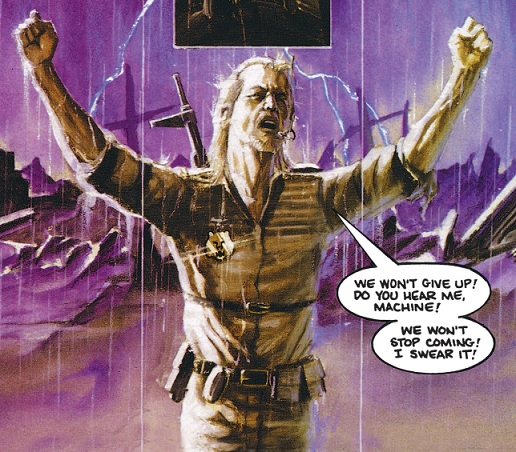
Team Leader: John Connor from ‘The Terminator: The Burning Earth’

Image: Dark Horse Comics

There’s no shortage of leaders in fiction who could lead a small group of people trying to survive a zombie apocalypse, but John Connor’s resume is particularly impressive: As the man destined by fate to save humanity from Skynet, a middle-aged John has kept humanity alive as the war against the machines reaches its 40th and final year, a testament to his leadership skills. But John’s no armchair general; even at his advanced age, he’s still fit enough to climb cliffs, run, and engage in combat with Skynet’s forces while getting only an hour of sleep at a time, and has the ability to think quickly and efficiently in life and death situations. And when worst comes to worst, John is willing to make impossible choices, such as euthanizing injured people who can’t be saved, a decision that would be valuable (if unwanted) in a zombie apocalypse.

Strengths:

*Decades of combat experience leading humanity in a war against a highly-intelligent supercomputer with legions of zombie-like enemies.

*High level of compassion towards people and reverence for human life, which would help survivors trust him.

*Great physical stamina and combat abilities for a man his age, reducing his chance of becoming a burden to others.

*Destined by fate to save the human race, whether it be from Skynet or a zombie apocalypse.

Brawler: Indiana Jones

Image: Disney

The world’s most famous archaeologist would be a great addition to any zombie team: his decades of experience in exploring tombs, lost cities, and swinging around on his whip would be invaluable when it comes to getting through abandoned cities, towns, and dangerous locations left to crumble in the wake of a zombie onslaught. And while there are others who are stronger, bigger, and faster, Indy takes up the mantle of the group’s brawler because of his ability to quickly improvise when taking on opponents – sometimes several at a time – who are better at fighting than he is. It also helps that Indy has almost supernatural amounts of luck; no matter how bad or hard things get, the universe always seems to step in to give Indy a way out, whether when trying to save the Ark from a convoy of Nazis, or when taking on another convoy of Nazis armed with a tank; such a gift would be a huge advantage in taking on the undead and hostile humans in a post-apocalyptic world.

Strengths:

*Extensive experience in one-on-one fights, which would come in handy when fighting hostile survivors.

*Able to improvise on the fly and frequently defeat opponents with more skill, strength, and numbers than him.

*Possesses incredible, almost supernatural luck when it comes to getting out of hostile situations.

*Years of experience exploring dangerous locations would translate well to exploring abandoned cities.

Weapons Expert: Gabe Logan

Image: Sony Computer Entertainment

The protagonist of the Syphon Filter video game series joins my team as its weapons expert: as a former soldier in the US’s special forces, and a secret agent who single-handily took down a huge, secretive black-ops agency who tried to unleash a manufactured virus upon the world, Gabe is a master of modern combat, equally capable of using stealth and raw firepower to achieve his objectives, and can use virtually any modern weapon, whether they be pistols, submachine guns, rifles, shotguns, grenade launchers, explosives, and even knives with incredible accuracy. When Gabe’s skill with firearms is coupled with his incredible physical strength (he can hang one-armed and fire a one-handed weapon with perfect accuracy), and tactical abilities (he’s taken on and defeated soldiers in bullet-proof armor, attack helicopters, and even tanks) he becomes the group’s all-around weapons expert who can engage zombies in a full-on assault, quietly take them out one-by-one, or snipe them from afar. Finally, Gabe is very trusting towards other people and is a natural leader, having led the Agency after bringing it down, making him an invaluable member of any team going through a zombie-infested wasteland.

Strengths:

*Over thirty years of combat experience in a multitude of environments around the world that required both open combat and stealth, allowing him to tackle any situation involving zombies or hostile humans.

*Excellent marksman with almost every known modern weapon.

*Good inter-personnel and leadership skills.

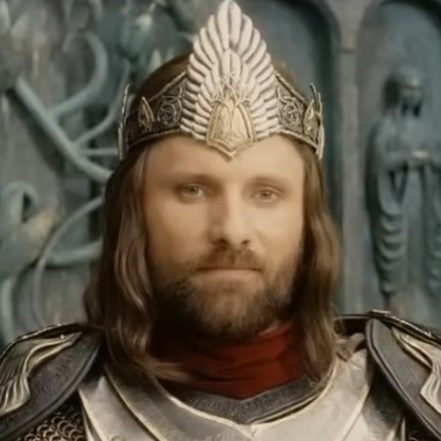
Brains: Aragorn II

Image: Warner Bros. Pictures

When most people think of the brains of a group, they imagine a computer genius who can hack any computer system and help restart civilization after the zombies are wiped out. But I think a certain kind of intelligence is needed in a zombie apocalypse: with technology all-but guaranteed to fail and be decades away from being restarted, a better choice would be someone who is skilled in the art of surviving off the land, and Aragorn, son of Arathorn, is the right man for the job.

While he’s best known for being a great swordsman and the king of Gondor after Sauron was defeated (spoiler alert for a 69 year old book), one of Aragorn’s often overlooked abilities is his time spent wandering Middle-Earth as a ranger for 57 years, giving him plenty of experience in hunting, finding food, and using natural resources to cure and treat wounds and diseases in lands full of orcs, bandits and monsters, all of which would serve him well in the desolate lands of a zombie hellscape. Those skills are further augmented from the knowledge and wisdom Aragorn learned from growing up with elves in Rivendell, and from the wizard Gandalf.

If you’re looking for someone who has the smarts to help you survive in the wild when you’re not being attacked by brain-eating zombies, and to help you take out zombies when they are attacking, Aragorn’s your man.

Strengths:

*Almost 60 years of experience surviving and thriving in the wildness against monsters and hostile humans, making survival in a post-apocalyptic wasteland much easier.

*Excellent leadership skills from serving as king of Gondor for 122 years, giving him unmatched experience when dealing with friendly and hostile groups, as well as diplomacy. (John Connor remains team leader due to leading armies in fighting Skynet non-stop for decades, where Aragorn primarily ruled in a time of peace.)

*Excellent melee and swordsmanship skills, an invaluable asset in a world where bullets would become very rare.

Medic: Dr. Beverly Crusher

Image: Paramount Pictures

It was surprisingly hard coming up with a pop culture healer who didn’t have magical abilities, but I ended up going with Beverly Crusher, chief medical officer on the Starship Enterprise D and E. Her biggest advantage in taking on the role of the group’s healer is that she has the best medical equipment the 24th century has to offer. Even if she can only carry what’s in an expanded medkit, that would include a dermal regenerator for treating minor skin wounds, an osteogenic stimulator for minor bone fractures, and a medical tricorder, an invaluable device that could help in the treatment of (presumably) almost any known ailment, and possibly a regular tricorder, which can possibly act as a miniature library of 24th century data and information, which would be very handy when it comes to rebuilding the world after the zombie apocalypse is over. But that doesn’t stop there: as shown in ‘The Next Generation’ episode, ‘The Survivors’, portable replicators exist, so if Beverly knows she’s going into a zombie apocalypse wasteland, she’d make sure to carry one to replicate an almost limitless supply of food, drink, medical supplies, and clothing. And because Starfleet personnel don’t go into the field unarmed, Beverly would also carry a personal phaser, and possibly a phaser rifle, both of which would be an invaluable tool and weapon against the living dead.

However, even 24th century technology requires energy to operate, and would eventually die and become useless. But even then, Beverly would still have her medical training to fall back on, and like almost everyone else on this list, Beverly has an aptitude for leadership, benefiting her roles as head of the Enterprise’s medical teams, and Starfleet Medical in general. Throw in her ability to be cool under pressure and ability to fight when needed, and Beverly becomes an invaluable member of any zombie-fighting team.

Strengths:

*Carries multiple weapons and tools from the 24th century that would make survival much, much easier.

*Extensive medical training, allowing her to treat a wide array of ailments and injuries.

*Ability to remain cool under pressure.

*Apt at both leadership and combat when the need arises.

Speed Fighter: Doom Guy

Image: id Software

Finding a human who can fight hard and fight fast without supernatural abilities or technology that would inevitably run out of power is tricky… but there’s one guy who is not only fast, but arguably the best fighter out of anyone in this group: Doomguy, the protagonist of the long-running Doom series. For the purposes of this list, we’re sticking with Doomguy as he appeared in the original 1990 series, where he is an ordinary human without the supernatural abilities from later games. But why does a heavily-muscled space marine become a speedster? Easy: Doomguy is so fast, he can outrun rockets! To be more specific, he can reach speeds of up to 90 miles an hour while weighing over 1,200 pounds, meaning he has the strongest legs in human history. Couple this with his unbreakable will and experience in fighting zombies (and demons), and Doomguy becomes the group’s sledgehammer against the zombie hordes; the only thing stopping Doomguy from taking care of everything himself while the others relax and sip pina coladas from Beverly’s replicator is that he’s just as vulnerable to damage as any other human, meaning that if he’s shot enough or ganged up on, he’d still be killed. But even as a glass cannon, Doomguy’s speed, brawn, and combat skills make him an unbeatable ally in the fight against the undead.

Strengths:

*Endless stamina and the fastest running speed of any human who has ever lived.

*Unbreakable will from fighting thousands, if not millions of zombies and demons both in our world, and in Hell itself.

*Experience in using a variety of weapons ranging from his fists, rocket launchers, and plasma weapons.

Mascot: Ellen Ripley

Image: Disney

Mascots are supposed to be cute, adorable, an animal, or otherwise sympathetic person. But for my group’s mascot, I went with Ellen Ripley. She’s not cute, she’s not adorable, and she’s not a happy-go-lucky innocent, but Ellen represents some of the best humanity has to offer: Gifted with the ability to think and act through fear no matter how frightened she is, Ellen can combine that with her pragmatic, no-nonsense leadership to become a force to be reckoned with, so much so that a bunch of battle-hardened marines turned to her – an untrained civilian – to help lead them when aliens wiped out half their squad.

Yet, beneath her fierce, focused exterior is a woman who cares about others and is capable of acts of extreme bravery in the face of overwhelming danger. While Ellen can fight, her biggest strength is being the rock that people can cling to when things are at their worst. More than anyone else in the group, Ellen demonstrates humanity at its bravest, and that earns her the mantle as the face, heart, and soul of the team.

Strengths:

*Extraordinary ability to think and act through fear.

*Pragmatic, no-nonsense leadership abilities.

*Extreme bravery in the face of danger.

Guy Who Dies First: Helena Shaw

Image: Disney

As the co-protagonist of Indiana Jones and the Dial of Destiny, Helena may be quick on her feet and cunning, but she would be the first to die: As a con artist who ultimately only cares about herself, Helena wouldn’t hesitate to sacrifice everyone else to save her own life the moment things got dangerous, or bolt after grabbing whatever supplies she could carry. Either way, Helena would quickly find herself alone and surrounded by dozens or hundreds of the undead. While she’d be able to evade them for a time, she would inevitably reach a point where she has no one to help her (or she’s being actively shot at by people she’s double-crossed), and be quickly turned into Purina zombie chow. While ruthlessness and cunning would be useful assets in a zombie apocalypse, having friends and allies to help you is an even greater advantage, and selfish con artists would quickly find themselves in short supply of both.

Strengths:

*Being able to emotionally manipulate and deceive people.

*Quick on her feet.

Conclusion:

When it comes to survival in a zombie apocalypse, it’s tempting to assemble a team of people who are excellent warriors, tough, and all-around badasses who can survive just fine on their own. But if a zombie outbreak rally happened, there’s one thing that would matter more than anything else: being able to work together with others. While pop-culture loves lone wolves like Rambo, a group would realistically have a much higher chance of survival when it comes to fighting millions, if not billions of zombies: being able to cooperate with others, sharing resources, and having someone to watch your back leads to a higher chance of survival compared to a lone individual who gets injured with no one around to help them. That’s why I think my team, which relies heavily on those who are skilled in both leadership and combat, would have an excellent chance of survival. But what about you? Who would you have on your team? Let us know in the comments below!

Perfect Moments: The Stories That Really Mattered…

Once in a while, you come across a moment in a story that is so perfect that it stays in with you for years, or even a lifetime. These are moments that, in my opinion, are flawless; perfect gems of storytelling that cannot be improved in any way, and are a joy to treasure and revisit again and again.

***

The Movie:

‘The Lord of the Rings: The Two Towers’

The Scene:

Why it’s perfect:

There are so many wonderful moments in The Lord of the Rings film trilogy that picking just one above all others is nearly impossible. Would you take an action scenes, or a moment of drama? I don’t know what I’d pick… but one of the top contenders comes at the end of the second film, where Sam gives Frodo one of the greatest inspirational talks in the history of film.

This scene is so beautiful, and so timeless, because it sums up exactly what The Lord of the Rings – and what all great stories – is about: good people who, when faced with overwhelming, all-powerful evil, choose to keep going. They could give up at any time. They could lie down and die. They could go home and give in to despair… but they don’t. Even if they’re scared out of their minds, they choose to take another step, to go one more mile, to get through just one more day, because they believe that there are things in the world worth saving, no matter how bad things get.

This isn’t just syrupy sentiment on Sam’s part: In Tolkien’s universe, evil is very real, and it is powerful, and it can and does triumph. Heroes die, kingdoms fall, and innocent people suffer… But in the long run, evil cannot win. It can conquer entire races, it can enslave so many people, and it can destroy so much, but it can never destroy the desire of all good people to live in peace with one another, no matter where they come from or who they are. Some are great warriors and others are just ordinary, everyday people. But all of them resist, in ways both big and small, flashy and quiet, and when evil dies, whether it’s a year later, a decade, or even a century, those people are still there, still going, and proving that evil will always fail in its quest to achieve total victory over all that is good.

Perfect Moments: The Last Stand of Men

Once in a while, you come across a moment in a story that is so perfect that it stays in with you for years, or even a lifetime. These are moments that, in my opinion, are flawless; perfect gems of storytelling that cannot be improved in any way, and are a joy to treasure and revisit again and again.

***

The Movie:

‘The Lord of the Rings: The Return of the King’

The Scenes:

Why they’re perfect:

When it comes to doing the climax of a story of a villain who wants to take over the world – and has the power to do it – writers need to step up and give their best, and the film adaptation of The Lord of the Rings: The Return of the King does it perfectly.

In these two scenes, the surviving members of the Fellowship and a small group of soldiers from Rohan and Gondor have come to the Black Gate to distract Sauron and keep his eye away from his home turf, giving Frodo and Sam the best chance of making it to Mt. Doom without being seen so they can destroy the One Ring. The problem is, Aragorn and his forces are outnumbered and have no chance of surviving, leading to Aragorn rallying his men with one of the best speeches in all of fantasy, and subsequently charging Sauron’s forces.

While fans love the speech and Aragorn’s subsequent charge, what’s not talked about are Aragorn’s men: every soldier who marched with him to the Black Gate did so knowing that they were going to die. They marched knowing that they would never see their loved ones again, and that they were going to war against a seemingly invincible enemy, one who has fought to enslave their world for thousands of years, who lied, deceived, and abused his own fanatical followers, who has refused to give up, caring only about himself and his glory. If Sauron wins, all of Middle-Earth will fall, and he will have dominion over all of Middle-Earth until the end of the world.

But these men refused to stay behind. They knew that this was their last, best, and final chance to save their world and their families from unspeakable evil, and chose to fight in the hopes that, against all odds, good will win. And so when Aragorn, Gandalf, Legolas, Gimli, Merry, Pippin, and Eomer charge into battle, the ordinary, everyday people charge with them into the last and greatest battle of their lives. They don’t know if Sauron will fall… But they’re going to do their best to ensure that he does.

My Favorite Fictional Places To Live In

If you could choose one fictional place to live in, what would it be? Would you go live in Hogwarts? A penthouse somewhere on Coruscant? Or maybe getting your very own Hobbit-hole in the Shire is more up your alley? Anyone who’s fallen in love with a book, a movie, or a game has fantasized about living in a particularly loved location; here are ten of my favorites.

10. The Matrix (The Matrix franchise)

Image created by me using Deviantart’s DreamUp AI art generator.

Why I’d love to live there: Wait a minute! you might say; why would you want to live inside the Matrix?! Isn’t it a prison for humanity? Well, the first six were, but the Matrix I’m referring to would be one that takes place after the film series, where humanity is aware that they live in virtual reality, but they and the machines are no longer at war. While the machines work to rebuild the surface of the Earth to make it habitable for humans again, humanity chills out in the Matrix to give the machines the power they need, and thanks to their world being virtual, people can now alter it so that they can choose how they look, what clothes they wear, and have increased physical abilities, including – if you’re lucky – flight! And since real estate isn’t an issue, humanity could finally reach a state where everyone is housed and poverty is eliminated forever. Yeah, it may be all digital trickery, but as Morpheus pointed out, your mind would make it real.

Potential drawbacks: While I think everyone would love being able to bend the laws of physics, the possibility of people abusing these new abilities is very high. While most people would be content to be able to fly around in the digital world, abusers, criminals, sociopaths, and bullies would abuse their new powers, and conflicts could become even more dangerous than they are now. So while the Matrix would be very cool, it could also be very dangerous.

9. The Enterprise D (Star Trek: The Next Generation)

Image: Paramount Pictures

Why I’d love to live there: The Enterprise D is a huge spaceship filled with all the wonders the 24th century has to offer, including one of the greatest fictional devices ever created: the holodeck, a place where almost any fantasy you can dream up can come to life. And when you’re not living out your favorite daydreams, you can visit the arboretum, watch the stars from Ten Forward, enjoy a stroll through the ship while listening to the hum of the engines, and visit the onboard dolphins. (No, really, there are dolphins on the Enterprise.) Accommodations are nice, too; if you can snag one of the officer’s quarters, you get a lovely view of space and funky iridescent bedding! Coupled with the ship’s enormous size, and the timeless 80’s sci-fi design, you’d have a nice place to call home.

Potential drawbacks: As Q so memorably pointed out, space is no place for the timid: Being assimilated by the Borg, being dissolved by giant crystal entities, encountering space anomalies that turn you into monkeys or trap you inside a never-ending time loop, and any other number of galactic hazards are some of the things you might encounter, so if you want to live on the Enterprise, maybe do so when it becomes a museum ship.

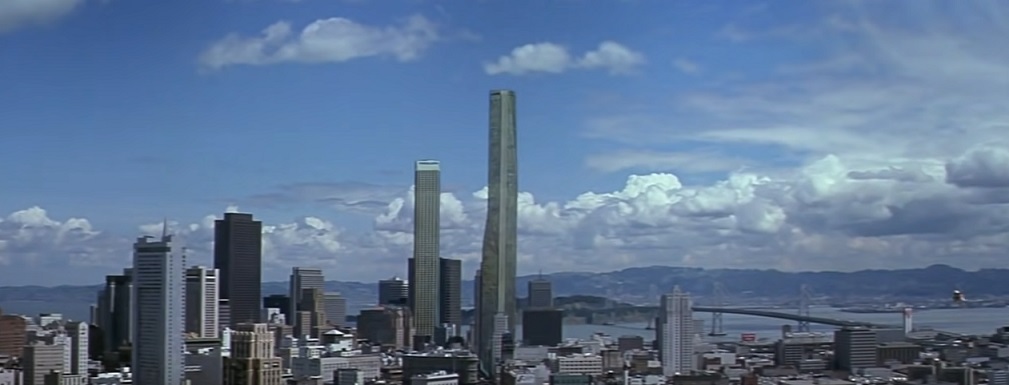
8. The Glass Tower (The Towering Inferno)

Image: 20th Century Fox/Warner Bros.

Why I’d love to live there: The Glass Tower is, in my opinion, one of the most beautiful skyscrapers ever to appear in film. Not only is the gold exterior a beautiful, simple, timeless look, but the interior has a wonderfully charming 70’s decor, right down to the interior elevators. But the big perk is the views: no matter where you live in the tower, you would get breathtaking views of the city, the bay, and the surrounding areas.

Potential drawbacks: Well, there is the itsy, bitsy, tiny fact that the tower catches on fire due to faulty wiring due to cut corners and cost saving measures during construction. And considering that the tower is in San Francisco, your monthly rent would be about 18 trillion dollars. So unless you magically get a free, lifetime lease, you’d have to be quite rich to live there.

7. Mêlée Island (The Secret of Monkey Island)

Image: Lucasfilm Games

Why I’d love to live there: As a night owl, the never-ending nightlife of Melee Island (It’s always 10 PM), is a big plus for me, as is the peaceful town and wilderness to explore: nothing can hurt you here, there are plenty of shops to visit, and the island’s vast forests are beautiful to walk through without fear of wild animals and other threats.

Potential drawbacks: As this is also a pirate town in the 1700’s, you don’t have things like electricity, the internet, movies, or TV shows to keep you occupied on Melee Island, so once you’ve explored and seen everything, there’s not much else to do.

6. Equestria (My Little Pony: Friendship is Magic)

Image: Hasbro

Why I’d love to live there: Who says you have to live somewhere with nothing but humanoids to keep you company? Equestria is a land filled with adorable ponies who are happy to be your friend, and there are plenty of places to live with them, from towns to deserts, palaces and islands, and even floating cities, all but guaranteeing that you’ll find somewhere you like. Plus, Equestria is watched over by a benevolent monarch who has ruled it for over 1,000 years without succumbing to madness or becoming a dictator; if only we were blessed with leaders that good.

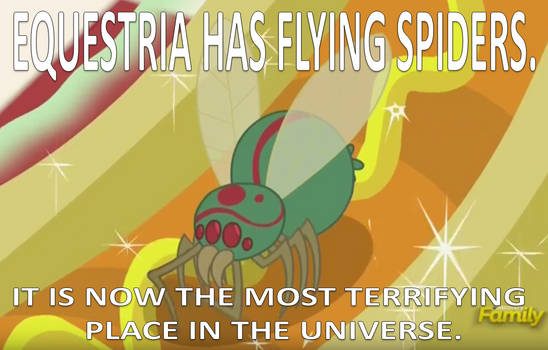
Potential drawbacks: Magic is real in this universe, and while there are beneficial spells, there’s also plenty of harmful and destructive spells that can brainwash you, turn you into other creatures, or kill you. And despite having lots of friendly ponies to live with, there are also lots of unfriendly ponies and monsters who either want to eat you or conquer the world, and have the ability to do so thanks to aforementioned magic. Oh yeah, and there are flying spiders.

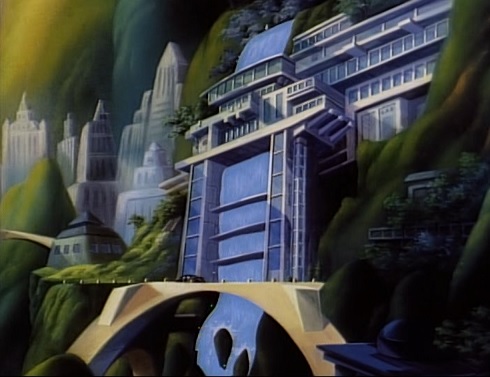
5. Cape Suzette (Talespin)

Image: Disney

Why I’d love to live there: Saturday morning cartoons of my childhood had lots of cool fictional places where adventures took place, but the only one I’d like to live in as an adult would be Cape Suzette from Disney’s Talespin. Set in a fictional 1930’s inhabited by anthropomorphic animals, Suzette is a sequestered, art-deco metropolis nestled in a towering mountain range and a beautiful cove, making it the perfect hub for the adventurous type. But the biggest draw is the apartment of Rebecca Cunningham:

Image: Disney

Even as a little kid, I thought her place was incredible, and as an adult it’s a strong contender for the most beautiful fictional apartment I’ve ever seen. Assuming money wasn’t a problem, this is where I’d love to live!

Potential drawbacks: Aside from being the only human in the city, you’d have to contend with raids by air-pirates, and every trip outside of the city’s boundaries is fraught with danger. There’s also the fact that the city’s de-facto ruler is a ruthless tiger who isn’t afraid to do anything and everything to increase his own wealth and power, so if he decided to ruin your life, there’s a strong chance he could get away with it.

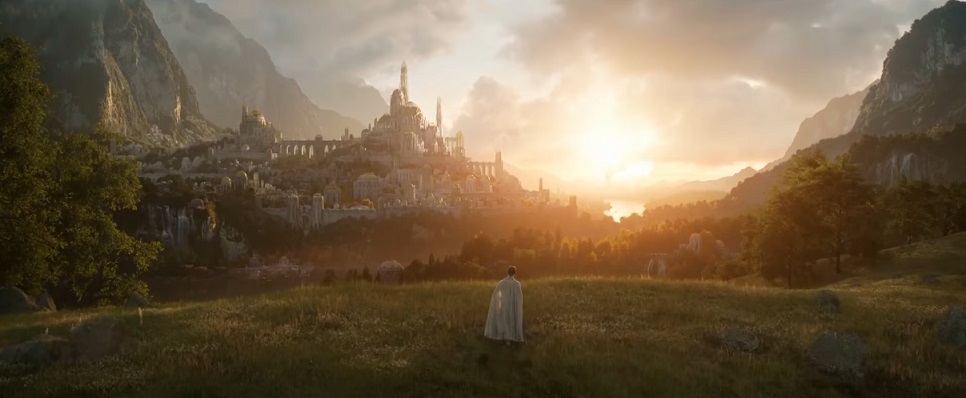
4. Valinor (The Silmarillion/ The Lord of the Rings)

Image: Amazon Studios

Why I’d love to live there: Valinor, the land of Middle-Earth’s gods, is one of the most fascinating places to me in JRR Tolkien’s universe, and the one place I’d love above all others to visit, or, better yet, live in: being free from evil, you could explore all its wonders, from the tallest mountains in existence, to the most majestic trees in creation, and the magical Gardens of Lórien, the most beautiful place in all of Arda. And if you wanted to, you could even visit the Halls of Mandos, the dwelling place of the dead; that sounds fun, right? But one of the most amazing draws would be living amongst elves and the gods themselves, beings who helped shape and create Arda and have seen the creator god – Eru – face to face.

Potential drawbacks: It’s said many times throughout Tolkien’s mythology – and by Tolkien himself – that mortals cannot live in Valinor because their lives would be greatly shortened due to the overwhelming magical power of the island, and they’d die cursing that they alone aged while everything around them seemed to never change. Yet, Frodo, Sam, and Gimili lived there in a state of peace and healing, suggesting that mortals can stay in the blessed realm if they accept death and don’t seek immortality. Thus, any would-be-mortal-resident would have to decide if living among elves, gods, and all their wonders is worth a greatly-reduced lifespan.

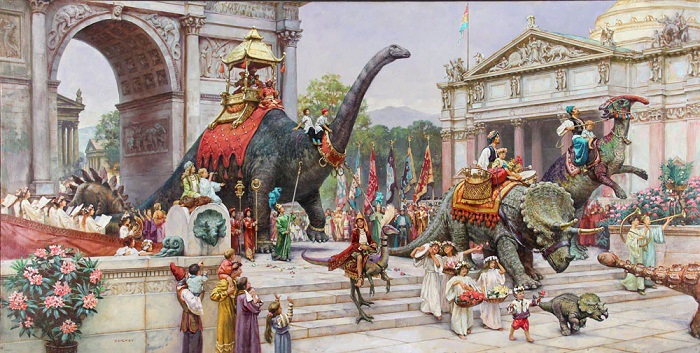
3. Dinotopia (The Dinotopia series by James Gurney)

Image: James Gurney

Why I’d love to live there: IT’S A UTOPIA WHERE HUMANS LIVE SIDE BY SIDE WITH DINOSAURS HOLY S**T THAT IS AWESOME.

Ahem; sorry.

To tone down my inner child, Dinotopia is one of the most wondrous, peaceful, utopian places I’ve ever found in fiction. A place where dinosaurs have survived to the present day and live peacefully with humans in cities, towns, jungles, mountaintop temples, and seaside communities, all brought to life by James Gurney’s beautiful artwork. For children and adults alike, it’s a place so many would love to call home, myself among them.

Potential drawbacks: Encountering carnivores who are not afraid to embrace their more savage side. Thankfully, you have to go out of your way to encounter them, so the threat is minimal, meaning that most of Dinotopia is one of the safer places on this list.

2. The Culture (The Culture series by Iain Banks)

Image created by me using Deviantart’s DreamUp AI image generator

Why I’d love to live there: When it comes to utopias in fiction, The Culture is arguably the one that probably gets closest to making one that you’d actually want to live in: A highly advanced, post-scarcity society where benevolent AI’s keep society running, allowing citizens of the Culture to do literally anything they want, as long as it doesn’t hurt or harm other individuals. With a high value on personal liberty and freedom, as well as technology that allows individuals to live up to 400 years (or even longer), people living in the Culture have it made: You can pursue all your passions, dreams, and hobbies as much as you want without worrying about having to pay the bills. Sweet!

Potential drawbacks: While the Culture does run into occasional problems and even more advanced civilizations dwelling in the cosmos, there really aren’t any hazards or drawbacks its citizens have to worry about; some would say that the Minds (the aforementioned AI’s that keep the Culture running) run a surveillance state, even if it is a completely benevolent one, but when you look at all the benefits the Culture’s technology can offer, and almost unlimited freedom everyone enjoys, the Culture is as close to an earthly heaven as you can get. And speaking of paradise…

1. Heaven

Image created by me with Deviantart’s DreamUp AI image generator

Why I’d love to live there: While we will likely never know for sure if there is continued existence after death (though considering the volume of near death experiences and other otherworldly phenomena reported throughout the centuries, I’m in the ‘there’s probably something after we die’ camp), Heaven, as seen in countless books, movies, TV shows, and video games, would be the absolute perfect place to live: a realm of peace, joy, and bliss, where all your dreams can come true, and where you can live without any of the negative parts of Earthy life, like death, aging, paying the bills, late-stage capitalism that puts the acquisition of money above human well being, etc. Plus, assuming the Supreme Being is benevolent and all-loving, you can chill out with God; who wouldn’t want to do that?! (I’ve always loved how in the book, ‘David Vs. God,’ you can even go surfing with God!)

There are countless versions of Heaven in fiction, but I especially like the version presented in the online webcomic, ‘The Order of the Stick,’: essentially, you get to enjoy every earthly delight you want, and when you’ve had your fill you get to go further up into Paradise to greater and greater joys.

Potential drawbacks: Depending on the rules of which universe you’re in (such as the movie, ‘What Dreams May Come’), the worst part of living in Heaven is the possibility that your loved ones don’t make it in, which would make living there hell. But since stories featuring getting into Heaven at the end tend to be more on the positive side, the odds of that happening are low, and the possibility remains that said loved ones can still eventually get there, even if they have to be rescued/fight their way out of Hell/the Underworld, etc.

Those are my favorite fictional places to live in; what are yours? Tell us your favorite fictional living places in the comments below!

The Best Background Characters: Sauron’s Last Orc

Every story has a cast of characters that we follow and watch and come to love… but what about the background characters? The nameless masses who rarely get our attention? This column examines my favorite background characters who deserve a moment in the spotlight.

The Game:

‘Ultimate Epic Battle Simulator 2’

The Character:

The last surviving Orc in Sauron’s army after an assault on Minas Tirith

(if auto-play doesn’t work, the relevant scene starts at 22:47)

Why He Deserves A Moment In The Spotlight

When it comes to big battles in fiction, huge numbers of enemy soldiers become faceless masses destined to cut each other down, becoming little more than meat for the grinder; redshirts, if you will. But when an army is whittled down to their last few soldiers, something happens: We become invested in those last few. Rather than them being nameless, faceless soldiers we expect to die, focusing on only a few – or just one – suddenly makes us interested in them. They now have a chance to show some personality and let us know that they’re not mindless soldiers who blindly follow orders.

Here, we get to see what happens when the last surviving orc in Sauron’s army tries to run away from the battle, only to be chased by a blood-drenched Gandalf hell-bent on killing said orc. This poor guy is armed with just a crossbow and probably just wants to get home and see his orc-wife and his orc-kids, and possibly play ball with his orc-dog and feed his orc-goldfish. Instead, he’s being chased by a crazed old man drenched head-to-toe in blood who wants to add the orc’s blood to his grotesque, gloppy suit. And while you can guess what happens, this is a great example of how big battle scenes can be exciting, but small, intimate moments can be more moving.

That’s F***ing Hilarious: My Favorite Funny Curses In Movies

NOTE: Although they are quoted and discussed in an academic manner, this article contains both written and video examples of vulgar language and is not safe for work.

Can swearing ever be funny? When played for drama, the Precision F-Strike can easily be one of the more shocking and memorable moments of a film, but when played for comedy, it’s often the funniest, as comedy Legend John Cleese would attest. To quote TvTropes:

“John Cleese… once described this trope in an interview, by explaining that the art of making swear words funny is to avoid using them… until the exact moment in the script when it will be most effective. A comedy with gratuitous swearing ends up desensitizing the audience to the words in question, meaning they lose a lot of their amusement. But if you go for fifty minutes without a single swear word, then suddenly have a character say “shit”, the swear word becomes instantly more amusing because the audience has been conditioned not to expect it up to that point.”

After thinking about this, I’ve come to the realization that Mr. Cleese is correct; after all, some of the most memorable swear words in cinema happen because you don’t expect them. Thus, to celebrate the times where vulgar language can add so much to a scene, I thought it’d be fun to share my amusing uses of swear words in films. Some were done intentionally, others less so, and some are the result of goofy writing or hilarious acting, and some may be the result of mondegreen (a phenomena where a word or phrase is misheard or misunderstood and interpreted as something else), but they are all memorable and good for a chuckle.

Honorable Mention 1: Harry Potter and the Deathly Hallows Part 2

It’s not a swear word, but if you listen closely at 2:48, you can hear what sounds like Voldermort’s otherworldly voice whispering, ‘Screw you, Harry!’ It pretty much ruins the drama of what is otherwise one of the most dramatic and satisfying moments of the entire Harry Potter saga, but it’s pretty dang funny to imagine that as the most powerful dark wizard alive dissipates into the afterlife, a fragment of his spirit takes one last opportunity to insult Harry, but in a polite, non-vulgar way. How thoughtful!

Honorable Mention 2: Dexter

I have never seen the television show Dexter and know next-to-nothing about it, but I have seen this clip countless times and it still cracks me up, especially with some of the jokes people have made with it.

7. Transformers: Dark of the Moon

The climactic chapter of the live action Transformers film series (until two sequels and a quasi-reboot came along) pulled no punches in upping the stakes, with a full-on invasion of Earth by the Decepticons, having the Autobots be grossly outnumbered, and having the Autobot’s most revered leader turn out to be a Decepticon turncoat who will enslave the human race without a second’s thought. It’s only fitting then, that he’s executed at the end without any mercy by his successor and former admirer Optimus Prime.

But while Sentinel’s official last words are an anguished, ‘No, Optimus!’ if you listen closely at the 1:00 mark, you can hear him groan, ‘Oh, fuck!’ before he dies and goes to Transformer hell. There’s just something amusing about the most famous, noble Autobot in Cybertron’s history going out not with a plea or a whimper, but with the sudden realization that he had screwed up so badly that the best way to express his regret was with an all-too human expression.

6. Transformers: The Movie

Yep, there are two entries about profanity in a series about shape-shifting robots that’s targeted for young kids. The first film about these robots from beyond the stars was notable for many things: the death of Optimus Prime, the introduction of Unicron, a robot capable of eating entire worlds, killing off almost all of the original cartoon’s cast, and being the very first time profanity was used in the series.

In this scene, Spike the human and his robot buddy Bumblebee have their moonbase self-destruct in an attempt to destroy Unicron as he eats said base, only for the plan to fail utterly. In response, a flabbergasted Spike calmly asks his robotic companion what the best course of action is to resolve their rather unfortunate predicament. Just kidding; he memorably says, ‘Oh shit, what are we gonna do now?!’

Can you imagine that? Someone swearing in a cartoon for kids? Outside of this example, I can’t think of any other show or movie that’s done so, and not only is it shocking, but funny, too because of how relatable and understandable Spike’s reaction is.

5. Superhero Movie

Released near the end of the era of big-budget movie parodies, ‘Superhero Movie’ is a funny send-up of superhero films released up to that date, the most famous being Sony’s Spider-Man trilogy, but with affectionate jabs towards the X-Men and Fantastic Four as well, complete with juvenile humor throughout. But my pick for the most memorable moment of the film comes at the climax, where the nefarious villain Hourglass – on the verge of gaining immortality – instead meets the Grim Reaper via Dragonfly plopping a crotch-bomb right in front of his face. And how does this dastardly villain, possessing a genius intellect, a fiendish plan, and every advantage imaginable, react? He gives the film’s only use of the word, ‘Fuck.’

Much like Sentinel in ‘Dark of the Moon,’ there’s just something funny at seeing a story’s villain so gobsmacked or horrified that they have to resort to cursing, and ‘Superhero Movie’ does it well.

4. Star Wars: Return of the Jedi

The Star Wars movies may pack stylized violence galore, but are by and large G-rated when it comes to talking… except in 1987’s, Return of the Jedi, where, when watching a super star destroyer plunge towards the second Death Star, you can hear someone on Admiral Ackbar’s flagship yell, ‘Die, dickheads!’ at 0:38.

For years, Star Wars fans have been wondering if we’re really hearing someone swear, or just something that sounds like it. Personally, I like to think that it is real, as it’s perfectly reasonable that someone fighting against an evil empire would celebrate and let loose with the strongest insult they could think of at realizing that said empire is finally about to be destroyed after decades of terror, suffering, and misery. Who among us wouldn’t do the same?

3. The Hobbit: An Unexpected Journey

In the pantheon of major Hollywood blockbusters, New Line Cinema’s The Lord of the Rings and The Hobbit trilogies are quite odd when compared to their peers: Aside from the decapitations, arms getting lopped off, armies being slaughtered by the thousands, and Sean Bean being turned into a pincushion, all six films are surprisingly tame, with no sex and no vulgar language that we can understand (aside from untranslated dwarvish). Much fun has been poked at this phenomena over the years, but as it turns out, there is exactly one audible curse word in the saga, one that’s hidden very well.

In the opening prologue of The Hobbit: An Unexpected Journey, Smaug the dragon attacks the city of Dale, burning it to the ground and inflicting death and destruction beyond comprehension. Naturally, it makes sense that people would be scared out of their minds at having their peaceful life destroyed in mere minutes, and nowhere is that more audible than someone yelling, “Oh God, what the fuck?!” at 1:59 in the clip above.

What I love about this swear is that it’s the perfect embodiment of John Cleese’s description of funny swears: After three movies of people, elves, and dwarves talking in G-rated language, having a ‘fuck!’ come out of nowhere is darkly hilarious, and a very understandable reaction to a dragon destroying everything you know and love. But even this vulgar word serves a purpose, as it helps to humanize the people of Dale; It’s one thing to see fictional characters panic, but when they let lose with curses and expletives that we all use from time to time, it makes them more human and shows that they feel the anger, frustration, and rage that we all do in a world that sucks at times.

2. The Wicker Man

2006’s ‘The Wicker Man’ quickly became a laughing stock as one of the cherished, ‘So bad it’s good’ films of the decade, even being described as the year’s best comedy, and all of that is due to the infinitely-entertaining Nicholas Cage, who does everything from running around and punching old women in a bear suit, to demanding how something got burned, and yelling about bees. But for my money, the film’s most hilarious moment is him yelling about how his death isn’t going to bring back the islander’s honey. It’s a line that – when taken out of context – is THE definition of ‘so stupid, it’s awesome,’ and you wonder how Mr. Cage managed to yell it without cracking up. I have no idea how, but I’m so glad he did it.

1. Epic Movie

What would happen if Superman suddenly no longer had bulletproof skin? He’d be in for a world of hurt, as demonstrated brilliantly in ‘Epic Movie.’

‘Epic Movie,’ despite it’s disastrous reception by audiences and critics alike, and it’s subpar performance as a spoof film, does have one truly brilliant scene: a parody of the sequence from ‘Superman Returns’ where Superman gets shot in the eye. But here, we see what would happen if the Man of Steel didn’t have indestructible eyeballs.

Everything about this scene is great: the music is appropriately bombastic, the build up is flawless, the effects of a slow-motion bullet are well done for a low-budget parody… and then the bullet sinks into Superman’s eyeball with a cartoonish squishing sound, and he shrieks in absolute agony, topped off with a very understandable shriek of how he’s been shot in the fucking eye. While the film may not be the best example of a parody, this scene is absolute gold, and my favorite use of the word ‘fuck’ in any film.

Five Ways Sauron Is A Good Role Model

When it comes to role models, you can do a lot better than Sauron, The Lord of the Rings. Ever since his debut in 1954 with the publication of ‘The Fellowship of the Ring,’ Sauron continues to reign as one of literature’s most famous fantasy villains. Yet, as Elrond noted, nothing is evil in the beginning, and even with his egomania, his desire to brainwash and enslave everyone in Middle-Earth, and his desire to become a god king, there are still some good and noble traits to Sauron’s character. So let’s dive in and take a look to see the dark lord’s admirable traits:

5. He uses cunning and intelligence over brute strength

For those unfamiliar with the backstory of Tolkien’s world, Sauron is essentially an angel who served a god of evil (Morgoth) that sought complete and total domination over the world and everything in it, corrupting the very essence of the world so that his evil was forever entrenched with it, causing strife among all those on it forever.

While Sauron was incapable of performing similar feats, he was arguably more intelligent and strategic with the strength, power, and resources that he had. Instead of seeking to control everything, he only sought to control the minds of those who lived in Midde-Earth, using lies, charm, deciet, and his Ring to strategically advance his goals. If Morgoth was the overpowering brute who believed in overwhelming power and physical might, Sauron was the quiet, silent type who lurks in the shadows, biding his time until the moment is right to strike with a scalpel for maximum effect.

4. He commits himself 100% to making his dreams come true

In a way, Sauron is the ultimate made-man (maiar?). Before he fell into evil, he loved perfection and order, and joined Morgoth to help make his dream become a reality. When Morgoth fell, did Sauron run away, hide in a cave, and weep for his dead dream? Nope; he abandoned Morgoth and continued on his quest. No matter how many elves, men, hobbits, ents, and gods were against him, Sauron refused to abandon his dream of a perfectly ordered world, to the point that he was willing to risk everything and created The One Ring to achieve his goal, with the risk of being reduced to a permanently powerless, helpless spirit if it were ever destroyed.

Regardless of how abhorrent his actions were, you can’t help but admire Sauron for having the courage to follow his heart and do everything he could to make his dreams come true!

3. He isn’t afraid to ignore authority figures and forge his own path

If there’s one thing Sauron cannot be faulted for, it’s his courage in rebelling against actual, physical gods. While Sauron is a powerful angel (perhaps the most powerful), he’s still outmatched by the gods who rule over all of Arda, and the god who created them, a god that Sauron has seen in-person. Yet, Sauron willingly and purposefully defies all of them, refusing to let himself be bound by rules, orders, and commands forced down on him from those more powerful than himself. Sauron has a dream, and he’s not going to let anything stop it!

Who among us hasn’t felt the frustration and anger of being ordered to do something by our parents, our bosses, organizations, or the government? How about being told what to do and how to live our lives without those in power caring about what we want to do? How many of us have dreamed of giving those authority figures the finger? Sauron did, only he did it to gods who could wipe him out in an instant. Whatever his many failings, the guy’s got guts.

2. He’s fallible and fails as often as he succeeds

Hold on a second! Why should we admire a dark lord who fails just as often as he succeeds? Because that makes said dark lord a much more interesting, well-rounded character instead of the cliched dark lord who is all but unstoppable, who is the best fighter, has the best armies, and commands power beyond imagination. And at first glance Sauron appears to be such a character. Here’s a list of his greatest triumphs throughout his career in villainy:

1. Became the second-in-command of the most evil being who ever existed.

2. Created the most evil object in history that no mortal could hope to control.

3. Brought down the most powerful human kingdom to ever exist using nothing but words.

4. Created the Ringwraiths

5. Tricked the elves into creating magical rings that would allow Sauron to control their minds and the minds of anyone who wore them.

6. Could sing songs so powerfully and so skillfully that he defeated a very powerful elf in a battle of wills (presumably it was this song).

7. Came very close to conquering the world twice, and would have succeeded if not for last-minute interventions.

8. Created a language from scratch to allow all his followers to speak a common tongue.

But with the good must come the bad, and here are Sauron’s greatest failures:

1. Was defeated by a really big doggy in a fight.

2. Was beaten multiple times by the armies of elves and men.

3. Had his ability to take a pleasing appearance taken away by God himself.

4. Failed to take over the minds of the most powerful elves and the dwarves using The One Ring.

5. Was killed by an elf and a man on the side of a volcano.

6. Failed to take over the world due to the actions of a 600 year old schizophrenic midget.

While powerful, Sauron still failed in many of his quests. Every time he fought others in hand-to-hand combat, he lost, and his ultimate scheme to enslave the world failed as well. Yet, its this fallibility that makes Sauron so interesting. He’s like the Terminator in the first Terminator film: He’s stronger, more durable, more intelligent, and more powerful than everyone else in the story. Taking him on in a fight is incredibly dangerous. Yet, he is not invincible, and knowing that he can and does fail makes him more interesting as a character. And speaking of failure…

1. He never, ever gives up

He may have massive armies at his command, an unmatched intellect, the ability to use magic and trickery like no one else, and have the ability to take over the world, but Sauron’s greatest strength as a villain is that no matter how many defeats he suffers, or how many times his plans fail, and no matter how many times he’s killed, Sauron never, ever gives up. No matter what you throw at him, no matter how badly his armies are decimated, or how many times his kingdoms are overthrown, Sauron will just get back up and keep going. He will let nothing stop him, and he’s quite possibly the closest thing Middle-Earth has to a Terminator: No matter where you’re hiding in Middle-Earth, Sauron is out there. He can’t be reasoned with. He can’t be bargained with. He doesn’t feel pity or remorse, and no matter how many times you defeat him, he will come back and he absolutely will not stop, ever, until he has conquered Middle-Earth.

If you take away all his villainy and see his virtues, Sauron suddenly becomes a role model that anyone can look up to, including children. He fits the profile of the plunky underdog almost perfectly and delievers a timeless, universal message everyone can aspire to: You may not be the most powerful, the strongest, or the most capable of people, but if you make the most of what you have, follow your heart, refuse to accept defeat, and keep going no matter what life throws at you, you, too, can make your dreams come true!

Well, just as long you aren’t followed around by an elderly and demented midget. If that happens, you’re screwed.

“No”

One of the great pleasures in fiction is coming across characters who are focused, determined, and know exactly what they want in life, and if you’re a writer, you’ve probably looked into creating such a character yourself. Like most writers, you’ve probably read about how you’re supposed to ask what your characters want to learn more about who they are. While it’s sound, timeless advice, there’s a deeper, more meaningful aspect to it that’s rarely discussed.

First, though let’s take a look at some famous villains and what they want:

1. Sauron wants to conquer Middle-Earth, and he has the strength, the military might, and the intelligence to pull it off; all he needs is his ring, and he will stop at nothing to retrieve it.

2. The Deacon from Waterworld wants to find and pillage Dryland, and he never gives up, no matter what obstacles are in his way, including the incompetence of his underlings.

3. Disney wants to buy every corporation, media franchise, and nation on Earth, and they won’t let pesky things like laws, common sense, or an outraged public stop them.

Now, let’s look at some famous heroes and what they want:

1. Gandalf will stop at nothing to prevent Sauron from taking over Middle-Earth, but while he puts his allies and assets in harms way, he doesn’t hesitate to put himself in harm’s way as well.

2. Luke Skywalker will redeem his father from the Dark Side and refuses to give up, no matter the odds, even when he has to turn himself over to the Empire and stand before the most powerful and evil being in the galaxy.

3. Jack Dawson may be a scrappy beggar with nothing to his name but the clothes on his back and sketches of naked French prostitutes, but he’s not going to let anything get in his way from saving Rose aboard the Titanic.

All these heroes and villains have simple, identifiable goals, but have you noticed that there’s a common thread among them?

None of them will take ‘no’ for an answer.

This is the deeper meaning behind ‘what do your characters want?’ What do they want so badly that they will refuse to give up, no matter the odds, no matter how many people say, ‘no, you can’t do that,’ or even if they lose everything dear to them? Combine this determination with the classic advice and we get a new, richer version:

‘What do your characters want so much that they won’t take ‘no’ for an answer?’

Answer this question and you’re already halfway there to creating a determined, focused character. Even better, combining an antagonist who refuses to accept ‘no,’ and a protagonist who refuses to accept ‘no,’ results in guaranteed conflict, the lifeblood of any story. Better yet, make both sides morally ambiguous and the conflict becomes even richer:

1. A soldier has to maintain a quarantine on a city infected with zombies and knows that if any break out, his family will eventually be attacked and turned into zombies themselves. But while guarding a vulnerable section of a wall, a desperate survivor with her little boy comes up to escape. Problem is, her boy has been bitten and will inevitably turn and spread the virus. Her mother is aware of this, but is determined to find a cure and is willing to kill to get her son out of the city.

2. Two battlefleets sail towards each other: one is from an empire that is on the verge of total victory in the galaxy, and only needs to conquer one last planet to obtain complete control over the galaxy so they can use every world’s resources to build a fleet to combat an even bigger, more dangerous alien fleet that’s heading their way. But the fleet from the last planet will stop at nothing to protect their people from a lifetime of slavery, even if it means deploying planet-destroying weapons and wiping themselves out to defeat their enemies.

3. A terrorist organization sneaks into a city to plant a nuclear bomb and blow it up to kill an evil and corrupt president and his cabinet who have turned their once-democratic country into a third-world dictatorship; wipe them all out with one bomb, and the country has a chance to recover. The city’s police officers – who have dedicated themselves to protecting the innocent – set out to stop the terrorists no matter what the cost, even if some innocents are caught in the crossfire.

It’s easy to come up with ‘my character wants to save the world/get rich/win the baking competition/stop the Disney corporation from taking over the world,’ motivations when developing our characters, but if we take the time to ask what they want so badly that they will sacrifice everything to get, we will get to know them better, and make them even more compelling for our audiences to follow.