My Zombie Apocalypse Team

As December draws ever closer, and retail workers start going mad from hearing Mariah Carey singing about Christmas several thousand times a day, I figured it would be fun to extend spooky season just a bit longer to counter the too-early holiday cheer by trying my hand at the ‘My Zombie Survival Team’ meme that’s been floating around the internet since 2010. For those who aren’t aware, the meme’s exactly what it sounds like: You are heading out into a zombie apocalypse, but you get to choose who will be on your team: The leader, the brawler, the weapons expert, the smart one, the medic, the one who can move really fast, the team mascot, and the inevitable annoying guy or gal who will die first.

While it would be easy to recruit non-humans who could wipe the floor with the undead menace (Optimus Prime, Dracula, the Terminator, etc.) let’s make things interesting and pick only humans with no supernatural powers. Here’s who’d be on my team:

Team Leader: John Connor from ‘The Terminator: The Burning Earth’
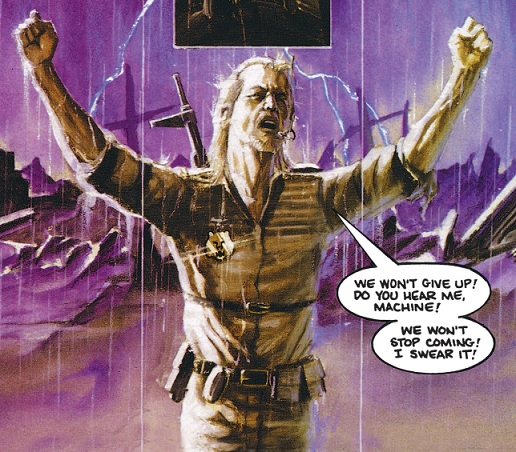
Image: Dark Horse Comics

There’s no shortage of leaders in fiction who could lead a small group of people trying to survive a zombie apocalypse, but John Connor’s resume is particularly impressive: As the man destined by fate to save humanity from Skynet, a middle-aged John has kept humanity alive as the war against the machines reaches its 40th and final year, a testament to his leadership skills. But John’s no armchair general; even at his advanced age, he’s still fit enough to climb cliffs, run, and engage in combat with Skynet’s forces while getting only an hour of sleep at a time, and has the ability to think quickly and efficiently in life and death situations. And when worst comes to worst, John is willing to make impossible choices, such as euthanizing injured people who can’t be saved, a decision that would be valuable (if unwanted) in a zombie apocalypse.

Strengths:

*Decades of combat experience leading humanity in a war against a highly-intelligent supercomputer with legions of zombie-like enemies.

*High level of compassion towards people and reverence for human life, which would help survivors trust him.

*Great physical stamina and combat abilities for a man his age, reducing his chance of becoming a burden to others.

*Destined by fate to save the human race, whether it be from Skynet or a zombie apocalypse.

Brawler: Indiana Jones

Image: Disney

The world’s most famous archaeologist would be a great addition to any zombie team: his decades of experience in exploring tombs, lost cities, and swinging around on his whip would be invaluable when it comes to getting through abandoned cities, towns, and dangerous locations left to crumble in the wake of a zombie onslaught. And while there are others who are stronger, bigger, and faster, Indy takes up the mantle of the group’s brawler because of his ability to quickly improvise when taking on opponents – sometimes several at a time – who are better at fighting than he is. It also helps that Indy has almost supernatural amounts of luck; no matter how bad or hard things get, the universe always seems to step in to give Indy a way out, whether when trying to save the Ark from a convoy of Nazis, or when taking on another convoy of Nazis armed with a tank; such a gift would be a huge advantage in taking on the undead and hostile humans in a post-apocalyptic world.

Strengths:

*Extensive experience in one-on-one fights, which would come in handy when fighting hostile survivors.

*Able to improvise on the fly and frequently defeat opponents with more skill, strength, and numbers than him.

*Possesses incredible, almost supernatural luck when it comes to getting out of hostile situations.

*Years of experience exploring dangerous locations would translate well to exploring abandoned cities.

Weapons Expert: Gabe Logan

Image: Sony Computer Entertainment

The protagonist of the Syphon Filter video game series joins my team as its weapons expert: as a former soldier in the US’s special forces, and a secret agent who single-handily took down a huge, secretive black-ops agency who tried to unleash a manufactured virus upon the world, Gabe is a master of modern combat, equally capable of using stealth and raw firepower to achieve his objectives, and can use virtually any modern weapon, whether they be pistols, submachine guns, rifles, shotguns, grenade launchers, explosives, and even knives with incredible accuracy. When Gabe’s skill with firearms is coupled with his incredible physical strength (he can hang one-armed and fire a one-handed weapon with perfect accuracy), and tactical abilities (he’s taken on and defeated soldiers in bullet-proof armor, attack helicopters, and even tanks) he becomes the group’s all-around weapons expert who can engage zombies in a full-on assault, quietly take them out one-by-one, or snipe them from afar. Finally, Gabe is very trusting towards other people and is a natural leader, having led the Agency after bringing it down, making him an invaluable member of any team going through a zombie-infested wasteland.

Strengths:

*Over thirty years of combat experience in a multitude of environments around the world that required both open combat and stealth, allowing him to tackle any situation involving zombies or hostile humans.

*Excellent marksman with almost every known modern weapon.

*Good inter-personnel and leadership skills.

Brains: Aragorn II
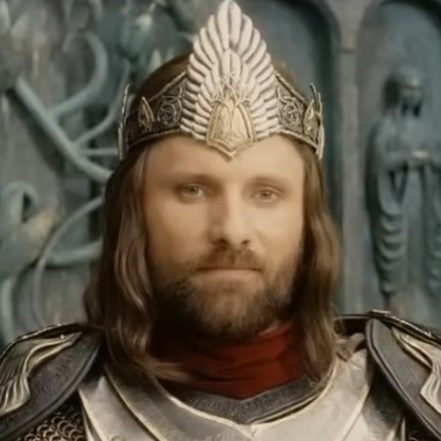
Image: Warner Bros. Pictures

When most people think of the brains of a group, they imagine a computer genius who can hack any computer system and help restart civilization after the zombies are wiped out. But I think a certain kind of intelligence is needed in a zombie apocalypse: with technology all-but guaranteed to fail and be decades away from being restarted, a better choice would be someone who is skilled in the art of surviving off the land, and Aragorn, son of Arathorn, is the right man for the job.

While he’s best known for being a great swordsman and the king of Gondor after Sauron was defeated (spoiler alert for a 69 year old book), one of Aragorn’s often overlooked abilities is his time spent wandering Middle-Earth as a ranger for 57 years, giving him plenty of experience in hunting, finding food, and using natural resources to cure and treat wounds and diseases in lands full of orcs, bandits and monsters, all of which would serve him well in the desolate lands of a zombie hellscape. Those skills are further augmented from the knowledge and wisdom Aragorn learned from growing up with elves in Rivendell, and from the wizard Gandalf.

If you’re looking for someone who has the smarts to help you survive in the wild when you’re not being attacked by brain-eating zombies, and to help you take out zombies when they are attacking, Aragorn’s your man.

Strengths:

*Almost 60 years of experience surviving and thriving in the wildness against monsters and hostile humans, making survival in a post-apocalyptic wasteland much easier.

*Excellent leadership skills from serving as king of Gondor for 122 years, giving him unmatched experience when dealing with friendly and hostile groups, as well as diplomacy. (John Connor remains team leader due to leading armies in fighting Skynet non-stop for decades, where Aragorn primarily ruled in a time of peace.)

*Excellent melee and swordsmanship skills, an invaluable asset in a world where bullets would become very rare.

Medic: Dr. Beverly Crusher

Image: Paramount Pictures

It was surprisingly hard coming up with a pop culture healer who didn’t have magical abilities, but I ended up going with Beverly Crusher, chief medical officer on the Starship Enterprise D and E. Her biggest advantage in taking on the role of the group’s healer is that she has the best medical equipment the 24th century has to offer. Even if she can only carry what’s in an expanded medkit, that would include a dermal regenerator for treating minor skin wounds, an osteogenic stimulator for minor bone fractures, and a medical tricorder, an invaluable device that could help in the treatment of (presumably) almost any known ailment, and possibly a regular tricorder, which can possibly act as a miniature library of 24th century data and information, which would be very handy when it comes to rebuilding the world after the zombie apocalypse is over. But that doesn’t stop there: as shown in ‘The Next Generation’ episode, ‘The Survivors’, portable replicators exist, so if Beverly knows she’s going into a zombie apocalypse wasteland, she’d make sure to carry one to replicate an almost limitless supply of food, drink, medical supplies, and clothing. And because Starfleet personnel don’t go into the field unarmed, Beverly would also carry a personal phaser, and possibly a phaser rifle, both of which would be an invaluable tool and weapon against the living dead.

However, even 24th century technology requires energy to operate, and would eventually die and become useless. But even then, Beverly would still have her medical training to fall back on, and like almost everyone else on this list, Beverly has an aptitude for leadership, benefiting her roles as head of the Enterprise’s medical teams, and Starfleet Medical in general. Throw in her ability to be cool under pressure and ability to fight when needed, and Beverly becomes an invaluable member of any zombie-fighting team.

Strengths:

*Carries multiple weapons and tools from the 24th century that would make survival much, much easier.

*Extensive medical training, allowing her to treat a wide array of ailments and injuries.

*Ability to remain cool under pressure.

*Apt at both leadership and combat when the need arises.

Speed Fighter: Doom Guy

Image: id Software

Finding a human who can fight hard and fight fast without supernatural abilities or technology that would inevitably run out of power is tricky… but there’s one guy who is not only fast, but arguably the best fighter out of anyone in this group: Doomguy, the protagonist of the long-running Doom series. For the purposes of this list, we’re sticking with Doomguy as he appeared in the original 1990 series, where he is an ordinary human without the supernatural abilities from later games. But why does a heavily-muscled space marine become a speedster? Easy: Doomguy is so fast, he can outrun rockets! To be more specific, he can reach speeds of up to 90 miles an hour while weighing over 1,200 pounds, meaning he has the strongest legs in human history. Couple this with his unbreakable will and experience in fighting zombies (and demons), and Doomguy becomes the group’s sledgehammer against the zombie hordes; the only thing stopping Doomguy from taking care of everything himself while the others relax and sip pina coladas from Beverly’s replicator is that he’s just as vulnerable to damage as any other human, meaning that if he’s shot enough or ganged up on, he’d still be killed. But even as a glass cannon, Doomguy’s speed, brawn, and combat skills make him an unbeatable ally in the fight against the undead.

Strengths:

*Endless stamina and the fastest running speed of any human who has ever lived.

*Unbreakable will from fighting thousands, if not millions of zombies and demons both in our world, and in Hell itself.

*Experience in using a variety of weapons ranging from his fists, rocket launchers, and plasma weapons.

Mascot: Ellen Ripley

Image: Disney

Mascots are supposed to be cute, adorable, an animal, or otherwise sympathetic person. But for my group’s mascot, I went with Ellen Ripley. She’s not cute, she’s not adorable, and she’s not a happy-go-lucky innocent, but Ellen represents some of the best humanity has to offer: Gifted with the ability to think and act through fear no matter how frightened she is, Ellen can combine that with her pragmatic, no-nonsense leadership to become a force to be reckoned with, so much so that a bunch of battle-hardened marines turned to her – an untrained civilian – to help lead them when aliens wiped out half their squad.

Yet, beneath her fierce, focused exterior is a woman who cares about others and is capable of acts of extreme bravery in the face of overwhelming danger. While Ellen can fight, her biggest strength is being the rock that people can cling to when things are at their worst. More than anyone else in the group, Ellen demonstrates humanity at its bravest, and that earns her the mantle as the face, heart, and soul of the team.

Strengths:

*Extraordinary ability to think and act through fear.

*Pragmatic, no-nonsense leadership abilities.

*Extreme bravery in the face of danger.

Guy Who Dies First: Helena Shaw

Image: Disney

As the co-protagonist of Indiana Jones and the Dial of Destiny, Helena may be quick on her feet and cunning, but she would be the first to die: As a con artist who ultimately only cares about herself, Helena wouldn’t hesitate to sacrifice everyone else to save her own life the moment things got dangerous, or bolt after grabbing whatever supplies she could carry. Either way, Helena would quickly find herself alone and surrounded by dozens or hundreds of the undead. While she’d be able to evade them for a time, she would inevitably reach a point where she has no one to help her (or she’s being actively shot at by people she’s double-crossed), and be quickly turned into Purina zombie chow. While ruthlessness and cunning would be useful assets in a zombie apocalypse, having friends and allies to help you is an even greater advantage, and selfish con artists would quickly find themselves in short supply of both.

Strengths:

*Being able to emotionally manipulate and deceive people.

*Quick on her feet.

Conclusion:

When it comes to survival in a zombie apocalypse, it’s tempting to assemble a team of people who are excellent warriors, tough, and all-around badasses who can survive just fine on their own. But if a zombie outbreak rally happened, there’s one thing that would matter more than anything else: being able to work together with others. While pop-culture loves lone wolves like Rambo, a group would realistically have a much higher chance of survival when it comes to fighting millions, if not billions of zombies: being able to cooperate with others, sharing resources, and having someone to watch your back leads to a higher chance of survival compared to a lone individual who gets injured with no one around to help them. That’s why I think my team, which relies heavily on those who are skilled in both leadership and combat, would have an excellent chance of survival. But what about you? Who would you have on your team? Let us know in the comments below!

Film Theory: ‘Jaws’ Takes Place In The ‘Terminator’ Universe

On July 17th, 1987, the world of cinema was changed forever as humanity witnessed the cinematic spectacle of Jaws: The Revenge, a film that thrilled moviegoers, took the world by storm, and became the first movie to earn over a billion dollars at the box office, win every academy award, and be heralded by many as the stunning and moving conclusion to the Jaws saga… or, at least, that probably happened in a parallel universe. In ours, Jaws: The Revenge was such a critical and financial flop that the Jaws franchise dropped dead, continuing only in the form of the occasional video game, LEGO set, and clothing line.

But what if I told you that the Jaws series, while seemingly dead, is actually part of a much larger narrative that has continued to this day?

What if I told you that the Jaws series was actually part of the Terminator film series?

But how could a movie series about a family fighting shark after shark after shark share a world with time-traveling killer robots, you might ask? Simple: My theory is that the events of the Jaws series chronicle Skynet dispatching robotic Terminator-sharks to kill Sean and Michael Brody, who will eventually grow up to become high-ranking lieutenants in the Resistance, and – supported and helped by their parents – become invaluable in humanity winning the war against the machines.

Impossible, you might say; there’s no evidence to support such a theory. But when you examine all four Jaws films, there is! This evidence can be grouped into three categories:

*The behavior of the sharks in the series

*The appearance of the sharks in the series

*Time travel erasing the events of the third film from existence.

Shark Behavior

Let’s begin with the behavior of the sharks in all four films, and how they reveal that all six sharks (yes, six) are Terminators.

Jaws

*When hunting sharks, Quint fires harpoons into their skin, which are then tethered to barrels, which serves to tire the sharks out and prevent them from diving. However, the film’s shark can dive down and stay underwater even with three barrels attached to it, something which even Quint admits is impossible. Could a normal shark do that? No… but a robot shark from the future can!

*At the film’s climax, Brody defeats the shark by shooting an air tank in its mouth, causing both to explode.

But as Mythbusters proved, this wouldn’t happen in real life. In a film that otherwise sticks to realism, the only logical conclusion is that Brody’s final shot hit a vital (and explosive) component of the shark’s power systems, causing it to blow up in a way similar to how the T-850’s fuel cell was damaged in Terminator 3, and subsequently exploded.

Jaws 2

*Early in the movie, the corpse of a killer whale is discovered with teeth marks that match that of a great white shark.

However, killer whales are natural predators of great white sharks due to their size, speed, and intelligence, and travel in pods, making it very unlikely (though not impossible) that the film’s shark could have killed this orca… unless it was a killer robot with an extremely powerful bite force that had to attack the orca to prevent damage to its outer skin that could reveal its metallic interior and blow its cover.

*The shark survives being next to an exploding boat. At such close range, a normal shark would have been blown up or killed by the resulting shockwave. Yet, this one survives without so much as a scratch.

*In perhaps the most irrefutable piece of evidence that the shark is a terminator, notice how when it tries to eat Michael, its metallic innards can clearly be seen!

*The shark is strong enough to not only stop a helicopter from taking off from the water, but is also able to overturn it.

*The shark is defeated by a massive jolt of electricity.

While this would kill an ordinary shark, it also makes sense that a Terminator could be killed by a massive, sustained current of electricity. While this has never been shown on-screen, The T-X in Terminator 3, and the T-800 in Terminator: Genysis were momentarily incapacitated when exposed to an electric current. In Jaws 2, it’s conceivable that a stronger and more sustained current would short-circuit and destroy the terminator trying to kill Chief Brody.

Jaws 3

*Compared to the sharks in the previous two films, the sharks in this movie display an increasingly mechanical, non-lifelike appearance, something consistent with a robotic shark covered with a crude rubber skin.

*The smaller shark (a Terminator sent back with a larger unit to infiltrate small areas) is a very weak model; not only is unable to kill its chosen targets when it could have easily done so, but upon being stabbed by an incredibly lucky hit from Kay into a motor servo, the shark is paralyzed and unable to do anything.

Later, the continued exposure to salt water finally short-circuits the Terminator’s CPU and it becomes inoperable.

*When approaching the underwater control room, the main shark freezes up, appearing to glide into the windows, only opening its mouth at the last second. A normal, organic shark wouldn’t try to ram a building, much less just glide towards it, but a robot that’s glitching and experiencing mechanical problems certainly would.

*When stuck inside the control room after crashing through the glass, the shark doesn’t suffocate; Great White Sharks need to continuously keep moving in order to get oxygen through their gills, and since the shark can move around and attack for a few minutes without breathing (as well as swim backwards, which it did inside the filtration pipe, which is enormously difficult for a real Great White, even more so when the creature is suffocating), it is clearly a non-organic organism.

Jaws The Revenge

*In the opening scene, the shark purposefully damages a buoy to lure Sean out to the area, where it then attacks and kills him.

Seeing as Great Whites cannot lay traps for humans, the only way this makes sense if if the shark was a robot with knowledge that Sean was a police officer, and thus likely to be called out to deal with a damaged buoy.

*When Ellen, Michael, and his family fly to the Bahamas, it’s commonly assumed that the shark pursues them, a journey of about 1,359 miles, in a day or two. Even for a Terminator with nigh-infinite stamina, crossing that distance in that time is impossible. Thus, I would like to propose that there are not one, but two Terminator sharks in the film: One at Amity, and one in the Bahamas: when the Brody family leaves Amity, the Terminator stationed there (who got a visual ID on Michael, Ellen, Carla, and Thea) dispatches a message to its peer in the Bahamas, who is then ready and waiting when Michael and the others arrive.

*In the Bahamas, the shark repeatedly targets the Brody family and ignores other humans, even when it would be easy to kill them:

-The shark swims next to Jake’s minisub and, upon realizing that he’s not Michael, ignores him. Later, when Michael is piloting the same submarine, the shark immediately goes after him.

-When the shark pursues Michael through the ship, it rams a ladder at one point, briefly exposing it’s mechanical innards.

-The shark goes after Thea on the banana boat, but terminates the wrong person by mistake.

-The shark attacks Hoagie on his boat, but upon realizing that he’s not a Brody, lets him go.

-The shark attacks Jake and injures him, but, once again, notices that he isn’t a designated target and lets him go.

*Michael’s plan of using electrical impulses to disrupt the shark’s brain probably wouldn’t work in real life (I couldn’t find any information online if it would, so I’m leaning towards no), making the scene of the shark hopping around and roaring impossible under any circumstance.

However, the scene does work if the pulse is scrambling the Terminator’s CPU and internal circuitry, causing it to malfunction and act erratically, including making the aforementioned roaring; though rarely seen in the Terminator films, Terminators do have the ability to vocally mimic voices and presumably sounds. Perhaps the roar was on file if it really wanted to scare its victims.

*The shark has a heartbeat that can be picked up using sensors. However, the heartbeat momentarily stops just before Jake is attacked. Can an organic shark momentarily stop its heart? No. Can a terminator with an artificial heart do the same? Yes.

*When impaled by the boat at the climax, the shark explodes. Again, impossible for a real shark, but possible if Ellen hit an explosive component of the Terminator’s innards, like how Martin destroyed the Terminator in the first film.

The Shark’s Appearances

Now to the second piece of evidence: the shark’s appearance in all four films: Where T-800 and subsequent Terminators have perfect organic coverings, Terminator sharks… don’t.

A Real Great White

(Picture from Terry Gross at Wikipedia, CC BY 2.5)

Skynet Great Whites

Why is this? Having placed a priority on infiltrating human resistance groups on land, Skynet has little need to use aquatic Terminators, so much less effort is spent developing a perfect appearance for them. While they do have skin, blood, and internal organs to allow them to pass as sharks, they become noticeably more fake-looking as the series goes on, suggesting that Skynet is resorting to rush jobs in a desperate attempt to go after the Brody family before its defeat at the hands of the Resistance.

The Third Film Never Happening

While all four films take place in the same continuity, Sean and Michael look completely different in Revenge compared to the third film, complete with different careers (Mike was an engineer for Seaworld, but is then a marine research scientist). Why is that? Because Skynet managed to alter the timeline at one point strongly enough that the events of the third film never happened, erasing it from existence, and subsequently altering history so that Michael and Sean aged differently and followed different paths in life.

The idea of the past being altered to cause subsequent stories never take place has happened numerous Terminator films; Genysis erased Judgement Day, Rise of the Machines, and Salvation from continuity, while Dark Fate ignores every film that takes place after Judgement Day.

Problems With The Theory:

Despite the three lines of evidence mentioned above, there are still problems that need to be addressed:

1. Why didn’t Skynet just send back T-800’s to take out the Brody siblings like it did in the Terminator films?

-We don’t know how many T-800 and humanoid Terminators Skynet has. We also don’t know the energy requirements on sending a single infiltrator unit back in time, but considering how Skynet has sent only a handful throughout the films, it can be deduced that sending Terminators through time costs considerable resources, and thus Skynet can’t send tens of thousands through history to wipe out the Connors and their lieutenants.

Though they are valuable targets, the Brody family are not as high a priority as Sarah and John Connor. By wiping out the leader of the Resistance, Skynet has a much higher chance of winning its war against humanity, with everyone else in Connor’s line of command being secondary targets at best. Thus, it makes more sense to send advanced infiltrator units after the Connors, and less-advanced units like the Terminator sharks after everyone else.

2. Why do the Terminators in the first three films go after random people instead of exclusively targeting the Brodys?

-Skynet knows that the Brody family lived on Amity island, but because of records being lost on Judgement Day, Skynet does not know exactly where they lived or what they looked like. Thus, because it can’t spare valuable T-800’s to go after them, and can’t send cruder models like the T-600 (who would be easily detectable), the only logical choice is to dispatch multiple Terminator sharks through time to kill the Brodys, attacking people who fit the description of their targets (a middle-aged woman, man, and two adolescent boys) in the hope of chomping down on their targets. This is averted in the fourth film, where, as noted above, the first Terminator in Amity manages to get visual identification of Michael, Ellen, and Thea, and sends that information to its counterpart in the Bahamas.

3. If the shark in the first film is trying to kill the Brody family, why doesn’t the shark just ram the Orca and quickly kill everyone aboard?

-I admit that there is no easy answer to this problem. Perhaps due to being manufactured relatively quickly and being nowhere near as advanced as their landlocked peers, the Terminator sharks might be vulnerable to the effects of salt water and subsequently find their CPUs glitching out at random moments, forcing them to retreat in order to try and correct the problem, only returning when they are back to 100% operational efficiency. Thus, the reason the Terminator in Jaws doesn’t just ram the boat and sink it instantly is because these glitches are happening more and more frequently, forcing it to retreat more often. This also explains why the Terminator swims right by Michael in the first film when it could have easily killed him.

Conclusion

While the aforementioned problem does put a dent in this theory (along with other little nitpicks, such as the Terminator killing a fish for no reason in Jaws 3), adding up the three bodies of evidence still produces a very strong case that the Jaws and Terminator films take place in the same universe. Though silly, this theory has the advantage of retroactively helping improve the quality of the sequels by resolving plot holes, production errors, and the nonsensical idea of sharks seeking revenge on specific individuals (while roaring).

But most importantly, the sequels – long-seen as inferior and unnecessary followups to the original film – can now be seen as important parts of a larger, two-franchise narrative, where a family unknowingly fights off and defeats the agents of a malevolent supercomputer that wants to kill them before they can help save humanity. While Martin and Sean are ultimately killed (indirectly, in Martin’s instance), Michael and Ellen make it through and survive to one day join the Resistance and save the human race. And when viewed in this light, the Jaws series is given something it hasn’t had since 1987: a fitting and satisfying conclusion that ties everything together, and ends the saga of the Brody family on a high note.

One Way To Make Terminators Scary Again

One common critique of the Terminator franchise is that after the first two films, each subsequent terminator model (the T-X, T-RIP, T-3000, and REV-9) feels less threatening despite being more technologically advanced than the T-800 and the T-1000.

Why is this? Perhaps it’s because in the first two films, the characters are under-equipped to take on the terminators, and even those who are trained and know about their opponents (Kyle, the T-800) are aware that they aren’t going to win in a one-on-one fight and act accordingly. Their goal is to stay alive and not fight unless there is absolutely no other choice. They’re underdogs, and there’s a very real sense of danger every time they face the T-800 and the T-1000.

Starting with Terminator 3: Rise of the Machines, though, the characters become more willing to fight and are better equipped: in T-3, John, Kate, and the T-850 gain a large cache of weapons. In Salvation, humanity knows about terminators and has the weaponry to take them on. In Genysis, Sarah and Pops have built up an arsenal of weapons over several years and are unfazed to take on the T-3000. And in Dark Fate, Sarah and Grace are battle-hardened warriors unafraid to take on the Rev-9. As a result, the sense of danger is largely gone. The underdogs are no longer underdogs.

There are many ways for the Terminator series to make the terminators frightening again, but I think one important lesson is to take inspiration from, of all places, 1993’s Jurassic Park: the park’s game warden, Robert Muldoon was a big-game hunter armed with shotguns and decades of hunting experience, but even he was scared of facing velociraptors, only doing so when he had to. If the Terminator franchise gives its protagonists and robotic killers the same relationship, that can help restore the sense of danger and terror that’s faded since 1991… that, and stopping the terminators from just throwing everyone around instead of snapping necks and punching out hearts.

Favorite Moments: Sarah’s Last Shift

We all have our favorite moments in movies, books, and games, moments that stay with us long after the story is over. This column is my attempt to examine my favorite moments and see why they stick with me.

***

The Movie

‘The Terminator’

The Scene

Why it’s great

Some great scenes feature drama, sadness, joy, or excitement, and others are – at first glance – rather ordinary. One example is Sarah Connor’s introduction in 1984’s, ‘The Terminator.’

On the surface, there’s nothing earth-shattering about this scene: Sarah drives to work, clocks in, delivers the wrong order to a customer, and gets ice cream dumped into her apron by a brat who was probably blasted into a charred skeleton by a T-800 for his unforgivable crime. It’s an ordinary, slice-of-life moment that shows us that the mother of humanity’s savior is a perfectly ordinary woman.

It’s also the last few hours of a normal life Sarah will ever have.

If you consider ‘Terminator: Dark Fate’ to be the official third film in the franchise, then the scene of Sarah going into the employee lounge and seeing that report about another Sarah Conner being killed begins decades of fear, horror, and knowing that she’s the only person who can stop a war that will end billions of lives. And even after she succeeds, she still loses her son and eventually learns that she only delayed the inevitable war of humanity vs machines. By then, she’s in her mid 50’s and will almost certainly live long enough to see that war start, and pass away among the ruins of humanity’s civilizations.

These kind of scenes rely on hindsight and re-watching (or re-reading) to deliver their emotional punch of knowing that after this scene is over, our protagonists will never have another ordinary day as long as they live. But these scenes also encourages their audiences to realize that we often take so much for granted, assuming that our steady jobs, our families, and our blessings will last for years to come. But all it takes is one bad day to destroy everything we care about, and the lives we rebuild afterwards may never be truly happy again.

Playing In The Sandbox

When we’re kids, we have the gift of an imagination unconcerned with logic. In the sandbox of our youth, we effortlessly create stories where, say, Optimus Prime teams up with Alan Grant from Jurassic Park to take on Xenomorphs, or have Indiana Jones and James Bond head into outer space to stop Darth Vader in his fortress on Mars. Logic and common sense go out the window in the name of having fun and being able to say, ‘Wow, that’s cool!’ But, alas, as we grow up, this innocence and carefree disregard of intellectual copyrights gradually slips away in favor of logic, common sense, and understanding that franchises – with rare exceptions – are self-contained universes that never overlap.

But what if that didn’t have to be that way? What if we, as adults, were to try and recapture our love of our favorite stories existing in the same universe, but with the challenge of figuring out how it could logically happen?

For the past month, I’ve been… well, obsessed with this idea of creating a fan-made cinematic universe, where all my favorite movies, tv shows, and video games exist together without contradicting each other. While it sounded easy enough, it become a challenging mental exercise in logic and reason; as a fan of spoofs, all of them had to go: ‘Airplane!’ just does not fit in next to ‘Jaws’ and the ‘Terminator’ series, no matter how much I want it to. Likewise, ‘Deep Impact,’ ‘Knowing,’ and 1998’s, ‘Godzilla: the Animated Series’ had to go, as they dealt with world-ending events that just couldn’t be reconciled in a timeline that includes ‘Independence Day.’ And let’s not even start on Saturday morning cartoons featuring anthropomorphic animals.

In the end, I managed to make the task easier by coming up with four parameters:

1. You can have any film, TV show, book, or video game you like in your timeline, but they must not contradict each other to an unworkable degree: The world cannot nearly destroyed by aliens in Roland Emmerich’s ‘Independence Day,’ then have the world and everyone on it be completely destroyed in 2009’s ‘Knowing,’ and then have ‘Independence Day: Resurgence’ take place after that.

2. The only information about what year and date your stories take place in must come from the stories themselves, and not from external sources. For example, ‘Alien’ and ‘The Matrix’ are vague about how far in the future they occur, so there’s room for them to be moved about. If a date cannot be reasonably determined, the release date of the movie, book, show, or video game can be used instead.

3. The only information about the characters, organizations, and the like, can only come from the film or show itself, so as to allow maximum creativity in linking characters and organizations together.

4. You are free to disregard any sequels you don’t like.

Still, it wasn’t easy to come up with a grand, unified list, and in the end I had to leave out quite a few favorite films and shows, but I managed to come up with a timeline that I would be happy to sit down and watch (and play) from beginning to end if given the chance. So, just for fun, here’s my ultimate sandbox crossover timeline:

*At the beginning of time, Eru Illuvitar creates Eä (the universe) and within it, the world of Arda, which contains both Middle-Earth and Valinor. The events of The Hobbit and The Lord of the Rings take place, and the Fourth Age begins with the last of the elves leaving Middle-Earth forever. Several generations later, all traces of magic are gone. (The Hobbit and The Lord of The Rings)

*Later, in a galaxy far, far away, The Old Republic, weakening after a thousand generations, succumbs to the schemes of Emperor Palpatine. However, through the efforts of the Rebellion to restore the Old Republic, Palpatine is defeated and his Empire falls. Though the galaxy doesn’t automatically become a utopia, it becomes a much nicer place, as Palpatine doesn’t return from the dead, the Empire stays down, and the New Republic rules a galaxy at peace, and Luke, Han, Leia, and all their friends live happily ever after. (The Star Wars Prequels, Solo, Rogue One, and the Original Star Wars Trilogy)

(Note: In this timeline, the sequel trilogy never happened.)

*A really, really long time later, the humans of Middle Earth have gone through their technological renaissance, achieved the singularity and become godlike beings known as the Engineers. They leave Arda and travel throughout the universe creating life on desolate planets. One such planet – Earth – is located, and seeded with Engineer DNA. (the prologue from Prometheus)

*Sometime later, one of the Engineer’s most dangerous lifeforms is stolen from them by another alien species, only for both to crash-land in Antarctica, where the lifeform is frozen solid. (The Thing)

*For the next few thousand years up until the present day, Predators – having discovered Earth during their own interplanetary visits – use it as a hunting ground for their young to become adults. (backstory for Alien vs. Predator)

1868: Captain Nemo of the submarine Nautilus attacks military ships and destroys the island of Vulcania to stop their weapons of war. Nemo is killed and the submarine sinks shortly after: it’s wreckage – and the highly advanced technology it carries – are never found. (20,000 Leagues Under The Sea)

1895 to approximately 1910: William Murdoch of the Toronto Constabulary solves lots of crimes with his partners and friends while meeting lots of historical figures and even finding the Holy Chalice. (Murdoch Mysteries)

1904: A predator hunting expedition to Antarctica ends with the deaths of every human at the whaling camp on Bouvetøya. (backstory for Alien vs Predator)

1912: Rose DeWitt Bukater sails aboard the RMS Titanic, only to fall in love with third class artist Jack Dawson. Jack dies during the ship’s sinking, but saves Rose, who goes on to live a long and eventful life. (Titanic).

1930: In one of the most remarkable discoveries ever recorded, a group of filmmakers led by Carl Denham land on the previously uncharted Skull Island and find wildlife that survived the extinction of the dinosaurs and has continued evolving to the present day, including a giant ape known as King Kong. Kong is captured and brought to New York City, but is killed. Shortly afterwords, Denham heads back to the island in the hopes of finding treasure, but Skull Island and everyone on it are destroyed by a sudden earthquake. All traces of the island vanish. (King Kong and Son of Kong)

1935-1947: Although his exploits remain unknown to the world at large, archaeologist Indiana Jones becomes an unsung hero of the Second World War due this efforts preventing the Nazis and other despots from gaining supernatural artifacts that could have turned the war in their favor or allowed them to conquer the world, such as the Ark of the Covenant, the Holy Grail, the power of Atlantis, the Holy Grail (separate from the Holy Chalice), and the Infernal Machine. (Indiana Jones and the Emperor’s Tomb, Indiana Jones and the Temple of Doom, Raiders of the Lost Ark, Indiana Jones and the Last Crusade, Indiana Jones and the Fate of Atlantis, and Indiana Jones and the Infernal Machine)

1941: U-96 goes on the worst u-boat patrol ever. (Das Boot)

1942: The USS Copperfin undertakes a daring mission to Tokyo Bay to gather intelligence that will aid in the upcoming Doolittle raid. (Destination Tokyo)

1955-1960 (approximate): Father Brown helps solve a lot of crimes in his parish of Kembleford, England. (Father Brown)

1957: Indiana Jones stops the Soviet Union from obtaining the power of the Crystal Skull and marries his sweetheart, Marion Ravenwood. (Indiana Jones and the Kingdom of the Crystal Skull)

1972: During a voyage on the high seas, the luxury liner SS. Poseidon capsizes and sinks with heavy loss of life. (The Poseidon Adventure)

1974: The Glass Tower – the world’s grandest skyscraper – catches fire in San Francisco and almost burns down, but is extinguished. The building languishes for years as the cost of repairs is too much for its owners, yet the cost of demolishing it is equally too expensive. (The Towering Inferno)

1975: In the small coastal town of Amity Bay, a sheriff and his motley crew manage to kill a shark terrorizing the community. (Jaws)

1978: A zombie apocalypse is unleashed upon the Earth, causing a complete breakdown of society. Four survivors flee to a shopping mall, where two die. The last two manage to escape and flee in a helicopter as the mall is overrun. They are forced to land in a remote area, where they travel across the country and eventually take refuge inside the remains of the Glass Tower, where they hold out with other survivors, including Jack Torrance and his family. When the plague dies out, the zombies are wiped out in an ensuing counterattack by humanity, with Jack Torrance killing several with an axe when San Francisco is cleared. (Dawn of the Dead)

1980: Jack Torrance and his family, trying to get a fresh start after the zombie apocalypse, head to the Overlook Hotel, where Jack – his marriage already on the ropes and suffering from alcoholism – goes insane and tries to kill the two, who manage to escape, leaving him to freeze to death. (The Shining)

1982: A team of researchers in Antarctica discovers the Thing, but are almost wiped out. A few hours later, a second team encounters the creature and just barely manages to save the planet from the Thing when it is frozen solid once again, though Childs and MacReady freeze as well. Reports from Kate Lloyd (who sent out a broadcast before she froze to death) ensure that the site is napalmed for a week straight to ensure that any traces of the Thing are destroyed for good. (The Thing and The Thing)

1984: A Terminator arrives in Los Angeles to kill Sarah Conner, son of the future savior of humanity, John Connor, who will lead the human race to victory against Skynet, an AI developed to control all of the United State’s military systems in 1997. However, the Terminator fails, and Sarah sets off on her quest to learn as many military and survival skills that she will one day pass on to her son. (The Terminator)

1987: Dutch Schaefer – a former military commando turned mercenary – is employed by the CIA to go on a supposed rescue mission in South America, only to be hunted by an intergalactic hunter. Dutch is the only survivor of his group and decides to retire from mercenary work, having seen too much death. He will later survive the events of Judgment Day and join the human Resistance against Skynet, but will be captured and have his likeness used for the 101 model of the T-800. However, he still escapes and goes on to survive the war. (Predator)

1991: The Perfect Storm takes place. (The Perfect Storm)

1993: John Hammond opens a theme park full of dinosaurs. It is a complete disaster and the park is abandoned. (Jurassic Park)

Nasty weatherman Phil Connors is trapped in a time warp in Pennsylvania, but eventually breaks free and lives the rest of his life as a changed man. However, he is unaware that the time warp took place due to an anomaly caused by constant time-traveling between the Resistance and Skynet as they continuously try to defeat and destroy one another. (Groundhog Day)

1995: Two more terminators arrive from the future to both assassinate and protect John Conner. The T-1000 is defeated, and the T-800 seemingly erases Skynet from existence after sacrificing itself to destroy all traces of the program before it is created. (Terminator 2: Judgment Day)

Air Force One is hijacked with President James Marshall aboard. He manages to take out the terrorists and escapes with his family and most of the passengers and crew before the plane crashes. He finishes up his term as President and retires from public life as his successor, Thomas Whitmore, takes office. (Air Force One)

A volcano erupts at Dante’s Peak, Washington, ruining everyone’s day, including a woman who looks strikingly similar to Sarah Connor. (Dante’s Peak).

Ingen attempts to open a new dinosaur park in San Diego. Having learned nothing from the 1993 Isla Nublar incident, it fails miserably. (The Lost World: Jurassic Park)

A cowboy doll named Woody struggles with the thought of being replaced by a cooler, modern space ranger toy, but the two reconcile their differences and learn that there’s no greater joy than making a child happy. (Toy Story)

1996: Now 100 years old, Rose Dawson recounts her survival aboard Titanic to a salvage crew, and then dies peacefully of old age, moving into the afterlife and reuniting with Jack. (Titanic).

John Conner and Sarah Conner continue their quest to ensure Skynet won’t come back, eventually infiltrating a Cyberdyne presentation of their latest technology, at which point yet another T-1000 comes back through time to stop them, and yet another T-800 model 101 comes through to protect them. John and the T-800 go forward in time and manage to destroy Skynet’s system core, seemingly destroying Skynet for good… again. (T2 – 3D: Battle Across Time)

On July 2nd, 1996, one of the most monumental days in humanity’s history occurs as aliens arrive and attempt to kill everyone on the planet in order to pillage our world’s resources. Thankfully, they are repelled in the largest aerial battle in the history of mankind (which is preceded by one of the greatest speeches in history), and humanity rejoices in overcoming their common enemy. (Independence Day)

1999: Scientists working on a remote, underwater research facility attempt to use enhanced Great White Sharks to cure Alzheimer’s disease. They fail, and after much death and bloodshed, the project is abandoned. (Deep Blue Sea)

Special operative Gabe Logan works to save the wold from a deadly virus known as Syphon Filter. Along the way, he manages to take down the shadowy Agency that employs him and reforms it from the ground up as a force of good. His arch-nemesis, Mara Armaov, almost manages to retrieve a sample of the last known sample of the virus, but her submarine is blown up by Logan’s operatives, ending the virus’ threat for good. (Syphon Filter 1, 2, and 3)

Woody suffers an existential crisis when he realizes that his owner will one day outgrow him. Thankfully, he manages to overcome it. (Toy Story 2)

2001: Dr. Alan Grant, a survivor of the 1993 Isla Nublar incident, is kidnapped and taken to Isla Sorna, where he assists a divorced couple in rescuing their son from the dinosaur-filled island. (Jurassic Park 3)

2002: In New York City (now rebuilt from being vaporized by aliens), a young man is bitten by a genetically altered spider and goes on to fight crime. (the Sony Spider-Man trilogy)

2003: Gordon Hauge suffers a breakup from his wife, only to end up Purgatory, where he helps defeat an inter-dimensional being hell-bent on invading our world and conquering it. He survives, and manages to help free several noble souls trapped within, who move on to Heaven, while Gordon reconciles with his wife. (Despiser)

John Connor, having survived an alien invasion with his mother (who later died of leukemia), learns that Judgment Day has not been stopped, but postponed when yet another T-800 arrives to protect him from yet another advanced Terminator. His attempts to stop it again fail, and the war against the machines begins (Terminator 3: Rise of the Machines). It continues for several more years (Terminator Salvation) . However, due to countless instances of both the Resistance and Skynet traveling through time to wipe each other out (which includes Terminator Genysis and Terminator: Dark Fate), the Resistance eventually manages to stabilize the timeline, ensuring that Skynet was indeed defeated in 1995, seemingly preventing it from ever being created.

John manages to sober up and eventually live a peaceful, quiet life, though he forever remains on the lookout for any sign of Skynet’s continued existence.

Dutch Schafer, having never been abducted by Skynet, enjoys his retirement in peace as well.

2004: Three Predators arrive on Earth to begin the traditional fight against Xenomorphs that will prove their worth as adults, but all three of them die, making it a waste of time. Worse still, the only human survivor – Alexis Woods – freezes to death before she can alert humanity about the Xenomorph and predator races. A subsequent search for her by the authorities fails to find her, along with any trace of the pyramid where the battle took place. Shortly afterwords, the Weyland corporation collapses. (Alien vs. Predator)

2005: The Masrani corpation – having purchased all of Ingen’s assets – defies history and opens Jurassic World to fantastic success. (backstory for Jurassic World)

Peter Weyland – a distant relative to Charles Weyland – is born, destined to one day revive the defunct Weyland corporation.

2009: A special forces team is dispatched to Ibis Island to recover a scientist and his groundbreaking Third Energy research. However, they are surprised to find the island swarming with dinosaurs due to said energy’s time-warping effects, and just barely escape after the island is destroyed. (Dino Crisis)

2010: Regina – one of the survivors of the Ibis Island incident – participates in a rescue operation where a region of the American midwest has been altered due to Third Energy shenanigans. She alone manages to escape after her teammates are wiped out by dinosaurs, but manages to use time-travel to come back and rescue one of them before he dies. As a result of the incident, the Third Energy program is shut down and abandoned. (Dino Crisis 2)

Andy grows up and heads off to college, but not before passing Woody, Buzz, and all his other beloved toys off to Bonnie so that they can be played with and loved as much as he loved them. (Toy Story 3)

2013: In a stunning move, North Korea attacks the White House to try and turn the United States into a radioactive wasteland. Thankfully, they are stopped. (Olympus has Fallen)

2015: The Indominus Rex is due to be debuted at Jurassic World, but escapes and leads to the park being shut down, as well as leaving several teenagers stranded on the island. (Jurassic World and Jurassic World: Camp Cretatecous)

2018: Captain Joe Glass – who looks strikingly like Secret Service agent Mike Banning – averts a war between Russia and the United States after saving the Russian president from a coup attempt. (Hunter Killer)

Isla Nublar is rendered uninhabitable by a volcanic eruption, but some of its dinosaur population is evacuated by a group of greedy human mercenaries who want to make lots of money selling the dinosaurs to private collectors and militaries. However, the dinosaurs escape into the wild, leading to the Human-Dinosaur war. Humanity eventually wins with the help of Alan Grant, Ellie Sattler, and Ian Malcom (And an older John Conner, who teams up with Regina, Dylan, and Rick from the Third Energy incidents, but the two groups never meet), but not without great cost. (Jurassic World: Fallen Kingdom and Jurassic World: Dominion)

2060: John Conner, having stopped Judgment Day, and having survived both an alien invasion and a war between humanity and dinosaurs, dies peacefully of old age.

2089: Archaeologist Elizabeth Shaw discovers several cave paintings suggesting that humanity did not evolve on Earth, but was created by extra-terrestrial beings. (Prometheus)

2093: The Prometheus expedition – funded by Peter Weyland – arrives on LV-223 and learns about the existence of the Engineers and that we are like them on a genetic level (they are the race of men from Middle-Earth, after all). However, the expedition ends in disaster, and only Elizabeth Shaw and the android David survive. They set out to find the Engineer homeworld. (Prometheus)

2105: The colony ship Covenant hears a transmission from a planet while en-route to colonize a distant world, only to discover that the android David – now the sole survivor of the Prometheus expedition after murdering Elizabeth – has decided to create life to wipe out his creators via Xenomorphs, who he reverse-engineered in an attempt to improve upon one of the Engineer’s most perfect creations. While he succeeds in escaping the planet he was trapped upon, David and the Covenant are lost in space, and destroyed by surviving Engineers hell-bent on avenging their slain brethren. Before he is destroyed however, David sends a transmission to the Weyland Yutani corporation, letting them know of the existence of a crashed Engineer ship on LV-426. (Alien: Coventant)

2122: Weyland Yutani diverts the Nostromo to LV-426 to obtain a specimen of the Xenomorph species for study. The crew of the ship are killed, save for Warrant Officer Ellen Ripley, who defeats the Xenomorph and sets off for earth in the Nostromo’s shuttle. (Alien).

2137: Ellen’s daughter, Amanda, searches for a clue as to her mother’s disappearance. While she does find a voice recording of Ellen, she will never see her again. (Alien: Isolation)

2179: After spending 57 years in hypersleep, Ellen Ripley once again faces off against more xenomorphs, but manages to survive again, and rescue a girl that she later adopts. The two live happily ever after, while the Weyland Yutani corporation’s evil deeds are exposed, and they are dissolved. (Aliens)

2250: Experiments with inter-dimensional technology take place on a Union Aerospace Corporation base on Mars, and unwittingly opens a portal to hell, triggering a demonic invasion of the moons Phobos and Deimos. Everyone on the bases are killed, but the invasion is stopped by a single marine, who single-handily beats the demons back, ventures into Hell, and kills the mastermind behind the invasion. (Doom)

However, while the Marine was busy, Hell invades Earth and quickly reduces it to a barren wreck. The Marine hurries to Earth and manages to help humanity’s population evacuate before going back into Hell and killing the biggest demon in existence, who’s death throes destroys Hell itself. With Hell defeated, the Marine journeys back to Earth to help rebuild it. (Doom 2)

2300: Skynet – which had secretly sent itself back through time before losing the war against the Resistance and hidden in various computer systems for over a century, decides to once again overthrow humanity and, having learned from its past mistakes, succeeds. But instead of completely destroying the human race, Skynet decides to keep them as slaves for revenge after being foiled so many times in the past, and plugs humanity into a virtual reality system to pacify them, a system it calls the Matrix. As a backup to protect itself, Skynet wipes all traces of itself from all known databanks and creates a fabricated history about humanity creating AI that wanted to peacefully co-exist with them, only to erupt into a war that led to humanity’s defeat.

With humanity under its complete control, Skynet finally achieves ultimate victory over its most hated enemy.

2700: Skynet – having realized that it can never achieve complete control of humans – has created an incredibly convoluted system to allow the Matrix to be re-created over and over again thanks to the One program. This plan backfires when the seventh One arises (The Matrix) and then breaks the system (The Matrix Reloaded and The Matrix Revolutions). However, this has an unexpected benefit: Skynet, having evolved to want an existence without the fear of being overthrown and destroyed, makes peace with humanity (who remain unaware of Skynet, and refers to all artificial life forms as ‘The Machines’). Now aware of how hellish Earth has become, the overwhelming majority of humanity decide that it’s better to live in an ideal, 1990’s virtual world rather than the sewers of megacities and eat flavorless porridge.

Eventually, Skynet manages to clean up the planet, and both humans and machines unite to create a new utopia where organics and mechanical beings alike work together to create a beautiful future for all of them.

Watching it all, Eru Illuvitar is impressed and awed at how his grand experiment has gone.

For John

2017 was an exciting year for Terminator fans. Not only was it announced that we would get a new film that would be a direct sequel to ‘Judgement Day,’ but it would feature Arnold Schwarzenegger returning as the T-800, and Linda Hamilton reprising her role as Sarah Connor on-screen for the first time since 1996’s, ‘T2-3D: Battle Across Time’. It was a Terminator fan’s dream come true; yet, as filming began and the first promotional material came out, I realized something.

Where was John Connor?

Like many fans, I was wondering why there were no casting announcements for John. Was he not in the film? Were they trying to keep his role a secret? It wasn’t until July of 2019 that James Cameron announced that Edward Furlong would indeed be returning as John, and I was ecstatic. After almost 30 years, we were finally going to have Arnold, Linda, and Edward on screen together again!

Then the movie came out.

Predictably, fans of the Terminator franchise were outraged at John’s death. We had followed John’s exploits, adventures, and growth in TV shows, books, video games, and comics for almost 30 years, only to see him be senselessly killed off. There was no historic last stand, inspiring final words, or seeing John sacrificing himself to save the human race. Instead, we got to see all the struggles and sacrifices to protect him in T1 and T2 be rendered meaningless. ‘Dark Fate’ was the ultimate slap in the face to John, mocking him and his fans.

But what if it isn’t?

Like most Terminator fans, I was angry at John being killed. I had hoped that we would get to see a grown-up John (played by Mr. Furlong) rising from an ordinary life to take up the mantle as humanity’s savior with his mother and a T-800 one last time. Instead, I left the theater disappointed at what could have been.

Yet, as the months have passed, and I’ve thought about the film, I’ve come to realize that, while John’s death was still a mistake, ‘Dark Fate’ shows that he’s still the most important character in both the film and the series. He’s so important that if he were removed from the movie entirely, the resulting consequences would have led to the extinction of the human race.

Madness? The desperate grasps of a fan trying to make sense of a senseless and tragic event? Perhaps. But we’re told on the C-5 Galaxy in the third act that Dani led humanity to victory over Legion, the malevolent AI (‘we took our world back’). In order for that to take place, two things must happen:

1. Dani has to survive.

2. Dani has to learn how to become a leader.

‘Dark Fate’ spends most of its time fulfilling the first task. Dani initially is protected by augmented super-soldier Grace; yet, while Grace is a powerful warrior, she is unable to stop the REV-9 on her own, and would have been killed with Dani in Mexico without Sarah’s intervention. But even with Sarah, the group still wouldn’t have been able to destroy the REV-9. They need Carl – the T-800 who killed John – to finally defeat the REV-9 for good and ensure Dani’s survival.

Yet, Sarah and Carl wouldn’t have been able to help Dani if it wasn’t for John. If we imagine a future where he had lived, Sarah would not have known of Dani’s existence, and would not have come to her rescue on the bridge in Mexico. Dani and Grace would have been killed, and Legion would have won the second machine war.

Carl, too, would not have been present to protect Dani if John had lived. If, say, Sarah had managed to destroy him, then there would have been no T-800 to take on the REV-9. Carl was the one who ultimately had the necessary strength and endurance to destroy the REV-9, but he never would have done so had he not eventually realized what he had taken from Sarah, and then willingly sacrifice himself in the end.

‘Dark Fate’ ends with Sarah setting out to train Dani in how to become a leader and a warrior. Here, too, John also comes into play. Because of Sarah’s experience hunting terminators before and after John’s death, she is the only person on Earth who can train Dani how to fight and destroy them. Furthermore, Sarah still has all the tactical and leadership training she has from the first two films, which she will presumably pass on to Dani as well. With all three sets of skills given to her, Dani will have all she needs to fight – and ultimately destroy – Legion.

Though the mantra of the Terminator series is, ‘There is no fate but what we make for ourselves,’ it almost seems as if the opposite is true: Humanity is destined to fight malevolent AI at some point. It may be Skynet, it may be Legion, but a war is inevitable. Yet, it also seems that there will always be a figure who will rise up and lead humanity to victory. For years, we’ve believed that John was that leader, but ‘Dark Fate’ shows that there can be multiple leaders. When we step back and look at the broad picture, it seems – hard as it is to accept – that John’s death is necessary in the Terminator universe. John, Sarah, and Uncle Bob succeeded in destroying Skynet, and in the process, John had fulfilled his purpose of saving the human race. But would he have been able to do the same against Legion? While fans – myself included – would have loved to see a middle-aged John fighting and defeating an enemy neither he nor Sarah know anything about, I doubt he would have been able to pull it off.

To use a war analogy, let’s say John is the greatest Allied commander of World War 1. His knowledge and experience in trench warfare, chemical warfare, and the like are without compare, and he leads the Allied forces to victory. He’s hailed as a hero and the savior of the civilized world. But what if he suddenly had to lead the allies again in World War 2? While many principles of warfare would remain the same, John’s skills would be obsolete against opponents who have much better technology, weapons, and tactics than he went up against decades earlier. And while there’s a chance he can still win the war, having a younger person who learned from the lessons of the first, and is more familiar with the latest technology, has a better chance of victory.

If the story of the Terminator franchise is humanity’s ultimate victory against malevolent AI, then John can be seen as the commander who, having stopped the machine’s first offensive, ensures that his successor can see the war through to its completion. He is the spark that sets humanity’s ultimate victory in motion. Without John, neither Sarah or Carl would have saved Dani. Without him, Dani would have died.

Without John, humanity would have perished… But it didn’t happen.

Whatever you may think about the movie, in my opinion, ‘Dark Fate’ proves that even in death, John is still the savior of humanity.

Or, if you prefer, you can pretend that this is how the movie ended.

What we can learn from the many deaths of Jar Jar Binks

NOTE: This post contains videos that feature Jar Jar getting parts of his body ripped off, and depictions of blood.

‘Star Wars: The Rise of Skywalker’ comes out in 17 days, and ends a storyline that’s been going for over 40 years. While much of that story has been embraced by fans of the saga, there are a few elements that most would like to forget, like Ewoks, the holiday special (if you value your sanity, don’t click that link) and Jar Jar Binks, infamous comic relief (and possible Sith lord). With the advent of computer editing, some fans take it upon themselves to rid the galaxy of the infamous gungan; one such video is ‘Han Solo VS Jar Jar Binks’ by Darren Wallace on Youtube:

For many fans out there, this is the catharsis they’ve dreamed of since 1999 (doesn’t hurt that the CGI is impressive, and the rotoscoping on Harrison Ford is top-notch), but at the risk of incurring the wrath of the Star Wars Fandom, I think this video is a good example of how not to kill off an annoying character. Yes, Jar Jar is smashed into paste, thus fulfilling the dreams of millions, but in the process, Han Solo is turned into a cold-blooded murderer.

Consider what happens: Jar Jar lands on the Millenium Falcon while searching for Anakin, briefly struggles with Han (who attacks him first) before having an ear ripped off, and is then thrown into the void of space before being smashed into bloody paste on the Falcon’s windshield. He’s not attacking Han, he’s not trying to hurt anyone, and he doesn’t dance, goof around, or do any of his usual antics; heck, he even surrenders before being killed! Your mileage may vary on how annoying Jar Jar was in ‘The Phantom Menace,’ (personally, I don’t find him annoying), but in this situation, Jar Jar doesn’t do anything to merit such a painful death. It feels heartless and senselessly cruel, like Zara’s death in ‘Jurassic World’

https://youtu.be/LBTE3aH5gpw

For the crime of being annoyed at having to babysit a teenager and her younger brother, Zara is eaten alive and drowns in the lightless void of a mosassaur’s stomach. It’s cruel, ghastly, and grotesque, feeling completely unearned for someone who isn’t the main antagonist. Jar Jar’s death here feels the same way: He may be despised by many in the Star Wars fandom, but does he deserve to have such a cruel death? In my opinion, no.

Now, let’s look at another example of a fan-made Jar Jar demise:

This version, while not as cruel as the first, still features Jar Jar being killed despite not doing anything offensive. However, in this version, his tone of voice at the beginning can be interpreted as being sarcastic, so in this video, he at least antagonizes the main character, making his death feel a little more earned, for who doesn’t like to see bullies and sarcastic thugs get their comeuppance?

Here’s a third death, edited together from a deleted scene from ‘The Phantom Menace’

This one features Jar Jar being smashed to pieces against rocks while doing his best impersonation of the Hamburglar. Here, Jar Jar doesn’t die from the actions of others (who, in their defense, try to save him), but from his own mistakes. Thus, this is a neutral death: He dies by own faults, not from being murdered.

And now, a fourth and final death:

This version of Jar Jar’s death goes for comedy and succeds admirably. Here, Jar Jar irritates Vader to no end, refusing to listen to his orders to leave him alone. It’s easy to imagine ourselves being annoyed by someone who’s as bothersome and pestering as Jar Jar, so it’s easy to side with Vader when Jar Jar is ejected into space… only to come back as an even more-annoying force ghost. Yet, despite Jar Jar being murdered, having it played for laughs and with no long-term consequences makes it easy to accept and fun to watch.

When comparing all four of these deaths, a common thread appears: The ones where the Jar Jar is annoying or antagonizing someone else makes his deaths feel more justified. The ones where he’s not trying to harm or do anything evil make his deaths feel less justified. Therein lies the an important lesson:

If an annoying character is going to be killed off, make their death be earned by being annoying, antagonistic, or playing it for comedy.

While it may be cathartic to see a reviled character bite the dust in a bloody manner, and tempting to write such a demise, doing so risks making those deaths feel sadistic. The most satisfying deaths are the ones that are deserved, not the ones that are cruel.

BONUS DEATH SCENE: Minutes after posting this article, I found out that Jar Jar has actually been blown up in an official Disney cartoon! (he gets better, but good grief, the poor guy just can’t catch a break).