Valve’s 2004 game, ‘Half-Life 2’ is rightfully regarded as one of the greatest first person shooters ever released, featuring (for its time) unparalleled physics, a gripping story, and one of the most oppressive atmospheres ever encountered in a video game. Playing as silent scientist Gordon Freeman, the player fights to free humanity from the Combine, an inter-dimensional alien empire that has conquered Earth (instead of, as you might think, a race of sentient grain harvesters).
Throughout the game, the player often hears from Wallace Breen, a human who has allied himself with the Combine as humanity’s ‘administrator’. Though he presents a friendly, almost grandfatherly face to the public, complete with speeches explaining why humanity should work with the Combine, it eventually becomes clear that Breen is not a nice guy. But is he truly a villain?
In-game, we’re told that, during humanity’s hopeless, seven-hour war against the Combine, Breen intervened and managed to negotiate a surrender, where, in exchange for not being wiped out by the Combine, humanity is allowed to exist, but as a subservient race who has to endure a life of nonstop oppression and helplessness. But did Breen do this to save the human race, or to gain power for himself? We’re never told, leaving it up to the player to come to their own conclusions. I like to think that Breen did want to save humanity, and hates the Combine, but he also wants power, and realized that working with the Combine was the way to get it. But in the end, it was all for naught, and he met his end falling to his death from the top of the Combine tower.
But what if he had lived?
‘Half-Life 2: Breen’s Redemption’, by Youtube user Crunchy Soap, examines what might have happened had Breen survived the events of Half-Life 2. The result is a hauntingly beautiful look at a man who realizes the misery his actions has caused, and a prime example on how to redemption a villain:
How to redeem a villain
1. Have the villain lose everything they gained from becoming evil:
Breen loses his position of power with the Combine and becomes an ordinary person with nothing to his name.
2. Have the villain reach their lowest point:
Breen is injured and alone, and knows that he’ll probably be shot on sight by the Resistance, or any member of humanity with a gun.
3. Have the villain face the consequences of what he/she has done
Unlike other stories, Breen doesn’t face imprisonment or execution for his actions: instead, he comes face to face with the suffering his alliance with the Combine has caused, regardless of any good intentions he might have had when he made said alliance.
4. Have the villain turn against the organization he/she created
Even though he’s an older man and past his physical prime, Breen takes on the Combine elite with nothing but a pipe to save the lives of two Resistance members, and later, three of them with only a submachine gun. In doing so, he reaches a point of no return: by killing members of his organization, he cements his decision to change sides, for good or ill.
5. Have the villain help his former enemies/work to restore what he/she has destroyed
Breen saves the lives of two Resistance members, then a child, and then becomes a full-fledged member of the Resistance, joining their fight to save Earth from the Combine. By doing so, he now does what he can to undo the damage he caused on behalf of the Combine.
While there are deeper villain redemption stories out there, ‘Breen’s Redemption’ is a short, effective tale that’s told without any dialogue(outside of the opening). While he probably would not be given a chance of redemption based on how much the in-game characters despise him, I like seeing him get a chance to turn back, making this video a personal favorite… but if you’d rather see Breen get his comeuppance in hilarious ways, this should help scratch that itch:
Once in a while, you come across a moment in a story that is so perfect that it stays in with you for years, or even a lifetime. These are moments that, in my opinion, are flawless; perfect gems of storytelling that cannot be improved in any way, and are a joy to treasure and revisit again and again.
***
The Video Game:
‘Syphon Filter: The Omega Strain’ (skip to 8:36 to reach the relevant part)
Why it’s perfect:
‘Syphon Filter: The Omega Strain’, while ambitious in design, is, at best, a mediocre game since its release in 2004, due to the lack of an online mode, frustrating trial-and-error gameplay, and a story that has the unenviable task of extending a series that ended perfectly at the end of the previous installment. However, it does have one segment at the end that makes the game worth playing: The player character fighting side by side with series hero Gabe Logan.
When I was growing up, Gabe Logan was my favorite gaming character, beating out the likes of Mario, Sonic, Solid Snake, and so many other video game mascots. I played through all three games of the original Playstation One trilogy, so I was looking forward to seeing how the series had continued in the Playstation Two followup, ‘The Omega Strain.’ Unfortunately, I wasn’t that impressed, due to the limitations mentioned above. Still, I trudged on, creating a digital version of myself to help save the world, trying to find what fun I could in the process.
Then I played the final level.
Near the end of the final mission, I ran into a terrorist base to help stop the nuclear destruction of Russia. It’s a pretty standard mission, with plenty of running, gunning, and dying over and over again, but then something happened that made my inner child scream with glee: my in-game self was face to face with Gabe himself, who needed my help to save the day. And when I had calmed down enough, I unpaused the game and experienced gaming bliss: Gabe and me running through the base, blowing away terrorists in a fight to save millions of innocent lives.
I was fighting side by side with my favorite videogame character, and to this day it remains one of my favorite videogaming moments.
One advantage video games have over all other forms of storytelling is that they give the player to chance to actually interact with their favorite characters, but player-created characters doing so is extremely rare; the only other time I can think of it happening is ‘Sonic Forces,’ but ‘Strain’ remains special for me. I tried playing the ensuing sequels after this one, but didn’t like them, and thus, ‘Strain’ remains the series finale of the Syphon Filter franchise for me, if only for the final level. I began the series as an impressionable teenager guiding Gabe Logan in his quest to defeat the agency, and I finished the series fighting side by side with him, a treat that no movie, book, or tv series has ever come close to duplicating.
Ah, the 80’s. A magical time for fantasy cinema. From that era we got such classics as ‘Conan the Barbarian,’ ‘Krull,’ and ‘Dragonslayer.’ But every golden era has it’s… not-classics, films that end up becoming snark bait on Mystery Science Theater 3000. ‘Wizards of the Lost Kingdom’ is one of those films. Made in 1985, ‘Wizards’ feels very much like a movie made to cash in on the fantasy fad, and while it’s no classic of the fantasy era, writers looking to create their own sword and sorcery epics will find a lot to learn from its mistakes, so let’s dig in and see what this Argentinean epic has to offer.
Consider having a nobody take on the most powerful bad guys in your story
He’s barely in the film, but king Tyler manages to get the most impressive background of anyone we meet: the opening narration tells us that armies of wizards and sorcerers were fighting each other, but it wasn’t a powerful warrior, or a good wizard who defeated them, but a simple peasant who united the common folk and took them out.
It’s common to have underdogs take out much more powerful antagonists in fiction, but it’s all the more impressive when a person with no magical or extraordinary powers manages to do so against characters do have those abilities, and giving such a backstory – or showing it – makes for an interesting character. Indeed, Tyler is the most intriguing character in ‘Wizards’ based off that intro… which makes it a pity that he has less than two minutes of screentime before being killed.
Avoid rushing the first act of your story
There’s something to be said about leaping into a film and getting right to what the audience wants. Heaven only knows how, as a kid, I got bored about how many movies seemed to take forever to get going. As an adult, however, I’ve come to realize the value of setting up a story, characters, and necessary background in the first act.
‘Wizards’ has to be credited for getting going right out of the gate. After the opening voiceover that sets up the backstory, we’re off and running with Simon, the young wizard, as he sets out to save his kingdom from Shurka, an evil wizard. The problem? The first act lasts only thirteen minutes, and we have barely any time to settle in before the main quest begins. While that’s impressive from a time perspective, it gives us barely any time to know anyone in the story or understand what the main problem is, and why we need to be invested in it. It’s like heading out on a hiking trip, but you only get thirty seconds to meet everyone before being dumped on the trail with only the faintest idea of where you’re going. It’s disorienting, makes you wonder if taking this trip is a good idea, and ‘Wizards’ feels the same way.
In our own stories, there’s no problem in getting going right away, but be sure to lay the foundations for your work. Audiences will want to know what they’re getting into, and taking the time to give them even the most basic of information about the world, characters, and story will get your story off to a good start. When in doubt, it’s better to take your time and let the audience settle in, than to rush and leave them wondering what on earth is going on.
Give your main character a goal
It’s one of the most basic storytelling rules, but it cannot be understated: one of the keys to an interesting character is giving them a goal, something they want and need to work towards. Simon, by contrast, only wants to get back to the castle and stop the wizard. While wanting to save a kingdom is a noble goal, the problem is that he doesn’t make the choice to do so: he’s told by his wizard father, and, like a loyal dog, sets off on his quest. Compare Simon to Luke Skywalker: Luke was bored living on his moisture farm and wanted to leave and find adventure in his life. He had a motivation for leaving, and after his aunt and uncle were barbecued, he had the new goal of fighting the Empire to stop them from committing any more atrocities. Compared to Luke, Simon is a chess piece being moved across the board without making any decisions on his own.
When it comes to doing your own characters, their own goals don’t have to be big, but just having something they want to achieve makes them feel like a person, instead of a robot just doing what it’s told to do (though to be fair, having a robot set off to save a magical kingdom could make for an interesting story on its own).
For the love of all that is holy, think twice before making your ‘chosen one’ a teenager
If there’s one story trope that’s been done to death, resurrected, beaten, killed again, and brought back to life over and over, it’s the idea of a youngster chosen by fate to save the day. While the trope itself isn’t bad, Simon is the embodiment of its most cliched portrayals: he’s whiny, hardly does anything on his own, and is a brat at multiple points. In his favor though, the film does show why Shurka would want him dead, by demonstrating that Simon can give life to inanimate objects and raise the dead… pretty fearsome powers indeed.
If you’re going to do your own chosen one who’s a teenager, then try flipping some of the cliches Simon has: Have your character be confident, but aware that he has a lot to learn. If he’s going to whine, have him whine at characters who are slacking off or not doing their jobs instead of how hard life is for him. Show him taking the initiative and doing as much as they can on their own, even if they’re afraid or aware that they aren’t going to succeed, and show some of the skills they have that are key to winning the day, even if they aren’t fully developed yet.
Consider having your character summon incredibly powerful allies who want nothing to do with their quest
One of the best parts of the film involves Simon coming up with the clever idea of summoning several dead warriors to help him take out the evil wizard and save his kingdom. And, amazingly enough, he actually pulls it off, awakening the corpses of four dead warriors… who have no interest in fighting whatsoever and almost immediately sink back into the earth.
The genius of this scene comes from the buildup: the idea of summoning legendary dead warriors to fight off an evil wizard makes sense, and there’s a lot of potential for interesting interactions with them as they trudge back to the castle, which makes the audience expect those warriors to stick around. Having them have no interest in fighting at all and wanting to go back to sleep is a nice twist on our expectations, and is… kind of pathetic, really, which makes it amusing.
Save the comic relief for the first half of the story
A little bit of humor in any story is always welcomed. But, like all things in life, there’s a time and place for it. ‘Wizards’ has a sequence near the end of the second act where Simon’s protector, Kor, is captured by a cyclops and threatened with death if he doesn’t marry his sister, who Kor ran away from after apparently getting engaged. While some parts of the scene are amusing (primarily the one soldier who runs away via sped up footage ALA Benny Hill), the problem is that the scene feels out of place. We’re coming up on the climax of the story, and things are supposed to be getting more focused, tighter, and more serious. Pausing the story to have a sequence that doesn’t advance it is not a good idea. If anything, this sequence should have been earlier in the film, shortly after Kor and Simon met: Helping Kor out of his jam would have shown Kor that Simon wasn’t just a whiny, pink shirt-wearing useless kid, and that helping him out would be a worthy cause.
In any case, be very careful where you put comedic scenes in non-comedic movies. While there’s no rule saying you can’t put them later in the film, it’s generally better to have them take place earlier on, and, more importantly, have them advance the story instead of being a side trip that doesn’t add anything to the movie.
Consider how many secondary characters you need, and set them up
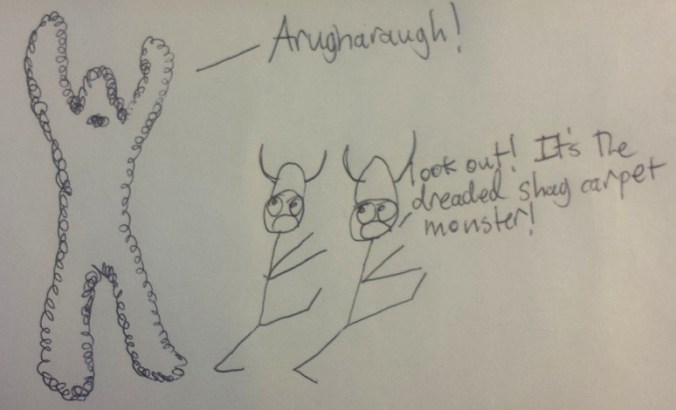
No film is complete without a supporting cast, but making sure that cast contributes to the plot is vital: ‘Wizards’ features two characters, Gulfax the… shag carpet monster thing, and Hurla the gnome, neither of whom contributes anything to the story. Gulfax is a clear Chewbacca stand-in who’s only contribution is to whack someone in the head, and Hurla guides Simon and Kor to the fearsome Suicide Cavern the promise of helping him again… which he doesn’t. Both could have been easily cut from the story without any ill effect.
Granted, not all side characters have to do big, mighty things: Chewbacca, in ‘A New Hope,’ mainly helps fly the Millennium Falcon and assists in freeing Leia from the Death Star, but his contributions feel important. If Gulfax, for example, had acted as a guide to Simon on their journey back to the castle, and the gnome been mentioned earlier as someone who can give Simon vital help in stopping the sorcerer, their roles would have been more substantial and meaningful.
In our own stories, don’t pad your story with characters just because you can. Each of them needs to play a role, and the more you have who don’t do anything is less time you can spend on the characters that do matter.
Avoid a random-events plot, and have all your scenes and locations contribute to the story
For all of ‘Wizards’ flaws, perhaps the most glaring is that it the story feels unpolished. All the events are in place, but don’t have the narrative glue binding them together, making the story feel like a bunch of random events taking place between the beginning and the end. Very few of these scenes add anything of value to the story, and those that could have don’t live up to their potential: The Suicide Cavern, for example, could have let us see what Kor and Simon are afraid of, and then have them work to overcome them, and strengthening their bond in the process. Instead, they just sing songs and pass through easily. After several more of these scenes, we finally reach the climax, and then the movie’s over, leaving us with the feeling that we don’t know anything about anyone, or why it all happened in the first place.
How can you avoid this mistake? When doing your own story, take the time in the first act to set up everything that’s coming afterwords. If your characters have to go on a quest, tell them where they’re going and why they’re going there. Warn them of the dangers they might face, and allies who might be able to help them, so that we, the audience, has an idea of what’s coming. While we want to be surprised by something unexpected, there’s still great value in anticipating something exciting or frightening coming our way.
The Takeaway
When doing a story, it cannot be overstated how important it is to give your characters (one of whom is hopefully not a teenager ‘chosen one’ who whines all the time) goals and motivations, to have every scene and character contribute to the story, and to set everything up in the first act so the audience has a good idea where they’re going and what to expect. Once you get going, limit comedic scenes to the first half of the story so the second can focus on the climax.
We all have our favorite moments in movies, books, and games, moments that stay with us long after the story is over. This column is my attempt to examine my favorite moments and see why they stick with me.
***
The Movie
‘The Lord of the Rings’ (1978 Bakshi film)
The Moment
Why it’s great
Today marks the 40th anniversary of Ralph Bakshi’s adaptation of ‘The Lord of the Rings’, an imperfect but ambitious attempt to bring Tolkien’s world to life on the big screen. While there is undeniably much to the film that didn’t turn out well, there are equally many things to do work, chief among them being the portrayal of Aragorn. While Viggo Mortensen is unquestionably more well known to the public, the late (and great) John Hurt’s performance of the ranger-turned-king is one of the film’s highlights.
Hurt’s interpretation of Aragorn embodies the spirit of what a perfect, Arthur-like king should be: Focused and knowing what’s at stake, but not using that that as an excuse to treat others unfairly. He may raise his voice, but only to get someone’s attention or get them back on track, but he also shows care to those under his guidance.
While there are other great examples of those traits throughout the film (including a fun moment where he gets into a play fight with Frodo), I like this clip the most because it portrays all three of those traits in only twenty seconds. It even has Aragorn turning grief into a motivator to keep Frodo and the others going, showing how determined he is to continue, even when all seems lost. Though he may be ridiculed for being a pantless Native American, this version of Aragon embodies what I’d like to see in a king, and I’d be happy to fight alongside him… and maybe offer some trousers.
Of all the comedy tropes out there, which one is your favorite? Slapstick? Ironic? Dead Baby? Mine is Fish out of water: a character is placed in a situation they have no experience in dealing with, and have to try and make the most of it.
While there are countless examples of this trope happening in fiction, one of my favorite happened two years ago for the release of ‘Doctor Strange,’ where talkshow host Jimmy Kimmel has the Sorcerer Supreme, Dr. Strange, come to perform tricks for a birthday party. Predictably, shenanigans ensue. Let’s see what we can learn from this amusing tale of an infinity stone wielding sorcerer taking on the terror of hyperactive children:
For instant comedy, have your larger than life character go to a child’s birthday party
There are a handful of situations all-but guaranteed to generate instant comedy, and having your character go to a child’s birthday party is one of them. Think about it: Any character who goes to a birthday party in an attempt to entertain children will look ridiculous . Don’t believe me? Imagine the following people and characters making balloon animals for kids:
•Darth Vader
•Master Chief
•Joseph Stalin
•Sauron
•Barack Obama
•Batman
•Dracula
•An Imperial stormtrooper
•Jesus
If you want instant comedy, putting your character at a child’s birthday party is a great way to make it happen, especially if they’re larger than life, out-of-the-ordinary characters.
Consider having your character not be above being bought for a service
Heroes are supposed to be above such pitiful human failings as greed, selflessly devoting themselves to helping others free of charge… which makes for a nice subversion whenever they decide to do something just for the money, especially if it’s an embarrassing task. Here, it’s amusing to see that Dr. Strange, master of the mythical arts, isn’t above doing something just for the money. Sometimes, a little touch of greed can show that, underneath all the superpowers, abilities, and willpower, even the most powerful humans are still… well, only human.
Consider having your character be terrible at their attempted task
We all admire someone who, when faced with something they’re not prepared for, still tries to do it anyway. Of course, not everything goes as we’d hoped, and sometimes they fail, as Strange does here. For all his skill at fending off inter-dimensional demons and creating time loops, Strange has zero skill in making balloon animals, and he looks hilarious just trying. Better still, he knows it and doesn’t care; he just wants that $150 dollars. While we may admire someone who tries and fails, we can laugh at seeing someone not giving a… well, you know, as they barely try at all, and carry that same attitude over to their interactions with people who don’t like that ‘I could care less’ attitude.
The Takeaway
For instant comedy, consider having your character try to entertain children at a birthday party, which, in addition to making them look utterly silly, gives a chance to show a little more of their human side by having them do it just for money and not really caring how it turns out.
We all have our favorite moments in movies, books, and games, moments that stay with us long after the story is over. This column is my attempt to examine my favorite moments and see why they stick with me.
***
The Video
‘Super Best Sisters Play – Shadow the Hedgehog’ (skip to 6:57)
Why it’s Great
Ah, the good old fashioned showdown: the protagonist/s and antagonist/s all gather together for one, last, decisive fight to see which side will be victorious. It’s a no-holds-barred beatdown, where no quarter is given, and none is expected. It will be bloody. It will be vicious. It will be cruel.
Unless it isn’t.
In this animated playthrough of ‘Shadow the Hedgehog’, we get a showdown between cute cartoon characters in prison, with their respective tough guy leaders readying for a fight, finally ending with two sides readying to unleash the pain… and then Shadow and his arch-nemesis just stand around for a few seconds before bouncing off each other in the most anti-climactic way possible, followed by almost everyone bouncing around as bright, colorful balls instead of stabbing each other as we expected.
What’s so effective about this scene is how the buildup is used for comedic effect: it makes the viewer think they’re going to get an awesome fight, only to have it dissolve into a wimp battle that couldn’t be sillier if it tried. Comedy gold.
There’s one question that has dogged mankind since the moment we could walk upright, form languages, and come into contact with other cultures, a question that every nerd, writer, and child asks at one point in their lives: Who would win if __________ and __________ got into a fight?
There’s no denying how cool it is to see two characters from different franchises, eras, and universes fight it out for dominance, survival, and bragging rights. Admit it: When you were a kid, you loved having all your toys fight one another for no other reason than it was fun. I did; granted, most of my toys opponents tended to be dinosaurs, but it was great. But as we grew up, such questions become relegated to fan fictions or our imaginations as we put our toys away.
Then, come 2005, an animation was posted on NewGrounds that changed Internet culture forever.
I don’t remember when I first saw ‘Showdown,’ but it hooked me from my very first viewing. Here it was, a showdown featuring dozens of pop culture characters duking it out for no other reason that it was cool, set to the beats of a disturbingly catchy song. Now, 13 years later, that song is still as catchy as ever, but what’s great is knowing that this song and video were, at one point, the peak of crossovers, long before the Avengers and cinematic shared universes came into our culture outside of comic books. In a way, this is the precursors to all those things, and though it wasn’t the first, it’s one of the most important.
Though short, this song and music video offers some valuable lessons for those of us who want to write our own crossover fights:
If logic is no object, then nothing is off the table in a crossover
How can Shaq take on Godzilla? Where did all the good and bad guys come from when they started fighting in Tokyo? How can an ordinary human deflect bullets with his hand? Such logic isn’t needed to enjoy the sight of so many characters fighting each other: One part of crossovers that makes them so special is how rare and unique they are. Remember how excited everyone was when Marvel’s ‘The Avengers’ was first announced and then released? It was a once-in-a-decade event and was so exciting because a movie crossover involving so many characters from different films, all fighting together for the very first time in Hollywood history. While we’ve gotten three more such superteam crossovers (soon to be four), ‘The Avengers’ was so memorable that we were willing to accept any flaws or cliches the film had (ragtag group of different individuals fighting amongst each other – literally – before coming together to fight a common enemy), and ‘Showdown’ is the same. It’s so cool to see all these characters fighting that logic is temporarily thrown out the window.
Consider having a good guy fight to save others even during a free-for-all
In a blink-and-you’ll-miss-it moment in the video, Optimus Prime rushes in to stop a skyscraper from falling after Godzilla hits it with his tail. Though this moment costs him his head, it speaks volumes about Optimus’ character, in that in the middle of a battle to the death between every fictional character, he stops to try and save innocent lives. Doing a similar act for your own fights is a great way to show that someone really is a hero who puts others ahead of themselves.
Consider the pros and cons of focusing on a small group of main characters in a free-for-all
Every story needs a main character that the audience can focus on or follow, and free-for-all battles are no exception. Here, the protagonists are Batman, Abraham Lincoln, Shaq, and Jackie Chan, and most of the video focuses on them. However, consider changing up the roster of secondary characters as your story goes on; while it’s cool seeing Abraham Lincoln wielding an assault rifle, a machete, and go pole-vaulting to try and take on a shape-shifting robot from outer space, I can’t help but feel it would be cooler to have other characters come in during the song’s second act to shine, even if only for a few seconds each. Who wouldn’t want to see, say, Spider-Man running around with a machete, or Solid Snake pole-vaulting into Optimus? Part of the charm of these giant fights is seeing a large group of characters fight, so it’s smart to give everyone time to shine, no matter who they are.
Consider including a character so powerful that it requires others putting aside their differences and teaming up to defeat them
He only does two things in the song (kick Indiana Jones in the crotch and kill Batman), but Chuck Norris’ appearance marks him as the most powerful and badass character in ‘Ultimate’ He’s so powerful, in fact, that it takes the combined might of over 20 other characters to take him down in the bloodiest battle that the world ever saw. And even cooler, most of them would be mortal enemies outside of ‘Ultimate’; where else would you see every single Power Ranger fighting alongside Darth Vader and Benito Mussolini?
The advantage of bringing in uber-powerful characters into your story is that they immediately dominate the battlefield, forcing other characters to to put aside their differences, even if only for a few moments, to work together for their own survival, giving you a unique opportunity to have characters who would never otherwise tolerate each other be forced to do so, leading to moments that are either awesome, funny, or a mix of both as they interact and play off each other.
Consider making the survivor/winner of your big fight an unknown who isn’t a fighter
Just who would win in a winner takes all fight of pop culture characters? Depending on who you ask, there’s an infinite number of possible victors, ranging from the strongest, the fastest, smartest, or the most clever. ‘Ultimate’ bucks that trend by having the victor not be a muscle-bound warrior, a magical wizard, or a dictator, but Fred Rogers, host of ‘Mr. Rogers’ Neighborhood’.
What’s great about this ending is that the victor of such a bloody battle isn’t even a warrior, but a kind, gentle man who, by all accounts, never raised his voice or said anything unkind about anyone. It’s unexpected, it’s novel, and even heartwarming to see someone opposed to violence standing as the greatest character in pop culture, and mourning all those who perished (though, personally, I think the seppuku was going a bit too far).
The Takeaway
When doing an incredibly awesome crossover that involves lots of fighting, you have more leeway to break the laws of physics or logic in order to get something cool. Consider following a core group of characters, but remember that your audience will want to see everyone get a moment to shine, especially when dozens of them have to team up to take down a particularly powerful character, and to see good guys/gals doing little deeds to try and help others, even at the cost of their own personal safety. And when it comes to endings, consider having someone unexpected win, instead of the most popular character.
Once in a while, you come across a moment in a story that is so perfect that it stays in with you for years, or even a lifetime. These are moments that, in my opinion, are flawless; perfect gems of storytelling that cannot be improved in any way, and are a joy to treasure and revisit again and again.
***
The Video:
Fedex’s ‘Combat Rangers’ commercial.
Why it’s Perfect
There are some moments in media that beg for deeper explanation, moments that causes us to pause and think deeply on why they move us, prompting lengthy soul-searching in an attempt to better understand ourselves and our desires, our frailties and vices. From such deep prompting, growth and understanding can result, and possibly even enlightenment as we come to understand our place in the cosmos, and what we can do to contribute to it… Or we can just laugh at the sight of muscular toy soldiers going into war wearing tutus and wedding dresses while wielding handbags and umbrellas.
I remember watching this commercial as a kid back in the mid 90’s; back then, I had little comprehension of shipping, manufacturing, and the unseen side of the retail industry, but I didn’t care, as I thought the Combat Rangers were hilarious. Over twenty years later, they still are, and this remains one of my favorite commercials for its use of humor to illustrate what could happen if a mistake is made in shipping goods from overseas. Most of that humor comes from the sheer absurdity of warriors charging into battle wearing attire and weapons so inappropriate it’s absurd, making it an excellent example of ‘fish out of water’ comedy that I love so much: Someone or something taken into a situation that they have no experience or business being in, and doing their best to make it work. In this instance, men dressed in women’s clothing, yet still charging into battle.
To take this idea to it’s logical extreme, imagine how ridiculous, yet hilarious it would be for any modern war movie to have it’s soldiers wearing wedding dresses into combat. ‘Hunter Killer’ may have gotten triple its box office revenue if Gerard Butler and the Navy SEALS were wearing pink ballerina outfits as they battle to save the Russian president. It would be a comedy goldmine.
The very best commercials stay with you years after you’ve seen them, and long after their products have left the market. ‘Combat Rangers’ easily earns its place among those hallowed ads… and I have to confess, that squishy mud sound effect six seconds in never fails to make me laugh.
We all have our favorite moments in movies, books, and games, moments that stay with us long after the story is over. This column is my attempt to examine my favorite moments and see why they stick with me.
***
The Video
‘The Shining Recut’
Why it’s Great
Ah, Halloween. The most wonderful time of year for people who love the supernatrual, the spooky, and the macabre. This is the holiday when Jason, Freddy, Leatherface, and all the other malevolent legends of pop culture get to enjoy the limelight, and when our favorite horror films are popped into the DVD player or streamed online. It’s a celebration of all things terrifying… but instead of posting a video showcasing that terror, let’s go with something a bit different… turning one of those horror films into a feel-good family film!
‘The Shining Recut’ is arguably the video that launched the ‘recut trailer’ genre, and is still one of the best. The humor of seeing a dark, creepy film turned into a feel-good funfest cannot be overestimated, especially knowing the context of all the scenes used in the clip, and imagining just what ‘The Shining’ would be like in this alternate version, where Jack, Wendy, and Danny come together as a loving family who overcome all their hardships in life… instead of, you know, freezing to death in the show and enduring permanent psychological trauma.
I think one of the great pleasures of Halloween is taking icons and beings who scare us and making them harmless and fun, if only for a day, and one of the best ways to counter that fear is to turn it into something funny. Where we would otherwise run and hide from a maniac with an axe, or a chainsaw, or an alien who wants to eat us, we render them harmless through the power of comedy. And maybe that’s what Halloween is really about: Gaining mastery over the powers of the night… well, that, and filling our arteries with sugar.
Is there such a thing as the perfect horror story? One so tight, so focused, and so scary that it cannot be improved upon? Probably… but I haven’t found it. ‘Masterpiece’, comes close, though.
There are several versions of this story online, but this is the first one I read a few years ago, and it’s stuck with me ever since, becoming one of my favorite horror stories; it’s short, concise, to the point, and haunts you long after its over with. But more than any other monster story, or tale where a ghoul or alien chases people around, ‘Masterpiece’ sticks with me not from the blood or gore, but from the way it so effectively uses sadism and the fear of inevitable pain. So in honor of Halloween, let’s see what we can learn from this short and chilling tale:
Consider starting your story in media res
What’s in media res, you ask? It’s when you start the story not at the beginning, but at the halfway point or later, before cutting back to the beginning, which is almost guaranteed to get your audience’s attention and curiosity immediately. ‘Masterpiece’ does so by starting with our unnamed narrator alone in his bedroom at night, staring at the dead bodies of his parents, leaving us to wonder how on earth he got there. Yikes.
Consider having something awful happen to your loved ones in a horror story
We often like to imagine ourselves in stories, taking the place of the protagonist as they go on adventures, save the day, etc. But when it comes to horror movies, that imagination can backfire. While we learn nothing about the narrator’s parents, that’s not necessary to feel the horror of them being murdered and defiled. It’s all to easy to imagine our own parents going through such horrific treatment, and while that would be enough to make some people close the page and walk away, it does serve as an effective way to suck readers deeper into the story. And it doesn’t have to be parents, either: it could be a beloved aunt, grandparent, or pet.
Consider having your antagonist be an intelligent, non-human being who psychologically torments its prey
It’s a bit cliché, but having your non-human monster be intelligent is a surefire way to ratchet up the creepy factory in a horror story. By going with something that can think, plan, and outwit the protagonist/s, or worse, torments its prey with tricks and mental torture, you make your protagonist’s predicament all the more dangerous and gripping, as cruelty can be more frightening than the raw power of a simple-minded beast. The monster in ‘Masterpiece’ is memorable not because it kills the protagonist’s parents, but because it toys with the narrator and letting them know they’re screwed no matter what they do, and presumably taking great pleasure in such a fact.
Consider having your protagonist be truly helpless in a horror story
It’s common for heroes to be initially helpless against a monster in a horror story, but as they learn more about their opponent, they’re able to fight back, either by getting a weapon, creating one, or exploiting a weakness of the beast. The narrator in ‘Masterpiece’ has no such hope. He/she is in a bedroom with a monster under their bed, and the moment they try to get out or run, they’re dead. That feeling of helplessness, of not being able to fight back or inflict any harm on a tormentor, is one of the most visceral and effective feelings in horror, and arguably the bedrock of the entire genre.
Consider ending your horror story with the promise of pain
Of all the ways to end a horror story, there’s perhaps none more chilling than letting the reader/protagonists know that the only thing they have to look forward to is pain and suffering. ‘Masterpiece’ ends not with the monster ripping the narrator apart, but the simple act of telling him/her that it knows that they’re awake. With the monster less than three feet away, it’s easy to imagine it smiling and waiting for the helpless narrator to just try and run, and that they have no chance of escaping. The narrator is going to die, no matter what.
What’s so good about this type of ending is that it’s a perfect example of the mind being more effective than anything the author can create. There doesn’t need to be any bloodshed, shots of mutilated flesh, or limbs being cut off because our imaginations are so much more effective. If you end a story with a scene of a person being dragged into a dungeon and seeing a tray holding an ice cream scoop just the right size for a human eyeball… well, you can guess what happens next.
Sometimes, not showing what’s going to happen, and leaving the details to the imagination, are far more effective than showing it.
The Takeaway
For a really effective horror story, have an intelligent, sentient monster do something horrifying happen to a helpless protagonist’s loved ones and then trap them in a situation where they can’t escape or fight. But to take the story to the next level (and freak out your audience), have the monster psychologically torture the protagonist.
Wow. That was intense. Let’s calm down with someone being a goofball cop in 1940’s Los Angeles.

 Imperfect Glass