16 Great Things about ‘The Lord of the Rings: The Rings of Power’ Season 2

In my last article about The Rings of Power, I talked about my 15 favorite things about Season 1. Here – in no particular order – are my 16 favorite things about Rings’ second season. Be warned that this list contains spoilers for not only Season 2, but also future events in the series, and the Lord of the Rings as well.

*All pictures in this article are the property of Amazon.*

1. Sauron’s Death

Season 2 opens with a flashback to Sauron trying to take command of Middle-Earth’s orcs following Morgoth’s fall. Unsurprisingly, the orcs (and Adar) don’t take kindly to being told that they’ll be sacrificed to achieve Sauron’s goals, so they express their displeasure by stabbing Sauron a few hundred times until he explodes, turning the surrounding terrain into a winter wonderland.

Many fans of Tolkien’s works have decried this scene for contradicting Sauron’s character (he tries to reason with the orcs, where he dominates them in the books with fear and terror), but I think this scene is a clever look at Sauron’s journey as a character. Originally, he was a being who loved order and perfection, but during his time as Morgoth’s servant Sauron was corrupted into being willing to enslave, torture, and kill others to get what he wanted. With Morgoth gone, some of Sauron’s original goodness is poking through, and this scene shows him at the halfway point between the good spirit he was originally, and the hate-filled tyrant of the Lord of the Rings trilogy.

Despite contradicting Season One of Rings’ (Adar said that he killed Sauron after the latter experimented on so many orcs; here, he and the orcs kill Sauron before those experiments begin), this prologue is a great way to open the season.

2. Sauron’s Rebirth

Something never elaborated on in Tolkien’s works is how Sauron creates a new body for himself each time he was killed, saying only that it took Sauron longer and longer with each subsequent death. Rings lets us see how the process might have gone: after being killed by the orcs, Sauron slowly rebuilds himself from a few drops of blood, taking the lives of insects, rats, and eventually people before he can finally create a new body for himself and resume his quest to conquer Middle-Earth.

What I like about this scene is that, compared to everything else we’ve seen of Tolkien’s world onscreen, this is something out of a story by H.P. Lovecraft: we’re watching the birth of an abomination from the dark, moldy depths of the earth, something that doesn’t belong to the natural order of things. And while this putrid mass of cancerous growth may look weak and frail, it’s still one of the most powerful and evil things in existence. And in a nice nod to Tolkien’s mythology, the whole sequence ties into his recurring theme that evil cannot create new things, only corrupt what has already been made: where Sauron could once manifest a beautiful form before his fall, now he is forced to take life from others to create a body for himself, one that may seem normal, but is only a mask to hide the evil within.

3. Choose Good

Sauron may have created a new body for himself, but he is now at the lowest point of his entire existence: he’s lost his position as Morgoth’s right hand. He has no armies to command, he’s been exiled from his home in Valinor, and his dreams of creating a perfect, orderly world are in tatters. But being humbled presents him with an opportunity to realize what he’s done and turn his life around, something that he seems to seriously consider when he comes across a group of refugees, one of whom unknowingly offers him the chance to leave his destructive path and choose a new, better one.

Later, when talking on a ship, the same man gives Sauron a brief, but perfect summary of what it means to turn from evil and become good:

I like to imagine that this meeting isn’t due to chance, but actually an act of fate: in The Fellowship of the Ring, Gandalf told Frodo that Bilbo was meant to find the Ring, and that Frodo was also meant to have it. During the events of The Hobbit, Gandalf and Thorin seem to have been guided to meet each other in Bree, which ultimately led to the Quest of Erebor and the death of Smaug, saving Middle-Earth from his wrath.

With all that said, I believe that Eru subtly guided the old man into meeting Sauron and inspired him to say the right things in hopes of helping the fallen Maiar find his way back to the light… but, alas, Sauron chooses instead to be a big meany butt and be evil (and confirming that he was lying to Galadriel about trying to redeem himself in Season 1).

Had Sauron listened to the man and chosen differently, the fate of Middle-Earth would have been very different, indeed.

4. Rhûn

If there’s one thing The Lord of the Rings, The Hobbit, and The Silmarillion has in common, it’s that we don’t get to see a world outside of the standard European fantasy environment (tall mountains, forests, castles, and the like). That’s why it’s such a delight in Season 2 that we finally get to see the deserts of Rhûn – the homeland of the Easterlings – on screen for the very first time.
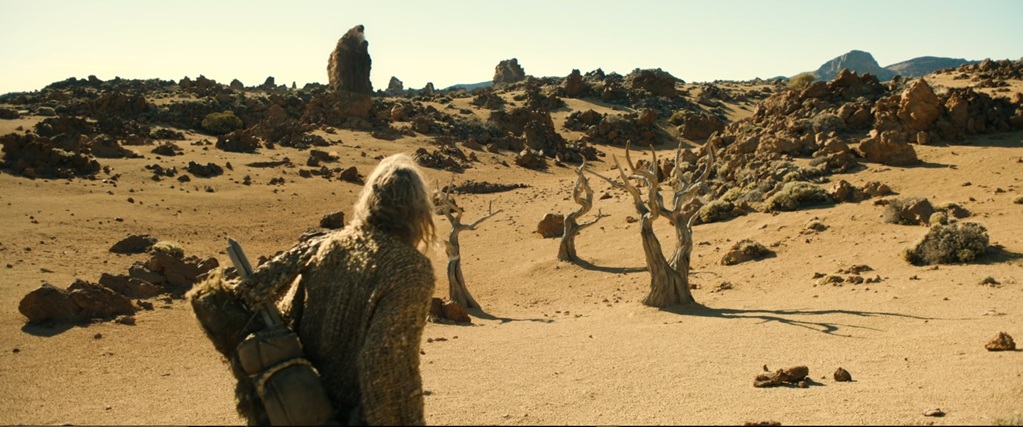
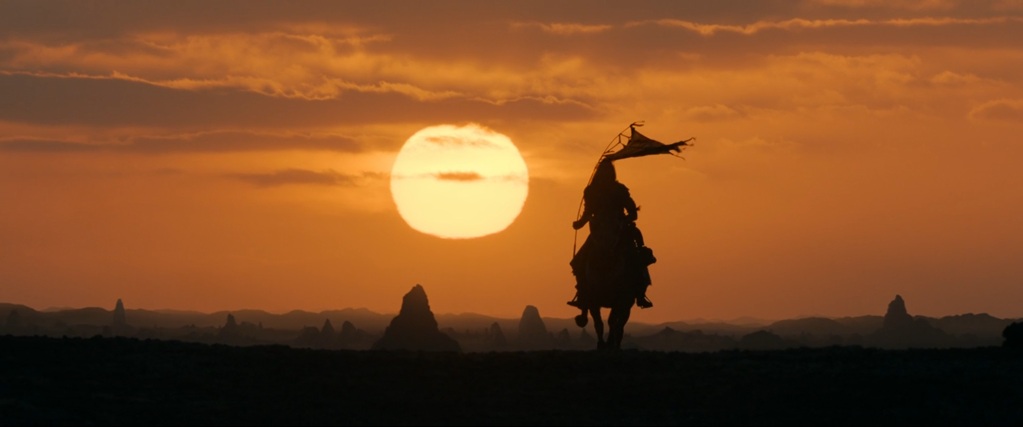
While we don’t get much outside of rocks, dead trees, barren canyons, and lots of sand, it’s great to finally see something other than European climates, and remember that Middle-Earth is so much bigger and varied than what we’ve seen in Tolkien’s books.

5. Celebrimbor

Though he had an important role to play in Season 1 of Rings, where he forged the three rings of the Elves, Season 2 is where Celebrimbor gets to come into his own and shine as one of the most famous elves of the Second Age. As the descendant of the famously fiery and temperamental Fëanor, Celebrimbor is an elf who doesn’t desire fame, power, or ruling others, but only in creating beautiful things and trying to undo the mistakes of his ancestor… a desire that makes him him all-too vulnerable to Sauron’s manipulations.

While he has all the qualities of being a noble hero like Gandalf, Aragorn, and Galadriel, Celembrimbor is unfortunately like Isildur and Bromoir: beings who fight and strive to do what is right at great personal cost, but who’s tales are told as tragedies by those who come after them. Celebrimbor’s a noble and kind-hearted elf, but his determination to make his mark on the world has catastrophic consequences for the world at large.

Yet, his noble intentions, determination to do what is right after realizing he’s been lied to and deceived by Sauron, and only wanting to do good makes him endearing and likeable. Like Diza, he’s an elf you’d be happy to share ale with at a tavern after a long day’s work.

6. Celebrimbor’s Anvil
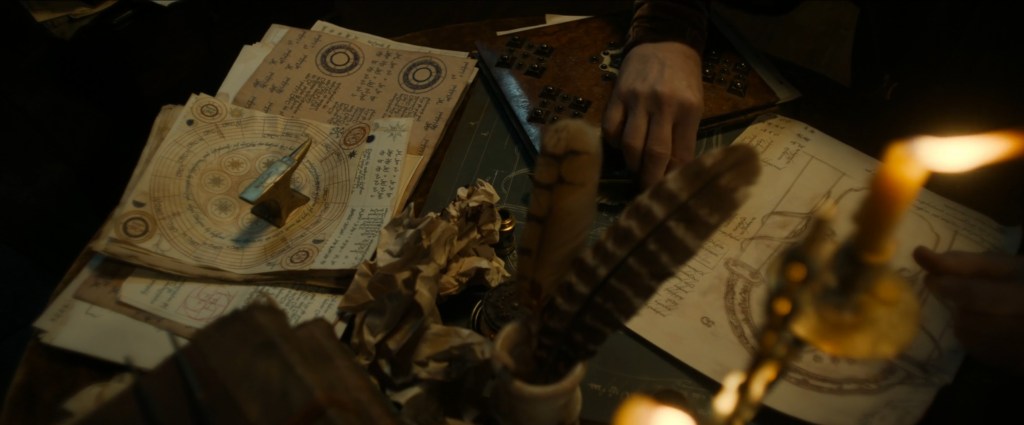
It’s only onscreen for a few seconds, but when Celebrimbor is doing some paperwork in his office, sharp-eyed viewers will see that he uses a tiny anvil as a paperweight, implying that the mighty Celebrimbor, greatest Elven smith of the Second Age, has a good sense of humor. Plus, the image of noble and graceful elves going through the effort to craft, shape, and forge an itty-bitty, widdle anvil is hilarious. Why haven’t we gotten this thing as an officially licensed collectible yet?

7. The Hammer and the Crown

Middle-Earth has its fair share of historical objects that Indiana Jones would be happy to track down, and ‘Rings’ has two big ones in Season 2: Fëanor’s hammer, and Morgoth’s crown.

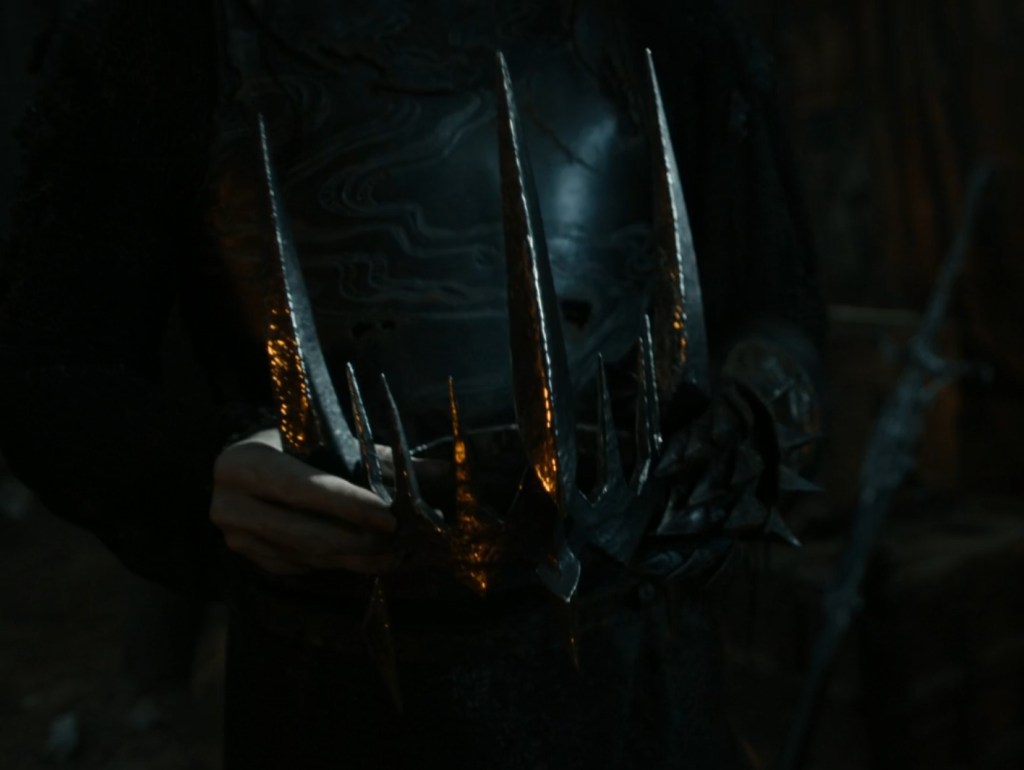
While fans who have only watched the films or seen the show can understand that these are important artifacts, readers of Tolkien’s works will get the most enjoyment out of seeing the hammer forged the most beautiful objects in all of creation (the Silmarils), and that crown that was worn by the most evil being who will ever exist (and that held the aforementioned jewels in its spiky embrace). Both go a long way to help make the world of Middle-Earth feel ancient and lived in, and that they played huge parts in changing the course of history long before the show began.

8. The Nameless Thing

One of the most fascinating parts of Tolkien’s world are the nameless things: eldritch horrors that live in the deepest, darkest fissures deep beneath the mountains of the world that are even older than Sauron. They are only mentioned briefly in Tolkien’s works, but are apparently so frightening that even Gandalf refuses to describe these abominations after encountering them when pursuing the balrog after their fall into the pit of Khazad-dûm. Season 2 gives us a glimpse of one in the form of a giant, grotesque worm-thing that tries to eat Isildur and Arondir before being sliced up from the inside and being (presumably) turned into nameless thing-burgers for dinner.

Is this a scene that doesn’t really add anything to the overall plot? Yes. Could it have been cut out without any effect on the story? Yes. Is it cool to see one of the most mysterious, dark, and vicious things that Tolkien ever wrote about? Heck yes.

9. Mirdania Sees Sauron’s True Form

One of Tolkien’s smartest decisions in writing The Lord of the Rings was not describing what Sauron looks like: he’s an unseen evil, a force so powerful and so dreadful that you don’t even have to be anywhere near him to experience the power of his malice. And despite having more screentime in Rings of Power than both the Hobbit and Lord of the Rings films combined, Rings has never shown Sauron’s true form, only his armor from the First Age and the disguises he wears to interact with others.

The closest we get to getting a glimpse of Sauron’s true form is when one of Celebrimbor’s assistants, Mirdania, accidentally enters the unseen world and sees Sauron as he really is (without realizing who she’s looking at), the experience shaking her to her core… but we don’t see that. All we get is Mirdania describing a tall being with pitiless eyes and skin made of flames. By describing the moment, but not showing it, Rings follows Tolkien’s example by leaving it up to the viewer’s imagination to visualize what Sauron’s true, malevolent form must look like.

One last little twist about the scene: after Mirdania describes what she saw, who’s the first one to comfort her? Sauron himself.

10. The Raid on the Temple

One of season 2’s strongest storylines is showing Numenor’s gradual downfall. While season 1 hinted that the greatest kingdom of Men in Middle-Earth was starting to crumble from within, season 2 brings this rot out into the open as a power-hungry Ar-Pharazôn begins his campaign to take control of the island empire and persecute those loyal to the Valar, the elves, and their ways.

The one scene that perfectly embodies Numenor’s descent into evil is the raid on the Faithful’s temple. Starting off as a peaceful funeral ceremony bidding farewell to all who died on the mainland in the last season, it devolves into Pharazôn’s sniveling weasel of a son – Kemen – gleefully interrupting the ceremony and announcing the destruction of the temple, destroying sacred artifacts for the fun of it, and then emotionally manipulating Isildur’s friend Valandil into starting a fight to justify using lethal force against the faithful, ending with Kemen stabbing Valandil in the back.

This scene, more than any other in the series, showcases the cruelty and moral rot of Numenor. What’s more chilling is that there are no orcs here, no supernatural monsters or ancient evils emotionally manipulating everyone present. It’s just humans being evil to one another, and it’s arguably scarier than any demon Tolkien could conjure up. And the worst part is that this is only a taste of the evil that Numenor is going to unleash upon Middle-Earth at large in the years to come.

(As an aside, I think there’s a very good chance that Kemen will end up being one of the Ringwraiths: Tolkien’s writings strongly imply that at least three Ringwraiths were of Numenorian descent, and it’s easy to see Kemen being nasty and power-hungry enough to accept a ring of power by Sauron. And if he wants to take the throne of Numenor, only to be denied, then Sauron might offer to make him a great lord and promise him a kingdom of his own to rule… Angmar, perhaps?)

11. Sauron’s Deceptions

One of Sauron’s greatest strengths is his ability to deceive and manipulate almost anyone he encounters, including the smartest, wisest, and most powerful elves in Middle-Earth. Yet, the books are vague about how he does this beyond his ability to take fair forms and cast illusions. While most of his manipulations in Season 2 follows the pattern of narcissists abusing others (lovebombing, gaslighting, ignoring boundaries, victim blaming, etc.), we get to see Sauron’s supernatural abilities at work when he conjures a vision of Eregion to subtly trap Celebrimbor. Like the holodeck from Star Trek, Celebrimbor can walk around in this vision, touch things, interact with other elves, and continue his work… completely unaware that the real Eregion is being bombed into rubble by orcs.

This illusion is a fascinating demonstration of Sauron’s power and his ability to deceive others, and makes you wonder how he’s used this ability on others throughout his time in Middle-Earth: It’s one thing to resist lies and flattery, but it’s much harder to resist when the very world around you is a lie and you don’t know it.

12. Who’s Will Is Stronger?

So often in fantasy stories, dark lords and evil-doers have all the power and all the advantages over their good counterparts, including the willingness to do whatever needs to be done to achieve their goals. But Celebrimbor gets a moment to prove that the good guys can be equally as strong-willed: shackled to his desk and unable to stop Sauron from taking the rings that he will use to enslave men and create the ringwraiths, Celebrimbor realizes the only way he can get free is to cut off his own thumb so he can slip through his shackle. But doing so means that he will never again be able to use a hammer, an anvil, and a forge to create things. Celebrimbor’s Eru-given gifts of forging and creating will be forfeit, and his dreams of making Middle-Earth beautiful will be gone.

Knowing all that, Celebrimbor still cuts off his thumb.

While gruesome, this is one of Celebrimbor’s best character moments: when everything is on the line, he is willing to give up his life’s dream for the chance to stop Sauron and save others. While it is, unfortunately, all for nothing in the long run, never let it be said that Celebrimbor did something most of us wouldn’t have the courage to do.

13. Celebrimbor’s Death

Celbrimbor’s death is one of the more gruesome in Middle-Earth media: tortured by being shot repeatedly with arrows from Sauron himself, threatened with supernatural means to ensure he doesn’t die, and then being impaled with a spear through the gut before finally dying, it’s a gruesome spectacle. Yet, one thing that’s puzzled me ever since watching it is why Sauron cries after Celebrimbor’s death. He wouldn’t see Celebrimbor as a friend, nor would a being such as himself be frightened at a prophecy that his rings will one day destroy him. So why the tears?

After mulling things over, I’ve come to think that the reason Sauron cries is because he’s realized he’s crossed the point of no return. All throughout Season 1 and 2, Sauron says that his greatest goal is to heal Middle-Earth of the hurts he helped inflict upon it. Yet, when staring at Celebrimbor’s corpse, Celebrimbor’s words cut through all the lies he’s told himself:

“I go now to the west, blown forth on a wind that you can never follow.”

I think Sauron realized that Celebrimbor was right: After all he’s done, and after all the times he’s rejected the chance to turn away from evil, it now hits Sauron that he can never go back to Valinor, his home. If he did, the Valar would imprison him, find him irredeemable, and thrust him into the void to join his master in endless darkness.

In my opinion, this is the moment where the last piece of good in Sauron dies. From here, he will fully embrace evil to achieve his goals and abandon any attempt to kid himself that he’s doing this to help others. Celebrimbor may have died here, but so did a tiny, flickering spark of light that will never be re-kindled.

14. Adar Turns Back to the Light.

One of my favorite storytelling tropes is when a villain sincerely and truly repents of their ways and turns their backs on evil. That’s why one of my favorite scene in all of Rings – tied with Sauron being offered the chance to turn from evil, as described above – comes with Adar turning back to the light.

Having obtained Galadriel’s ring, Adar seems poised to use it as a weapon to turn the tide in his war against Sauron and finally defeat him once and for all… but that’s not what happens. Though exactly what happened isn’t shown, it’s logical to assume that Adar’s mind was healed by Galdriel’s ring, making him realize how much evil, death, and destruction he had caused since beginning his quest to create a homeland for the orcs. But instead of giving into despair and hopelessness, or telling himself even more lies to cover up the pain as Sauron did, Adar instead chooses to pursue a path of peace.

While his quest for redemption only lasted a few minutes, Adar holds the unique distinction of being the only true villain in Tolkien’s universe – whether in books, films, games, and TV shows – to sincerely repent, something that Sauron, Saruman, Grima Wormtongue, and so many others never did.

While his ultimate quest to have the orcs live in peace was doomed to never succeed, I hope Adar can return in future seasons (due to Elves being able to reincarnate in Valinor if they are killed), and become of the good guys fighting against Sauron.

15. “Dwarves!”

Dwarves!

16. Sauron vs Galadriel

In Tolkien’s writing, an interesting paradox is introduced regarding Sauron: Despite his overwhelming power, strength, and innate magical abilities, he always loses whenever he gets into a physical fight with someone. That trend is played with at the climax of Season 2, when we get our very first scene of the Dark Lord going toe-to-toe with an opponent onscreen when he fights Galadriel for the 9 rings of power. For the majority of the fight, Sauron easily has the upper hand, toying with her mind and easily deflecting her blows before finally defeating her with a stab from Morgoth’s crown, and taking the 9 rings.

While I enjoy the fight for being able to see my favorite fictional villain getting to show off his fighting skills (and using Morgoth’s crown as a weapon is an ingenious and clever idea), I also like how the fight shows that even if Sauron defeated Galadriel, destroyed Eregion, and got his rings, he still lost: Galadriel escapes, and his potential ally and slave will instead be a thorn in his side for the rest of his days, giving hope, comfort, and aid to those who fight against Sauron, and will be one of the major players in his final and permanent defeat.

Sauron may have won this battle, but though it will take centuries for it to happen, he has ultimately lost his war to enslave Middle-Earth, and Galadriel escaping is just the first of many twists of fate that will finally lead to his final and ultimate defeat.

That’s it for Season 2, which I think is a big improvement over Season 1; come back in 2027 when we’ll take a look of my favorite moments from the third season of ‘The Rings of Power’.

Revisiting The Syphon Filter Series: Part 2

Continuing our look back at my favorite levels of the Syphon Filter Playstation 1 trilogy, let’s continue with the second game, Syphon Filter 2. Released less than a year after its predecessor, Syphon Filter 2 is everything a great sequel should be: it expands upon the world from the first, advances the plot in a logical and meaningful way, and has the protagonists take on bigger obstacles: Gabe and Lian are both being hunted by the US government and the Agency, Lian is still infected with the virus and running on borrowed time, and some of their new allies may not who they seem to be…

Typically seen by fans as the best of the original three games, I agree with them that Syphon Filter 2 is really, really good… with the caveat that the game relies too much on frustrating trial-and-error gameplay that leaves little to no room for mistakes. With that said, here are my favorite levels, ranked from least-enjoyable to best. Note that, like before, this breakdown will spoil every big story detail.

21. McKinzie Airbase Interior

While the opening level in the Colorado Rockies is a good introduction to the game, and a good way to ease players back into Gabe Logan’s shoes, the second level, the airbase hospital, introduces players to SF2’s biggest gameplay change: Trial-and-error gameplay. Whereas players had a fairly forgiving difficulty in the first game, SF2 is nowhere near as merciful, where a single mistake will result in an instant game over, and the Hospital is a jarring introduction to said gameplay. You have to sneak around the hospital with no map, no weapons, and cannot raise the alarm. No mistakes are allowed, and rather than leading excited players deeper into a world of spy-adventure, it instead makes them wonder what they’re getting into.

Best story element: In the ending cutscene, Lian is found by a security guard. However, he realizes that Lian is being held illegally, and, having taken an oath to uphold the law, allows her to escape and will cover up said escape as long as he can. While he’s never seen or mentioned after this level, this soldier leaves an impression as a nameless mook who chooses to do the right thing, even at (presumably) great cost to himself.

20. Pharcom Exhibition Center

Gabe returns to the Pharcom Museum from the first game to track down an important object. While it is fun to revisit a level from the previous game and explore more of its previously-unseen wings, the trial-and-error gameplay makes it a frustrating slog, especially when Agency mooks chuck grenades into the air vents while you’re scurrying about. (and how do the soldiers stationed in the building not hear that?)

Best story element: Gabe showcasing his moral code by having no qualms about killing Agency mooks, but refusing to kill soldiers, due to them being innocents unaware of the espionage taking place all around them.

19. McKinzie Airbase Exterior

If the hospital escape was a frustrating mess, escaping the military base is even worse; where the hospital was fairly small, this enormous level can test your patience. Thankfully, you have a map this time around, and more things to hide behind. Plus, it’s great seeing how your actions here will make things easier for Gabe and his troops in subsequent levels, making this level a good example of how one character’s actions can help someone else further along in a story.

Best story element: Lian ensuring that Gabe and his soldiers won’t be gassed on the mountain, making their journey easier.

18. Moscow Club 32

SF1’s most unique location had players going through an abandoned cathedral, and SF2’s most unique romp takes place in Club 32, a Russian dance club that’s come under siege from bad guys as Lian tries to catch up with an old friend fleeing the chaos. There’s nothing overly great or bad about this level, but the techno-Russian dance music sure is catchy.

Best story element: Lian demonstrating her moral code by refusing to kill innocent police officers, no matter how hard they make things for her.

17. Agency Bio-Lab

If the hospital escape was a pain, and sneaking out of a military base was hard, then the Agency Bio-Labs are a nightmare, and the worst example of SF2’s trial-and-error gameplay. You, as Gabe, are trapped in a massive underground laboratory with no map, no equipment, a flimsy disguise to keep you safe, and a knife for self-defense. Your to-do list is long, and you’re surrounded by guards who won’t hesitate to shoot first and ask questions later, and all it takes is a single mistake to send you back to the last checkpoint. The only reason this mission isn’t at the bottom of the list is because Gabe has a very good reason for being here (getting Lian’s vaccine), giving the player a good incentive to keep going; she helped Gabe out so much, so now it’s only fair that he help her in return.

Best story element: Having to kill agency scientists to stop the alarm from being raised. They’re innocent and don’t attack you, but Gabe has no choice but to kill them to avoid being overwhelmed and captured. It’s a good – if uncomfortable – example of how protagonists sometimes have to be ruthlessly pragmatic in order to achieve a greater goal.

16. Volkov Park

Compared to it’s predecessor, SF2 features some genuinely creepy, almost horror-inspired levels, and a prime example is Moscow Park with it’s spooky, moody atmosphere of running through a park in the dead of night during a snowstorm. While the level itself is a straightforwards run-and-gun mission that has you trying to catch up to Yuri while under attack by his goons, the atmosphere is what makes the level memorable.

Best story element: Taking on several snipers in the middle of the night in a snowy forest with a night-vision-equipped rifle.

15. Colorado Interstate 70

Having made it to the freeway after their transport crashed, Gabe and Chance now have to make their way further down the mountain to escape. As a breather level after making it through the hospital, The interstate doesn’t have any real standout moments, but it helps build up Gabe and Chance’s camaraderie.

Best story element: If you’re killed during the mission, the Agency goons stop shooting at both you and Chance, foreshadowing that he’s secretly working with them.

14. New York Sewers

What’s a modern-day spy game without a journey into some sewers? SF2’s penultimate level has Gabe and his partner Teresa going through some of Manhattan’s sewers on their quest to finally kill Agency leader Stevens… but they’ve to go through an army of infinitely respawning Agency mooks before a pitched and tense fight in a parking garage, where Gabe finally ends Stevens for good, ensuring a happy ending for everyone!… right?

Best story element: Killing Agency leader Stevens is so satisfying, but nothing can top learning that Chance, your ally from the first third of the game, is actually a traitor who’s been working for the Agency from the beginning, and is the one ultimately responsible for Lian being captured and so many deaths, including his own men. Yet, as he points out, he was just doing his job as an Agency operative and asks Gabe how many men he killed to get this point. It’s a perfect example of an antagonist justifying their actions (rightly or wrongly) and correctly pointing out that the protagonist has done a lot of morally questionable things, too.

13. New York Slums

Having finally escaped from the Agency’s labs, Gabe now has to flee through the slums of New York City to reach safety and save Lian’s life. Of course, it won’t be easy, as not only is the Agency deploying legions of photocopied goons to stop him, but the police believe Gabe is a terrorist and are after him as well. What follows is a race through city streets, burning buildings, and fighting off everyone who wants you dead. After the stress of the previous two Bio-lab levels, the slums are refreshingly straightforward.

Best story element: Gabe comes to the rescue of a police officer pinned down by Agency goons, but instead of thanking him and letting him go in gratitude, she still tries to carry out her duty and arrest him, a nice subversion from how said rescues usually go in these kind of games.

12. Aljir Prison Break-In

Unquestionably the most tense stage in the Syphon Filter trilogy, Aljir prison is a bleak, depressing, gloomy, and intense level that has Lian sneaking through a Russian maximum-security prison to free the real Yuri from being executed in an hour. This level is pure stealth, where one mistake results in an instant game-over. While other missions that rely heavily on this type of gameplay are frustrating, the unexpected horror-style atmosphere of this level (just listen to the music) make it stand out, and finally making it to the very end is an incredibly rewarding experience.

Best story element: making it to the very end of the level, only to learn that Yuri’s execution has suddenly been moved up, leaving Lian with just one minute to reach him before he’s fried to a crisp, ramping up the tension even more.

11. Aljir Prison Escape

You thought sneaking into Aljir Prison was tough? Try breaking out! Having rescued Yuri, Lian now has to fight her way out of the prison while protecting Yuri. Thankfully, stealth is largely dropped here, and you get the satisfaction of being able to shoot your way out, taking out the sadistic guards responsible for running such a horrible place, a cathartic experience if there ever was one.

Best story element: Finding your way blocked by some crazed prisoners with guns. While you’re responsible for setting them free, they don’t care, and will kill you as quickly as they would the guards, forcing you to take them out non-lethally in order to proceed.

10. Colorado Mountains

Having survived his C-130 transport being shot down over the Colorado Rockies, Gabe has to rally the surviving GI’s who flew with him, and start his way down the mountain while under attack by the Agency. Though it’s the lesser of the three opening missions for the PS1 trilogy, the Rocky Mountains do a good job of establishing the stakes of what Gabe will face going forward, as well as increasing the difficulty compared to the opening level of SF1, letting players know that things aren’t going to be as easy this time around.

Best story element: Gabe rallying the surviving GI’s and working to keep everyone’s spirits up. While it isn’t long before the shooting starts, it’s refreshing to have Gabe focused on helping others instead of having to get into fight after fight like most of the other levels in the series

9. Industrial District

Syphon Filter doesn’t do too many urban levels throughout the three PS1 games, but Moscow’s Industrial District are easily the most unique: having escaped Club 32, Lian chases Yuri through the streets of Moscow, which includes fighting on the streets, avoiding getting run over by cars in alleys, jumping from rooftop to rooftop, and dodging headshots from Yuri while chasing him into a park. It’s a solid, action-filled level with more catchy music.

Best story element: Having to act fast to avoid being crushed by a car in an alley when you have nowhere to hide.

8. Volkov Park – Gregorov Fight

Remember having to stop Mara Aramov from killing Phagan in the last game without killing her? SF2 revisits the concept, only this time it’s harder: having been cornered by Lian in Moscow’s Park, Yuri decides to turn and fight to the death, forcing Lian to stop Yuri without killing him. How do you do that? Shoot out all the lights, sneak up to Yuri in the dark, and taser him. But even then, Yuri can still sense and kill you if you’re not careful, but oh is it satisfying to finally taser the bastard after he’s spent the last three levels making your life miserable.

Best story element: Learning that ‘Yuri’ is actually an imposter, making you see the events of the past three levels in a new light.

7. Pharcom Expo Center: Ancient China Exhibit

This new wing of Pharcom’s museum has Gabe and Teresa involved in a race to stop the Agency’s second-in-command, Morgan, from detonating bombs to send the whole place up in flames. After protecting Teresa while she disarms said bombs, the climax features Gabe facing off against Morgan, who’s armed with an M-79 grenade launcher. While the first half of this fight involves just staying out of Morgan’s line of sight while he does the standard bad-guy monologue, the second half requires Gabe to actually take him out. One mistake, and Gabe gets a grenade to the face. The tension’s high, the pace is swift, and it’s one of the series’ most intense boss battles.

Best story element: Taking on a boss who dies as easily as anyone else, but who has a weapon that can kill the protagonist in one shot, leaving no room for error.

6. Bio-Lab Escape

Compared to the long stealth sections of the prior level, escaping the Agency’s bio-lab is refreshingly straightforward… but it’s anything but easy. You’re being hunted down by Agency goons wearing head-to-toe bullet-proof body armor, the place is in lockdown, and even at the very beginning you’re faced with one such goon and no way to kill him… unless you shoot the glass beakers on the table in front of you, causing them to explode, which the game doesn’t even hint is possible. Thankfully, the rest of the mission is more enjoyable, and a great example of escaping a sealed underground base, faced with nearly insurmountable odds, and fighting your way to freedom.

Best story element: Gabe – having no other way forward – is forced to leap into a large air vent to grab onto a tiny opening two stories below. One slip-up, and he’ll be chopped into bite-sized pieces by a giant, unshielded fan right below him, making it a nail-biting drop (and demonstrating Gabe’s incredible grip-strength)

5. 1-70 Mountain Bridge

In my opinion, this is one of the best levels of the Syphon Filter series, and one of the more clever ones: you have to stop the Agency from blowing up a bridge on the mountains to trap Gabe and his GI friends so they can be saturated with nerve gas. To accomplish this, you have to sneak around said bridge, quietly eliminate Agency goons and their commanders, and disarm bombs without being seen, as doing so will result in the bridge being blown up immediately. Not only that, but you also have to make your way along the bridge’s girders, where one fall will result in death as well. And then, after all that, you have to save two GI’s from being killed by Agency goons by shooting said goons with a single bullet to achieve a double-headshot. And THEN you have to take on one last convoy of Agency goons before finally escaping… and being blown off another bridge.

Though this is a very tough level, saving the bridge and making it to safety makes you feel like a badass more than any other point in the game… oh yeah, and the music here is also cool.

Best story element: A tie this time around:

  1. The protagonist facing off a numerically superior enemy force and stopping them from doing something terrible without them being aware that you’re there that saves not only you, but others as well.
  2. Gabe somehow falling at least 15 stories onto a moving train and surviving without a scratch. Totally impossible, but funny at the same time, and continuing the series’ tradition of him falling fatal distances without a scratch.

4. United Pacific Train 101

After several levels of stealth, trial-and-error gameplay, and countless mission restarts, Pacific Train 101 is a breath of fresh air where all you have to do is make your way to the front of said train and gun down any goon who tries to stop you. There’s no stealth, no mission parameters, and no one you have to save or protect. It’s just good, old-fashioned running and gunning with a kickass soundtrack.

Best story element: Gabe rightfully calling an Agency mook an idiot for throwing a hand grenade onto a fuel car less than ten feet in front of him.

3. United Pacific Train 101 – Part 2

Essentially the previous train level, only now there’s a time-limit, which gives you an extra incentive to reach the front of the train before it crashes.

Best story element: Gabe leaping from a moving train onto a helicopter as the train plunges into a canyon. Awesome!

2. C-130 Wreck Site

Finally arriving at the C-130 crash site, you need to retrieve the data disks required to help save Lian’s life. But getting to them won’t be easy: the Agency has reached the site first and has deployed some of their best soldiers to stop you, requiring you to use all your combat skills to make it through, culminating in a desperate fight to stop Archer from escaping the site with the disks while he hangs underneath a helicopter that’s flying away. And to top it all off, the PS1’s graphic limitations makes it look like you’re fighting not through a crash site, but hell itself, and it’s here that you’re introduced to the series’ most pulse-pounding music. A hard level, but intense and fun.

Best story element: Stopping an important adversary who’s not only hanging from a helicopter that’s flying away, but who’s wearing body armor, forcing you to either tear through said armor in a nonstop barrage of bullets, or take him out with an incredibly well-aimed headshot.

1. Syke’s Parking Garage

Sticking the landing of any story is difficult, doubly-so for video games. The final level needs to be a culmination of your experience and offer something engaging to finish the story, and SF2 nails it with what is, in my opinion, the best boss fight in the series. Chance, your so-called-friend who was actually an Agency mole, is out to kill you after having murdered Teresa. Problem is, his body armor is so thick that not even grenades can pierce it. Defeating Chance seems impossible at first, but eventually you’ll realize that you can use the VAS-12 automatic shotgun to knock him back into your helicopter’s blades, slicing him to ribbons (and if your timing is perfect, doing so after he taunts you by yelling, “Is that the best you can do, Gabe?!”).

Though it’s the shortest level in the game, Chance’s boss fight has it all: A neigh-invulnerable foe, emotional stakes, incredible music, and forcing a protagonist to find an a creative way to defeat a foe when raw firepower won’t work. It’s the best level in the game, and one of the best in the series, and a perfect way to end Syphon Filter 2.

Best Story Element: Fighting a former friend turned traitor who massively outclasses the protagonist in every way, yet still emerging triumphant.

Come back next time, when we’ll take a look at Syphon Filter 3, the last game in the Playstation 1 trilogy.

Resident Evil: The Films Ranked

To close out my analysis and summary of the Resident Evil movies, here’s my own personal ranking of each film in the series, starting from the least enjoyable and working its way up to the most enjoyable.

6. Resident Evil

It has three good scenes and two great musical pieces, but no amount of production values, music, or cool sequences can save a generic zombie film with the Resident Evil brand slapped onto it at the last minute. This is a Resident Evil film in name only, and is the most disappointing overall.

Favorite Scene: The laser hallway

Favorite Shot:

5. Resident Evil: The Final Chapter

The Final Chapter feels like the first draft of a script written by someone who wants to end the series on their terms without caring about what came before. Not only is the story filled with retcons that don’t work, it also suffers from disposable characters and awful editing that makes the movie physically painful to watch. However, the film does have some good ideas, some gorgeous post-apocalyptic scenery, and the surprisingly effective ending saves the movie from being a complete failure.

Favorite Scene: The ending, where Alice is given Alicia’s memories and sets out to continue fighting the undead.

Favorite Shot:

4. Resident Evil: Apocalypse

Of all six films, Apocalypse is the one that feels like the most faithful adaptation of the games, due to following the basic story of Resident Evil 3: Nemesis, complete with corresponding characters, monsters, and Nemesis himself coming to life via fantastic practical effects. Plus, LJ – while a walking stereotype – is a welcome source of comic relief. Unfortunately, Alice is at her worst here, acting like a smug high schooler who thinks she’s the toughest girl around and doesn’t give a shit about anyone but herself, going out of her way to steal everyone’s thunder for her own glory.

Favorite Scene: Nemesis attacking the STARS members and sparing LJ

Favorite Shot:

3. Resident Evil: Retribution

Retribution is in the unenviable position of being a commercial for The Final Chapter, and rewatching it knowing that all of the plot points it sets up will never be fulfilled makes it a bittersweet experience. However, it does has a lot of fun action sequences, the greatest variety of locations from any of the films, and the ending is still the best in the series.

Favorite Scene: That awesome cliffhanger ending

Favorite Shot:

2. Resident Evil: Extinction

The most original film of the series, Extinction is a satisfying, post-apocalyptic, Mad Max-style daylight horror film set almost entirely in a desert wasteland, a setting that has never appeared in the games. Coupled with good action sequences, a fantastic third-act fight against Dr. Issacs, and a great soundtrack, it’s a fun film that succeeds at carving out its own identity while staying true to the Resident Evil spirit.

Favorite Scene: Carlos’ sacrifice

Favorite Shot:

1. Resident Evil: Afterlife

The best film of the series is a blast, starting with an exciting assault on Umbrella headquarters before turning into a perfectly-paced siege film with plenty of memorable action sequences, including a fight against the Axeman, who’s my favorite monster from the games, and like Nemesis, was brought to life perfectly, and finishing with a duel against Albert Wesker, the most memorable character in the series. While the cliffhanger ending does prevent the movie from being self-contained and acting as a satisfying series finale, the rest of the film is a great watch, and I always enjoy watching it again and again.

Favorite Scene: The battle between Claire and the Axeman, which is my favorite scene of the entire series. The water, that massive axe, the music, all of it is just perfect!

Favorite Shot:

What We Can Learn From The Resident Evil Series: A Summary

Imagine that the year is 2001, and you’re off to see Peter Jackson’s adaptation of JRR Tolkien’s The Lord of the Rings: The Fellowship of the Ring. You love the books and can’t wait to see them brought to life on the big screen! You get your popcorn, take your seat, eagerly wait as the lights go down… and then watch a movie that follows a bunch of characters you’ve never heard of as they infiltrate a fortress never mentioned in the books. None of Tolkien’s characters appear, and while a few monsters do menace the heroes (orcs, uruk-hai, and a warg), the story ultimately has nothing to do with his books.

How would you feel after the movie was over? Probably infuriated that you got something that has a passing resembles its source material but is more interested in showcasing the writer’s own ideas than the story you paid to see. That’s what the Resident Evil films feel like: a series of movies that had a mountain of material to take inspiration from, but chose to go its own way for better or worse. And while the films were critical failures, they were financial successes, going on to become – for a time – the most successful live-action video game movie franchise, and the most financially successful horror film series in history.

But no matter their financial and critical success, the Resident Evil films were always destined to be B movies meant to provide lots of action and thrills with little to no philosophical musings about the human condition or discussions of morality. And by that criteria, the films largely delivered on what they set out to do, thanks to three things:

1. All the films have simple stories with clear, achievable goals for the characters.

2. They take the basic idea of the games (zombies get lose and have to be stopped before they infest the world) and expand on it (zombies get lose, take over the world, and have to be stopped before the human race is wiped out) in a way that feels true to the spirit of the series, allowing fans to see characters and monsters from said games in new and unique scenarios.

3. They have lots of unique action sequences featuring monsters and characters from the games, sometimes re-created shot for shot.

Yet, for all their success, the films don’t quite reach the height of what they could have been; they suffer from an overarching story that feels disjointed and held together with staples, duct-tape, and Elmer’s school glue when viewed back to back, due to said story being made up film-by-film as the series went along. And while all the elements for great action movies are present, the biggest obstacle holding the films back boils down to one thing: Alice, the main character.

For all the anecdotes listed above, the Resident Evil films have another, unofficial distinction: they’re the most expensive fan-fiction story of all time in that they follow an original character throughout her adventures in the Resident Evil universe. And like poorly-written fan-fiction, said character is a black hole sue whom the entire universe revolves around. Everyone, and I mean everyone, is either:

1. Trying to kill or capture her.

2. Taking orders from her or trying to save her, often at great risk to themselves.

3. Admiring how awesome she is.

Furthermore, Alice is extra-special in-universe because she’s one of only two people in the world to successfully bond with the T-virus without any side effect, the other being Angela from the second film. But then Alice gets a one-up on Angela by becoming the only person on Earth to get psychic powers, and then she gets an army of clones who also has psychic powers, and then she defeats the Umbrella corporation and saves the human race from extinction, sacrificing her life in the process, only to return to life, making her a modern-day Jesus (if Jesus went around killing zombies with guns and psychic powers, that is).

But did you notice something about that description? The established characters from the games – Jill Valentine, Chris Redfield, Claire Redfield, Carlos, Albert Wesker, etc. – have almost no part to play in the fight for humanity. While they may shoot guns and kill zombies, they’re reduced to supporting characters, only existing to help Alice accomplish her quest. If they get a moment to do something cool that has nothing to do with Alice, she’ll swoop in and steal that moment (see: Jill trying to save Becky, Claire trying to defeat the Axeman, etc.).

While she has her sympathetic moments, and ultimately goes from being an unlikable jerk to a heroic clone trying to save the human race, there’s no escaping the fact that Alice is the biggest problem with the Resident Evil films. If she had been replaced with, say, Jill Valentine, and not gotten any special powers, we would have gotten a series that went like this:

Jill Valentine – a cop with the Raccoon City police department – teams up with her allies to fight off a zombie apocalypse, only to learn that their employer, the Umbrella corporation, is responsible for the outbreak. Armed with nothing but guns, their wits, and their determination, Jill, Claire, Chris, Barry, Carlos, Nicholai, Sergei, Leon, Ada, and newcomers Luther, LJ, Rain, Chase, and Betty roam the apocalyptic wastelands, trying to stop Umbrella and save the human race, eventually having to team with their arch-nemesis Albert Wesker in a final, desperate assault that leaves them just narrowly managing to save the human race and destroying Umbrella once and for all, allowing Jill and her friends to begin rebuilding a ruined world.

Doesn’t that sound like a great story? If we had gotten that, it’s my belief that the series would have been better recieved by both fans and critics. But instead, it was foiled by a newcomer who shoves everyone else aside so she can be the messiah. And in that lies the one lesson the ‘Resident Evil’ films offers to writers:

When adapting a franchise from one medium to another, stay true to the spirit of the source material while keeping the focus on established characters instead of newcomers.

While things will inevitably be changed in any adaptation, writers need to still present the story fans come to see. Tell the story from the original book, show, or game, respect said story, and use new ideas and new characters to compliment and support the original, not overshadow it.

Viewing the Resident Evil films years after the series concluded was a fascinating experience for me: I can’t think of any other series adaptation that has good production values, a real sense that the filmmakers were trying hard and learning from their mistakes, but still runs the gauntlet from awful to fantastic (in a B movie way). Most frustrating is that there was always the feeling that the films were always a few inches away from reaching their full potential, and it does happen a few times! Most of the action sequences – save those from the last film – are a lot of fun, the post-apocalyptic world is well done, the monsters are mostly great, and, despite all the changes made, it really does feel like a Resident Evil story come to life… it’s just not the one we should have gotten.

In the end, despite its missteps, the Resident Evil film series mostly accomplishes what it set out to do, in my opinion. It started weak, gradually got better, reached its zenith, then fell flat on its face at the end, but managed to get to its feet and cross the finish line. If you’re a fan of action movies, zombies, horror, and video games, I believe they’re still worth a watch. But most of all, they’re an important reminder that when we, as writers, are adapting someone else’s work, we’re stewards for that story. It is up to us to faithfully adapt it as best we can and respect it, even when we have to make changes. If we deliver a faithful and respectful adaptation, we’ll not only delight long-term fans, but introduce others to a world that they’ll want to explore, guiding them towards the original books, games,and stories, ensuring that a beloved story will earn a new generation of fans and be kept alive for years to come.

Why Wendy Torrance Embodies 2020

If you had to pick a pop culture character to represent us in 2020, who would it be?

Would it be Ellen Ripley, who was scared out of her mind at facing phallic terrors from beyond the stars, but grabbed a gun and fought back? Perhaps it would be Bilbo Baggins, who was swept out of his comfortable hobbit hole and went through a dangerous world that tried to kill him at every turn. Or maybe you would choose Shinji Ikari from Neon Genesis Evangelion, a boy who basically wanted everyone to die. These three would work, as well as so many others who could embody what we’ve gone through in 2020.

Me? I’d pick Wendy Torrance from 1980’s, ‘The Shining.’

I know what you’re thinking: What? Why would you pick her? She can’t fight, she spends most of the film on the verge of hysterics, in hysterics, or preparing for the next outbreak of hysterics. She’s as far from a champion of the people as you can get… Yet, there’s more to Wendy than you’d guess at first glance.

Let’s consider Wendy’s situation: she’s mentally worn down from living for years with a man who looks down on her, and she’s now isolated with her loved ones in the middle of a vast and dangerous wilderness. Worse, the man she’s lived with eventually decides to harm her in order to satisfy his own ego and inflated self-importance, but Wendy can’t leave because she’d be exposed to something invisible (the cold) that will kill her. She’s overwhelmed, outmatched, and can’t rely on others to help her survive.

Now, compare that to our own situation: If you live in the USA, you’re isolated in your community and likely worn down from four years of living with a president who constantly lies, makes false claims, and gaslights us at every turn, and who could care less about our health and well-being, and, after losing the election, is going out of his way to get revenge on the country for rejecting him to satisfy his ego and inflated self-importance. But we can’t leave the country or our communities because we’ll be exposed to an invisible virus that can kill us; we’re overwhelmed, and can’t rely on others to help us.

Like most of us, Wendy isn’t a fighter; she’s terrified, emotionally exhausted, and can sometimes barely keep herself together, but has a strength that ultimately saves her:

She doesn’t give up.

When faced with her homicidal husband, Wendy knocks him out and locks him in a pantry instead of trying to placate him. When Danny is in danger, Wendy goes off to find him, regardless of the danger to herself. When faced with supernatural evil, she panics as anyone would, but she still keeps going. And in the end, after getting past everything trying to terrify or kill her, she manages to find Danny and get to safety, driving off into the dark while her homicidal husband is left behind to howl and yell, doomed by his own actions and incompetence.

When we came face to face with a virus that can kill us, it was terrifying. We could have panicked and given up. But we haven’t. We’ve kept going. In the face of an lying president who’s lack of action has led to over 344,000 deaths, we’ve kept going.

Even when we’re emotionally exhausted and drained to the breaking point, we keep going.

Though we still have another long, dark year to get through, we’re in our snowmobiles. We will keep driving towards safety while our tormentor is left to rage and scream.

Wendy Torrance wasn’t a warrior, but she refused to give up, and neither have we. And like her, we’ll get through this.

Happy New Year, everyone.

What We Can Learn From The Jaws Series: A Summary

The year is 1975: ‘Jaws,’ the greatest shark movie ever made is released, a film with a perfect cast, expertly-crafted scares, an unforgettable soundtrack, and one of the most satisfying villain endings ever filmed. The film ushers in the age of the summer blockbuster, and propels Steven Spielberg into a career as one of the best filmmakers of his day.

Fast-forward to 1987. ‘Jaws the Revenge,’ one of the most reviled shark movies ever made, is released, a film starring Michael Caine as a man named after a sandwich, a shark who’s mechanical innards can frequently be seen as it lurches around the Bahamas seeking revenge on the Brody family, and an ending where a toy shark in a swimming pool explodes after being gently touched by a wooden bowsprit. The film ushers in the end of the Jaws franchise, and becomes a laughingstock among fans of cinema.

What on earth happened?

Lighting, as the old saying goes, never hits the same place twice. Although it only had three sequels, the Jaws series is one of the most infamous examples of a franchise that started out perfectly before ending with a dud. Although there are many lessons to be learned from the series on how not to handle sequels, one lesson stands above the rest:

When a story’s conflict has been resolved, it’s time for the story to end.

Perfect film that it is, ‘Jaws’ is not an epic that can be told as a trilogy in the vein of ‘Star Wars’ or ‘Lord of the Rings.’ It’s a small-scale, self-contained story centered around a single community with a clear beginning, middle, and end. It has a conflict (a shark terrorizing a coastal town) with a definitive ending (said shark is blown to pieces) in which Amity is saved, and the story has come to its logical end with no loose threads or ideas that could be explored in a sequel. ‘Jaws’ does not lend itself to further stories of Martin Brody fighting off shark after shark, year after year, and yet we got three more stories that now serve as poster children for unnecessary sequels.

Now, this is not to say that ‘Jaws 2,’ ‘3,’ and ‘The Revenge’ don’t have their merits. As previous installments in this series have shown, each one has moments, scenes, and ideas that are quite good.

But there’s a theme running through all the Jaws movies that I never noticed until re-watching them: coming to terms with trauma. The first film has Quint’s legendary recollection of surviving the sinking of the USS Indianapolis, ‘2’ has Martin dealing with the PTSD of going face to face with a shark, and ‘Revenge’ has Ellen dealing with losing both a son and her husband to the sharks. Much like Ellen Ripley in ‘Aliens,’ the original film, ‘2,’ and ‘Revenge’ are at their strongest when they focus on Quint, Martin and Ellen dealing with the trauma they’ve endured from the sharks, helping make them so much more memorable than cookie-cutter protagonists who exist to provide cheap thrills via their inevitable, bloody deaths.

But it’s not just trauma that was an unexpected find when re-watching the movies. I was surprised to find that, out of the three sequels, I actually enjoyed ‘Revenge’ the most. Not because it’s a good film (though it is a satisfying guilty pleasure), but because, out of all three sequels, it’s the one that tries the most to do something new while moving the story forward. ‘2’, while the best of the three, is still largely a copy of the first film, and ‘3’ has nothing in common with the rest of the series (aside from Sean, Michael, and a shark), but ‘Revenge’ doesn’t repeat the ‘shark attacks Amity’ plot. Though its new ideas weren’t that great (dooming it before a single shot was filmed), ‘Revenge’ at least tried to do its own thing and escape the shadow of its predecessor, and for that it deserves recognition.

While all four films offer many character moments, story ideas, and themes that are valuable to learn from, I believe that if we were to condense all those lessons down, these are the three most valuable:

1. When a story’s conflict has been resolved, it’s time for the story to end.

2. Having characters struggle to overcome traumatic events makes them more interesting to watch.

3. When writing a sequel to a self-contained story, try to follow the same spirit as the original, but avoid copying the story and conflict.

Valuable lessons, indeed, but ones that came at a high cost: Although it’s been over 30 years since ‘Revenge’ was released, it seems unlikely that we’ll see another Jaws film anytime soon, if ever. And you know what? Maybe that’s for the best (if nothing else, ‘Revenge’s poor showing prevented the series from eventually heading into outer space). If the Jaws series proves only one thing, it’s that if you really want to honor a story you love, leave it be. Let it stand on its own and not taint it with inferior and unnecessary followups. Let other stories in the same genre tell their tale without the burden of having to live up to a masterpiece.

Oh, and avoid having your sharks roar. That’s just silly.

I know Kung-Fu: A look at the duels in the Matrix Saga – Finale

Ever since the creation of CGI, Hollywood showdowns have become more elaborate than ever before. Once limited by what could be accomplished in camera, we can now enjoy the spectacle of people flying, jumping, kicking, and beating the tar out of each other in elaborate environments, using feats that could only be accomplished with the aid of computers. However, bigger, better effects don’t always lead to better fights.

The Matrix trilogy, as a whole, mostly avoids the problem of emotionally hollow duels. When taken in as one continuous story, the Matrix saga (including ‘The Animatrix’ and ‘Enter the Matrix’) has a strong start and a strong ending: The stakes are high, the risks are high, and Neo, Morpheus, and Trinity are all in real danger when they fight. But it’s the second act, with ‘Reloaded,’ that things stumble. There’s plenty of fights and duels, but it often feels more like spectacle than a clash where anyone can die, or be seriously injured. The fight against Seraph, for example, feels like padding in a film that’s already taking an unusually long time to get going, and the Burly Brawl – while being a visual treat – adds little to the story beyond showing that Smith can clone himself, and foreshadowing Neo’s final line in the series.

In going through the Matrix series again for these articles, I realized that there was something else I didn’t pick up on until I had seen all the movies and games: Many of the duels and fights in ‘Reloaded’ could be trimmed or even cut out, and that’s because:

1. The duels mostly feel like action for the sake of action.

2. It doesn’t feel like the characters are in danger, or that or that terrible things will happen if they fail

The first and third film’s duels work because it’s clear that if Neo and his companions fail, the repercussions will be awful; when Neo fights Bane onboard the Logos, you can feel the desperation and urgency as he and Bane clobber each other. When Morpheus fights Smith in the first film, you know he’s in a losing battle. People get hurt, scuffed up, and bleed. In ‘Reloaded,’ however, that sense of danger is mostly gone, save for When Neo and Morpheus fight Smith in the hallway on the way to the Architect. Duels frequently end with people and programs walking away none the worse for wear. If both the protagonist and the antagonist are obviously going to walk away unscathed, then there’s no urgency or danger, and the audience won’t be as involved than if they knew that, say, Trinity could have her head cut off with a chainsaw if she fails to outrun Agent Smith.

So, what can we learn from the Matrix series when it comes to duels?

*Any duel works best when it has a strong reason to take place, and that there are repercussions if the protagonist fails.

*Make sure that your characters can get tired and suffer injuries, such as being cut, sliced, smashed, or having broken noses, busted lips, or even snapped limbs (it’s jarring how Neo can fight hundreds of Smiths without so much as a bruise, scrape, or broken glasses).

*Make sure the duel have a solid reason for existing. If it assists or impedes the antagonist and protagonist in reaching their goal and moves the story along, it will likely turn out well. If the duel is primarily to showcase an action scene, it might need to be revamped, or scrapped altogether.

Follow these three guidelines, and we can make duels that grip viewers and don’t let go, whether they’re simple fistfights in a room, or elaborate spectacles made by the best CGI Hollywood has to offer.

If you’d like to reread previous entries in this series (in chronological order), you can find them here:

The Matrix

The Animatrix

The Matrix Reloaded

Enter the Matrix

The Matrix Revolutions

The Matrix: Path of Neo

Three Fridays: A Comparison of ‘Friday the 13’ – Finale

For the past few decades, Hollywood has increasingly remade or rebooted its more famous stories at an ever-increasing rate. While this can be attributed to cashing in on brand-name recognition or nostalgia (or creative bankruptcy, as some might say), it does allow us to see how a story can be told in two different ways, for better or worse. Sometimes the remake is an almost straight-up copy, while the other goes for a radically different interpretation. Even rarer is the example of one story told more than twice, or even three times (how many Spider-Man origin stories do we have, now?). The original ‘Friday the 13th’ falls into that elusive category.

Over the past three weeks, we’ve taken a look at the three adaptions of Jason’s origin story. If, by chance you missed them, here’s some handy links:

The 1980 film

The 2009 remake

The 2019 comic

When comparing all three, one major factor keeps coming up: When you take away everything connecting the stories to the franchise at large, they are largely generic slasher tales: Everything else about them, the remote location, young adults being picked off one by one, a mysterious killer, the final girl, etc. can be found in any horror, slasher, or thriller. But what elevates the 1980 and 2019 versions is their killer, Ms. Voorhees. Unlike so many other slasher villains (including her son), she elevates herself not by being a bloodthirsty savage with an absurd body count, but by being a sympathetic killer, a mother consumed by grief and rage who wants both vengeance and to spare other children from the stupidity of horny camp counselors.

Thus, the ultimate takeaway from the original ‘Friday’ is the importance of giving our killers more motivation beyond, ‘kill, kill, KILL!’ Unless we’re writing inhuman monsters like a shark, an alien, or an elder god from a forgotten faith, it’s imperative to give them a relatable objective. Maybe they’re killing to avenge loved ones, or to get revenge on those who wronged them. They might kill because they’re mentally ill and believe they’re pleasing their overcontrolling parents. Maybe they’ve come from the future to kill all those who will one day be part of a dictatorship that rules the world. Perhaps they’re killing to prevent people from finding an ancient and dangerous artifact that could destroy the world. Or maybe they’re convinced they’re doing God’s will and killing people they think God hates.

Whatever the reason for embarking on a murder spree, giving killers a motivation we can understand helps us make them stand out, even if the story they’re in is typical and unremarkable. There will always be room for killers who are unknowable forces of pure evil (Michael Meyers comes to mind), but those who we can help our readers identify with will stay with them long after the killings end.