16 Great Things about ‘The Lord of the Rings: The Rings of Power’ Season 2

In my last article about The Rings of Power, I talked about my 15 favorite things about Season 1. Here – in no particular order – are my 16 favorite things about Rings’ second season. Be warned that this list contains spoilers for not only Season 2, but also future events in the series, and the Lord of the Rings as well.

*All pictures in this article are the property of Amazon.*

1. Sauron’s Death

Season 2 opens with a flashback to Sauron trying to take command of Middle-Earth’s orcs following Morgoth’s fall. Unsurprisingly, the orcs (and Adar) don’t take kindly to being told that they’ll be sacrificed to achieve Sauron’s goals, so they express their displeasure by stabbing Sauron a few hundred times until he explodes, turning the surrounding terrain into a winter wonderland.

Many fans of Tolkien’s works have decried this scene for contradicting Sauron’s character (he tries to reason with the orcs, where he dominates them in the books with fear and terror), but I think this scene is a clever look at Sauron’s journey as a character. Originally, he was a being who loved order and perfection, but during his time as Morgoth’s servant Sauron was corrupted into being willing to enslave, torture, and kill others to get what he wanted. With Morgoth gone, some of Sauron’s original goodness is poking through, and this scene shows him at the halfway point between the good spirit he was originally, and the hate-filled tyrant of the Lord of the Rings trilogy.

Despite contradicting Season One of Rings’ (Adar said that he killed Sauron after the latter experimented on so many orcs; here, he and the orcs kill Sauron before those experiments begin), this prologue is a great way to open the season.

2. Sauron’s Rebirth

Something never elaborated on in Tolkien’s works is how Sauron creates a new body for himself each time he was killed, saying only that it took Sauron longer and longer with each subsequent death. Rings lets us see how the process might have gone: after being killed by the orcs, Sauron slowly rebuilds himself from a few drops of blood, taking the lives of insects, rats, and eventually people before he can finally create a new body for himself and resume his quest to conquer Middle-Earth.

What I like about this scene is that, compared to everything else we’ve seen of Tolkien’s world onscreen, this is something out of a story by H.P. Lovecraft: we’re watching the birth of an abomination from the dark, moldy depths of the earth, something that doesn’t belong to the natural order of things. And while this putrid mass of cancerous growth may look weak and frail, it’s still one of the most powerful and evil things in existence. And in a nice nod to Tolkien’s mythology, the whole sequence ties into his recurring theme that evil cannot create new things, only corrupt what has already been made: where Sauron could once manifest a beautiful form before his fall, now he is forced to take life from others to create a body for himself, one that may seem normal, but is only a mask to hide the evil within.

3. Choose Good

Sauron may have created a new body for himself, but he is now at the lowest point of his entire existence: he’s lost his position as Morgoth’s right hand. He has no armies to command, he’s been exiled from his home in Valinor, and his dreams of creating a perfect, orderly world are in tatters. But being humbled presents him with an opportunity to realize what he’s done and turn his life around, something that he seems to seriously consider when he comes across a group of refugees, one of whom unknowingly offers him the chance to leave his destructive path and choose a new, better one.

Later, when talking on a ship, the same man gives Sauron a brief, but perfect summary of what it means to turn from evil and become good:

I like to imagine that this meeting isn’t due to chance, but actually an act of fate: in The Fellowship of the Ring, Gandalf told Frodo that Bilbo was meant to find the Ring, and that Frodo was also meant to have it. During the events of The Hobbit, Gandalf and Thorin seem to have been guided to meet each other in Bree, which ultimately led to the Quest of Erebor and the death of Smaug, saving Middle-Earth from his wrath.

With all that said, I believe that Eru subtly guided the old man into meeting Sauron and inspired him to say the right things in hopes of helping the fallen Maiar find his way back to the light… but, alas, Sauron chooses instead to be a big meany butt and be evil (and confirming that he was lying to Galadriel about trying to redeem himself in Season 1).

Had Sauron listened to the man and chosen differently, the fate of Middle-Earth would have been very different, indeed.

4. Rhûn

If there’s one thing The Lord of the Rings, The Hobbit, and The Silmarillion has in common, it’s that we don’t get to see a world outside of the standard European fantasy environment (tall mountains, forests, castles, and the like). That’s why it’s such a delight in Season 2 that we finally get to see the deserts of Rhûn – the homeland of the Easterlings – on screen for the very first time.
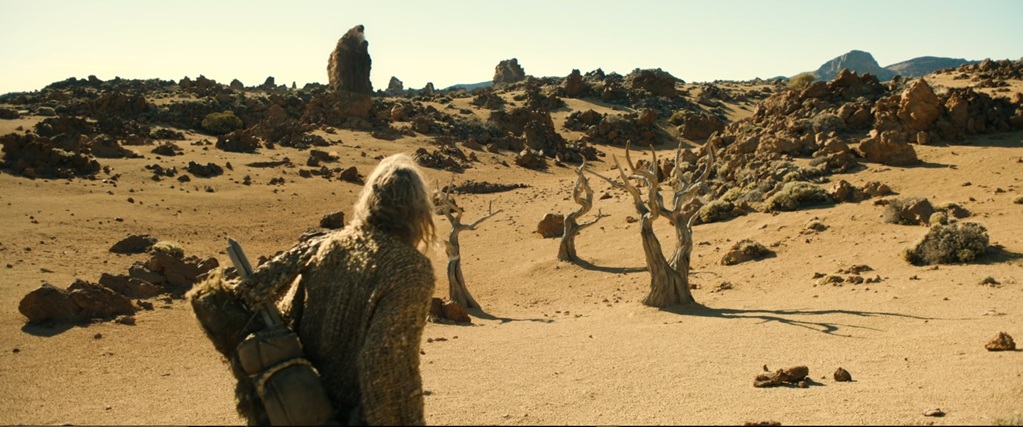
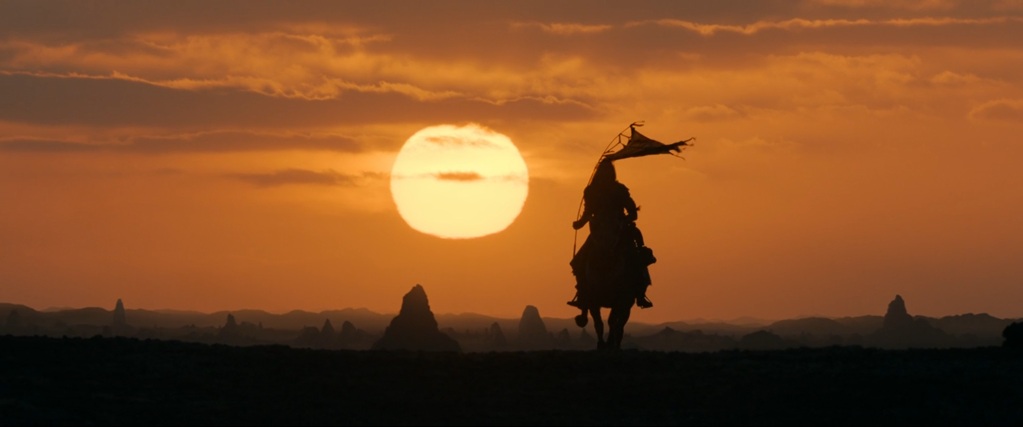
While we don’t get much outside of rocks, dead trees, barren canyons, and lots of sand, it’s great to finally see something other than European climates, and remember that Middle-Earth is so much bigger and varied than what we’ve seen in Tolkien’s books.

5. Celebrimbor

Though he had an important role to play in Season 1 of Rings, where he forged the three rings of the Elves, Season 2 is where Celebrimbor gets to come into his own and shine as one of the most famous elves of the Second Age. As the descendant of the famously fiery and temperamental Fëanor, Celebrimbor is an elf who doesn’t desire fame, power, or ruling others, but only in creating beautiful things and trying to undo the mistakes of his ancestor… a desire that makes him him all-too vulnerable to Sauron’s manipulations.

While he has all the qualities of being a noble hero like Gandalf, Aragorn, and Galadriel, Celembrimbor is unfortunately like Isildur and Bromoir: beings who fight and strive to do what is right at great personal cost, but who’s tales are told as tragedies by those who come after them. Celebrimbor’s a noble and kind-hearted elf, but his determination to make his mark on the world has catastrophic consequences for the world at large.

Yet, his noble intentions, determination to do what is right after realizing he’s been lied to and deceived by Sauron, and only wanting to do good makes him endearing and likeable. Like Diza, he’s an elf you’d be happy to share ale with at a tavern after a long day’s work.

6. Celebrimbor’s Anvil
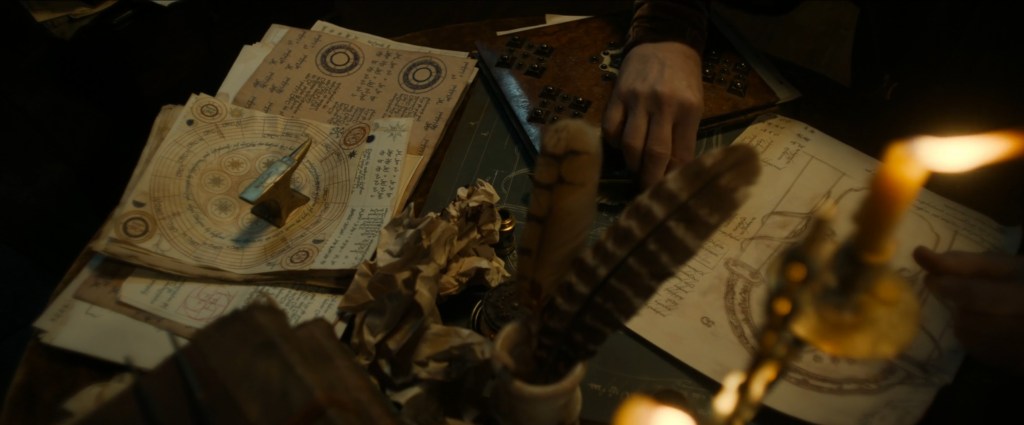
It’s only onscreen for a few seconds, but when Celebrimbor is doing some paperwork in his office, sharp-eyed viewers will see that he uses a tiny anvil as a paperweight, implying that the mighty Celebrimbor, greatest Elven smith of the Second Age, has a good sense of humor. Plus, the image of noble and graceful elves going through the effort to craft, shape, and forge an itty-bitty, widdle anvil is hilarious. Why haven’t we gotten this thing as an officially licensed collectible yet?

7. The Hammer and the Crown

Middle-Earth has its fair share of historical objects that Indiana Jones would be happy to track down, and ‘Rings’ has two big ones in Season 2: Fëanor’s hammer, and Morgoth’s crown.

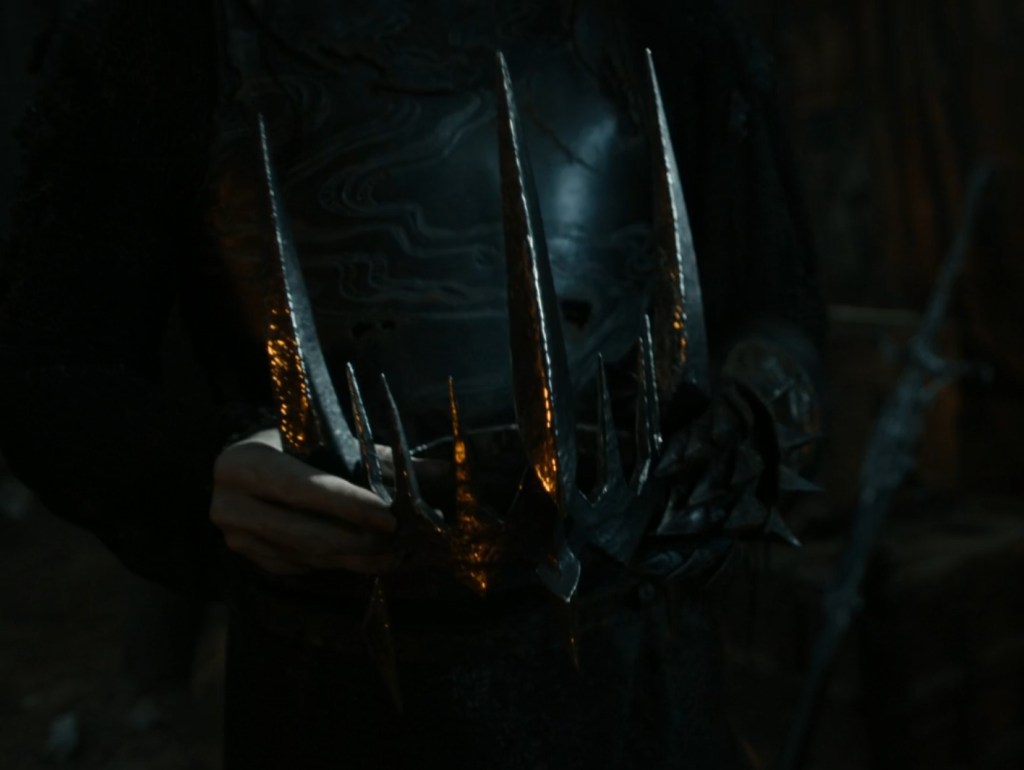
While fans who have only watched the films or seen the show can understand that these are important artifacts, readers of Tolkien’s works will get the most enjoyment out of seeing the hammer forged the most beautiful objects in all of creation (the Silmarils), and that crown that was worn by the most evil being who will ever exist (and that held the aforementioned jewels in its spiky embrace). Both go a long way to help make the world of Middle-Earth feel ancient and lived in, and that they played huge parts in changing the course of history long before the show began.

8. The Nameless Thing

One of the most fascinating parts of Tolkien’s world are the nameless things: eldritch horrors that live in the deepest, darkest fissures deep beneath the mountains of the world that are even older than Sauron. They are only mentioned briefly in Tolkien’s works, but are apparently so frightening that even Gandalf refuses to describe these abominations after encountering them when pursuing the balrog after their fall into the pit of Khazad-dûm. Season 2 gives us a glimpse of one in the form of a giant, grotesque worm-thing that tries to eat Isildur and Arondir before being sliced up from the inside and being (presumably) turned into nameless thing-burgers for dinner.

Is this a scene that doesn’t really add anything to the overall plot? Yes. Could it have been cut out without any effect on the story? Yes. Is it cool to see one of the most mysterious, dark, and vicious things that Tolkien ever wrote about? Heck yes.

9. Mirdania Sees Sauron’s True Form

One of Tolkien’s smartest decisions in writing The Lord of the Rings was not describing what Sauron looks like: he’s an unseen evil, a force so powerful and so dreadful that you don’t even have to be anywhere near him to experience the power of his malice. And despite having more screentime in Rings of Power than both the Hobbit and Lord of the Rings films combined, Rings has never shown Sauron’s true form, only his armor from the First Age and the disguises he wears to interact with others.

The closest we get to getting a glimpse of Sauron’s true form is when one of Celebrimbor’s assistants, Mirdania, accidentally enters the unseen world and sees Sauron as he really is (without realizing who she’s looking at), the experience shaking her to her core… but we don’t see that. All we get is Mirdania describing a tall being with pitiless eyes and skin made of flames. By describing the moment, but not showing it, Rings follows Tolkien’s example by leaving it up to the viewer’s imagination to visualize what Sauron’s true, malevolent form must look like.

One last little twist about the scene: after Mirdania describes what she saw, who’s the first one to comfort her? Sauron himself.

10. The Raid on the Temple

One of season 2’s strongest storylines is showing Numenor’s gradual downfall. While season 1 hinted that the greatest kingdom of Men in Middle-Earth was starting to crumble from within, season 2 brings this rot out into the open as a power-hungry Ar-Pharazôn begins his campaign to take control of the island empire and persecute those loyal to the Valar, the elves, and their ways.

The one scene that perfectly embodies Numenor’s descent into evil is the raid on the Faithful’s temple. Starting off as a peaceful funeral ceremony bidding farewell to all who died on the mainland in the last season, it devolves into Pharazôn’s sniveling weasel of a son – Kemen – gleefully interrupting the ceremony and announcing the destruction of the temple, destroying sacred artifacts for the fun of it, and then emotionally manipulating Isildur’s friend Valandil into starting a fight to justify using lethal force against the faithful, ending with Kemen stabbing Valandil in the back.

This scene, more than any other in the series, showcases the cruelty and moral rot of Numenor. What’s more chilling is that there are no orcs here, no supernatural monsters or ancient evils emotionally manipulating everyone present. It’s just humans being evil to one another, and it’s arguably scarier than any demon Tolkien could conjure up. And the worst part is that this is only a taste of the evil that Numenor is going to unleash upon Middle-Earth at large in the years to come.

(As an aside, I think there’s a very good chance that Kemen will end up being one of the Ringwraiths: Tolkien’s writings strongly imply that at least three Ringwraiths were of Numenorian descent, and it’s easy to see Kemen being nasty and power-hungry enough to accept a ring of power by Sauron. And if he wants to take the throne of Numenor, only to be denied, then Sauron might offer to make him a great lord and promise him a kingdom of his own to rule… Angmar, perhaps?)

11. Sauron’s Deceptions

One of Sauron’s greatest strengths is his ability to deceive and manipulate almost anyone he encounters, including the smartest, wisest, and most powerful elves in Middle-Earth. Yet, the books are vague about how he does this beyond his ability to take fair forms and cast illusions. While most of his manipulations in Season 2 follows the pattern of narcissists abusing others (lovebombing, gaslighting, ignoring boundaries, victim blaming, etc.), we get to see Sauron’s supernatural abilities at work when he conjures a vision of Eregion to subtly trap Celebrimbor. Like the holodeck from Star Trek, Celebrimbor can walk around in this vision, touch things, interact with other elves, and continue his work… completely unaware that the real Eregion is being bombed into rubble by orcs.

This illusion is a fascinating demonstration of Sauron’s power and his ability to deceive others, and makes you wonder how he’s used this ability on others throughout his time in Middle-Earth: It’s one thing to resist lies and flattery, but it’s much harder to resist when the very world around you is a lie and you don’t know it.

12. Who’s Will Is Stronger?

So often in fantasy stories, dark lords and evil-doers have all the power and all the advantages over their good counterparts, including the willingness to do whatever needs to be done to achieve their goals. But Celebrimbor gets a moment to prove that the good guys can be equally as strong-willed: shackled to his desk and unable to stop Sauron from taking the rings that he will use to enslave men and create the ringwraiths, Celebrimbor realizes the only way he can get free is to cut off his own thumb so he can slip through his shackle. But doing so means that he will never again be able to use a hammer, an anvil, and a forge to create things. Celebrimbor’s Eru-given gifts of forging and creating will be forfeit, and his dreams of making Middle-Earth beautiful will be gone.

Knowing all that, Celebrimbor still cuts off his thumb.

While gruesome, this is one of Celebrimbor’s best character moments: when everything is on the line, he is willing to give up his life’s dream for the chance to stop Sauron and save others. While it is, unfortunately, all for nothing in the long run, never let it be said that Celebrimbor did something most of us wouldn’t have the courage to do.

13. Celebrimbor’s Death

Celbrimbor’s death is one of the more gruesome in Middle-Earth media: tortured by being shot repeatedly with arrows from Sauron himself, threatened with supernatural means to ensure he doesn’t die, and then being impaled with a spear through the gut before finally dying, it’s a gruesome spectacle. Yet, one thing that’s puzzled me ever since watching it is why Sauron cries after Celebrimbor’s death. He wouldn’t see Celebrimbor as a friend, nor would a being such as himself be frightened at a prophecy that his rings will one day destroy him. So why the tears?

After mulling things over, I’ve come to think that the reason Sauron cries is because he’s realized he’s crossed the point of no return. All throughout Season 1 and 2, Sauron says that his greatest goal is to heal Middle-Earth of the hurts he helped inflict upon it. Yet, when staring at Celebrimbor’s corpse, Celebrimbor’s words cut through all the lies he’s told himself:

“I go now to the west, blown forth on a wind that you can never follow.”

I think Sauron realized that Celebrimbor was right: After all he’s done, and after all the times he’s rejected the chance to turn away from evil, it now hits Sauron that he can never go back to Valinor, his home. If he did, the Valar would imprison him, find him irredeemable, and thrust him into the void to join his master in endless darkness.

In my opinion, this is the moment where the last piece of good in Sauron dies. From here, he will fully embrace evil to achieve his goals and abandon any attempt to kid himself that he’s doing this to help others. Celebrimbor may have died here, but so did a tiny, flickering spark of light that will never be re-kindled.

14. Adar Turns Back to the Light.

One of my favorite storytelling tropes is when a villain sincerely and truly repents of their ways and turns their backs on evil. That’s why one of my favorite scene in all of Rings – tied with Sauron being offered the chance to turn from evil, as described above – comes with Adar turning back to the light.

Having obtained Galadriel’s ring, Adar seems poised to use it as a weapon to turn the tide in his war against Sauron and finally defeat him once and for all… but that’s not what happens. Though exactly what happened isn’t shown, it’s logical to assume that Adar’s mind was healed by Galdriel’s ring, making him realize how much evil, death, and destruction he had caused since beginning his quest to create a homeland for the orcs. But instead of giving into despair and hopelessness, or telling himself even more lies to cover up the pain as Sauron did, Adar instead chooses to pursue a path of peace.

While his quest for redemption only lasted a few minutes, Adar holds the unique distinction of being the only true villain in Tolkien’s universe – whether in books, films, games, and TV shows – to sincerely repent, something that Sauron, Saruman, Grima Wormtongue, and so many others never did.

While his ultimate quest to have the orcs live in peace was doomed to never succeed, I hope Adar can return in future seasons (due to Elves being able to reincarnate in Valinor if they are killed), and become of the good guys fighting against Sauron.

15. “Dwarves!”

Dwarves!

16. Sauron vs Galadriel

In Tolkien’s writing, an interesting paradox is introduced regarding Sauron: Despite his overwhelming power, strength, and innate magical abilities, he always loses whenever he gets into a physical fight with someone. That trend is played with at the climax of Season 2, when we get our very first scene of the Dark Lord going toe-to-toe with an opponent onscreen when he fights Galadriel for the 9 rings of power. For the majority of the fight, Sauron easily has the upper hand, toying with her mind and easily deflecting her blows before finally defeating her with a stab from Morgoth’s crown, and taking the 9 rings.

While I enjoy the fight for being able to see my favorite fictional villain getting to show off his fighting skills (and using Morgoth’s crown as a weapon is an ingenious and clever idea), I also like how the fight shows that even if Sauron defeated Galadriel, destroyed Eregion, and got his rings, he still lost: Galadriel escapes, and his potential ally and slave will instead be a thorn in his side for the rest of his days, giving hope, comfort, and aid to those who fight against Sauron, and will be one of the major players in his final and permanent defeat.

Sauron may have won this battle, but though it will take centuries for it to happen, he has ultimately lost his war to enslave Middle-Earth, and Galadriel escaping is just the first of many twists of fate that will finally lead to his final and ultimate defeat.

That’s it for Season 2, which I think is a big improvement over Season 1; come back in 2027 when we’ll take a look of my favorite moments from the third season of ‘The Rings of Power’.

15 Great Things About ‘The Lord of the Rings: The Rings of Power’ Season 1

The year is 2017 and Amazon has just announced that they’re going to create the very first TV show set in JRR Tolkien’s Middle-Earth, one that will chronicle the Second Age, the downfall of Numenor, the creation of the rings of power, and the early years of Sauron’s war to enslave Middle-Earth. And to top off that bombshell announcement, the show is going to run for five seasons and be the most expensive TV show in history. With almost unlimited production resources, being set in one of the most famous fantasy series ever created, and having legions of fans of said series, the stars were aligned to create one of the biggest hits television has ever seen.

It didn’t quite work out that way.

After the release of The Rings of Power‘s first season, reception was, to be generous, mixed. Critics found the writing to be subpar, and fans in particular were not happy with the many liberties taken with adapting Tolkien’s work, including turning Galadriel into a bloodthirsty warmonger, the Harfoots being unlikable pricks who leave their injured to die (and then later laugh at said deaths), and Elves and Dwarves having mixed ethnicities, among other things.

As a die-hard fan of both the Lord of the Rings and Hobbit film trilogies, I thought season 1 of Rings of Power was average at best. It had some good bits, some bad bits, but nothing truly awful or great, and I quickly forgot most of it after the season concluded. Recently, though, I re-watched season 1 to get ready to see season 2, and I was surprised to find that I enjoyed it much more than the first-go around. Here – in no particular order – are fifteen of my favorite things about The Rings of Power: Season 1.

NOTE: For those who haven’t watched the show, or have but haven’t read Tolkien’s books, this article contains big spoilers for the first season of Rings of Power, as well as what will happen in future seasons; you have been warned.

1. The Prologue

It seems to be a cosmic law that if you have a movie or a TV show set in Middle-Earth, you’re going to have a spectacular prologue, and Rings continues that tradition. Where the New Line films began with the Battle of the Last Alliance, and the Hobbit films showcased the downfall of Erebor, Rings gives us the first age of Arda, showcasing the beauty of a world just before everything was ruined forever. We get our first-ever glimpse of Valinor, home of Middle-Earth’s gods and the elves, the destruction of the Two Trees, the briefest glimpse of Morgoth, Sauron’s master, the war to overthrow him, a hauntingly beautiful shot of Sauron in his armored form, and the ending setting up Galadriel’s quest to hunt him down, which will be her singular focus for the entire season.

This prologue is Rings is at its best, the one sequence that matches the epic scope of the New Line films. And it’s not just the big moments that make the prologue as epic as what’s come before, but little things, too: we see the giant Eagles being defeated in battle for the very first time, and the elves expecting a quick victory against Morgoth, but finding themselves sucked into a war that lasts centuries, cleverly paralleling our own history where overconfident nations gleefully expected wars to be over in weeks, only to find themselves in bloodbaths that lasted for years, leaving their armies and populations shattered and broken.

2. Adar

Long known for being, ugly, snarling beasts with cockney accents who can be killed by a single hit from any weapon, Rings bucks that trend by giving us what I think is the the most interesting orc in any Tolkien story: Adar, one of the first orcs ever created by Morgoth. But unlike a lot of monster prototypes, Adar isn’t a savage, feral, barely-sentient beast with British teeth: he’s an orc who still strongly resembles the elf he was before being tortured and warped into something foul.

It’s not just Adar’s ruggedly handsome looks that make him stand out, but his character: While he does horrible things, psychologically torments others, enslaves innocent people, and commits ecological genocide, Adar doesn’t want to conquer the world, make himself a god, or wipe out other civilizations; all he wants is for his fellow orcs to have a safe place to live that they can call home, and enjoy life like any other being.

Adar is the best kind of antagonist: while he does horrible things, they’re in pursuit of a goal we can understand and even sympathize with. And on top of that, he’s a noble villain, one who was once good, but apparently believes he can’t come back from what he’s become; for all his desires to help his fellow orcs, he’s likely too mentally broken from Morgoth’s tortures and torments to think he can come back and be healed. Or worse, he’s given up and doesn’t care anymore.

With this complex morality and fascinating history, and the fact that he actually accomplishes his goal by the end of the season, Adar is easily the best character in the show.

3. Míriel

When she’s first introduced, Míriel – acting queen of Numenor – comes off as a pretty standard ‘noble ruler of a doomed kingdom’ archetype with a mixture of good traits tempered by a hardness one expects of someone trying to deal with the decline of a powerful kingdom. But what I like about Míriel is that, despite her pride and hardness, she is a good person who is trying her best to deal with knowing that Numenor is heading for certain doom, and is willing to put herself in harm’s way to save others, even peasants who are far beneath her in the social hierarchy. And even after being blinded trying to save some of those people, she refuses to give in to despair and grief. What she lacks in physical strength and powers, Míriel makes up for with her strong will, willingness to risk herself, and willingness to help even the lowliest of people.

Yet, for all her noble qualities, Míriel is a tragic figure: a leader with the best of intentions who is fighting to save what good remains in her failing kingdom, but like a sand castle being hit by the relentless assault of the waves,her quest is ultimately doomed, turning her into a tragic hero worthy of being included among Tolkien’s many doomed heroes.

4. Arondir

Perhaps no other character created for Rings of Power caused as much a stir among fans of Middle-Earth as Aronidr, a dark-skinned elf assigned to watch over the Southlanders. Now removed from the accusations of him being walking ‘woke’ propaganda, Arondir ties with Adar as my favorite character of the series: he’s an elf skilled in war and a master of the bow, but without the jokes and easy-going nature of everyone’s blonde-haired, pointy-eared elf from the Woodland realm.

Yet, Aronidr is not a dark, brooding, or miserable character; beneath his firm exterior lies someone who cares deeply for others, and will go to any lengths to save the people he has been charged to watch over. While Legolas is the Elf you want who is aloof and easygoing, Arondir is the one you want watching your back when fighting those who want to take your life and everyone and everything you love.

5. The Lindon Elves

Rivendell and Lothlorien may be tied when it comes to the most beautiful Elven realms in Tolkien adaptions, but in my opinion, Lindon takes that honor. From the gorgeous outfits its residents wear, to the autumn-colored forests in which they live, and the breathtaking halls of trees, Lindon is arguably Elven society at its peak, a society that lives in peace with itself and nature; if Valinor wasn’t an option, Lindon would be the one place in Middle-Earth I’d love to live in.

And yet, the beauty of this realm is tinged with the knowledge that it will soon begin to fade as the Elves’ influence and ability to stay in Middle-Earth begins to wane. Having their leaders seek to stop that from happening gives both Gil-Galad and Elrond a strong, understandable motivation for their actions in the season. If I were lucky enough to live in such a beautiful place, I’d want to save it, too!

6. Elrond and Durin’s Friendship

I have a confession to make: I’ve never really cared for the Dwarves in Tolkien’s world. I’ve found them to be too noisy, proud, and boastful for my tastes, similar to how a cat person can grudgingly tolerate a big, bouncy dog, but ultimately would rather prefer the quiet independence of a feline. But with that said, the biggest surprise of Rings for me was just how well done the friendship between Elrond and Durin is handled.

Unlike a lot of fantasy friendships between different beings that are pretty straightforward and easy to summarize, the relationship between Elrond and Durin is like a rubber band constantly snapping back and forth: Elrond and Durin go from being best buddies you can see going on camping trips together to Durin never wanting to see Elrond ever again, to the two of them realizing they’re pawns in a bigger game and unsure if their friendship can even survive. And when things get too rough, Disa is there to throw cold water on the two and calm things down.

The relationship between the three is a refreshingly complex triangle that is like any other friendship in real life: it’s never completely smooth sailing, full of back and forths between anger, disappointment, not wanting to hurt one another, and ultimately wanting to do what’s right for each other. In a mythology that places such a high value on friendship, it’s a delight to see one this complex.

7. Disa

Joining the list of Rings’ best newcomers is Disa, Durin’s wife. Like the rest of her kind, she’s tough, formidable, refuses to be intimidated, and not accommodating of those overcome with foolishness and pride. Yet, she’s also wonderfully generous and welcoming, even to beings from different races. You easily get the impression that while most Dwarves would glare at you out of the corner of their eyes, Disa would be the first to come up, shake your hand, and eagerly offer to give you a tour of her kingdom and all its wonders.

While Adar may be wonderfully complex, and Arondir is someone you’d want to have your back in dangerous territory, Disa is the one newcomer in Rings that I’d be more than happy to invite over for dinner. Heck, I’d love to watch a miniseries of her vacationing around Middle-Earth and visiting the Shire, Minas Tirith, Lothlorien, and other famous landmarks just to see how she interacts with everyone who lives there. She really is that delightful.

8. Numenor

While the show’s portrayal of Numenor isn’t as grand, awe-inspiring, or majestic as how it appeared in the Silmarillion (to me, it looks more like an overgrown, sprawling Mediterranean favela than the dwelling place of the most advanced, powerful, and mighty human kingdom in the world), Numenor has slowly grown on me, especially with its Byzantine/Mesopitamian design, blue, bronze, and gold color scheme, and some truly beautiful locations that do sell the island’s proud history. And while Numenor may not be the pinnacle of human technology and culture as depicted in the Silmarillion, the show does nail the atmosphere of a proud nation that sees itself as superior to everyone else, yet is decaying from within due to isolationism, nationalism, and moral rot. While Numenor may have been more beautiful thousands of years in the past, it is now a shadow of what it once was, both physically and mentally, and the show captures that very well.

9. Isildur Ruins Ontamo and Valandil’s Lives

We’ve all seen it before: Someone is trapped in a job they don’t like, don’t want, and would do almost anything (short of starting thermonuclear war) to get out of. Eventually they decide to get out, no matter what it takes, and if that includes getting themselves fired, so be it. That’s the path a young Isildur takes in Rings: Wanting to get out of the Sea Guard to follow his own calling as a member of the Faithful, Isildur purposefully makes the unforgivable mistake of letting go of a rope, which gets him kicked out as he wanted… but what Isildur didn’t count on was two of his closest friends, Ontamo and Valandil, getting kicked out with him.

Cruel? Definitely, but I like how Isildur, instead of getting a clean break, now has to deal with the guilt of getting his two friends being shown the door because of his own actions, especially when it was Valandil’s dream to join the Guard for years, if not decades. Rarely do we see characters purposefully screw up, only to have their closet friends suffer because of it, and I’m glad Rings explores that here.

On a related note, I also like how, later on, Isildur acknowledges what he did and, instead of trying to make amends with words or deeds, lets Valandil hurt him instead (which can be seen at 5:58 in the clip above). Painful, yes, but it shows Isildur’s willing to feel pain if it means helping a friend emotionally heal (and as an added bonus, while Valandil does let go of his anger afterwords, it’s still not enough for Isildur to get back into the Sea Guard, forcing him to find another way to get back in).

10. The Creation of Mordor

One of the biggest surprises in Rings was seeing the creation of Mordor: while how that happens sounds silly no matter how you write it (a magic sword is used to unlock a dam to release water into a trench that flows into a volcano to make it erupt), there’s no denying that the eruption of Mt. Doom itself, the pyroclastic flow, and subsequent destruction of the Southlands, is awe-inspiring to watch. The filmmakers clearly took full advantage of the show’s big budget to make the most spectacular eruption they could (as well as the apocalyptic aftermath) and succeeded.

While the story behind Mordor’s creation could have been simplified (perhaps the sword could have been used to make the volcano itself erupt without the need of any dams), there’s no denying that the creation of Sauron’s realm is a visual treat, and one of the highlights of the season.

11. The Southlanders

When watching Rings again, I was surprised to see that, for all the big battles, state-of-the-art CGI, and fancy sets, the best part about the series is the thread of the Southlanders and their fight to save their home from Adar and his orcs. Confined to the borders of pre-eruption Mordor and watched like prisoners by the elves for the crimes of their ancestors, the Southlanders have a hard lot in life, a life only made harder by an invasion of ruthless, bloodthirsty orcs seeking to destroy everything they have.

In hindsight, I think Rings might have been better received if it focused exclusively on the Southlanders and their struggles. We all know about Galadriel, Elrond, Gil-Galad, Elendil, Isildur, Ar-Pharazôn, and Sauron, and what roles they’ll play in what’s to come, but the Southlanders have no great leaders or legendary figures among them. They don’t have magic, larger-than-life kings to lead them, or even decent weapons: they’re ordinary, everyday people who are forced to fight against evil when vastly outmatched and outnumbered. And unlike the aforementioned heroes and villains, Bronwyn, Theo, Waldreg, Rowan, and the other Southlanders have no plot armor to protect them. Any one of them can die at any time, and many do.

In a way, the Southlander’s story feels like the one most faithful to the spirit of Tolkien’s works, a story of ordinary, everyday people who have to confront unimaginable, overpowering evil. Their struggle is the most relatable, grounded, and believable part of the series, and they give us a unique perspective on Middle-Earth that we haven’t seen before, a perspective that the Middle-Earth franchise needs more of going forward.

12. Only Blood can Bind

One theme Tolkien uses throughout his work is that being evil sucks: you may be powerful initially, but inevitably you’ll destroy yourself – both physically and spiritually – and the subplot of Waldreg and the other Southlanders pledging their service to Adar fits this theme perfectly: While everyone who fought back loses much, those who survived escape with their lives and the hope of a better life. But every single person who submits to Adar – save Waldreg – ultimately loses everything, including their lives. Their corpses are cast aside and forgotten, left to rot under the falling ash of Mount Doom. Even the mere act of submitting to Adar requires great pain and sacrifice, as Rowan found out the hard way.

The deaths of the fallen Southlanders serves as a cautionary tale about serving evil: Evil may promise you the power to get what you want, but requires you to sacrifice everything (including your soul), takes delight in hurting you every chance it gets, and when you’re no longer useful, will toss you out without a second thought.

13. The Stranger

I don’t like the Harfoots or their story in Rings; in my opinion, the show would have been better cutting out these annoying little pricks and giving the other story threads more time to grow and develop. (It’s quite telling that many viewers reported rooting for the Mystics when they set fire to the Harfoot’s camp.) However, that dislike doesn’t apply to the other big character in their story thread, the Stranger. Say what you will about Gandalf (it’s very clearly him) arriving in Middle-Earth thousands of years before he did in the books, but Daniel Weyman does a wonderful job bringing him to life as an incredibly powerful, but confused being who doesn’t know who he is, what he’s capable of, or what he’s meant to do. He’s like a big, powerful puppy who just wants to help and doesn’t have a malevolent bone in his body, but could easily kill you by mistake as easily as he could grow fruit on a tree to save you from starvation.

The Gandalf we all know from the Third Age is frequently grumpy, serious, and intolerant of foolishness, but this but this Gandalf is warmer, kinder, supportive, and not yet worn down from opposing Sauron for thousands of years. I hope we get to see more of that warmth as the series goes on.

14. Sauron

When I first read about Rings of Power, the biggest question I had was how they were going to portray Sauron. One of Sauron’s greatest strengths in the Lord of the Rings and The Hobbit is that, for all his power, strength, malice, and cunning, he’s almost always off-screen. He’s an unseen eldritch horror that everyone – even the orcs that serve him – are afraid of, and making him a regular character in a TV show risked losing that malice. Thankfully, I think the first season of Rings handled Sauron well. Aside from a brief glimpse of his armored form in the prologue, it isn’t until the end of the last episode that his disguise as Halbrand is cast aside and his true identity revealed.

In my opinion, the most interesting part of Sauron in Rings is the exploration of his motivations: He claims that he wants to rule Middle-Earth in order to bring order and healing to atone for his actions while serving Morgoth, but it is never answered if his claim is genuine, or just another lie. Furthermore, did Sauron come to care about Galadriel, or did he want to slowly corrupt her so she would end up serving him in his later conquests? Was Sauron truthful about wanting to settle down in Numenor and live a simple life as a blacksmith? And for that matter, did Eru nudge Galadriel into encountering Sauron in the hopes that she might persuade him to turn from his self-destructive path? The show provides no answers, leaving viewers to come up with their own conclusions, keeping in line with Sauron being a master lair, deceiver, and manipulator who’s true motivations are known only to him.

15. “I’m Good!”

This moment gets on the list not because of its emotional impact, or masterful storytelling, but because of just how narm-filled it is. Instead of having Gandalf silently and powerfully cause the three Mystics to explode into magical butterflies (?!), he has to proudly announce that he is, in fact, good! It’s the most unintentionally funny moment of the series and always good for a chuckle.

While The Lord of the Rings: The Rings of Power continues to be decisive among viewers and lacks the pop-culture impact its far more famous predecessors did, I still think there’s plenty to like and admire in its first season, as well as the second. Come back next time, where we’ll take a look at what I think are the best parts of the sophomore season of Amazon’s flagship series.

My Favorite Fictional Places To Live In

If you could choose one fictional place to live in, what would it be? Would you go live in Hogwarts? A penthouse somewhere on Coruscant? Or maybe getting your very own Hobbit-hole in the Shire is more up your alley? Anyone who’s fallen in love with a book, a movie, or a game has fantasized about living in a particularly loved location; here are ten of my favorites.

10. The Matrix (The Matrix franchise)

Image created by me using Deviantart’s DreamUp AI art generator.

Why I’d love to live there: Wait a minute! you might say; why would you want to live inside the Matrix?! Isn’t it a prison for humanity? Well, the first six were, but the Matrix I’m referring to would be one that takes place after the film series, where humanity is aware that they live in virtual reality, but they and the machines are no longer at war. While the machines work to rebuild the surface of the Earth to make it habitable for humans again, humanity chills out in the Matrix to give the machines the power they need, and thanks to their world being virtual, people can now alter it so that they can choose how they look, what clothes they wear, and have increased physical abilities, including – if you’re lucky – flight! And since real estate isn’t an issue, humanity could finally reach a state where everyone is housed and poverty is eliminated forever. Yeah, it may be all digital trickery, but as Morpheus pointed out, your mind would make it real.

Potential drawbacks: While I think everyone would love being able to bend the laws of physics, the possibility of people abusing these new abilities is very high. While most people would be content to be able to fly around in the digital world, abusers, criminals, sociopaths, and bullies would abuse their new powers, and conflicts could become even more dangerous than they are now. So while the Matrix would be very cool, it could also be very dangerous.

9. The Enterprise D (Star Trek: The Next Generation)

Image: Paramount Pictures

Why I’d love to live there: The Enterprise D is a huge spaceship filled with all the wonders the 24th century has to offer, including one of the greatest fictional devices ever created: the holodeck, a place where almost any fantasy you can dream up can come to life. And when you’re not living out your favorite daydreams, you can visit the arboretum, watch the stars from Ten Forward, enjoy a stroll through the ship while listening to the hum of the engines, and visit the onboard dolphins. (No, really, there are dolphins on the Enterprise.) Accommodations are nice, too; if you can snag one of the officer’s quarters, you get a lovely view of space and funky iridescent bedding! Coupled with the ship’s enormous size, and the timeless 80’s sci-fi design, you’d have a nice place to call home.

Potential drawbacks: As Q so memorably pointed out, space is no place for the timid: Being assimilated by the Borg, being dissolved by giant crystal entities, encountering space anomalies that turn you into monkeys or trap you inside a never-ending time loop, and any other number of galactic hazards are some of the things you might encounter, so if you want to live on the Enterprise, maybe do so when it becomes a museum ship.

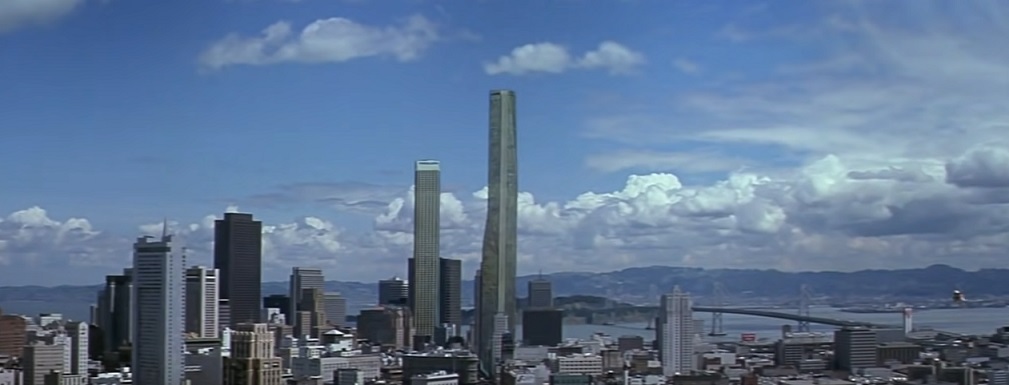
8. The Glass Tower (The Towering Inferno)

Image: 20th Century Fox/Warner Bros.

Why I’d love to live there: The Glass Tower is, in my opinion, one of the most beautiful skyscrapers ever to appear in film. Not only is the gold exterior a beautiful, simple, timeless look, but the interior has a wonderfully charming 70’s decor, right down to the interior elevators. But the big perk is the views: no matter where you live in the tower, you would get breathtaking views of the city, the bay, and the surrounding areas.

Potential drawbacks: Well, there is the itsy, bitsy, tiny fact that the tower catches on fire due to faulty wiring due to cut corners and cost saving measures during construction. And considering that the tower is in San Francisco, your monthly rent would be about 18 trillion dollars. So unless you magically get a free, lifetime lease, you’d have to be quite rich to live there.

7. Mêlée Island (The Secret of Monkey Island)

Image: Lucasfilm Games

Why I’d love to live there: As a night owl, the never-ending nightlife of Melee Island (It’s always 10 PM), is a big plus for me, as is the peaceful town and wilderness to explore: nothing can hurt you here, there are plenty of shops to visit, and the island’s vast forests are beautiful to walk through without fear of wild animals and other threats.

Potential drawbacks: As this is also a pirate town in the 1700’s, you don’t have things like electricity, the internet, movies, or TV shows to keep you occupied on Melee Island, so once you’ve explored and seen everything, there’s not much else to do.

6. Equestria (My Little Pony: Friendship is Magic)

Image: Hasbro

Why I’d love to live there: Who says you have to live somewhere with nothing but humanoids to keep you company? Equestria is a land filled with adorable ponies who are happy to be your friend, and there are plenty of places to live with them, from towns to deserts, palaces and islands, and even floating cities, all but guaranteeing that you’ll find somewhere you like. Plus, Equestria is watched over by a benevolent monarch who has ruled it for over 1,000 years without succumbing to madness or becoming a dictator; if only we were blessed with leaders that good.

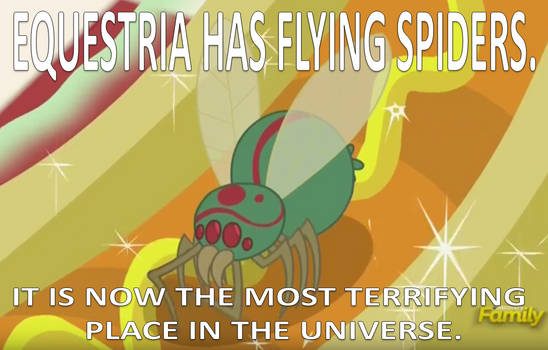
Potential drawbacks: Magic is real in this universe, and while there are beneficial spells, there’s also plenty of harmful and destructive spells that can brainwash you, turn you into other creatures, or kill you. And despite having lots of friendly ponies to live with, there are also lots of unfriendly ponies and monsters who either want to eat you or conquer the world, and have the ability to do so thanks to aforementioned magic. Oh yeah, and there are flying spiders.

5. Cape Suzette (Talespin)

Image: Disney

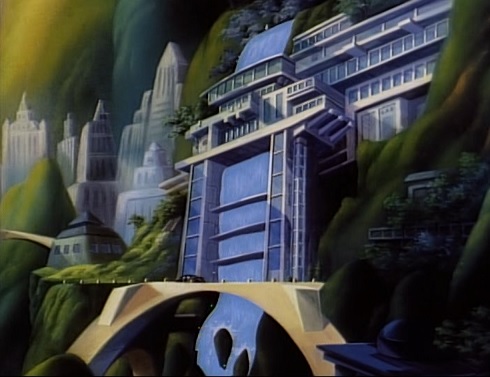
Why I’d love to live there: Saturday morning cartoons of my childhood had lots of cool fictional places where adventures took place, but the only one I’d like to live in as an adult would be Cape Suzette from Disney’s Talespin. Set in a fictional 1930’s inhabited by anthropomorphic animals, Suzette is a sequestered, art-deco metropolis nestled in a towering mountain range and a beautiful cove, making it the perfect hub for the adventurous type. But the biggest draw is the apartment of Rebecca Cunningham:

Image: Disney

Even as a little kid, I thought her place was incredible, and as an adult it’s a strong contender for the most beautiful fictional apartment I’ve ever seen. Assuming money wasn’t a problem, this is where I’d love to live!

Potential drawbacks: Aside from being the only human in the city, you’d have to contend with raids by air-pirates, and every trip outside of the city’s boundaries is fraught with danger. There’s also the fact that the city’s de-facto ruler is a ruthless tiger who isn’t afraid to do anything and everything to increase his own wealth and power, so if he decided to ruin your life, there’s a strong chance he could get away with it.

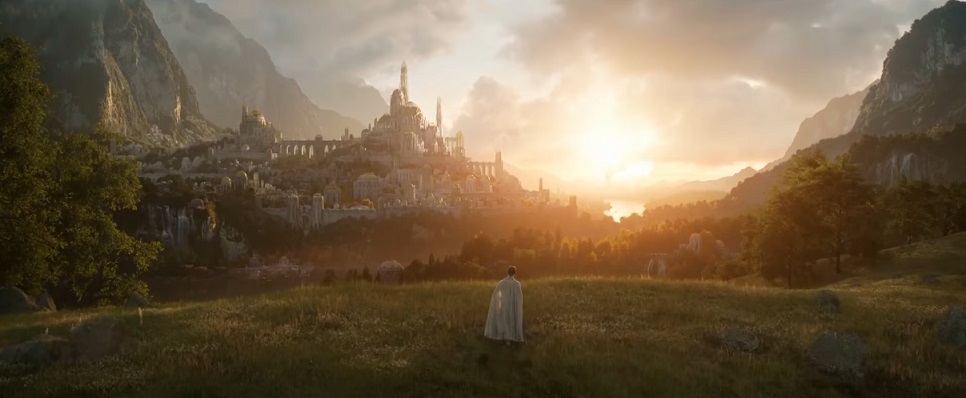
4. Valinor (The Silmarillion/ The Lord of the Rings)

Image: Amazon Studios

Why I’d love to live there: Valinor, the land of Middle-Earth’s gods, is one of the most fascinating places to me in JRR Tolkien’s universe, and the one place I’d love above all others to visit, or, better yet, live in: being free from evil, you could explore all its wonders, from the tallest mountains in existence, to the most majestic trees in creation, and the magical Gardens of Lórien, the most beautiful place in all of Arda. And if you wanted to, you could even visit the Halls of Mandos, the dwelling place of the dead; that sounds fun, right? But one of the most amazing draws would be living amongst elves and the gods themselves, beings who helped shape and create Arda and have seen the creator god – Eru – face to face.

Potential drawbacks: It’s said many times throughout Tolkien’s mythology – and by Tolkien himself – that mortals cannot live in Valinor because their lives would be greatly shortened due to the overwhelming magical power of the island, and they’d die cursing that they alone aged while everything around them seemed to never change. Yet, Frodo, Sam, and Gimili lived there in a state of peace and healing, suggesting that mortals can stay in the blessed realm if they accept death and don’t seek immortality. Thus, any would-be-mortal-resident would have to decide if living among elves, gods, and all their wonders is worth a greatly-reduced lifespan.

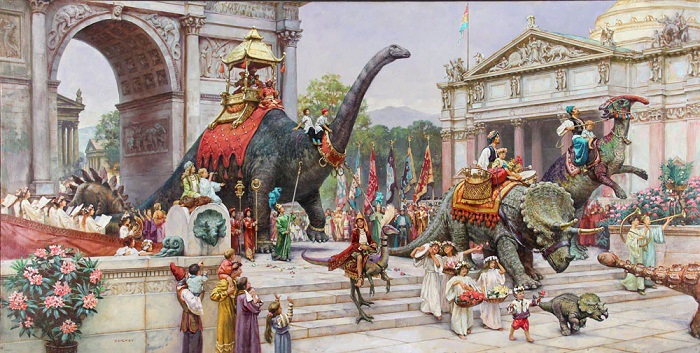
3. Dinotopia (The Dinotopia series by James Gurney)

Image: James Gurney

Why I’d love to live there: IT’S A UTOPIA WHERE HUMANS LIVE SIDE BY SIDE WITH DINOSAURS HOLY S**T THAT IS AWESOME.

Ahem; sorry.

To tone down my inner child, Dinotopia is one of the most wondrous, peaceful, utopian places I’ve ever found in fiction. A place where dinosaurs have survived to the present day and live peacefully with humans in cities, towns, jungles, mountaintop temples, and seaside communities, all brought to life by James Gurney’s beautiful artwork. For children and adults alike, it’s a place so many would love to call home, myself among them.

Potential drawbacks: Encountering carnivores who are not afraid to embrace their more savage side. Thankfully, you have to go out of your way to encounter them, so the threat is minimal, meaning that most of Dinotopia is one of the safer places on this list.

2. The Culture (The Culture series by Iain Banks)

Image created by me using Deviantart’s DreamUp AI image generator

Why I’d love to live there: When it comes to utopias in fiction, The Culture is arguably the one that probably gets closest to making one that you’d actually want to live in: A highly advanced, post-scarcity society where benevolent AI’s keep society running, allowing citizens of the Culture to do literally anything they want, as long as it doesn’t hurt or harm other individuals. With a high value on personal liberty and freedom, as well as technology that allows individuals to live up to 400 years (or even longer), people living in the Culture have it made: You can pursue all your passions, dreams, and hobbies as much as you want without worrying about having to pay the bills. Sweet!

Potential drawbacks: While the Culture does run into occasional problems and even more advanced civilizations dwelling in the cosmos, there really aren’t any hazards or drawbacks its citizens have to worry about; some would say that the Minds (the aforementioned AI’s that keep the Culture running) run a surveillance state, even if it is a completely benevolent one, but when you look at all the benefits the Culture’s technology can offer, and almost unlimited freedom everyone enjoys, the Culture is as close to an earthly heaven as you can get. And speaking of paradise…

1. Heaven

Image created by me with Deviantart’s DreamUp AI image generator

Why I’d love to live there: While we will likely never know for sure if there is continued existence after death (though considering the volume of near death experiences and other otherworldly phenomena reported throughout the centuries, I’m in the ‘there’s probably something after we die’ camp), Heaven, as seen in countless books, movies, TV shows, and video games, would be the absolute perfect place to live: a realm of peace, joy, and bliss, where all your dreams can come true, and where you can live without any of the negative parts of Earthy life, like death, aging, paying the bills, late-stage capitalism that puts the acquisition of money above human well being, etc. Plus, assuming the Supreme Being is benevolent and all-loving, you can chill out with God; who wouldn’t want to do that?! (I’ve always loved how in the book, ‘David Vs. God,’ you can even go surfing with God!)

There are countless versions of Heaven in fiction, but I especially like the version presented in the online webcomic, ‘The Order of the Stick,’: essentially, you get to enjoy every earthly delight you want, and when you’ve had your fill you get to go further up into Paradise to greater and greater joys.

Potential drawbacks: Depending on the rules of which universe you’re in (such as the movie, ‘What Dreams May Come’), the worst part of living in Heaven is the possibility that your loved ones don’t make it in, which would make living there hell. But since stories featuring getting into Heaven at the end tend to be more on the positive side, the odds of that happening are low, and the possibility remains that said loved ones can still eventually get there, even if they have to be rescued/fight their way out of Hell/the Underworld, etc.

Those are my favorite fictional places to live in; what are yours? Tell us your favorite fictional living places in the comments below!

The Best Background Characters: ‘Oh God’ guy

Every story has a cast of characters that we follow and watch and come to love… but what about the background characters? The nameless masses who rarely get our attention? This column examines my favorite background characters who deserve a moment in the spotlight.

***

The Show:

‘The Lenny Henry Christmas Show’

The Character:

A random audience member

The Scene:

Why He Deserves A Moment In The Spotlight

It’s spooky season once again, and what better way to mark the occasion than with this terrifying live action parody of Wallace and Gromit from 1995’s ‘The Lenny Henry Christmas Show’? The lovable, charming duos of Wallace and Gromit have gone from England’s most lovable couple into inter-dimensional abominations wearing skinned flesh in an attempt to blend in with humanity and their canine companions. It’s so grotesque, so horrifying, that at 0:51 in the clip, you can just faintly hear someone in the audience groaning, ‘Oh god…’ I don’t know who this man is or anything about him – and he’s not even a background character, per se – but he sums up the audience’s feelings so perfectly that he becomes the best thing about this sketch, stealing the show from the two things that will haunt my nightmares forever more.

The Best Background Characters: Agent Harmon

Every story has a cast of characters that we follow and watch and come to love… but what about the background characters? The nameless masses who rarely get our attention? This column examines my favorite background characters who deserve a moment in the spotlight.

***

The Show:

‘Stranger Things: Season 4’

The Character:

Agent Harmon

The Scene:

Why He Deserves A Moment In The Spotlight

Recently, I watched all four seasons of Stranger Things, a show with a great many characters both major and minor, but one of whom stands out as one of the most awesome redshirts you’ll ever see on TV.

For those of you who are unaware, a Redshirt is a minor, typically unnamed character in a movie, show, or book who exists sorely to die and establish how dangerous a situation is for the main characters. Named after the famous crewmembers from Star Trek, they’ve become a joke in pop culture, and I was expecting the two government agents in the fourth season of Stranger Things to be the same.

Boy, was I wrong.

When military spooks break into Will and Jonathan’s house to kill them, I thought agent Harmon would quickly fall like his partner, leaving the boys to fend for themselves. But to my surprise, Harmon immediately morphed from an overweight, lazy, tv-watching agent into a stone-cold warrior who fearlessly takes on an entire squad of soldiers with only a pistol and wins. Granted, he doesn’t kill them all, but he does stop them from getting Will and the others, ensuring that they escape to find Eleven.

What’s so great about this scene is that even though we know so little about Harmon, we quickly become invested in his struggle because we subconsciously know he doesn’t have plot armor and could die at any time, making his fight even more engaging than the main characters who we know are going to survive until the climax of the story. He’s a redshirt who temporarily becomes a main character, one who is responsible for keeping the others alive… but, sadly, at the cost of his life.

Rest in peace, Harmon (AKA, Unknown Agent Hero Man). We only knew you for a few minutes, but if you had gone to the Upside Down with the others in the season finale, you’d have killed Vecna in seconds with that legendary pistol of yours and saved the world.

What We Can Learn From The Star Wars Holiday Special (For Real This Time)

Last year, I gathered all my courage, mourned not being able to watch The Incredible Hulk, and finally sat down to watch the Star Wars Holiday Special, which is commonly called one of the worst moments in television history and one of the biggest missteps in the Star Wars franchise, sentiments that are completely and utterly 100% true. And while I played up this awfulness for comedic value, I figured it was time to actually write out what works well and what doesn’t in the special because, despite what pop culture might tell you, I was surprised to find that the special is… not that awful.

Now, don’t get me wrong; the special is not some misunderstood masterpiece that has aged like fine wine. It is a bad show with seemingly endless padding, almost ten minutes of non-stop Wookie gargling without subtitles, stirring and whipping, and the… inconsistent acting. And that’s before Leia breaks out into song. But as hard as it may be to believe, there’s also some good things, too: the lighthearted, feel-good music, seeing Luke, Leia, Han, and all the other classic characters doing their stuff, the 70’s style that saturates the whole thing, and some downright hilarious Youtube comments.

Now, lest you feel the temptation to actually sit down and watch the special (an endeavor I don’t recommend unless you’ve consumed copious amounts of alcohol) sit back and let me present to you the hard-won writing lessons I got from watching this piece of 70’s kitsch.

What does the story do well?

The core concept isn’t bad

Regardless of its execution, the story of the Holiday Special itself isn’t bad: During a period of galactic civil war, Chewbacca tries to get back to his family on Kashyyyk to celebrate Life Day, the most important holiday in Wookie culture. But it won’t be easy: the Galactic Empire is in hot pursuit of Chewie, and maintains a presence on Kashyyyk harassing the locals. Not only will Chewie and Han have to escape the Empire, but Chewie’s family will also have to outsmart and outwit the local Imperials before Chewie arrives so they can all safely celebrate. That’s not a bad story at all, which leads the Special to stand as proof that even the best story ideas can fail due to other circumstances.

It has a good introduction to Boba Fett

While fans generally agree that the Holiday Special is awful, there is also agreement that the best part is a short cartoon that features the first appearance of Boba Fett, one of Star Wars’ most famous side-characters. And they’re right! It’s a short, self-contained story that takes full advantage of it’s animated medium to create interesting and unique visuals that would be expensive to do in live-action, as well as give Boba a moral ambiguity that left first-time viewers wondering if he truly was an ally or someone nefarious, all aided by an excellent voice performance by Don Francks. Plus, hearing Darth Vader in any cartoon is always an excellent thing.

It shows what life is like for ordinary people in a sci-fi universe

If there’s only one thing the Holiday Special does well, it’s to show what life is like for ordinary, everyday people in the Star Wars galaxy, the folks who aren’t involved in the war, who aren’t firing blasters at Stormtroopers, and who just want to get through their day. We get to see cooking shows, what a Wookie home is like, the toys a child has in this galaxy, and what common people do to relax and have fun.

While showing ordinary life in a fantasy world sounds boring (don’t we indulge in fantasy to escape from everyday life?), it actually adds a lot of depth to that universe. Films and books typically devote little to no time showing what everyday life is like for people in fantasy worlds because of needing to focus on whatever is threatening that world. Devoting an hour and half to showing people buying and preparing food, playing, relaxing in bars, and celebrating holidays doesn’t bring in the big bucks at the cinema, after all, which makes these kind of stories rare, and even rarer in one of the biggest film franchises in history.

What could have been done to improve the story?

Everything

Okay, that’s too easy.

It could have cut out the Wookie porn

Unless it is a vital part of the story, we don’t need to watch an elderly Wookie getting sexually stimulated by softcore virtual pornography.

It could have cut out all the padding

On retrospect, I think one reason the Holiday Special earned such a disastrous reputation is that so much of it feels like padding. Part of this is due to the variety show format, but while parts of it are… tolerable… most are not, such as Malla stirring and whipping, and almost four minutes of assembling a transmitter. If these segments were removed and the story revised to focus on the holiday aspect, it would have been a stronger, more enjoyable tale.

It could have made the story more ‘holiday-ey’

While the slice-of-life format of the Holiday Special is a welcome change from the constant, non-stop war seen in all the Star Wars films, the holiday aspect feels almost non-existant. While it wouldn’t make sense for the Star Wars universe to just copy Christmas traditions verbatim, it would have been nice to see more holiday traditions throughout the special, such as festive decorations, gift-giving, etc. Even having Itchy, Lumpy, and Malla try to spread holiday cheer to the Imperials who come to their house would have helped embody the spirit of a winter holiday. As it is, the special’s only holiday aspect comes at the very end; while this works as the climax to the story, it would have been better to have more moments of festivity throughout.

Conclusion

While it deserves much of the negative reception it’s received, the Star Wars Holiday Special is, like every story, a product of its time. Where the rest of the Star Wars saga is a timeless story, the Holiday Special is a weird time capsule of the late 70’s, for better or worse, a time where where variety shows were viable entertainment, but starting their slide into obsolescence, and the Star Wars franchise was still trying to find its footing. And while there is a lot to dislike here, there’s still some good stuff, too. In a way, the Special is like our own holiday season: If we honestly search for things to be thankful for in a world filled with pain, suffering, and misery, we can find them.

Happy Winter Holidays, everyone.