We all have our favorite moments in movies, books, and games, moments that stay with us long after the story is over. This column is my attempt to examine my favorite moments and see why they stick with me.
***
The Video
Why it’s great
As a lifelong fan of disaster movies, I’ve always had a fascination watching the big-scale destruction of cities, continents, and even entire planets, all brought to life with the best visual effects Hollywood money can buy… but as I’ve gotten older, I’ve come to appreciate disaster scenes that are told not with wide, epic-sweeping shots designed to showcase as much carnage as possible, but with smaller, more intimate moments where the camera stays with a small group of people, or even a single person, letting us experience a disaster from their point of view: It’s easy to focus on carnage when there’s no one to be seen, but it’s more gripping when we follow a single person fighting for their life.
This video, which showcases what would happen if the Moon smashed into Earth (hint: It would be kinda bad), but told from multiple perspectives around the globe, and each one in first-person. It’s a clever way to give us an intimate look at the end of the world, as experienced by ordinary people witnessing the end of everything they know. Terrifying? Yes… but also awe-inspiring.
Continuing our look back at my favorite levels of the Syphon Filter Playstation 1 trilogy, let’s continue with the second game, Syphon Filter 2. Released less than a year after its predecessor, Syphon Filter 2 is everything a great sequel should be: it expands upon the world from the first, advances the plot in a logical and meaningful way, and has the protagonists take on bigger obstacles: Gabe and Lian are both being hunted by the US government and the Agency, Lian is still infected with the virus and running on borrowed time, and some of their new allies may not who they seem to be…
Typically seen by fans as the best of the original three games, I agree with them that Syphon Filter 2 is really, really good… with the caveat that the game relies too much on frustrating trial-and-error gameplay that leaves little to no room for mistakes. With that said, here are my favorite levels, ranked from least-enjoyable to best. Note that, like before, this breakdown will spoil every big story detail.
21. McKinzie Airbase Interior
While the opening level in the Colorado Rockies is a good introduction to the game, and a good way to ease players back into Gabe Logan’s shoes, the second level, the airbase hospital, introduces players to SF2’s biggest gameplay change: Trial-and-error gameplay. Whereas players had a fairly forgiving difficulty in the first game, SF2 is nowhere near as merciful, where a single mistake will result in an instant game over, and the Hospital is a jarring introduction to said gameplay. You have to sneak around the hospital with no map, no weapons, and cannot raise the alarm. No mistakes are allowed, and rather than leading excited players deeper into a world of spy-adventure, it instead makes them wonder what they’re getting into.
Best story element: In the ending cutscene, Lian is found by a security guard. However, he realizes that Lian is being held illegally, and, having taken an oath to uphold the law, allows her to escape and will cover up said escape as long as he can. While he’s never seen or mentioned after this level, this soldier leaves an impression as a nameless mook who chooses to do the right thing, even at (presumably) great cost to himself.
20. Pharcom Exhibition Center
Gabe returns to the Pharcom Museum from the first game to track down an important object. While it is fun to revisit a level from the previous game and explore more of its previously-unseen wings, the trial-and-error gameplay makes it a frustrating slog, especially when Agency mooks chuck grenades into the air vents while you’re scurrying about. (and how do the soldiers stationed in the building not hear that?)
Best story element: Gabe showcasing his moral code by having no qualms about killing Agency mooks, but refusing to kill soldiers, due to them being innocents unaware of the espionage taking place all around them.
19. McKinzie Airbase Exterior
If the hospital escape was a frustrating mess, escaping the military base is even worse; where the hospital was fairly small, this enormous level can test your patience. Thankfully, you have a map this time around, and more things to hide behind. Plus, it’s great seeing how your actions here will make things easier for Gabe and his troops in subsequent levels, making this level a good example of how one character’s actions can help someone else further along in a story.
Best story element: Lian ensuring that Gabe and his soldiers won’t be gassed on the mountain, making their journey easier.
18. Moscow Club 32
SF1’s most unique location had players going through an abandoned cathedral, and SF2’s most unique romp takes place in Club 32, a Russian dance club that’s come under siege from bad guys as Lian tries to catch up with an old friend fleeing the chaos. There’s nothing overly great or bad about this level, but the techno-Russian dance music sure is catchy.
Best story element: Lian demonstrating her moral code by refusing to kill innocent police officers, no matter how hard they make things for her.
17. Agency Bio-Lab
If the hospital escape was a pain, and sneaking out of a military base was hard, then the Agency Bio-Labs are a nightmare, and the worst example of SF2’s trial-and-error gameplay. You, as Gabe, are trapped in a massive underground laboratory with no map, no equipment, a flimsy disguise to keep you safe, and a knife for self-defense. Your to-do list is long, and you’re surrounded by guards who won’t hesitate to shoot first and ask questions later, and all it takes is a single mistake to send you back to the last checkpoint. The only reason this mission isn’t at the bottom of the list is because Gabe has a very good reason for being here (getting Lian’s vaccine), giving the player a good incentive to keep going; she helped Gabe out so much, so now it’s only fair that he help her in return.
Best story element: Having to kill agency scientists to stop the alarm from being raised. They’re innocent and don’t attack you, but Gabe has no choice but to kill them to avoid being overwhelmed and captured. It’s a good – if uncomfortable – example of how protagonists sometimes have to be ruthlessly pragmatic in order to achieve a greater goal.
16. Volkov Park
Compared to it’s predecessor, SF2 features some genuinely creepy, almost horror-inspired levels, and a prime example is Moscow Park with it’s spooky, moody atmosphere of running through a park in the dead of night during a snowstorm. While the level itself is a straightforwards run-and-gun mission that has you trying to catch up to Yuri while under attack by his goons, the atmosphere is what makes the level memorable.
Best story element: Taking on several snipers in the middle of the night in a snowy forest with a night-vision-equipped rifle.
15. Colorado Interstate 70
Having made it to the freeway after their transport crashed, Gabe and Chance now have to make their way further down the mountain to escape. As a breather level after making it through the hospital, The interstate doesn’t have any real standout moments, but it helps build up Gabe and Chance’s camaraderie.
Best story element: If you’re killed during the mission, the Agency goons stop shooting at both you and Chance, foreshadowing that he’s secretly working with them.
14. New York Sewers
What’s a modern-day spy game without a journey into some sewers? SF2’s penultimate level has Gabe and his partner Teresa going through some of Manhattan’s sewers on their quest to finally kill Agency leader Stevens… but they’ve to go through an army of infinitely respawning Agency mooks before a pitched and tense fight in a parking garage, where Gabe finally ends Stevens for good, ensuring a happy ending for everyone!… right?
Best story element: Killing Agency leader Stevens is so satisfying, but nothing can top learning that Chance, your ally from the first third of the game, is actually a traitor who’s been working for the Agency from the beginning, and is the one ultimately responsible for Lian being captured and so many deaths, including his own men. Yet, as he points out, he was just doing his job as an Agency operative and asks Gabe how many men he killed to get this point. It’s a perfect example of an antagonist justifying their actions (rightly or wrongly) and correctly pointing out that the protagonist has done a lot of morally questionable things, too.
13. New York Slums
Having finally escaped from the Agency’s labs, Gabe now has to flee through the slums of New York City to reach safety and save Lian’s life. Of course, it won’t be easy, as not only is the Agency deploying legions of photocopied goons to stop him, but the police believe Gabe is a terrorist and are after him as well. What follows is a race through city streets, burning buildings, and fighting off everyone who wants you dead. After the stress of the previous two Bio-lab levels, the slums are refreshingly straightforward.
Best story element: Gabe comes to the rescue of a police officer pinned down by Agency goons, but instead of thanking him and letting him go in gratitude, she still tries to carry out her duty and arrest him, a nice subversion from how said rescues usually go in these kind of games.
12. Aljir Prison Break-In
Unquestionably the most tense stage in the Syphon Filter trilogy, Aljir prison is a bleak, depressing, gloomy, and intense level that has Lian sneaking through a Russian maximum-security prison to free the real Yuri from being executed in an hour. This level is pure stealth, where one mistake results in an instant game-over. While other missions that rely heavily on this type of gameplay are frustrating, the unexpected horror-style atmosphere of this level (just listen to the music) make it stand out, and finally making it to the very end is an incredibly rewarding experience.
Best story element: making it to the very end of the level, only to learn that Yuri’s execution has suddenly been moved up, leaving Lian with just one minute to reach him before he’s fried to a crisp, ramping up the tension even more.
11. Aljir Prison Escape
You thought sneaking into Aljir Prison was tough? Try breaking out! Having rescued Yuri, Lian now has to fight her way out of the prison while protecting Yuri. Thankfully, stealth is largely dropped here, and you get the satisfaction of being able to shoot your way out, taking out the sadistic guards responsible for running such a horrible place, a cathartic experience if there ever was one.
Best story element: Finding your way blocked by some crazed prisoners with guns. While you’re responsible for setting them free, they don’t care, and will kill you as quickly as they would the guards, forcing you to take them out non-lethally in order to proceed.
10. Colorado Mountains
Having survived his C-130 transport being shot down over the Colorado Rockies, Gabe has to rally the surviving GI’s who flew with him, and start his way down the mountain while under attack by the Agency. Though it’s the lesser of the three opening missions for the PS1 trilogy, the Rocky Mountains do a good job of establishing the stakes of what Gabe will face going forward, as well as increasing the difficulty compared to the opening level of SF1, letting players know that things aren’t going to be as easy this time around.
Best story element: Gabe rallying the surviving GI’s and working to keep everyone’s spirits up. While it isn’t long before the shooting starts, it’s refreshing to have Gabe focused on helping others instead of having to get into fight after fight like most of the other levels in the series
9. Industrial District
Syphon Filter doesn’t do too many urban levels throughout the three PS1 games, but Moscow’s Industrial District are easily the most unique: having escaped Club 32, Lian chases Yuri through the streets of Moscow, which includes fighting on the streets, avoiding getting run over by cars in alleys, jumping from rooftop to rooftop, and dodging headshots from Yuri while chasing him into a park. It’s a solid, action-filled level with more catchy music.
Best story element: Having to act fast to avoid being crushed by a car in an alley when you have nowhere to hide.
8. Volkov Park – Gregorov Fight
Remember having to stop Mara Aramov from killing Phagan in the last game without killing her? SF2 revisits the concept, only this time it’s harder: having been cornered by Lian in Moscow’s Park, Yuri decides to turn and fight to the death, forcing Lian to stop Yuri without killing him. How do you do that? Shoot out all the lights, sneak up to Yuri in the dark, and taser him. But even then, Yuri can still sense and kill you if you’re not careful, but oh is it satisfying to finally taser the bastard after he’s spent the last three levels making your life miserable.
Best story element: Learning that ‘Yuri’ is actually an imposter, making you see the events of the past three levels in a new light.
7. Pharcom Expo Center: Ancient China Exhibit
This new wing of Pharcom’s museum has Gabe and Teresa involved in a race to stop the Agency’s second-in-command, Morgan, from detonating bombs to send the whole place up in flames. After protecting Teresa while she disarms said bombs, the climax features Gabe facing off against Morgan, who’s armed with an M-79 grenade launcher. While the first half of this fight involves just staying out of Morgan’s line of sight while he does the standard bad-guy monologue, the second half requires Gabe to actually take him out. One mistake, and Gabe gets a grenade to the face. The tension’s high, the pace is swift, and it’s one of the series’ most intense boss battles.
Best story element: Taking on a boss who dies as easily as anyone else, but who has a weapon that can kill the protagonist in one shot, leaving no room for error.
6. Bio-Lab Escape
Compared to the long stealth sections of the prior level, escaping the Agency’s bio-lab is refreshingly straightforward… but it’s anything but easy. You’re being hunted down by Agency goons wearing head-to-toe bullet-proof body armor, the place is in lockdown, and even at the very beginning you’re faced with one such goon and no way to kill him… unless you shoot the glass beakers on the table in front of you, causing them to explode, which the game doesn’t even hint is possible. Thankfully, the rest of the mission is more enjoyable, and a great example of escaping a sealed underground base, faced with nearly insurmountable odds, and fighting your way to freedom.
Best story element: Gabe – having no other way forward – is forced to leap into a large air vent to grab onto a tiny opening two stories below. One slip-up, and he’ll be chopped into bite-sized pieces by a giant, unshielded fan right below him, making it a nail-biting drop (and demonstrating Gabe’s incredible grip-strength)
5. 1-70 Mountain Bridge
In my opinion, this is one of the best levels of the Syphon Filter series, and one of the more clever ones: you have to stop the Agency from blowing up a bridge on the mountains to trap Gabe and his GI friends so they can be saturated with nerve gas. To accomplish this, you have to sneak around said bridge, quietly eliminate Agency goons and their commanders, and disarm bombs without being seen, as doing so will result in the bridge being blown up immediately. Not only that, but you also have to make your way along the bridge’s girders, where one fall will result in death as well. And then, after all that, you have to save two GI’s from being killed by Agency goons by shooting said goons with a single bullet to achieve a double-headshot. And THEN you have to take on one last convoy of Agency goons before finally escaping… and being blown off another bridge.
Though this is a very tough level, saving the bridge and making it to safety makes you feel like a badass more than any other point in the game… oh yeah, and the music here is also cool.
Best story element: A tie this time around:
The protagonist facing off a numerically superior enemy force and stopping them from doing something terrible without them being aware that you’re there that saves not only you, but others as well.
Gabe somehow falling at least 15 stories onto a moving train and surviving without a scratch. Totally impossible, but funny at the same time, and continuing the series’ tradition of him falling fatal distances without a scratch.
4. United Pacific Train 101
After several levels of stealth, trial-and-error gameplay, and countless mission restarts, Pacific Train 101 is a breath of fresh air where all you have to do is make your way to the front of said train and gun down any goon who tries to stop you. There’s no stealth, no mission parameters, and no one you have to save or protect. It’s just good, old-fashioned running and gunning with a kickass soundtrack.
Best story element: Gabe rightfully calling an Agency mook an idiot for throwing a hand grenade onto a fuel car less than ten feet in front of him.
3. United Pacific Train 101 – Part 2
Essentially the previous train level, only now there’s a time-limit, which gives you an extra incentive to reach the front of the train before it crashes.
Best story element: Gabe leaping from a moving train onto a helicopter as the train plunges into a canyon. Awesome!
2. C-130 Wreck Site
Finally arriving at the C-130 crash site, you need to retrieve the data disks required to help save Lian’s life. But getting to them won’t be easy: the Agency has reached the site first and has deployed some of their best soldiers to stop you, requiring you to use all your combat skills to make it through, culminating in a desperate fight to stop Archer from escaping the site with the disks while he hangs underneath a helicopter that’s flying away. And to top it all off, the PS1’s graphic limitations makes it look like you’re fighting not through a crash site, but hell itself, and it’s here that you’re introduced to the series’ most pulse-pounding music. A hard level, but intense and fun.
Best story element: Stopping an important adversary who’s not only hanging from a helicopter that’s flying away, but who’s wearing body armor, forcing you to either tear through said armor in a nonstop barrage of bullets, or take him out with an incredibly well-aimed headshot.
1. Syke’s Parking Garage
Sticking the landing of any story is difficult, doubly-so for video games. The final level needs to be a culmination of your experience and offer something engaging to finish the story, and SF2 nails it with what is, in my opinion, the best boss fight in the series. Chance, your so-called-friend who was actually an Agency mole, is out to kill you after having murdered Teresa. Problem is, his body armor is so thick that not even grenades can pierce it. Defeating Chance seems impossible at first, but eventually you’ll realize that you can use the VAS-12 automatic shotgun to knock him back into your helicopter’s blades, slicing him to ribbons (and if your timing is perfect, doing so after he taunts you by yelling, “Is that the best you can do, Gabe?!”).
Though it’s the shortest level in the game, Chance’s boss fight has it all: A neigh-invulnerable foe, emotional stakes, incredible music, and forcing a protagonist to find an a creative way to defeat a foe when raw firepower won’t work. It’s the best level in the game, and one of the best in the series, and a perfect way to end Syphon Filter 2.
Best Story Element: Fighting a former friend turned traitor who massively outclasses the protagonist in every way, yet still emerging triumphant.
Come back next time, when we’ll take a look at Syphon Filter 3, the last game in the Playstation 1 trilogy.
April 1rst, 2022 will be remembered as the day when the human race reached its peak, for that was the day when Morbius was released in cinemas worldwide, earning over a trillion dollars within a week and an astonishing 302% approval rating on Rotten Tomatoes from both critics and audiences. North and South Korea ended their decades-long feud as border guards abandoned their posts to go watch Morbius; police officers and criminals put aside their differences to sit side-by-by side in theaters, and families depleted their life savings, their children’s college funds, and sold their houses and cars to buy enough tickets so they could see Morbius thousands of times.
I, too, am one of those who fell under Morbius’ spell: ever since the film was released on home media, I have spent 23 ½ hours a day, every day, analyzing Morbius. Existing sorely on Morbius-themed popcorn and Morbius energy drinks, I have pored over every single frame of Morbius, analyzed every word, the camera angles, the use of color and framing, stopping only to sleep for fifteen minutes and spare a few seconds every now and then on other articles for my site. But all my efforts have paid off, as I have concluded that Morbius is the movie of all time, a movie that will still be watched and celebrated hundreds of years from now. The elderly, on their deathbeds, will ask their loved ones to play Morbius again so that they can depart this life watching the living vampire declare, “It’s Morbin’ time!” and children will frolic and play with actors in Morbius and Milo costumes in Morbinland theme parks.
While I will not live long enough to see that joyous future, my work spreading the word of the morb is not yet completed, for there are six people on Earth who think that Morbius is really a mediocre vampire superhero film. Thankfully, I am here to show them the light and prove that Morbius is the greatest film in history by comparing it to the previous greatest film of all time: Citizen Kane. For decades, snobby film critics and the Hollywood elite have beaten into film students and the common folk that Citizen Kane is the greatest film of all time, a most laughable claim if there ever was one, and a claim that I will now show to be 100% false by comparing the two films in several categories, such as the title, poster, plot, main characters, side characters, antagonists, conflict, cinematography, special effects, music, best scene, ending, and cultural impact. You may think this will be no contest, and you’re right: Morbius is going to win by a landslide.
To begin, let’s do a quick summary of both films:
1. Morbius is a 2022 film directed by acclaimed Swedish filmmaker Jorge Daniel Espinosa that follows the saga of a doctor-turned vampire as he struggles to remain his humanity while battling to save New York City from his best friend who has also turned into a vampire.
2. Citizen Kane is a 1941 film directed by a frozen peas spokesperson that follows the saga of why some old dead guy liked a sled so much.
Let the battle begin!
Title:
A movie’s title can sometimes make or break a picture, for it has to grab perspective viewers and give them an idea of what the film is about. Good examples include, Star Wars, The Lord of the Rings, The Towering Inferno, and Sharknado. Compared to these evocative titles, both Citizen Kane and Morbius are lackluster: Citizen Kane implies that the story is about some citizen named Kane, and Morbius gives no clue what it’s about. But by being similar to ‘morbid,’ it suggests something dark, yet mysterious, resulting in a curiosity that draws people in to find out what it’s about.
Winner: Morbius
Poster:
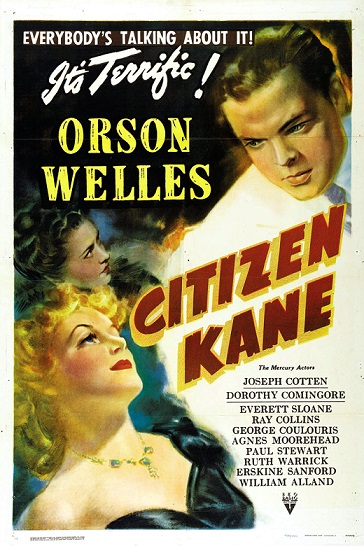
Citizen Kane’s poster shows some guy looking down at a woman. There’s no hint about what the movie’s about, and the marketing team had to resort to telling us that the movie’s terrific and everyone loves it! But ask any literary agent and they’ll tell you that a great story doesn’t need anyone to tell you it’s terrific, and doing so is a sign that the creators know their work isn’t actually terrific.
Morbius’ poster doesn’t resort to telling you how terrific it is: it shows instead uses a stylish teal and black color scheme, and the image of a man who’s both a man and a snarling man-beast to instantly grab your attention, informs you that a new Marvel legend has arrived, and uses the color red on the title, hinting that whatever is going to happen, there will be blood. Citizen Kane, by comparison, does not have blood, which is why it fails.
Winner: Morbius
Plot:
Citizen Kane’s story follows some reporter named Jerry as he tries to figure out why a dead guy said ‘Rosebud’ just before he died and what kind of man he was. Jerry eventually gives up, never learning what ‘Rosebud’ means. Man, what a loser.
Morbius’ story follows doctor Michael Morbius, a genius doctor who has dedicated his life to helping mankind. One day, while experimenting on a cure for his rare blood condition, he unknowingly transforms himself into a vampire, granting him extraordinary powers, but at the cost of constantly needing human blood. Worse still, his childhood friend, Milo, has also become a vampire. With time running out before he permanently loses his humanity, Morbius must fight to not only stop Milo, but the darkness within.
Winner: Morbius
Main Character:
Citizen Kane’s protagonist is Charles Foster Kane. He was once a nice little kid before becoming really rich and taking over a newspaper and getting an ego the size of a planet and subsequently ruining all the friendships and relationships he ever had before dying alone and reminiscing about a sled.
Morbius’ protagonist is Michael Morbius. Unlike Kane, he is a good man who strives to help those around him, and even when he is turned into a vampire and given extraordinary powers that would allow him to dominate and destroy everyone around him, he refuses to use those powers and tries to get rid of them while simultaneously trying to save his lifelong best friend from the same condition, and a government determined to hunt him down for a murder he didn’t commit. And throughout it all, Morbius constantly tries to do the right thing, no matter the cost to himself, making him not only a hero for our time, but the hero of all time.
Winner: Morbius
Side characters:
Citizen Kane’s side characters are boring. How many of them have become staples in pop culture? Can you name any of them off the top of your head? No? I thought not. Pfffft.
Morbius’ side characters, however, are a complex and wildly interesting bunch. Among them are:
*Morbius’ research assistant, Martine, who’s willing to work with Morbius even after he’s turned into a vampire, and also sacrifices her life to give Morbius the strength he needs to defeat Milo, only to then be resurrected as a vampire herself.
*FBI agent Simon Stroud, a tough, competent, yet fair man who owes his life to Morbius for the artificial blood Morbius invented, which is what allowed him to survive being wounded in Afghanistan. Yet, tragically, he has to hunt down Morbius, seeking to bring him to justice. But unlike so many other fictional, power-hungry or by-the-book agents, Stroud doesn’t compromise his morals to accomplish his goals.
*Alberto Rodriguez, Stroud’s partner, who appears to be nothing more than your typical, bumbling comic-relief sidekick, having no comprehension of feline behavior or how litterboxes work. Yet, he is surprisingly brave and unfazed at the prospect of facing off with a vampire, and shows no fear when the time comes, proving he’s far braver than most mortal men.
*Dr. Emil Nicholas, who helps sick children and acts as a surrogate father to Morbius and Milo, trying to be kind and understanding to both, but unconsciously favoring Morbius, with tragic results.
*Nicque Marina, who only appears a few times as a reporter for the Daily Bugle, who is clearly infatuated with Morbius (making her an audience surrogate for everyone on Earth), but who is dedicated to telling the truth and doing her job.
*Nurse Kristen Sutton, a kind and well-meaning nurse who’s brutal death at Milo’s hands made me cry harder than when Jack turned into a corpsicle in Titanic.
Every face in Morbius, no matter how briefly they may appear, is so memorable that they put every other supporting cast in every movie ever to shame.
Winner: Morbius
Antagonists:
Citizen Kane has only one antagonist: Kane himself, who, while pursing wealth and power, alienates everyone around him and ensures he’ll die alone, the fool.
Morbius faces not only the government during his cinematic journey, but also Milo, his best friend. Though crippled by a rare blood disease that leaves him weak and barely able to walk, Milo is fabulously rich and has helped fund all of Morbius’ work into curing their condition. Yet, when he takes the cure that turns him into a creature of the night, Milo goes on a blood-drenched rampage through the streets of New York City. But despite his viciousness, Milo still genuinely cares about Morbius and wants him to embrace being a vampire, too, so they can be best buddies forever and eventually take over the earth, complete with awesome castles, capes, and being suave, sexy creatures of the night.
Winner: Morbius
Conflict:
Citizen Kane’s conflict revolves around what ‘Rosebud’ means. Can you imagine anything more boring?
Morbius’ conflict centers around Michael Morbius’ desperate attempts to hold onto his humanity after becoming a vampire, while simultaneously trying to stop Milo’s rampage though New York City. Success will mean having to kill his best friend, and failure will mean losing his humanity and leading to the deaths of countless people.
Winner: Morbius
Cinematography:
In the cinematography department, Citizen Kane is surprisingly good, featuring complex camera moves and excellent cinematography with many memorable shots that have stood the test of time.
Unfortunately for Citizen Kane, Morbius’ cinematography is the gold standard for all films forever: besides being in vibrant color instead of boring black and white, Morbius has lots of pretty shots of New York City, highlighting man’s achievement in taming his environment, allowing him to create grand settlements filled with millions of people living peaceful, happy lives. But these shots subtly reminds us that if Morbius doesn’t stop Milo, all of these people will die, giving each shot a subtle menace and dread.
Plus, the film is a masterpiece of a wide and varied color palette, from the 80’s inspired credits, to the white, green, and orange subway, to the aforementioned colorful cityscapes. Plus, thanks to advanced filmmaking techniques, Morbius has many shots of Morbius flying through the sky, fighting Milo in slow motion, and plunging through a half-built skyscraper, shots that the salesman of frozen peas couldn’t even dream of using. And to cap it all off, there’s this awesome shot of a menacing green hallway at night with a vampire hopping around.
Does Citizen Kane have a spooky, green hallway at night with vampires hopping around? Didn’t think so.
Can you hum a single tune from Citizen Kane? Yeah, me neither.
Morbius, however, has a swelling, heart-stirring soundtrack, but nothing can top the auditory masterpiece that is ‘Off The Meds’ by EKSE, with it’s timeless, heart-wrenching lyrics:
‘I poop my answer, yes,’
‘Have sex!’
‘Poop my pants’
‘Poop my tent’
Sorry, Bernard Herrmann, but your noble efforts have been morbed!
Trying to pick the best scene from Morbius however, is more difficult than when Hercules embarked on his 12 labors. While I was tempted to go with the now-legendary scene of him saying, “It’s Morbin’ time!” and morbing all over Satan while on top of an erupting volcano, I ultimately chose what will surely be remembered as the greatest scene in movie history: Milo dancing.
Why is this scene the best scene ever? There are many reasons:
1. It has a shirtless Matt Smith doing pushups.
2. The architecture and look of the room, complete with black and white marble, mustard-colored curtains, and ‘color-inverted zebras being shot at by arrows’ wallpaper.
3. The joy of seeing a crippled man finally gaining a perfect, disease-free body and celebrating being able to move pain-free without the need of a walking stick.
4. The music, with its timeless lyrics, such as, ‘I poop my answer, yes,’ ‘Have sex!’ “Poop my pants,’ and ‘poop my tent.’
5. Milo’s dance choreography, which puts every musical ever to shame. Somewhere in the afterlife, Fred Astaire is weeping at both being able to see such talent, and grief that he was not able to live up to Milo’s standards while he was still alive.
There is no competition: Milo dancing is pure cinematic gold. When I one day depart this mortal coil, I want to watch this scene on repeat, with the last words my dying brain ever hears is ‘poop my tent’
Winner: Morbius
Ending:
Citizen Kane ends with Jerry mulling over everything he’s learned about Kane, coming to the conclusion that he doesn’t have a clue what Rosebud means and gives up, presumably to go home and cry while gulping down ice cream to soothe the pain of his failure as both a reporter and a man. And as he’s no doubt eating his way to type two diabetes, we, the audience, see Kane’s belongings being burned, including his beloved sled, Rosebud. That’s kinda sad, I guess.
Morbius ends so heartwrenchingly that I can barely type this without tears staining my keyboard: Despite all his efforts, Morbius is forced kill his greatest friend and end his rampage of destruction before flying off with his bat friends to an unknown future, leaving us to wonder if he has held onto his humanity or given in to his inner vampire… but the mid-credits teaser sequence, in which Morbius teams up with the Vulture – Spider-Man’s greatest, most famous, and most dangerous foe – reveals that he has indeed fallen to the inescapable grasp of evil, and that the noble doctor is no more.
Such power. Such gravitas. Not even Shakespeare himself could craft such a heart-wrenching tragedy.
Winner: Morbius
Cultural impact:
Citizen Kane’s lasting impact on pop culture is to allow professors at film schools to feel special by telling their students over and over that Citizen Kane is the best film in human history. Too bad they won’t be able to do that anymore!
Morbius’ impact on pop culture is difficult to determine, only because it’s been a year since it came out, but all reliable sources say that no other film or franchise will ever have as great an impact on human culture. The output of Morbius merchandise, fan art, fan videos, clothing, theme parks, happy meals, shampoo, and Halloween candy has surpassed Star Wars, Jurassic World, LEGO, and every franchise ever, and will doubtless continue to grow in popularity for centuries to come.
Winner: Morbius
Conclusion:
When we compare the winners in each category, it becomes clear that this is no contest: Morbius clobbers (or should I say, morbs) Citizen Kane in every aspect. Kane, once the pinnacle of cinema, is no longer the king, or even a pretender to the throne. Morbius has come and morbed all over Kane, and is now the king of the mountain, the zenith of humanity’s creative endeavors, and the greatest film of all time, bar none. This movie is what God created us for; our time to ascend to the stars and take our place alongside our peers throughout the cosmos has come, for we have proven that we are worthy of joining them with the cinematic tale of a doctor-turned vampire, leaving Citizen Kane to fade into dust, as it rightfully should.
Now, if you’ll excuse me, I need to go pop some more Morbius popcorn and watch the movie for the 9,528th time. Because it’s just that good.
Last week, we took a look at Sci-Fi’s surprise hit, ‘Sharknado,’ This week, let’s take a look at… well, The Second One.
Consider having your hero rush in to help, even when he has no idea what he’s doing.
In the film’s opening scene, Fin and April are en route to New York City, only for their plane to be attacked by sharks. Even though Fin’s a surfer with no flying experience, he still tries to fly the plane to safety instead of waiting for someone else to do so.
Not only does rushing in to help make our characters active protagonists, but it also gives them an underdog quality, in that they have to accomplish a task they’re not qualified to do.
Have your characters save someone they don’t like
While it’s easy for our characters to rush in and save people they care about, or even just bystanders they don’t know, it takes more courage to rush into danger to save someone they don’t like, as Fin has to do with Martin, an old childhood friend of his. While we may enjoy seeing mean people get their comeuppance (though not Martin, in this case), having our heroes take the high ground and save their lives says a lot about their character.
For bonus points, consider having the two characters take advantage of their situation to heal any emotional rifts they have and become friends again, as Fin and Martin do. Or, if not that, at least no longer hate each other.
Consider having an old-timer finally get to fulfill a failed dream decades later
His role isn’t necessary to the story, but it’s satisfying to see Harland McGuinnes – an old, retired baseball player – finally get the home run he never got to get in his last game by whacking a shark into the billboard at Citi Field. Who among us doesn’t have a dream that never came true, whether from circumstances beyond our control, or because of our own failings? That’s why it’s so satisfying to see characters get a second chance to make that dream come true and pulling it off, especially if they’re older and past their physical prime.
Consider doing crazy chase scenes
Car chases, foot chases, motorcycle chases, boat chases, helicopter chases; all of them have been done thousands of times in films. But how about a chase where the monsters are pursing an out-of-the-ordinary vehicle? One of ‘The Second One’s most creative scenes has Fin and friends riding a subway car that’s not only trying to outrun a tidal wave, but the sharks it’s carrying as well.
When it comes to chase scenes, the sky’s the limit, so why not try including two different antagonists at once in your own?
Consider trapping your characters be trapped between two bad choices
As the old saying goes, sometimes we have to choose the lesser of two evils in life. A similar situation has characters being forced to choose between two very unpleasant outcomes. In ‘The Second One,’ Fin and friends are trapped in a stairwell trying to get a door open. If they fail, they have to make a choice:
1. Do they choose to be killed by sharks who are rising towards them via flooding?
2. Do they choose to be killed by sharks descending towards them who are on fire?
Thankfully, they get the door open, but such no-win scenarios not only helps reveal more about a character’s true fortitude (are they brave? Panicky? Do they sacrifice others to save themselves?), but makes the viewer wonder what they’d do in the same situation, which keeps them engaged and wanting to find out what happens next.
Have the commoners rise up to save the day
If there’s one trope all but guaranteed to warm the heart, it’s seeing everyday people take up arms to fight the monster/menace of your story, and win. When this trope comes in to play, the authorities have failed to save the day, and the only people everyone else can rely on is themselves, which adds further drama to the scene. Here, the citizens of New York grab all manner of weapons and take on the sharks. Considering that these weapons include pitchforks, guns, chainsaws, and flamethrowers fashioned from super soakers, it’s as goofy as you’d expect, but still great fun.
Consider having a mid-air fight
(Play the clip to jump right to Fin’s mid-air fight)
They’re rare. They’re impractical, They’re all-but impossible to pull off in real life, but there’s no denying that a free-fall fight between two characters is awesome. In the climax of ‘The Second One,’ Fin flies through the sharknado towards the Empire State Building with his chainsaw, carving up sharks left and right, and eventually riding one onto the tower’s antenna.
The advantages of such a fight are numerous: Both participants are in a hazardous environment, the fight has to be decided quickly, which increases the ferocity on both participants, and unless they can figure out a way to land safely or get away, both fighters are going to die a very unpleasant death on impact. When you need a hazardous environment to stage a fight, it’s hard to top one in the sky.
Reconsider killing off likeable side characters
It’s distressingly common for disaster films to kill off side characters who are often more interesting than the protagonists, and ‘The Second One’ follows that trend, killing off Fin’s old love interest, Skye, and a helpful cab driver, Ben, played by the great Judd Hirsch. I liked both of these characters, and how they were competent, resourceful, and did their part to help Fin and the others survive; I especially liked how Skye, while still in love with Fin, doesn’t try to stop him from healing his relationship with April, which makes her death feel cruel and unnecessary (and Fin doesn’t even mention her afterwords!).
In our own stories, think carefully before killing off these side characters. While audiences expect a certain amount of casualties in a disaster film, having these side characters survive, even if longer than expected, can be a welcome surprise because we’re conditioned to believe they’ll die. If your viewer likes these characters, they’ll be grateful to you for saving them, and walk away happier than they would have otherwise been.
The Takeaway
We like seeing our protagonists rushing in to help, even when they don’t know what they’re doing, especially if it’s to save someone they don’t like and would otherwise leave to die, while watching older people fulfill a dream that never came true before escaping in a crazy chase sequence and then end up being trapped between two terrible ways to die, before rallying the common folk to save the day before charging into battle that includes a mid-air fight, and hopefully doesn’t involve the death of a likeable side character.


 Imperfect Glass