16 Great Things about ‘The Lord of the Rings: The Rings of Power’ Season 2

In my last article about The Rings of Power, I talked about my 15 favorite things about Season 1. Here – in no particular order – are my 16 favorite things about Rings’ second season. Be warned that this list contains spoilers for not only Season 2, but also future events in the series, and the Lord of the Rings as well.

*All pictures in this article are the property of Amazon.*

1. Sauron’s Death

Season 2 opens with a flashback to Sauron trying to take command of Middle-Earth’s orcs following Morgoth’s fall. Unsurprisingly, the orcs (and Adar) don’t take kindly to being told that they’ll be sacrificed to achieve Sauron’s goals, so they express their displeasure by stabbing Sauron a few hundred times until he explodes, turning the surrounding terrain into a winter wonderland.

Many fans of Tolkien’s works have decried this scene for contradicting Sauron’s character (he tries to reason with the orcs, where he dominates them in the books with fear and terror), but I think this scene is a clever look at Sauron’s journey as a character. Originally, he was a being who loved order and perfection, but during his time as Morgoth’s servant Sauron was corrupted into being willing to enslave, torture, and kill others to get what he wanted. With Morgoth gone, some of Sauron’s original goodness is poking through, and this scene shows him at the halfway point between the good spirit he was originally, and the hate-filled tyrant of the Lord of the Rings trilogy.

Despite contradicting Season One of Rings’ (Adar said that he killed Sauron after the latter experimented on so many orcs; here, he and the orcs kill Sauron before those experiments begin), this prologue is a great way to open the season.

2. Sauron’s Rebirth

Something never elaborated on in Tolkien’s works is how Sauron creates a new body for himself each time he was killed, saying only that it took Sauron longer and longer with each subsequent death. Rings lets us see how the process might have gone: after being killed by the orcs, Sauron slowly rebuilds himself from a few drops of blood, taking the lives of insects, rats, and eventually people before he can finally create a new body for himself and resume his quest to conquer Middle-Earth.

What I like about this scene is that, compared to everything else we’ve seen of Tolkien’s world onscreen, this is something out of a story by H.P. Lovecraft: we’re watching the birth of an abomination from the dark, moldy depths of the earth, something that doesn’t belong to the natural order of things. And while this putrid mass of cancerous growth may look weak and frail, it’s still one of the most powerful and evil things in existence. And in a nice nod to Tolkien’s mythology, the whole sequence ties into his recurring theme that evil cannot create new things, only corrupt what has already been made: where Sauron could once manifest a beautiful form before his fall, now he is forced to take life from others to create a body for himself, one that may seem normal, but is only a mask to hide the evil within.

3. Choose Good

Sauron may have created a new body for himself, but he is now at the lowest point of his entire existence: he’s lost his position as Morgoth’s right hand. He has no armies to command, he’s been exiled from his home in Valinor, and his dreams of creating a perfect, orderly world are in tatters. But being humbled presents him with an opportunity to realize what he’s done and turn his life around, something that he seems to seriously consider when he comes across a group of refugees, one of whom unknowingly offers him the chance to leave his destructive path and choose a new, better one.

Later, when talking on a ship, the same man gives Sauron a brief, but perfect summary of what it means to turn from evil and become good:

I like to imagine that this meeting isn’t due to chance, but actually an act of fate: in The Fellowship of the Ring, Gandalf told Frodo that Bilbo was meant to find the Ring, and that Frodo was also meant to have it. During the events of The Hobbit, Gandalf and Thorin seem to have been guided to meet each other in Bree, which ultimately led to the Quest of Erebor and the death of Smaug, saving Middle-Earth from his wrath.

With all that said, I believe that Eru subtly guided the old man into meeting Sauron and inspired him to say the right things in hopes of helping the fallen Maiar find his way back to the light… but, alas, Sauron chooses instead to be a big meany butt and be evil (and confirming that he was lying to Galadriel about trying to redeem himself in Season 1).

Had Sauron listened to the man and chosen differently, the fate of Middle-Earth would have been very different, indeed.

4. Rhûn

If there’s one thing The Lord of the Rings, The Hobbit, and The Silmarillion has in common, it’s that we don’t get to see a world outside of the standard European fantasy environment (tall mountains, forests, castles, and the like). That’s why it’s such a delight in Season 2 that we finally get to see the deserts of Rhûn – the homeland of the Easterlings – on screen for the very first time.
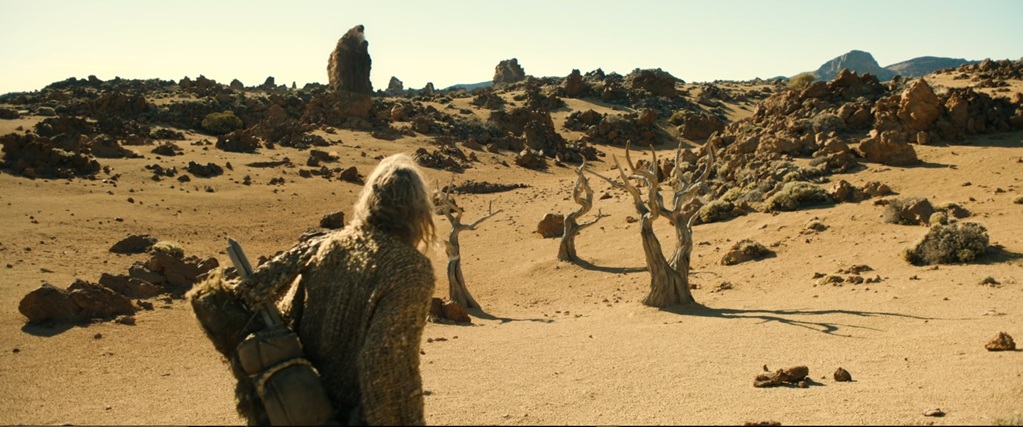
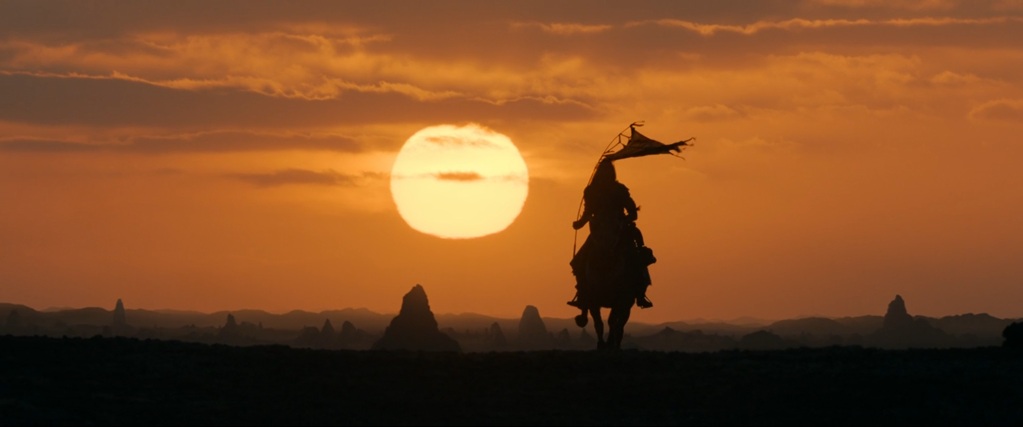
While we don’t get much outside of rocks, dead trees, barren canyons, and lots of sand, it’s great to finally see something other than European climates, and remember that Middle-Earth is so much bigger and varied than what we’ve seen in Tolkien’s books.

5. Celebrimbor

Though he had an important role to play in Season 1 of Rings, where he forged the three rings of the Elves, Season 2 is where Celebrimbor gets to come into his own and shine as one of the most famous elves of the Second Age. As the descendant of the famously fiery and temperamental Fëanor, Celebrimbor is an elf who doesn’t desire fame, power, or ruling others, but only in creating beautiful things and trying to undo the mistakes of his ancestor… a desire that makes him him all-too vulnerable to Sauron’s manipulations.

While he has all the qualities of being a noble hero like Gandalf, Aragorn, and Galadriel, Celembrimbor is unfortunately like Isildur and Bromoir: beings who fight and strive to do what is right at great personal cost, but who’s tales are told as tragedies by those who come after them. Celebrimbor’s a noble and kind-hearted elf, but his determination to make his mark on the world has catastrophic consequences for the world at large.

Yet, his noble intentions, determination to do what is right after realizing he’s been lied to and deceived by Sauron, and only wanting to do good makes him endearing and likeable. Like Diza, he’s an elf you’d be happy to share ale with at a tavern after a long day’s work.

6. Celebrimbor’s Anvil
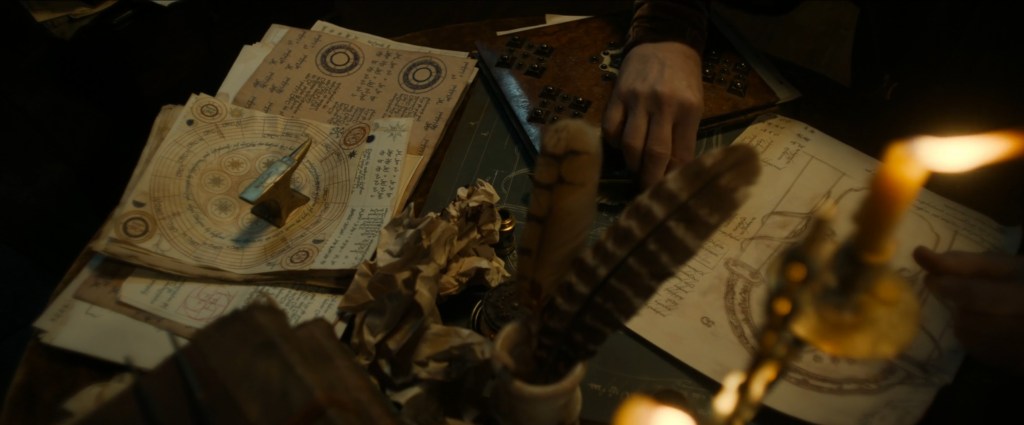
It’s only onscreen for a few seconds, but when Celebrimbor is doing some paperwork in his office, sharp-eyed viewers will see that he uses a tiny anvil as a paperweight, implying that the mighty Celebrimbor, greatest Elven smith of the Second Age, has a good sense of humor. Plus, the image of noble and graceful elves going through the effort to craft, shape, and forge an itty-bitty, widdle anvil is hilarious. Why haven’t we gotten this thing as an officially licensed collectible yet?

7. The Hammer and the Crown

Middle-Earth has its fair share of historical objects that Indiana Jones would be happy to track down, and ‘Rings’ has two big ones in Season 2: Fëanor’s hammer, and Morgoth’s crown.

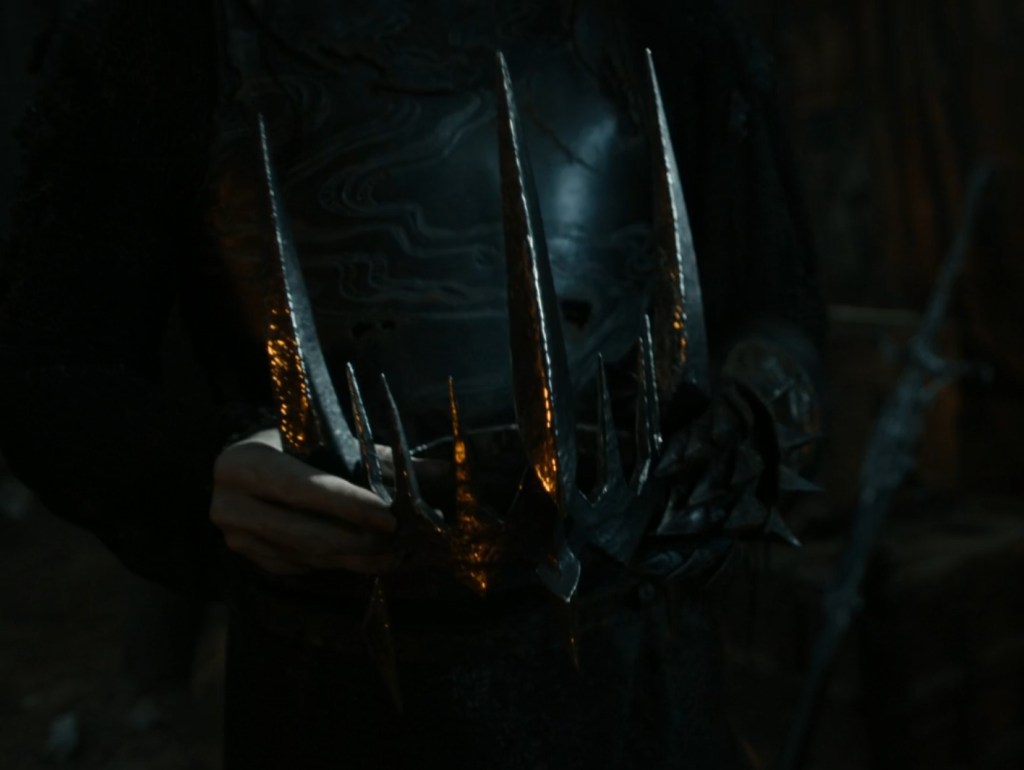
While fans who have only watched the films or seen the show can understand that these are important artifacts, readers of Tolkien’s works will get the most enjoyment out of seeing the hammer forged the most beautiful objects in all of creation (the Silmarils), and that crown that was worn by the most evil being who will ever exist (and that held the aforementioned jewels in its spiky embrace). Both go a long way to help make the world of Middle-Earth feel ancient and lived in, and that they played huge parts in changing the course of history long before the show began.

8. The Nameless Thing

One of the most fascinating parts of Tolkien’s world are the nameless things: eldritch horrors that live in the deepest, darkest fissures deep beneath the mountains of the world that are even older than Sauron. They are only mentioned briefly in Tolkien’s works, but are apparently so frightening that even Gandalf refuses to describe these abominations after encountering them when pursuing the balrog after their fall into the pit of Khazad-dûm. Season 2 gives us a glimpse of one in the form of a giant, grotesque worm-thing that tries to eat Isildur and Arondir before being sliced up from the inside and being (presumably) turned into nameless thing-burgers for dinner.

Is this a scene that doesn’t really add anything to the overall plot? Yes. Could it have been cut out without any effect on the story? Yes. Is it cool to see one of the most mysterious, dark, and vicious things that Tolkien ever wrote about? Heck yes.

9. Mirdania Sees Sauron’s True Form

One of Tolkien’s smartest decisions in writing The Lord of the Rings was not describing what Sauron looks like: he’s an unseen evil, a force so powerful and so dreadful that you don’t even have to be anywhere near him to experience the power of his malice. And despite having more screentime in Rings of Power than both the Hobbit and Lord of the Rings films combined, Rings has never shown Sauron’s true form, only his armor from the First Age and the disguises he wears to interact with others.

The closest we get to getting a glimpse of Sauron’s true form is when one of Celebrimbor’s assistants, Mirdania, accidentally enters the unseen world and sees Sauron as he really is (without realizing who she’s looking at), the experience shaking her to her core… but we don’t see that. All we get is Mirdania describing a tall being with pitiless eyes and skin made of flames. By describing the moment, but not showing it, Rings follows Tolkien’s example by leaving it up to the viewer’s imagination to visualize what Sauron’s true, malevolent form must look like.

One last little twist about the scene: after Mirdania describes what she saw, who’s the first one to comfort her? Sauron himself.

10. The Raid on the Temple

One of season 2’s strongest storylines is showing Numenor’s gradual downfall. While season 1 hinted that the greatest kingdom of Men in Middle-Earth was starting to crumble from within, season 2 brings this rot out into the open as a power-hungry Ar-Pharazôn begins his campaign to take control of the island empire and persecute those loyal to the Valar, the elves, and their ways.

The one scene that perfectly embodies Numenor’s descent into evil is the raid on the Faithful’s temple. Starting off as a peaceful funeral ceremony bidding farewell to all who died on the mainland in the last season, it devolves into Pharazôn’s sniveling weasel of a son – Kemen – gleefully interrupting the ceremony and announcing the destruction of the temple, destroying sacred artifacts for the fun of it, and then emotionally manipulating Isildur’s friend Valandil into starting a fight to justify using lethal force against the faithful, ending with Kemen stabbing Valandil in the back.

This scene, more than any other in the series, showcases the cruelty and moral rot of Numenor. What’s more chilling is that there are no orcs here, no supernatural monsters or ancient evils emotionally manipulating everyone present. It’s just humans being evil to one another, and it’s arguably scarier than any demon Tolkien could conjure up. And the worst part is that this is only a taste of the evil that Numenor is going to unleash upon Middle-Earth at large in the years to come.

(As an aside, I think there’s a very good chance that Kemen will end up being one of the Ringwraiths: Tolkien’s writings strongly imply that at least three Ringwraiths were of Numenorian descent, and it’s easy to see Kemen being nasty and power-hungry enough to accept a ring of power by Sauron. And if he wants to take the throne of Numenor, only to be denied, then Sauron might offer to make him a great lord and promise him a kingdom of his own to rule… Angmar, perhaps?)

11. Sauron’s Deceptions

One of Sauron’s greatest strengths is his ability to deceive and manipulate almost anyone he encounters, including the smartest, wisest, and most powerful elves in Middle-Earth. Yet, the books are vague about how he does this beyond his ability to take fair forms and cast illusions. While most of his manipulations in Season 2 follows the pattern of narcissists abusing others (lovebombing, gaslighting, ignoring boundaries, victim blaming, etc.), we get to see Sauron’s supernatural abilities at work when he conjures a vision of Eregion to subtly trap Celebrimbor. Like the holodeck from Star Trek, Celebrimbor can walk around in this vision, touch things, interact with other elves, and continue his work… completely unaware that the real Eregion is being bombed into rubble by orcs.

This illusion is a fascinating demonstration of Sauron’s power and his ability to deceive others, and makes you wonder how he’s used this ability on others throughout his time in Middle-Earth: It’s one thing to resist lies and flattery, but it’s much harder to resist when the very world around you is a lie and you don’t know it.

12. Who’s Will Is Stronger?

So often in fantasy stories, dark lords and evil-doers have all the power and all the advantages over their good counterparts, including the willingness to do whatever needs to be done to achieve their goals. But Celebrimbor gets a moment to prove that the good guys can be equally as strong-willed: shackled to his desk and unable to stop Sauron from taking the rings that he will use to enslave men and create the ringwraiths, Celebrimbor realizes the only way he can get free is to cut off his own thumb so he can slip through his shackle. But doing so means that he will never again be able to use a hammer, an anvil, and a forge to create things. Celebrimbor’s Eru-given gifts of forging and creating will be forfeit, and his dreams of making Middle-Earth beautiful will be gone.

Knowing all that, Celebrimbor still cuts off his thumb.

While gruesome, this is one of Celebrimbor’s best character moments: when everything is on the line, he is willing to give up his life’s dream for the chance to stop Sauron and save others. While it is, unfortunately, all for nothing in the long run, never let it be said that Celebrimbor did something most of us wouldn’t have the courage to do.

13. Celebrimbor’s Death

Celbrimbor’s death is one of the more gruesome in Middle-Earth media: tortured by being shot repeatedly with arrows from Sauron himself, threatened with supernatural means to ensure he doesn’t die, and then being impaled with a spear through the gut before finally dying, it’s a gruesome spectacle. Yet, one thing that’s puzzled me ever since watching it is why Sauron cries after Celebrimbor’s death. He wouldn’t see Celebrimbor as a friend, nor would a being such as himself be frightened at a prophecy that his rings will one day destroy him. So why the tears?

After mulling things over, I’ve come to think that the reason Sauron cries is because he’s realized he’s crossed the point of no return. All throughout Season 1 and 2, Sauron says that his greatest goal is to heal Middle-Earth of the hurts he helped inflict upon it. Yet, when staring at Celebrimbor’s corpse, Celebrimbor’s words cut through all the lies he’s told himself:

“I go now to the west, blown forth on a wind that you can never follow.”

I think Sauron realized that Celebrimbor was right: After all he’s done, and after all the times he’s rejected the chance to turn away from evil, it now hits Sauron that he can never go back to Valinor, his home. If he did, the Valar would imprison him, find him irredeemable, and thrust him into the void to join his master in endless darkness.

In my opinion, this is the moment where the last piece of good in Sauron dies. From here, he will fully embrace evil to achieve his goals and abandon any attempt to kid himself that he’s doing this to help others. Celebrimbor may have died here, but so did a tiny, flickering spark of light that will never be re-kindled.

14. Adar Turns Back to the Light.

One of my favorite storytelling tropes is when a villain sincerely and truly repents of their ways and turns their backs on evil. That’s why one of my favorite scene in all of Rings – tied with Sauron being offered the chance to turn from evil, as described above – comes with Adar turning back to the light.

Having obtained Galadriel’s ring, Adar seems poised to use it as a weapon to turn the tide in his war against Sauron and finally defeat him once and for all… but that’s not what happens. Though exactly what happened isn’t shown, it’s logical to assume that Adar’s mind was healed by Galdriel’s ring, making him realize how much evil, death, and destruction he had caused since beginning his quest to create a homeland for the orcs. But instead of giving into despair and hopelessness, or telling himself even more lies to cover up the pain as Sauron did, Adar instead chooses to pursue a path of peace.

While his quest for redemption only lasted a few minutes, Adar holds the unique distinction of being the only true villain in Tolkien’s universe – whether in books, films, games, and TV shows – to sincerely repent, something that Sauron, Saruman, Grima Wormtongue, and so many others never did.

While his ultimate quest to have the orcs live in peace was doomed to never succeed, I hope Adar can return in future seasons (due to Elves being able to reincarnate in Valinor if they are killed), and become of the good guys fighting against Sauron.

15. “Dwarves!”

Dwarves!

16. Sauron vs Galadriel

In Tolkien’s writing, an interesting paradox is introduced regarding Sauron: Despite his overwhelming power, strength, and innate magical abilities, he always loses whenever he gets into a physical fight with someone. That trend is played with at the climax of Season 2, when we get our very first scene of the Dark Lord going toe-to-toe with an opponent onscreen when he fights Galadriel for the 9 rings of power. For the majority of the fight, Sauron easily has the upper hand, toying with her mind and easily deflecting her blows before finally defeating her with a stab from Morgoth’s crown, and taking the 9 rings.

While I enjoy the fight for being able to see my favorite fictional villain getting to show off his fighting skills (and using Morgoth’s crown as a weapon is an ingenious and clever idea), I also like how the fight shows that even if Sauron defeated Galadriel, destroyed Eregion, and got his rings, he still lost: Galadriel escapes, and his potential ally and slave will instead be a thorn in his side for the rest of his days, giving hope, comfort, and aid to those who fight against Sauron, and will be one of the major players in his final and permanent defeat.

Sauron may have won this battle, but though it will take centuries for it to happen, he has ultimately lost his war to enslave Middle-Earth, and Galadriel escaping is just the first of many twists of fate that will finally lead to his final and ultimate defeat.

That’s it for Season 2, which I think is a big improvement over Season 1; come back in 2027 when we’ll take a look of my favorite moments from the third season of ‘The Rings of Power’.

I know Kung-Fu: A look at the duels in the Matrix Saga – Part 5

Last week, we took a look at the two duels featured in ‘The Animatrix,’ and today we’ll look at the only two duels in the final film of the Matrix franchise, ‘The Matrix Revolutions.” But as the old saying goes, quality is better than quantity, and in my opinion, these two duels are among the best in the series.

Neo vs Smith in Real Life

Emotional Context: Neo fights to keep Smith from killing both him and Trinity before they can reach the Machine City and end the war between man and machine.

Analysis: After the spectacle of tightly-choreographed duels in ‘Reloaded’, ‘Enter’ and ‘The Animatrix,’ the first duel in ‘Revolutions’ is surprisingly brutal: Neo or Smith, unable to use their otherwordly abiliites, try to kill each other with whatever they can get their hands on, whether it be their fists, the walls, or power cables. This brutality leads to Smith’s face being coated in blood, poor Neo having his eyes burned out, and ending with Smith’s head being bashed into bloody chunks.

What sets this duel apart from any other in the series is its brutality and horror atmosphere: Neo and Trinity are trapped inside a tiny hovercraft in the abandoned sewer tunnels of humanity’s old cities, miles from help. They’re initially outmatched and outsmarted by Smith, and if they fail to stop him, both humanity and the machines are doomed. And when the fighting begins, there’s no fancy martial arts and no elegant, dance-like fight choreography: Neo can’t fly, stop bullets, effortlessly jump around, or tirelessly fight off hundreds of opponents. Smith can’t dodge bullets, punch through concrete, or otherwise use any of the powers he normally has. Both are evenly matched,  and fancy moves are thrown aside in favor of banging faces against walls, throwing punches as hard as possible, and trying to choke Smith to death, followed by Neo getting an eyeful (haha) of exposed power cables. It’s a visceral example of how brutal fights can be more memorable than fancy ones.

Yet, for how dark and grim this duel is, it smartly lightens the mood by having Neo – having sacrificed his eyes – gain the ability to see the energy put out by machines, allowing him to kill Smith… and even crack a joke to Trinity about how she’ll need to drive, ending an otherwise deadly serious fight with some much-welcomed levity.

The Super Burly Brawl

https://youtu.be/MObFnU9kTvo

Emotional Context: Neo faces Smith one final time to stop him from destroying both humanity and the machines.

Analysis: And so, after four years, we finally come to the final confrontation of the Matrix series, the final showdown between Neo and Smith that would decide the fate of Earth and everyone – mechanical or organic – who lived upon it. And like any climax, ‘Revolutions’ holds nothing back in giving us a spectacle worthy for the ages, featuring:

*A fight that will decide whether good or evil will prevail

*A battle at night in the rain

*A fight that spans multiple locations

*Superpowers

*Gigantic sonic booms.

In terms of sheer spectacle, the Super Burly Brawl has no equal in the Matrix saga, both in fighting, and emotional weight: Neo’s fighting to stop Smith from destroying everyone and everything. If he fails, then not only will every single human on earth die, but so will every single machine. That gives every moment where he falters or stumbles dramatic weight, because the consequences of failure are so high. Yet, even as the fight gives us awesome, god-like beings fighting (to one of the most incredible fight scores I’ve ever heard), it does something so many of these series-ending fights rarely do: it has the good guy fail. In what may be the biggest twists in the series, Neo loses the climactic fight. All of his powers, all of his skills, all of the gifts he’s been given as The One aren’t enough to save him.

When I first saw ‘Revolutions,’ I loved seeing Smith and Neo beating the tar of out of each other. But when Neo fell from the sky, and was subsequently beaten into the mud, I was shocked. That wasn’t supposed to happen! Neo’s the good guy, the savior of humanity! He couldn’t lose! I was gripped, trying to figure out on how on earth Neo could still win; after all, lots of protagonists get beaten to a pulp, yet still manage to achieve victory at the last second. But not here. Neo’s beaten so badly that he can barely stand, and then lets himself be absorbed and killed. I was stunned… and then (like so many other fans) spent the next few weeks trying to figure out what happened when all those Smiths exploded.

What makes the final battle of the Matrix saga so good is that it delivers not only spectacle, and emotional weight, but also subverts expectations by having Neo lose, gripping audiences as they try to figure how how he can turn things around in his favor. Then it subverts them even further by having Neo sacrifice himself to let the machines delete Smith through him, showing that a protagonist can lose a battle, but win a war in the process. There’s more than one way to victory, and it isn’t always the path of beating an opponent to a bloody pulp.

And so, with Neo’s sacrifice, we’ve finally finished looking at all the duels in the Matrix saga… Well, almost. Come back next week, where we’ll take a look at one last duel in the series, which may be the most satisfying… and one of the most unique.

What we can learn from ‘Sharknado 3: Oh Hell No!’


Sharknado3cover

Last week, we took a look at the second film in the Sharknado franchise. Now let’s see what happens when sharks head into outer space!

Teaming up with the president is always cool

In real life, presidents almost never get to do anything other than giving speeches and sign paperwork. But in fiction, they have the chance to hop in fighter jets and take on aliens, take on terrorists who have taken over Air Force One, and fight vampires/zombies. In ‘Oh Hell No!’ Fin joins forces with the President of the United States to defend the White House from an attacking sharknado, both of them getting to fire guns and take out sharks before fleeing as the White House is destroyed by the Washington Monument.

In your own works, having the president of a country get her/his own action sequences is a surefire way to get the viewer’s attention. The president, by virtue of their office, is going to be an important individual, and also has the underdog value of being someone with no fighting/action skills, and having to go up against dangerous opponents with enormous stakes: if they die or get captured, the country is in big trouble. For bonus points, consider having your president be a historical figure, such as George Washington, Teddy Roosevelt, etc. Who wouldn’t want to see any of them taking on sharknadoes?

Awesome RV’s are always cool.

They rarely show up in fiction outside of zombie stories, but armored RV’s are always cool. What’s not to love about a vehicle that not only has all the comforts of home, but also has enough weapons and armor to take on the toughest monsters? ‘Oh Hell No!’ gets one that allows Nova and Lucas to pursue the latest sharknado threat in relative safety.

In our own stories, armored RV’s offer a lot of flexibility, ranging from van-sized, to bus-sized, and even dual-bus sized. But no matter how you rig them, they tap into the deep-rooted fantasy we all have of wanting to get into action without giving up the comforts of a bed, a kitchen, and so on.

Have someone’s heroic sacrifice show just how determined they are

How far would you go to sacrifice yourself for a cause? Sacrificing your life for something greater than yourself is heroic, but would you still be willing to do it if it was tremendously painful? Poor Lucas has a pretty unpleasant death in ‘Oh Hell No!,’ which finds him struggling to activate the RV’s self-destruct mechanism, only to have his legs and arms ripped off one by one until he finally activates the mechanism by hitting the button with his chin.

While being cruel, having your characters struggle to sacrifice themselves gives your viewers the chance to see just how determined and brave they can be… though if you’re not careful, it can become unintentionally amusing if they keep losing limbs and body parts. (it’s easy to visualize Lucas still trying to hit the button if his head was bitten off).

If your story has an out-there monster, have the military fight it

It’s amazing to think that after six movies, ‘Oh Hell No!’ has the only instance of the United States military taking on a sharknado. But as with Attack of the Killer Tomatoes, part of the fun of this kind of movie is seeing the military fight the beast and fail to defeat it, and a good reminder that seeing determined soldiers fighting goofy monsters to the death is all-but guaranteed to get a laugh from your audience.

Bigger is sometimes better

While previous sharknadoes have affected just a single city (Los Angeles and New York City), ‘Oh Hell No!’ has the fishy menace attack the East Coast of the United States, giving Fin and friends a much tougher task ahead of them: they have to save half a country from being wiped out instead of a single city.

While it’s common for the world to be at stake in disaster movies, ‘Oh Hell No!’ cleverly subverts the trend by only having a large part a country threatened, instead of the entire world. Consider doing the same in your own stories: audiences are so used to having the entire world be threatened that having something smaller and more intimate can feel refreshingly different.

Consider having your monsters run amok in an amusement park of DOOM

What’s more fun than a theme park? Having monsters running amok at a theme park! ‘Oh Hell No!’ features the fun of sharks attacking Universal Studios Orlando, including the last on-screen appearance of the Twister attraction before it was closed down.

The appeal of having monsters attacking a theme park is that they get to run amok among a nearly infinite variety of rides. Who wouldn’t want to see Michael Myers hijacking a bumper car to run people over? Or seeing Jason Vorhees slashing people to bits inside a tunnel of love while riding a swan boat? Or a Predator decapitating drunk partygoers on the steamboat in Disneyland?

Consider having an old timer get to fulfill a dream, but also help others in the process

Much like the baseball player from ‘The Second One,’ ‘Oh Hell No!’ features another older man who finally gets to fulfill a failed dream of heading into space. But what’s interesting in this version is that it’s Fin’s dad, Gil, and that by heading into space, he also is helping to save millions of lives and also be the hero his son always wanted, which allows him to accomplish three things at once.

While it’s satisfying to see someone fulfill a dream, you can make it even better if the character in question gets to help others in in the process.

Consider drafting the boyfriend/girlfriend to fight monsters

A date should be about having fun and enjoying yourself, not taking up arms to fight sharknadoes trying to wipe out humanity, as Claudia’s boyfriend learns when he’s recruited to fight off sharknadoes at NASA to protect the space shuttle.

The advantage of recruiting a boyfriend/girlfriend to fight isn’t that they’re underdogs fighting to survive something they’re not prepared for (unless they happen to have training or experience), but in that their character is revealed in times of extreme stress, which can help their partner decide if they really want to get together with them or not. They might be cowards who run away to save their own skins, or they may be brave, and prove themselves to be a worthy partner.

When you need a memorable finale for your monster movie, and realism isn’t an issue, consider sending your monster into space

When a monster franchise sends its monster into outer space, it’s a sign that the filmmakers have run out of ideas or are no longer taking the franchise seriously, and for good reason: I don’t think you can send an earth-born monster into outer space and not have it be inherently silly, as Jason and the Leprechaun have proved.

Yet, the silliness of outer space carnage can work if your series already thrives on the silly and the absurd, and sending sharks into the cosmos feels like the logical outcome of the ‘Sharknado’ franchise. and gives us the rare sight of man fighting sharks in the final frontier.

While it may be difficult to pull of seriously, sending sending your monsters into space does have the undeniable novelty of seeing said monsters causing havoc in space shuttles, space stations, other planets, etc. If your audience doesn’t groan and give up, they’ll go along just to see what absurdity awaits them.

End with the threat neutralized for good and the hero getting what they want

‘Oh Hell No!’ ends on quite the high note: the storm system that had caused the sharknadoes ihas been neutralized, Earth is safe, and Fin finally has a family of his own. If SyFy had chosen to end the ‘Sharknado’ series with the third film, it would have been a satisfying finale.

In our own stories, consider giving your own protagonist a happy ending and what they’ve wanted all along. It may be a family, a career they’ve dreamed of, or perhaps a new business, or even just the freedom to travel and see the world. It’s a just reward for all their hard work, and a satisfying way to see them begin a new life away from whatever’s been tormenting them.

Avoid ending on a cliffhanger if this is supposed to be the series finale.

With that said, however, ‘Oh Hell No’ does taint its happy ending with having April be squashed by a falling shark from outer space, leaving the viewer to wonder if she survived. While I don’t know if SyFy always intended to continue the series, or if it was a spur-of-the-moment decision to include the cliffhanger, it feels anticlimactic to set everything up as the big finale, only for the film to change its mind at the last second.

While it’s always tempting to leave the door open for more adventures, it’s wiser to wrap your story up instead of leaving a loose thread: it’s always possible to come back to a finished series, but leaving the door open to a sequel that will never happen will always leave viewers wondering what could have happened.

The Takeaway

Consider having the president, a boyfriend/girlfriend, and a cool RV help save a country once and for all from a monster with heroic self-sacrifice while the monster/s attack an amusement park and then heads into space before being stopped for good with the help of an older person fulfilling a lifelong dream, thus giving the protagonist what they’ve always wanted, but avoid ending your series finale on a cliffhangar that negates all the emotional investment we’ve had up to this point.

What we can learn from ‘The Ritual’ (the film)

TheRitualFilmHeading

Last week, we took a look at the book version of ‘The Ritual.’ Today, let’s take a look at the film adaptation and see what writers can learn from the big (small?) screen version of the novel:

Consider starting your story with a lighthearted touch, then immediately shifting to horror

‘The Ritual’ begins with Luke and the others (and newcomer Rob) having a typical guy’s night out with drinks, joking, and taking in a city’s nightlife. I first thought it was going to be a predictable scene of the group wanting to get away from their boring lives, but was quickly proven wrong when Luke and Rob stumble into a robbery, and Rob is killed. Only then does the film cut to the outskirts of Sweden’s Forest of Death six months later.

The brilliance of this sequence is how it plays with our expectations: We expect it to be another buddy-movie opening, but by then shifting into horror, it grabs our attention like a slap to the face. Consider doing the same subversion in your story: while the first part risks having the viewer say, ‘Oh great, not another cliched opening,’ the unexpected always gets their attention, letting them know that this isn’t going to turn out the way they think.

Consider having your characters learn to overcome fear

It’s standard advice for writers to have characters change and grow throughout their stories, giving readers the sense that their heroes are capable of learning and growing from both triumph and failure. But what kind of arc should they have? Here, Luke’s arc takes him from being a coward (not helping Rob when he’s being beaten by thugs), to learning to face fear (in this instance, a forest god who will turn you into a flayed flesh-flag if you don’t worship her).

One advantage of having your character learning to stand up for themselves is that everyone can relate to it. Who among us hasn’t felt small and afraid when faced with bullies, angry parents, or enraged employers? And who hasn’t felt the elation of finally standing your ground and fighting back? Having your characters do the same is almost guaranteed to be a fist-pumping, ‘hell yeah!’ moment because we know the struggle it takes to get to that point.

(In all fairness, though, you can’t blame Luke for not stepping in to help in the market; a glass bottle wouldn’t do much against two thugs who aren’t afraid to kill to get what they want.)

Consider having the victim make everything worse for everyone else

After injuring his knee early in the hike, Dom wants nothing more than to get out of the forest. But while his pig-headed stubbornness to get out as quickly as possible is understandable and relatable, it has the side effect of leading almost everyone else to their doom. Had the group just turned back, they probably would have gotten out of the forest alive. Such a contrast creates mixed emotions for your audience: they can sympathize with the victim who just wants to live, but also be angry at him/her for making things worse for everyone else by refusing to listen to reason.

Consider having a small mystery that’s never solved

About halfway through ‘The Ritual,’ Luke and the others find an abandoned tent that belonged to Anna Erikson, a woman who went missing in 1984. While this mystery is never solved, it does engage our imagination: What happened to Anna? Did she escape the forest? Did Moder kill her? Or did she join the cult and worship Moder? It may be possible that the villager who explains to Luke who Moder is Anna. Either way, the ambiguity behind the mystery helps reinforce the fact that Moder has been active for a very long time.

It’s important to note that this mystery is a small one, and not important to the plot. Had it been the main focus of the story, where Luke and the others heading to the forest to find this woman, then it would need to be solved.

Consider hearing something horrible instead of seeing it

It’s common to hear a monster in a creature feature long before it’s seen, and for good reason: Hearing an unearthly beast allows the reader’s/viewer’s imaginations to run wild, and making them lean close the screen or the page in hopes of catching even the smallest glimpse of the monster. However, using sound instead of visuals can also be effective in many other situations. In ‘The Ritual,’ it’s used to chilling effect when Phil is dragged upstairs where we hear him shrieking. We don’t see what’s going on, which makes us wonder what’s terrifying him so much. Torture devices? Other captives who fought back and were mutilated? A big, fat, naked man trying to seduce him?

By leaving something unseen, even if it’s not a monster, you can turbocharge your audience’s imagination… and make their skin crawl as they debate whether they want to see the unseen horror or not.

Consider having your characters sacrifice something for their freedom

In many stories where a character has to escape a location (a cell, a locked room, etc.) they manage to get out of their restraints without any pain. But if you want to turn up the tension, and make your audience squirm, consider having your characters sacrifice something to achieve that freedom. Here, Luke has to sacrifice his thumb by breaking it in order to free himself from his bindings.

Part of fiction’s appeal is imagining ourselves in the place of our heroes and imagining us accomplishing what they do, escaping from impossible situations included. Why not make them squirm by having them wonder if they’d be able to sacrifice a body part to escape. Would they be willing to break their arm? Lose an ear? How about an eye?

Consider having your final confrontation be a battle of wills, not physical strength

In my opinion, the most interesting thing ‘The Ritual’ changes from the book is the final showdown between Luke and Moder. In the book’s climax, the two collide in a van, and Luke drives her off with a pocketknife. Here, however, Moder tries to force Luke to worship her, presumably so she can continue to live from the strength of his prayers. In a physical fight, Luke is no match for Moder, but she’s in a difficult situation: if she kills Luke, she loses her last chance of getting a follower. Thus, Luke finally gains his resolve and refuses to kneel. And thanks to an axe-to-the-face moment, he manages to defeat Moder: not by killing her, but by leaving her powerless, alone, and trapped in a prison she cannot leave.

It’s a fascinating twist on the standard climax of having hero and monster fight in a duel to the death. Here, both parties survive, but Luke is still the winner. ‘The Ritual’ is proof that not every confrontation needs to involve weapons, fists, and pitting strength against strength. Sometimes the most amazing duels are fought with words and wills, where even the weakest in body can stand up to the biggest of bullies.

The takeaway

When writing a story about monsters, a good way to quickly suck viewers in is to start off with a familiar plot, only to quickly swerve into horror territory, setting up a story where the main character has to learn to stand up for himself and face his fears while dealing with injured companions who make things worse for everyone due to their stubbornness, creepy mysteries that they’ll never solve, unseen horrors that he doesn’t want to face, enduring great pain to gain freedom from captivity, and facing the beast and defeating it with courage and their will instead of weapons and strength.

BONUS: When all else fails, punch the evil old woman