11 Great Things About David Gordon Green’s ‘Halloween’ trilogy

Note: This post spoils the stories of the 2018 film Halloween and its two sequels: Halloween Kills and Halloween Ends. It also contains videos depicting fictional gore and violence that is not safe for work. It also contains a clip of a fictional character killing themselves.

It’s spooky season once more, and you know what that means: horror movies, slasher villains, and buckets of blood and gore. We’ve gotten a lot of horror franchises over the years, but only the classics endure, and the granddaddy of them is the Halloween franchise. While quite tame by today’s standards, the original was groundbreaking when it was release back in 1978, introducing the seemingly unkillable Michael Myers to silver screens everywhere, and beginning one of horror’s longest-running franchises.

Two years ago, David Gordon Green’s sequel trilogy – which acted as a direct followup to the original 1978 film – came to an end with Halloween Ends. Although the trilogy has gotten a mixed reception from fans, I think that, despite some narrative inconsistances, there’s a lot to like about the films. Here are eleven of my favorites:

11. Michael Meyers, Child Killer

While horror films can get away with a lot that other genres can’t, killing children is one of the things normally frowned upon. But Halloween, Kills, and Ends has no problem with Michael killing children.

While Michael was never even remotely a good guy, having him kill children in painful ways (I don’t even want to know what happened to the poor kid who wore that blood-drenched skull mask) shows viewers that he’s one killer who doesn’t mess around and is willing to kill anyone he comes across. Yet, even then he spares an infant in the first film, and we never find out why, further cementing that he’s a force of evil that doesn’t bother to explain itself to his victims.

10. Laurie and Michael’s Reunion

Throughout the first film of the sequel trilogy, we get to see how Laurie prepared herself for an inevitable rematch with Michael, and what follows isn’t so much a fight, but a one-man siege:

What I like about this even though Laurie has been preparing for this fight for years, she still can’t kill Michael with guns or brute force, and has to resort to trickery and help from her daughter and granddaughter, and even then it’s still not enough to kill Michael (who, at this point, is 61 years old).

One little thing that makes this scene even better is the moment when Laurie calls out for Ray: you can almost hear Michael thinking, “Wait a minute… I know that voice.” And then, turning his head, he sees Laurie through the door, recognizes the girl who got away so long ago, and decides to finish what he started back in ‘78.

9. Old Man Michael

One of my favorite things about the Halloween sequel trilogy is that the films acknowledge Michael’s age. Instead of trying to make him an eternally youthful man, Michael has aged to the point where he could collect social security checks and get senior discounts at the grocery store. By acknowledging that the bogeyman is getting old, it makes Michael’s kills all the more unique because we rarely get to see a senior-citizen slasher villain in stories, much less one who has three movies to play around in.

8. The Innocent Inmate’s Suicide

Though the trilogy is focused on horror and kills, it’s most emotional moment is when one of Michael’s fellow inmates from the asylum realizes that an enraged mob – who believes that he’s Michael – is going to tear him limb-from-limb. They can’t be stopped, they can’t be reasoned with, and the man – who is harmless and terrified – decides that the only thing he can do is jump to his death rather than face an even worse death at their hands.

Afterwords, the shock from all those present drives home how they’ve realized that their fear, paranoia, and desire to kill Michael have turned them into monsters on par with Michael himself.

7. Michael vs the Mob

The climax of ‘Kills’ sees Michael’s bloodiest, goriest, and highest body count in any of his films when he’s attacked by dozens of Haddonfield’s citizens.

He’s shot, clubbed, hit, beaten to the ground and seemingly defeated; it’d be a perfect ending to the series to have ordinary people unite and take Michael down for good… and then he lashes out, gets right back up, and kills everyone in the crowd.

Though the trilogy flip-flops on if Michael is supernatural or just a man, this scene proves that while Michael may look human, he is anything but.

6. Michael’s Evil Infecting Haddonfield

Though Michael is and always will be the face of the Halloween franchise, an idea that’s been brought up again and again is that evil always changes shape, and that killing Michael will mean that someone will eventually take his place. However, there’s another aspect of this that is subtly implied throughout the trilogy: that the evil within Michael corrupts everyone around it. When Michael returns to Haddonfield, the people there start to become paranoid and act violently to try and stop him, only succeeding in killing innocents and themselves, until Corey is seduced and corrupted in Ends, almost becoming Michael’s successor.

Michael may be a remorseless killer, but he is also a tumor that infects, corrupts, and destroys everyone around him. He’s a prime example of how evil can create a cycle of fear, death, and revenge that is almost impossible to stop.

5. Michael’s Supernatural Abilities

There’s been many theories on why Michael is so durable and hard to kill, and while Ends says that he’s just a man, I don’t think that’s true: Michael takes damage throughout the trilogy that would kill a man half his age and demonstrates endurance, durability, and strength beyond anything any normal person could endure: name any other man in his 60’s who can beat someone to death with their fists, he can crush a man’s head into pulp by smashing it with his boot, take a firehose of water to the chest without flinching, and hit someone with a baseball bat so hard that the bat itself is broken into two.

I’m of the theory that while Michael himself is human, the evil he contains makes him so much stronger and durable than any man could ever be, and while that power fades with age, it’s still always there, always driving him on, always giving him what he needs to continue his killing spree.

4. Michael vs the Firefighters

Michael gets into a lot of fights throughout the trilogy, but in terms of sheer ‘cool’ factor, this is my favorite:

Not only does this fight have a fantastic setting (taking place in front of a burning house), it demonstrates just how inhumanly strong Michael as as he takes down nine firemen who are armed with axes, firehoses, and even saws. But this fight is also a moment of awesome for the firefighters themselves: the moment they see Michael step outside, they instantly know who he is, but they don’t panic, run, or call for backup: instead, they stand their ground and fight. And while they all die, at least they go down fighting.

Fun fact: The house burning down during the scene? That was done for real, which meant that the filmmakers had about an hour to finish filming before the house collapsed. Thankfully, they did!

3. The Final Confrontation Between Laurie and Michael

The first sequel had a fight to the death between Laurie and Michael, but in my opinion, the final battle between the two in Ends is so much more gripping: Michael – now worn down from years of untreated injuries – comes to Laurie’s house and realizes she’s nearby. Laurie – who has given up on being a highly-trained survivalist – has no time to prepare as Michael comes for her, ending in a final, no-holds-barred beatdown between the two.

While the fight isn’t flashy or filled with fancy choreography, I love its atmosphere: this fight really feels like a final confrontation over 40 years in the making, both in-universe and out. Predator and Prey – both of whom are past their physical prime – fight to the death with nothing to lose and throw everything they have at each other, all backed with a near-apocalyptic soundtrack that makes things so much more intense. This is the last time Laurie and Michael will ever fight, and they give it their all. Many a fan has decried how Michael should have been able to kill her easily, but having Michael be old, worn out, and worn down from all the injuries he’s accumulated makes things more evenly matched between the two, and makes Laurie’s final victory all the more satisfying.

2. Michael is Killed For Good

There’s a saying in the world of comics: no one ever stays dead (except Uncle Ben), and the same can be said for slasher franchises: no matter how many times a villain is supposedly killed off for real, box office profits ensure he or she will always come back, no matter how convoluted the explanation may be. But while Michael will return for the inevitable reboot of the Halloween franchise, this timeline ends him in the most concrete way possible: by throwing his body into an industrial shredder and tearing him into bloody pulp.

There’s no way, NONE, that Michael can come back from this, and there’s one aspect of this scene that makes it so satisfying beyond seeing an evil man finally getting his just deserts: Throughout the series, Michael always comes back from every injury he takes. Whether it’s immediately, in a minute, a few hours, or even years, he always comes back, and I believe that Michael did not actually die in the fight with Laurie. Instead, he was so weakened from the loss of blood and his accumulated injuries that he couldn’t move, and while the evil possessing him was working to try and heal his body, the process couldn’t be completed when he was thrown into the shredder. Thus, Michael Myers truly died when the shredder tore him apart, and he felt all the pain that came with it: a far more just and deserved ending after all the lives Michael took, the fear he spread, and the suffering he inflicted on so many.

1. A Hopeful Ending

One reason I generally avoid horror films and franchises is the constant trope of downer endings where evil wins and nothing good comes from all the sacrifices, struggles, and suffering of the protagonists. Thankfully, Ends avoids this with a bittersweet, but hopeful ending:

After so many decades, Laurie finally kills Michael and frees both herself and Haddonfield from his reign of terror. While she cannot get back all the years and loved ones she’s lost, Laurie can now heal and create a new life for herself, complete with a new relationship with officer Hawkins. And best of all, in the final shots of the film, there’s no sound of Michael breathing. His mask remains, but the man – and the evil he carried – is truly gone, and it’s a great way to end the original Halloween timeline.

My Favorite Fictional Places To Live In

If you could choose one fictional place to live in, what would it be? Would you go live in Hogwarts? A penthouse somewhere on Coruscant? Or maybe getting your very own Hobbit-hole in the Shire is more up your alley? Anyone who’s fallen in love with a book, a movie, or a game has fantasized about living in a particularly loved location; here are ten of my favorites.

10. The Matrix (The Matrix franchise)

Image created by me using Deviantart’s DreamUp AI art generator.

Why I’d love to live there: Wait a minute! you might say; why would you want to live inside the Matrix?! Isn’t it a prison for humanity? Well, the first six were, but the Matrix I’m referring to would be one that takes place after the film series, where humanity is aware that they live in virtual reality, but they and the machines are no longer at war. While the machines work to rebuild the surface of the Earth to make it habitable for humans again, humanity chills out in the Matrix to give the machines the power they need, and thanks to their world being virtual, people can now alter it so that they can choose how they look, what clothes they wear, and have increased physical abilities, including – if you’re lucky – flight! And since real estate isn’t an issue, humanity could finally reach a state where everyone is housed and poverty is eliminated forever. Yeah, it may be all digital trickery, but as Morpheus pointed out, your mind would make it real.

Potential drawbacks: While I think everyone would love being able to bend the laws of physics, the possibility of people abusing these new abilities is very high. While most people would be content to be able to fly around in the digital world, abusers, criminals, sociopaths, and bullies would abuse their new powers, and conflicts could become even more dangerous than they are now. So while the Matrix would be very cool, it could also be very dangerous.

9. The Enterprise D (Star Trek: The Next Generation)

Image: Paramount Pictures

Why I’d love to live there: The Enterprise D is a huge spaceship filled with all the wonders the 24th century has to offer, including one of the greatest fictional devices ever created: the holodeck, a place where almost any fantasy you can dream up can come to life. And when you’re not living out your favorite daydreams, you can visit the arboretum, watch the stars from Ten Forward, enjoy a stroll through the ship while listening to the hum of the engines, and visit the onboard dolphins. (No, really, there are dolphins on the Enterprise.) Accommodations are nice, too; if you can snag one of the officer’s quarters, you get a lovely view of space and funky iridescent bedding! Coupled with the ship’s enormous size, and the timeless 80’s sci-fi design, you’d have a nice place to call home.

Potential drawbacks: As Q so memorably pointed out, space is no place for the timid: Being assimilated by the Borg, being dissolved by giant crystal entities, encountering space anomalies that turn you into monkeys or trap you inside a never-ending time loop, and any other number of galactic hazards are some of the things you might encounter, so if you want to live on the Enterprise, maybe do so when it becomes a museum ship.

8. The Glass Tower (The Towering Inferno)

Image: 20th Century Fox/Warner Bros.

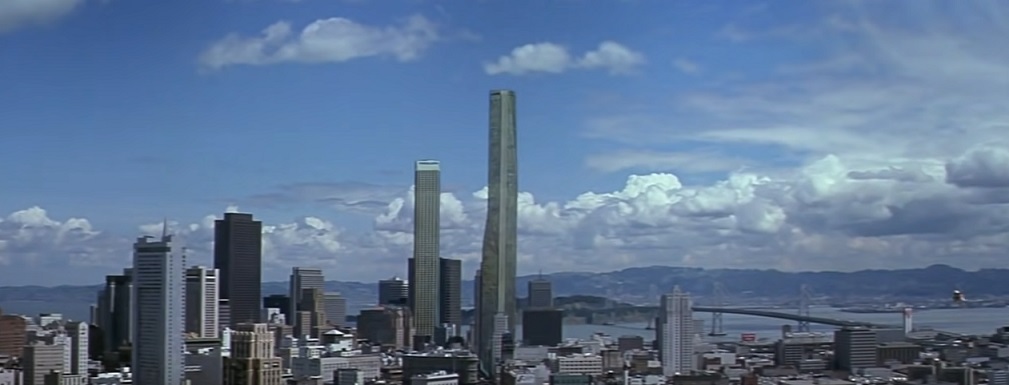
Why I’d love to live there: The Glass Tower is, in my opinion, one of the most beautiful skyscrapers ever to appear in film. Not only is the gold exterior a beautiful, simple, timeless look, but the interior has a wonderfully charming 70’s decor, right down to the interior elevators. But the big perk is the views: no matter where you live in the tower, you would get breathtaking views of the city, the bay, and the surrounding areas.

Potential drawbacks: Well, there is the itsy, bitsy, tiny fact that the tower catches on fire due to faulty wiring due to cut corners and cost saving measures during construction. And considering that the tower is in San Francisco, your monthly rent would be about 18 trillion dollars. So unless you magically get a free, lifetime lease, you’d have to be quite rich to live there.

7. Mêlée Island (The Secret of Monkey Island)

Image: Lucasfilm Games

Why I’d love to live there: As a night owl, the never-ending nightlife of Melee Island (It’s always 10 PM), is a big plus for me, as is the peaceful town and wilderness to explore: nothing can hurt you here, there are plenty of shops to visit, and the island’s vast forests are beautiful to walk through without fear of wild animals and other threats.

Potential drawbacks: As this is also a pirate town in the 1700’s, you don’t have things like electricity, the internet, movies, or TV shows to keep you occupied on Melee Island, so once you’ve explored and seen everything, there’s not much else to do.

6. Equestria (My Little Pony: Friendship is Magic)

Image: Hasbro

Why I’d love to live there: Who says you have to live somewhere with nothing but humanoids to keep you company? Equestria is a land filled with adorable ponies who are happy to be your friend, and there are plenty of places to live with them, from towns to deserts, palaces and islands, and even floating cities, all but guaranteeing that you’ll find somewhere you like. Plus, Equestria is watched over by a benevolent monarch who has ruled it for over 1,000 years without succumbing to madness or becoming a dictator; if only we were blessed with leaders that good.

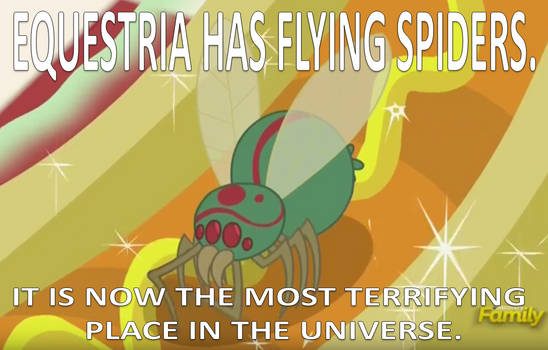
Potential drawbacks: Magic is real in this universe, and while there are beneficial spells, there’s also plenty of harmful and destructive spells that can brainwash you, turn you into other creatures, or kill you. And despite having lots of friendly ponies to live with, there are also lots of unfriendly ponies and monsters who either want to eat you or conquer the world, and have the ability to do so thanks to aforementioned magic. Oh yeah, and there are flying spiders.

5. Cape Suzette (Talespin)

Image: Disney

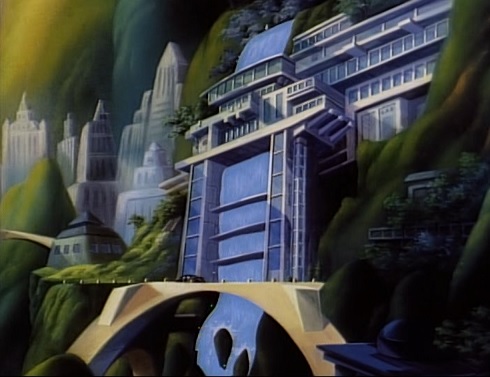
Why I’d love to live there: Saturday morning cartoons of my childhood had lots of cool fictional places where adventures took place, but the only one I’d like to live in as an adult would be Cape Suzette from Disney’s Talespin. Set in a fictional 1930’s inhabited by anthropomorphic animals, Suzette is a sequestered, art-deco metropolis nestled in a towering mountain range and a beautiful cove, making it the perfect hub for the adventurous type. But the biggest draw is the apartment of Rebecca Cunningham:

Image: Disney

Even as a little kid, I thought her place was incredible, and as an adult it’s a strong contender for the most beautiful fictional apartment I’ve ever seen. Assuming money wasn’t a problem, this is where I’d love to live!

Potential drawbacks: Aside from being the only human in the city, you’d have to contend with raids by air-pirates, and every trip outside of the city’s boundaries is fraught with danger. There’s also the fact that the city’s de-facto ruler is a ruthless tiger who isn’t afraid to do anything and everything to increase his own wealth and power, so if he decided to ruin your life, there’s a strong chance he could get away with it.

4. Valinor (The Silmarillion/ The Lord of the Rings)

Image: Amazon Studios

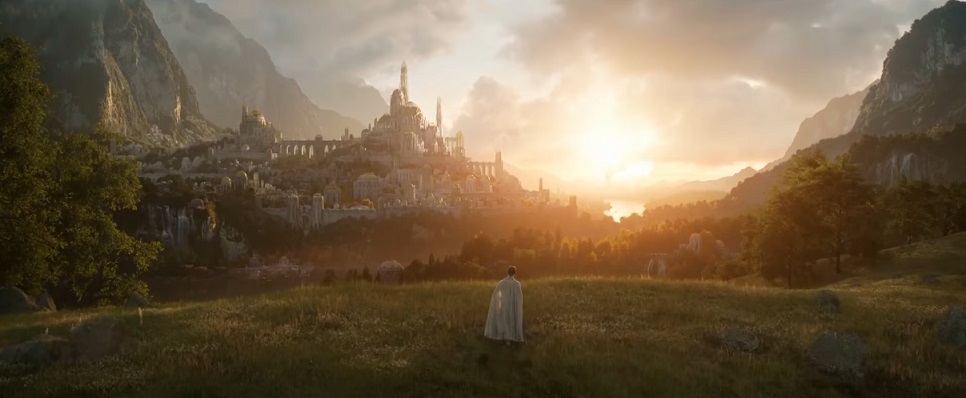
Why I’d love to live there: Valinor, the land of Middle-Earth’s gods, is one of the most fascinating places to me in JRR Tolkien’s universe, and the one place I’d love above all others to visit, or, better yet, live in: being free from evil, you could explore all its wonders, from the tallest mountains in existence, to the most majestic trees in creation, and the magical Gardens of Lórien, the most beautiful place in all of Arda. And if you wanted to, you could even visit the Halls of Mandos, the dwelling place of the dead; that sounds fun, right? But one of the most amazing draws would be living amongst elves and the gods themselves, beings who helped shape and create Arda and have seen the creator god – Eru – face to face.

Potential drawbacks: It’s said many times throughout Tolkien’s mythology – and by Tolkien himself – that mortals cannot live in Valinor because their lives would be greatly shortened due to the overwhelming magical power of the island, and they’d die cursing that they alone aged while everything around them seemed to never change. Yet, Frodo, Sam, and Gimili lived there in a state of peace and healing, suggesting that mortals can stay in the blessed realm if they accept death and don’t seek immortality. Thus, any would-be-mortal-resident would have to decide if living among elves, gods, and all their wonders is worth a greatly-reduced lifespan.

3. Dinotopia (The Dinotopia series by James Gurney)

Image: James Gurney

Why I’d love to live there: IT’S A UTOPIA WHERE HUMANS LIVE SIDE BY SIDE WITH DINOSAURS HOLY S**T THAT IS AWESOME.

Ahem; sorry.

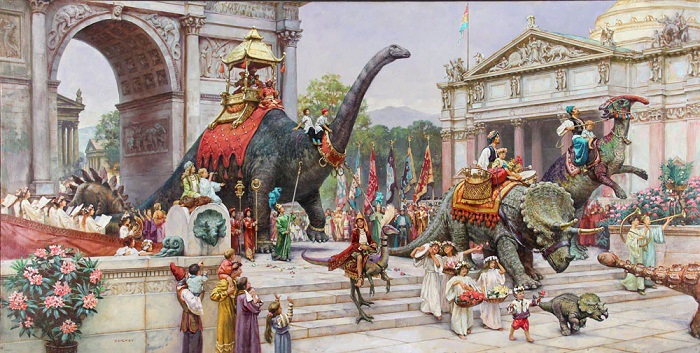
To tone down my inner child, Dinotopia is one of the most wondrous, peaceful, utopian places I’ve ever found in fiction. A place where dinosaurs have survived to the present day and live peacefully with humans in cities, towns, jungles, mountaintop temples, and seaside communities, all brought to life by James Gurney’s beautiful artwork. For children and adults alike, it’s a place so many would love to call home, myself among them.

Potential drawbacks: Encountering carnivores who are not afraid to embrace their more savage side. Thankfully, you have to go out of your way to encounter them, so the threat is minimal, meaning that most of Dinotopia is one of the safer places on this list.

2. The Culture (The Culture series by Iain Banks)

Image created by me using Deviantart’s DreamUp AI image generator

Why I’d love to live there: When it comes to utopias in fiction, The Culture is arguably the one that probably gets closest to making one that you’d actually want to live in: A highly advanced, post-scarcity society where benevolent AI’s keep society running, allowing citizens of the Culture to do literally anything they want, as long as it doesn’t hurt or harm other individuals. With a high value on personal liberty and freedom, as well as technology that allows individuals to live up to 400 years (or even longer), people living in the Culture have it made: You can pursue all your passions, dreams, and hobbies as much as you want without worrying about having to pay the bills. Sweet!

Potential drawbacks: While the Culture does run into occasional problems and even more advanced civilizations dwelling in the cosmos, there really aren’t any hazards or drawbacks its citizens have to worry about; some would say that the Minds (the aforementioned AI’s that keep the Culture running) run a surveillance state, even if it is a completely benevolent one, but when you look at all the benefits the Culture’s technology can offer, and almost unlimited freedom everyone enjoys, the Culture is as close to an earthly heaven as you can get. And speaking of paradise…

1. Heaven

Image created by me with Deviantart’s DreamUp AI image generator

Why I’d love to live there: While we will likely never know for sure if there is continued existence after death (though considering the volume of near death experiences and other otherworldly phenomena reported throughout the centuries, I’m in the ‘there’s probably something after we die’ camp), Heaven, as seen in countless books, movies, TV shows, and video games, would be the absolute perfect place to live: a realm of peace, joy, and bliss, where all your dreams can come true, and where you can live without any of the negative parts of Earthy life, like death, aging, paying the bills, late-stage capitalism that puts the acquisition of money above human well being, etc. Plus, assuming the Supreme Being is benevolent and all-loving, you can chill out with God; who wouldn’t want to do that?! (I’ve always loved how in the book, ‘David Vs. God,’ you can even go surfing with God!)

There are countless versions of Heaven in fiction, but I especially like the version presented in the online webcomic, ‘The Order of the Stick,’: essentially, you get to enjoy every earthly delight you want, and when you’ve had your fill you get to go further up into Paradise to greater and greater joys.

Potential drawbacks: Depending on the rules of which universe you’re in (such as the movie, ‘What Dreams May Come’), the worst part of living in Heaven is the possibility that your loved ones don’t make it in, which would make living there hell. But since stories featuring getting into Heaven at the end tend to be more on the positive side, the odds of that happening are low, and the possibility remains that said loved ones can still eventually get there, even if they have to be rescued/fight their way out of Hell/the Underworld, etc.

Those are my favorite fictional places to live in; what are yours? Tell us your favorite fictional living places in the comments below!

What We Can Learn From The Star Wars Holiday Special (For Real This Time)

Last year, I gathered all my courage, mourned not being able to watch The Incredible Hulk, and finally sat down to watch the Star Wars Holiday Special, which is commonly called one of the worst moments in television history and one of the biggest missteps in the Star Wars franchise, sentiments that are completely and utterly 100% true. And while I played up this awfulness for comedic value, I figured it was time to actually write out what works well and what doesn’t in the special because, despite what pop culture might tell you, I was surprised to find that the special is… not that awful.

Now, don’t get me wrong; the special is not some misunderstood masterpiece that has aged like fine wine. It is a bad show with seemingly endless padding, almost ten minutes of non-stop Wookie gargling without subtitles, stirring and whipping, and the… inconsistent acting. And that’s before Leia breaks out into song. But as hard as it may be to believe, there’s also some good things, too: the lighthearted, feel-good music, seeing Luke, Leia, Han, and all the other classic characters doing their stuff, the 70’s style that saturates the whole thing, and some downright hilarious Youtube comments.

Now, lest you feel the temptation to actually sit down and watch the special (an endeavor I don’t recommend unless you’ve consumed copious amounts of alcohol) sit back and let me present to you the hard-won writing lessons I got from watching this piece of 70’s kitsch.

What does the story do well?

The core concept isn’t bad

Regardless of its execution, the story of the Holiday Special itself isn’t bad: During a period of galactic civil war, Chewbacca tries to get back to his family on Kashyyyk to celebrate Life Day, the most important holiday in Wookie culture. But it won’t be easy: the Galactic Empire is in hot pursuit of Chewie, and maintains a presence on Kashyyyk harassing the locals. Not only will Chewie and Han have to escape the Empire, but Chewie’s family will also have to outsmart and outwit the local Imperials before Chewie arrives so they can all safely celebrate. That’s not a bad story at all, which leads the Special to stand as proof that even the best story ideas can fail due to other circumstances.

It has a good introduction to Boba Fett

While fans generally agree that the Holiday Special is awful, there is also agreement that the best part is a short cartoon that features the first appearance of Boba Fett, one of Star Wars’ most famous side-characters. And they’re right! It’s a short, self-contained story that takes full advantage of it’s animated medium to create interesting and unique visuals that would be expensive to do in live-action, as well as give Boba a moral ambiguity that left first-time viewers wondering if he truly was an ally or someone nefarious, all aided by an excellent voice performance by Don Francks. Plus, hearing Darth Vader in any cartoon is always an excellent thing.

It shows what life is like for ordinary people in a sci-fi universe

If there’s only one thing the Holiday Special does well, it’s to show what life is like for ordinary, everyday people in the Star Wars galaxy, the folks who aren’t involved in the war, who aren’t firing blasters at Stormtroopers, and who just want to get through their day. We get to see cooking shows, what a Wookie home is like, the toys a child has in this galaxy, and what common people do to relax and have fun.

While showing ordinary life in a fantasy world sounds boring (don’t we indulge in fantasy to escape from everyday life?), it actually adds a lot of depth to that universe. Films and books typically devote little to no time showing what everyday life is like for people in fantasy worlds because of needing to focus on whatever is threatening that world. Devoting an hour and half to showing people buying and preparing food, playing, relaxing in bars, and celebrating holidays doesn’t bring in the big bucks at the cinema, after all, which makes these kind of stories rare, and even rarer in one of the biggest film franchises in history.

What could have been done to improve the story?

Everything

Okay, that’s too easy.

It could have cut out the Wookie porn

Unless it is a vital part of the story, we don’t need to watch an elderly Wookie getting sexually stimulated by softcore virtual pornography.

It could have cut out all the padding

On retrospect, I think one reason the Holiday Special earned such a disastrous reputation is that so much of it feels like padding. Part of this is due to the variety show format, but while parts of it are… tolerable… most are not, such as Malla stirring and whipping, and almost four minutes of assembling a transmitter. If these segments were removed and the story revised to focus on the holiday aspect, it would have been a stronger, more enjoyable tale.

It could have made the story more ‘holiday-ey’

While the slice-of-life format of the Holiday Special is a welcome change from the constant, non-stop war seen in all the Star Wars films, the holiday aspect feels almost non-existant. While it wouldn’t make sense for the Star Wars universe to just copy Christmas traditions verbatim, it would have been nice to see more holiday traditions throughout the special, such as festive decorations, gift-giving, etc. Even having Itchy, Lumpy, and Malla try to spread holiday cheer to the Imperials who come to their house would have helped embody the spirit of a winter holiday. As it is, the special’s only holiday aspect comes at the very end; while this works as the climax to the story, it would have been better to have more moments of festivity throughout.

Conclusion

While it deserves much of the negative reception it’s received, the Star Wars Holiday Special is, like every story, a product of its time. Where the rest of the Star Wars saga is a timeless story, the Holiday Special is a weird time capsule of the late 70’s, for better or worse, a time where where variety shows were viable entertainment, but starting their slide into obsolescence, and the Star Wars franchise was still trying to find its footing. And while there is a lot to dislike here, there’s still some good stuff, too. In a way, the Special is like our own holiday season: If we honestly search for things to be thankful for in a world filled with pain, suffering, and misery, we can find them.

Happy Winter Holidays, everyone.

What we can learn from: ‘Killer Fish’

NOTE: My apologies for posting this two days late: Christmas and all it’s related fiascos has been taking up more of my time than I expected.

Forget Jaws. Forget ‘Deep Blue Sea’, ‘47 Meters down’ or ‘The Shallows’. If you’re looking for man vs killer aquatic animal action, look no further than the 1979 Italian caper, ‘Killer Fish’, a gripping, heart-pounding tale of criminals vs some of the most ferocious fish ever known to mankind!

Okay, it’s not that exciting. Or quick-paced. Or even on league with the aforementioned films. ‘Killer Fish’ won’t win any awards or be remembered out of bad film circles, but with its beautiful scenery, silly effects, and groovy 70’s soundtrack, it’s good for a laugh or two. Let’s dig in and see what writers can learn from this tale of diamond thieves vs fish.

When doing a killer monster movie, give a tease of your monster at the beginning

It may be a cliché, but giving your audience a tease of the monster at the beginning of the story (without fully revealing it, of course) gives them a delicious tease of the carnage to come after the inevitable first-act setup. In ‘Killer Fish’, however, the piranha are nowhere to be seen for the first half hour, as the film instead focuses on people blowing up a refinery, stealing diamonds, and then sneaking through a jungle and starting to argue with each other at a resort, leaving the audience wondering if they came to the wrong movie by accident; they came to see piranha wreaking havoc, not a criminal heist movie.

As a writer, keep the characters, plot, and action tied to the killer monster, even in the first scene: Imagine ‘Jaws’ without the opening attack; the film would have a much slower, less interesting start, and a bored audience will quickly become an audience that walks away.

Consider having the antagonist’s plan to use the monster backfire

Unlike most monster stories, where the beasts are either discovered or accidentally released to wreak havoc, ‘Killer Fish’ is unique in that the leader of the thieves release the piranha into the lake to guard ‘his’ diamonds, a refreshing change from the usual ‘monsters are accidentally released or are discovered’ storyline we frequently get. What’s great about this subversion (beyond giving the main antagonist an admittingly clever idea for guarding the treasure) is that it also sets up the inevitable moment where the antagonist is done in by their own plan, which is always a crowd pleaser.

Unless you’re going for a jumpscare, foreshadow big events in your story

When the piranha finally claim their first victim, the moment we’ve been waiting a half hour to see, it happens so quickly that – aside from seeing some terrifying bubbles – there’s no foreshadowing of the piranha’s attack. We, the audience, expect that the diver will go down, there’ll be a minute or two before something happens, and… oh, wait. He’s already being attacked. Nevermind.

There’s something to be said about giving audiences what they want in a monster film, but it’s important to remember that building up to the carnage makes the payoff even sweeter. Knowing that they’re finally on the verge of seeing the juicy bits lets creators ratchet up the tension and suspense before a monster attacks. This also applies to non-monster attacks; “Killer Fish’ features a tornado that destroys a dam, unleashing a tidal wave. The problem is, there’s no foreshadowing, or even hints about the tornado’s appearance, making it feel like something the script threw in to keep the plot moving, instead of a well-thought out event that feels logical and not a Diabolus ex Machina.

Consider having your character’s place of refuge slowly fall apart around them

Much like ‘Deep Blue Sea’ 19 years later, ‘Killer Fish’ smartly has the characters trapped in a location that’s slowly sinking, meaning that if they don’t find a way to escape to shore, they’re doomed to a terrible, fishy death. By preventing them from just sitting around and waiting for rescue, the story ensures that they have to stay active and work hard to ensure their survival, which keeps things moving forward. Even better, almost all those on board are thieves who want the diamonds and are willing to betray each other to get them, making their interactions more interesting than ordinary people just trying to stay alive.

Consider having your jerk have one completely selfless moment of compassion for others

Ollie the photographer is a pretty standard camera snob who’s only interested in getting his shots throughout the film (but with Brazil’s gorgeous scenery, can you blame him?). But in a smart move, Ollie does get one good moment on the sinking boat where he tries and help an injured crewmember without any ulterior motives. While he’s not the standard, ‘heartless, smug professional who’s not interested in helping others’ type, it is a nice, effective redemption moment for him.

Having a selfless moment for your own jerk characters allows you to make them more interesting: Imagine a snob who is mean to everyone they meet throughout your story. They insult, put down, and offend everyone they can, just because they can. Then, imagine that they’re seen handing out food and supplies to the homeless in subzero weather without any regard to their own comfort. Though it won’t automatically make them a well-rounded, compelling character, such opposites will help in developing them, and maintain the interest of the audience.

Consider having two characters who hate each others guts declare a truce during a bigger disaster

It’s always interesting to see character who hate each other’s guts being forced to work together, which is what happens with Robert and Paul, who have to put aside their desire to kill each other to survive piranha who want to kill them both… at least, until they can both survive long enough to try and kill each other again.

While mutual survival is the most common reason for enemies to work together, writers have a great opportunity to try many different things with such a relationship:

*The two can learn to like each other and become friends.

*The two work to irritate each other as much as possible.

*The two gain a begrudging respect for one another that lasts after the crisis has passed.

*The two still try to kill each other at every available moment.

*The two immediately fall in love and marry each other (not likely)

The possible outcomes for such a relationship are almost endless; few storytelling techniques leave your audience completely in the dark on what can happen, making for compelling drama, comedy, or whatever genre you want to explore.

If you’re doing a monster story, have the monsters be the focus of said story

Perhaps the biggest error ‘Killer Fish’ makes is that it’s not a movie about killer fish: it’s a film about thieves betraying each other and trying to get some diamonds while having to deal with the inconvenience of piranha stopping them from getting away with said diamonds. Most of the film revolves around them betraying each other, with the aquatic menace being regulated to a subplot, instead of the other way around.

No matter your genre, remember to keep the focus on what your audience came to see, whether it’s monsters, a natural disaster, aliens, etc. To use ‘Jaws’ as an example again, imagine if the film revolved around Brody and Co. fighting to save Amity’s only seafood restaurant, with them having to fight the shark to retrieve the sunken deed to the building. Yes, they’d still blow it up, but at the end of the day it would be about saving a restaurant, not saving Amity from a killer shark. Audiences would be disappointed that they didn’t get a shark-focused story, and would be angry at having been tricked into seeing a story about saving a restaurant.

The Takeaway

When doing a monster movie, keep everything focused on the monster, including opening with a tease of its fearsome abilities, foreshadowing its appearance later on (along with any other disasters that might occur). When everything falls apart, consider having your character’s place of safety slowly fall apart, forcing two characters who hate each other to work together for survival, giving a jerk a chance to do one truly selfless, charitable act.

What we can learn from ‘Attack of the Killer Tomatoes’

TomatoHeading

Everyone has a favorite movie, a film you can watch over and over again without ever getting tired of, even after you’ve long memorized all your favorite quotes and scenes. For me, that movie is ‘Attack of the Killer Tomatoes’. I remember watching it as a kid on my parent’s Betamax tapes, fascinated (and a bit scared) at seeing those red, growling balls of doom rolling around killing everyone in sight. From the opening scene to the (unintentional) helicopter crash, to a giant, suited chicken fighting to save San Diego at the climax, it was a mesmerizing spectacle to my young mind. And although the film isn’t as gripping from an adult’s perspective, ‘Tomatoes’ still has a quirky, goofy charm that cannot be denied, and it’s still just as much fun to watch today as it was all those years ago in my parent’s bedroom.

Now, let’s see what storytellers can learn from this tale of vicious vegetables fruit.

Give your audience what they came to see

It’s a solid bet that when people watch ‘Attack of the Killer Tomatoes,’ they’ll want to see tomatoes attacking people. We do get a steady stream of such attacks, but a good part of the film is taken up by subplots of the government trying to cover up the tomato threat, and Lois’ attempts to get a scoop for her paper. These scenes, while having some good jokes (Lois’ out-of-nowhere love for Mason at the ending and the subsequent song is brilliant), slow the film down when they aren’t focused on dealing with the tomatoes. Conversely, every scene of tomatoes attacking, chasing, or eating people are far more interesting (poor Greta’s last stand is a hoot).

When writing our stories, we should consider what our audience expects, and give that to them. If it’s a monster movie, then we need to be vigilant if what we’re writing focuses around that monster, even if they’re not on screen.

Consider have your team of experts be bottom-of-the-barrel numbskulls

Pop quiz: Which do you think is more interesting to watch?

A: A big problem threatens the city/country/planet/universe, and the government sends a team of the best of the best to solve it.

or

B: A big problem threatens the city/country/planet/universe, and the government sends a bunch of unqualified nobodies who have no idea what they’re doing.

Mason Dixon’s anti-tomato squad, which is in charge of saving the United States from the killer tomatoes, consists of:

*Mason Dixon, a washed-up government agent.

*Wilbur Finletter, a paratrooper who isn’t particularly bright.

*Sam Smith, the world’s worst disguise expert.

*Greg Colburn, an underwater expert who wears his scuba outfit everywhere he goes, even when he’s deployed to the desert.

*Gretta Attenbaum, a Russian Olympic swimmer who is also deployed to the desert.

By being not particularly well-suited to fighting tomatoes, a squad of z-grade agents instantly gets an underdog feel, which helps us root for them. We want to see these people work harder to overcome their underdog status, and it’s more satisfying to see them triumph instead of professionals who know exactly what they’re doing.

The best political jokes are not specific to any administration

Though ‘Tomatoes’ is set firmly in the 70’s, complete with wood panels, garishly bright clothes, avocado-colored walls, and harvest gold-colored bedsheets, it smartly doesn’t include any jokes towards the Jimmy Carter administration, instead choosing to go with mostly generic jokes such as:

*“We’ll never have a president as bad as this one!”

*An investigative committee that doesn’t investigate or accomplish anything.

*An administration that lies about trivial items (such as using public funds to buy fluffy flower print toilet paper).

Few jokes age as fast as political ones, so if you simply must write them, having them not refer to a particular person or administration is the way to go.

If your story has an out-there monster, have the military fight it

It’s natural to assume that when a Monster of Doom arrives in a film, the military will become involved, and inevitably fail. It’s all part of the fun watching the armed forces throwing everything they have at the beast and seeing man’s mightiest weapons amount to nothing. When they fight a scary monster such as Godzilla, the Cloverfield monster, or some other abomination, it’s chilling. But when those weapons fail to defeat a goofy monster? It’s comedy gold.

Thus, it’s no surprise that one of ‘Attack of the Killer Tomatoes’ most memorable sequences is a nighttime battle between the US military and the evil fruits. It’s hilarious seeing the military trying and failing to stop these giant beasts, and a good reminder that seeing determined soldiers fighting goofy monsters to the death is all-but guaranteed to get a laugh from your audience.

Considern summoning everyman heroes to save the day.

In the film’s climax, it’s not the military, law enforcement, or even the government that defeats the tomatoes, but a bunch of random citizens from San Diego (or, as the credits list them, every screwball in the county). Once again, the underdog principle comes into play, as watching ordinary, everyday people step up to save the day is more satisfying, especially when they win. Bonus points for making them a colorful bunch, such as Ms. Potato Famine, the Marx brothers, an Arab Sheikh, and a costumed chicken.

The takeaway:

When doing a monster movie (even a parody), try to have an interesting creature, keep the action focused on the monster (even when they’re not on screen) by limiting subplots that don’t involve them, and having unqualified, everyday people battling the creatures will have us more invested in their survival than well-trained experts.